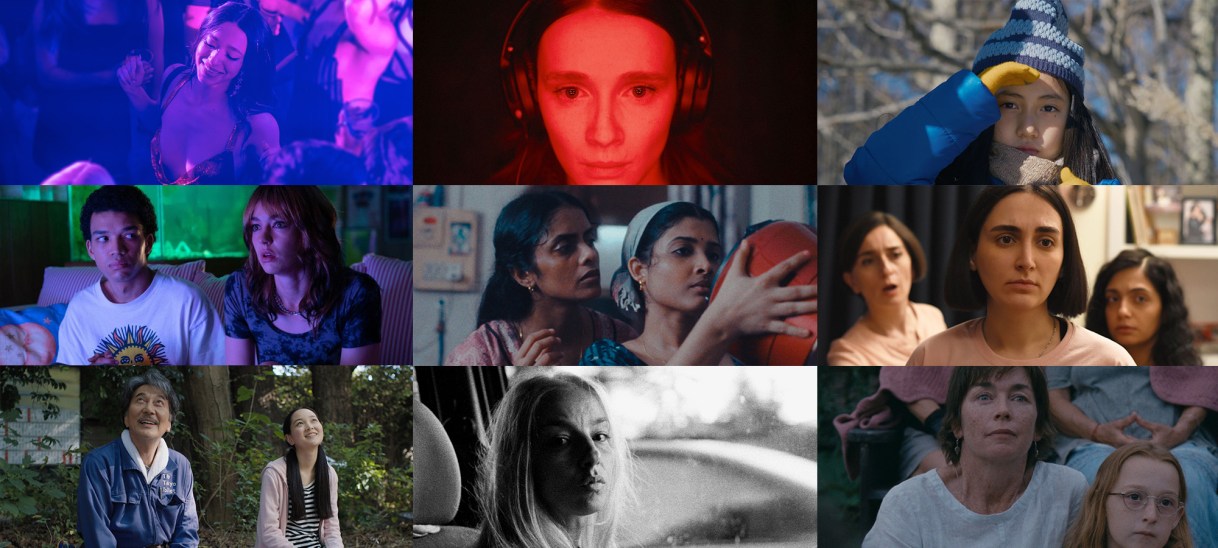
Best of 2024: Darcy’s Picks

With 2024 having drawn to a close, Rating Frames is looking back at the past twelve months of cinema and streaming releases that have come our way. In the second of our series of articles, Darcy is taking a look at his ten favourite films of the year that was.

With a dense collection of titles with no clear standout, 2024 was the hardest year to rank recent releases in a long time. With a collection of new voices and revered personal icons, 2024 had a wide mixture of films that went head-on in tackling modern life, something that has felt lacking in the last few years. The only key omission to this list upon release is Ramell Ross’ Nickel Boys, a book I love from an exciting new artistic voice in the medium I’ve been desperate to see all year, which is releasing via Amazon at the end of the month. With that being said, I’m happy with how this list came together and hope these rankings get someone to check out a new exciting film.

10. Chime

I struggled with whether to include this short film by one of my favourite filmmakers Kiyoshi Kurosawa ahead of more ambitious titles (like The Brutalist 2024), but ultimately this sinister snapshot of reality was impossible to shake. In a year, and what’s shaping as a decade defined by crucial filmmakers reflecting on their lives and creative work, Kurosawa used multiple 2024 projects to open a dialogue with his early and defining work, even going as far as remaking his 1998 film Serpent’s Path with the same name but in the French language.

In Chime, Kurosawa continues his pursuit into modern perceptions of evil and the malice of life through a brief lens into a culinary school, with a student seemingly driven mad by a noise no one else can hear. What happens next is a remarkable level of cinematic dread that burrows deep into your skin, taking up space in your soul. Kurosawa’s ability to communicate complicated ideas within the short film format is astounding, making this film a must-watch whenever it becomes more widely available.

9. Perfect Days

In a year stacked with esteemed filmmakers returning with a work deep in reflection of their first works, none felt as complete as Wim Wenders’ Japanese-language quotidian reflection piece Perfect Days. Centring on a Shibuya public toilet cleaner, Hirayama, performed by screen legend Kôji Yakusho, Wenders’ film reflects his global curiosity and evolving perspective on humanity through humour and grace. It will be a film I return to often in the coming years.

8. Janet Planet

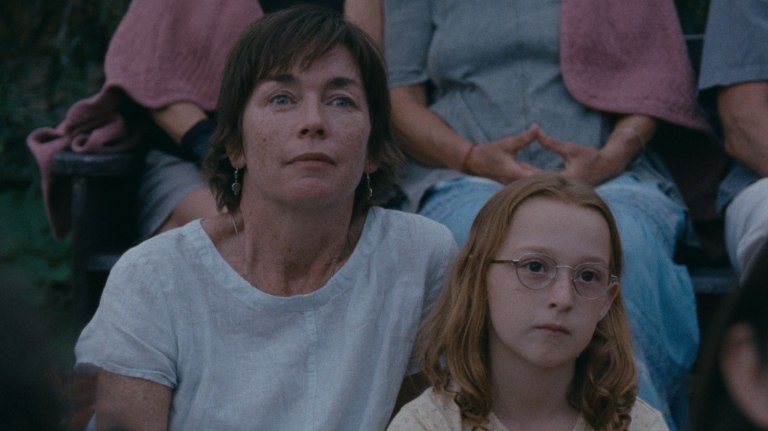
Janet Planet is a film that knows the smell and crunch of autumn leaves outside a family home that can define a childhood. Annie Baker’s debut work in the cinema space (after years as one of Broadway’s great unsung playwrights), inhabits the in-between with an honest curiosity.

Centring on a wonderful child performance by Zoe Ziegler as the 11-year-old Lacy and her mother Janet (a gravity-altering Julianne Nicholson), Janet Planet is keenly aware of the way a child can refract the adults around them, revealing new parts of a parent and child that is rare in its respect for both sides.

7. Red Rooms

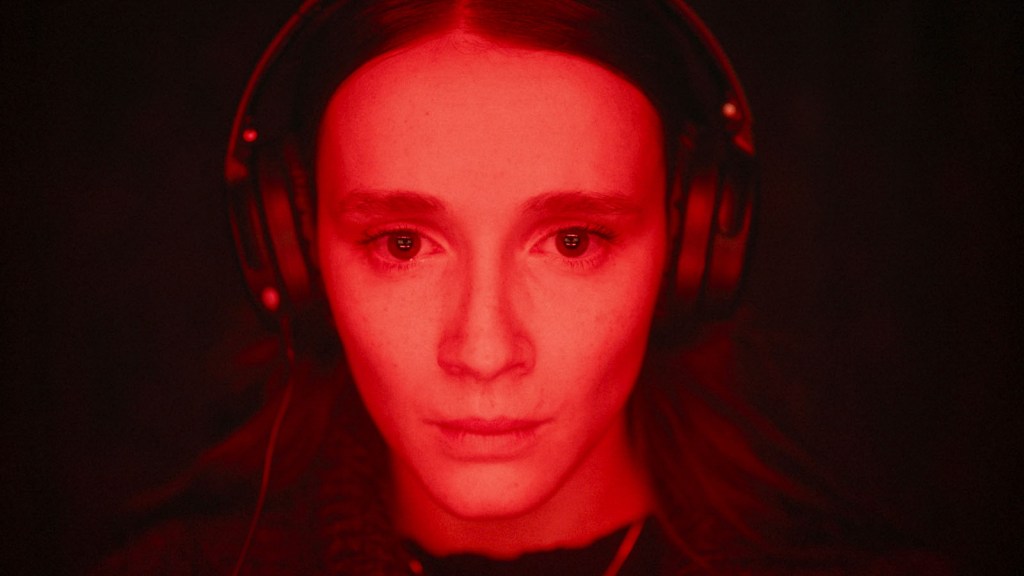
No film crawled under my skin more in 2024, where it continues to remain. While Canadian filmmaker Pascal Plante’s Red Rooms contains no violence, it is the most violently confrontational film you’ll encounter from the last year. At once a spiritual successor to David Fincher’s The Girl With the Dragon Tattoo (2011) and a keenly modern devolution of how the internet has isolated and festered our worst impulses, Red Rooms is one of the great underground discoveries of the year, a chilling interrogation into modern life through the lens of true crime, dark web violence, and modern voyeur culture.

At the front of the lens of the film is Kelly-Anne, portrayed by Juliette Gariépy as an all-time thriller character on the level of Patrick Bateman. A statuette beauty who spends her time modelling, crushing people in online poker, and obsessively attending the trial of Ludovic Chevalier (Maxwell McCabe-Lokos), a serial killer of adolescent girls who uploads his extreme violence to the dark web for those who wish to see, can. With Vincent Biron’s dexterous and compelling camera, we are intoxicated by a mesmerising oscillation between extreme unwatchability and an engrossing thriller, caught in a spiderweb where escape is too late. Achieves a lot from very little.

6. Evil Does Not Exist

The best score of the year can be found in Ryuichi Hamaguchi’s follow-up to this decade’s best film Drive My Car (2021), Evil Does Not Exist (more than halfway through the decade these lists should be beginning to solidify), with its elegiac jazz progressions that evolve into a haunting rapture from Eiko Ishibashi.

As a tale of eco-modernism that leaves room for the farcical ways contemporary metropolitan life seeks to corrupt what remains of the natural world which displays Hamaguchi’s breadth and quality as a writer. When consultants for a work retreat glamping company seek to operate within the small village of Mizubiki, they are confronted by an uncooperative community.

Like its overwhelming musical compositions, Evil Does Not Exist climaxes in a confounding but engrossing final moment that lingers and provokes long after you leave. Ishibashi and Hamaguchi are carving out a place as the composer-filmmaker collaboration which the industry should be measured up against.

5. Anora

The unexpected hit out of Cannes, making it the first American film to win the Palme d’Or since Tree of Life (2011) on top of being a Best Picture contender, Sean Baker’s eighth feature Anora is larger and broader than any film he’s made before while still capturing his uptempo yet sobering look into the contemporary American underbelly.

The modern chronicler of contemporary fringe America maintains his scepticism-bordering-on-cynicism about his homeland throughout his filmography, which is stretched to a compelling breaking point here. The internet has explained the film as a modern-day Pretty Woman (1990) by way of Uncut Gems (2019) with a Goodfellas (1990) like structure, but Sean Baker and star Mikey Madison are more interested in exploring how Ani is placed within different worlds than how the world changes her. Anora is a fully realised character that still carves out space to surprise us in moving and memorable ways.

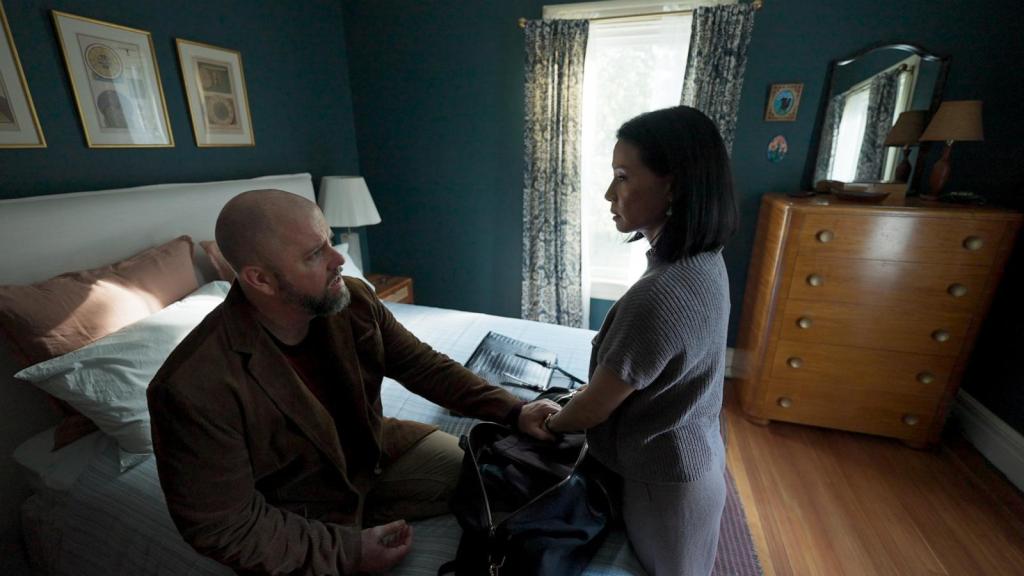
4. The Seed of the Sacred Fig

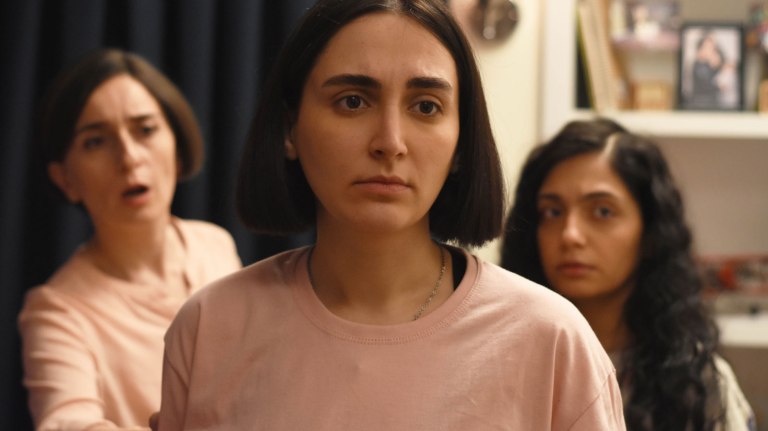
A film with a backstory as compelling as its on-screen drama (filmmaker Mohammad Rasoulof, the cast and creatives were forced to flee during production due to a warrant out for their arrest in Iran for filmmaking that goes against the regime), Rasoulof’s The Seed of the Sacred Fig speaks generationally about the modern Iranian moment through the language of family drama and genre filmmaking.

Through the use of social media footage from a recent student protest that turned violent—surprisingly a late addition in the editing process once they had fled the country—Rasoulof creates a certain surreality that arrives through this directness. This allows the simmering political drama to expand past the confines of the narrative into an explosive condemnation of authoritarian rule. While its final tonal shift won’t be for all audiences, it complicates and transforms the film into something larger and more elliptical than its humble and understated beginnings.

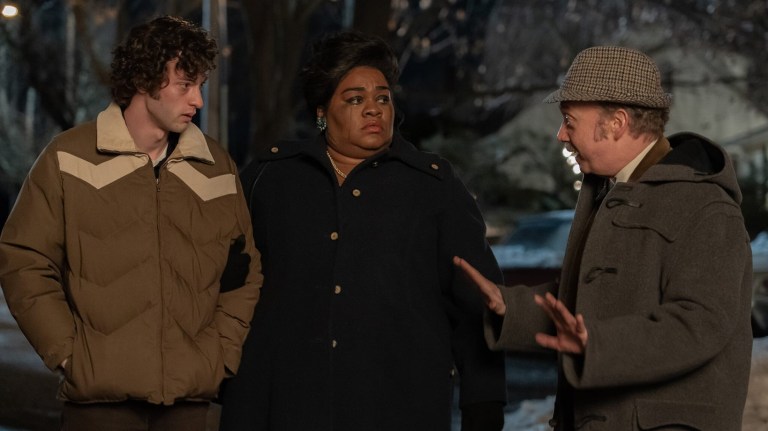
3. I Saw the TV Glow

In the days since the passing of the great David Lynch, much has been made about how modern cinema has increasingly lacked this effervescent feeling come to be known as ‘Lynchian’. But with the emergence of Jane Schoenberg and their second feature, I Saw the TV Glow in 2024, that essential Lynchian sensation that has defined indie filmmaking for 40 years has returned to breathe new life into our contemporary world.

With a close kinship to Twin Peaks: Fire Walk With Me (1992) — in contention for best film of the 90s — I Saw the TV Glow ties 90s television fan nostalgia with the dissociative world of the adolescent trans experience that is willing to go to some deeply uncomfortable depths of the soul. Schoenberg’s modern reflection of the trans experience as a Lynchian world won’t place it within the awards season conversation, but alongside the extraordinary documentary No Other Land (2024), I Saw the TV Glow is the only essential film to arrive in theatres this year.

2. Do Not Expect Too Much From the End of the World

The funniest film of the year is also the hardest to wrestle with. Rade Jude is indie cinema’s great punk rocker, throwing rotten fruit at those that need it. After releasing what will eventually be seen as the definitive Covid satire, 2021’s Bad Luck Banging or Loony Porn, the Romanian satirist Jude returns to take aim at the capitalistic infrastructure of modern Bucharest, the gig economy, and the iron claw multinational corporations hold over even small production companies just trying to get by.

With Ilinca Manolache at the centre of his film as production assistant and part-time TikTok satirist Angela, Jude has the perfect muse for life in the Romanian capital, strained in every direction to get by, all for the financial security of a soulless multinational corporation, personified by a great cameo by Nina Hoss.

With its expansive 163-minute runtime, Jude holds many feet to the fire, concluding with a virtuosic yet simple long take for a workplace safety video which will prevent the families from suing the company for culpability, that both cements and brushes off its themes and frustrations like a poetic middle finger to the ruling class.

By culminating this long-form screed on modernity with a capitalistic nightmare version of Bob Dylan’s iconic music video for Subterranean Homesick Blues, with the family of a worker injured at work told to hold up blank pages meant to express their side of the story but will be written in post instead of in their own voice, Do Not Expect Too Much From the End of the World cements Jude as the modern satirist to compare all others to. No one is doing it like him, but I wish more tried.

1. All We Imagine as Light

In a deep movie year with no real standouts like previous years have had, picking a number one was exceedingly difficult. That being said, no film expanded and deepened in my mind on rewatch as Payal Kapadia’s All We Imagine as Light. I was recently able to review this film properly since its showing at MIFF left me staggered. Kapadia’s soulful rendering of modern-day Mumbai is gorgeous and a must-see while it remains in theatres.

With a refined hand through documentary work, Kapadia flourishes in small moments. Whether it’s the embrace of a rice cooker given by a distant-slash-estranged husband working in Germany, or the small gesture of helping an older colleague move her things back to her old home after being wrongfully evicted, All We Imagine as Light embraces the aching emotionality of the quotidian, knowing these fleeting moments create a mosaic that reflects the light of human experience.

Honourable mentions: The Brutalist, Ryuichi Sakamoto: Opus, Challengers, No Other Land.

Best of 2024: Arnie’s Picks

With 2024 having drawn to a close, Rating Frames is looking back at the past twelve months of cinema and streaming releases that have come our way. In the first of our series of articles, Arnel Duracak is taking a look at his ten favourite films of the year that was.

While my 2024 viewings came in just short (36 new releases) compared to my 2023 viewings (37), there were a few titles that I had anticipated for a while and that really delivered to land on my top 10 list. Comparatively, I do think my 2023 top 10 was a stronger one overall, however I was pleasantly surprised to see what titles rounded off my ranking. I was also rather disappointed that I didn’t manage to catch some films at the cinema like The Brutalist, Didi and I Saw the TV Glow, however I’m hoping that 2025 will be a bigger year for my cinema viewings.

10. Blink Twice

As far as compact thrillers go, you’ll be hard pressed to find one as spicy, twisty and horny as Blink Twice.

Zoë Kravitz manages to blend just the right amount of suspense and teasing while bringing plenty of edginess and humour about through her script — and this is her directorial debut, mind you!

Channing Tatum also flips the charming sex appeal he’s come to be known for on its head by using it as a means to deliver a punchy, sometimes intense, performance.

While the film didn’t blow me away in ways that a similarly paced and executed film like Get Out (2017) did, Kravitz never lost my attention, even if the ending rounded off rather cheesily.

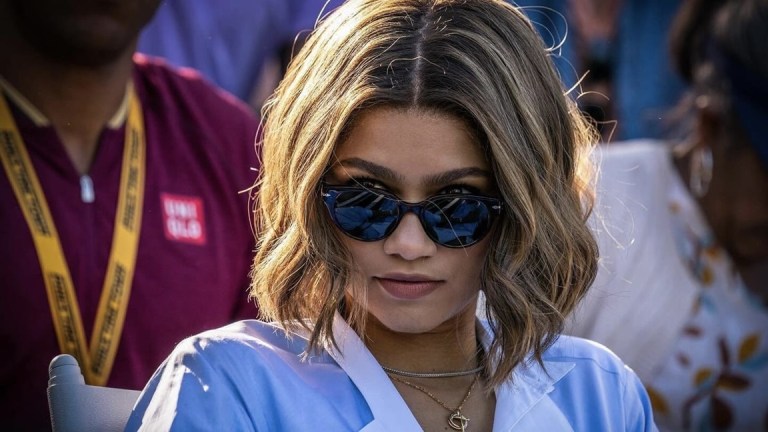
9. Challengers

Speaking of spicy and horny, Luca Guadagnino’s Challengers saw the phrase “sexy tennis” circulate all over social media.

It’s his second film of 2024 along with Queer (he’s had a busy year!) and it served up a hot and heavy treat, with Zendaya, Mike Faist and Josh O’Connor acting out a love triangle both on and off the court.

I don’t remember too much from the film which is probably why it’s lower on my list, but one thing that did stick in my mind was Trent Reznor and Atticus Ross’ pulsating techno score which was stuck in my head for at least a week after seeing the film.

The final sequence did also stick in my mind as being one of the most creative, well executed from last year, with zany camerawork and all around clever direction.

The film is worth a watch, especially when you hear that the great Andy Murray admitted he “didn’t really understand it.”

8. Gladiator II

Almost 25 years have passed since Gladiator (2000) took the world by storm, and Ridley Scott finally delivered his much anticipated sequel.

To Paramount’s relief, it proved to be a success, both at the box office (grossing over $400 million) and in its reviews and ratings.

As a massive Ridley fan, Gladiator II more than makes up for the sloppiness of Napoleon (2023) as it picks up some years after the first film and brings a level of freshness to the blockbuster scene now that Marvel’s reign has slowed down.

While the film does play it a bit too safe by essentially treading similar ground in terms of plot and structure to the first film, it rounds off the original with flashier set pieces and just… more… everything. I mean, sure, John Mathieson bitched about Ridley’s abruptness with shooting things without properly lighting a scene while on a podcast (no doubt a big reason he’s been able to churn out as many big films in recent years as he ever has), and sure there might be some historical inaccuracies (was the Colosseum really that flooded and filled with sharks?), but it’s Ridley Scott so that’s got to count for something?

7. Beetlejuice Beetlejuice

If you thought the length of time between Gladiator and its sequel was long, it’s been almost 40 years since Beetlejuice (1988) came out, but alas, Tim Burton’s long awaited follow up to his classic proved a success as well, raking in over $400 million at the box office.

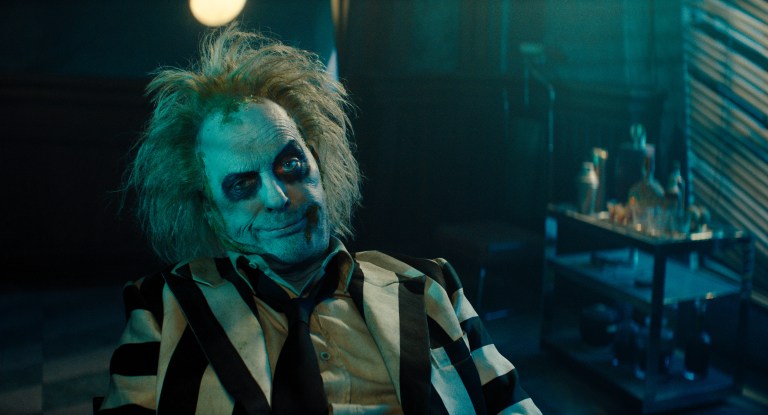
Beetlejuice Bettlejuice takes all of the quirkiness of the first film and goes bigger at every turn. While the plot isn’t as refined as the original, Burton takes audiences deeper into the ‘Afterlife’, with production designer Mark Scruton creating a world teeming with tangible sets and props. It’s a testament to how Burton likes to work which is very much by not taking shortcuts, building out sets and staying true to the practicality from his beginnings.

Frequent collaborators Danny Elfman and Colleen Atwood are also back and do a great job reinvigorating the world through their craft. Of course, what is a Beetlejuice sequel without the man himself; Michael Keaton, while noticeably older and wrinklier, still delivers his all in just as whacky a performance as in the original.

Burton’s latest muse, Winona Ryder successor (but not replacer), Jenna Ortega, fits the bill of the director’s artistic vision and really takes her learning’s on Netflix hit, Wednesday, to deliver a sound performance.

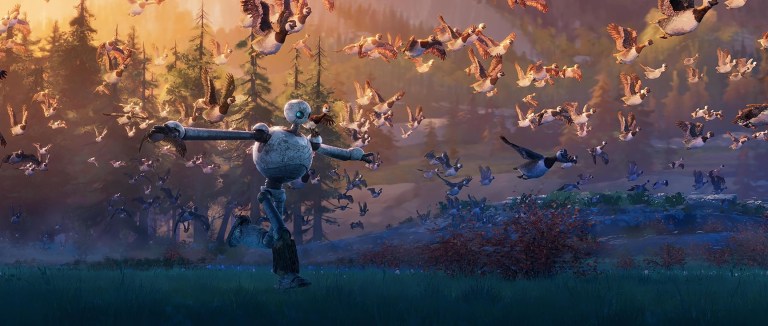
6. The Wild Robot

With some big titles in animation popping up in the last year ranging from Inside Out 2, Moana 2, Flow and Memoir of a Snail, it was the beached service robot who took the cake for me.

While I’m yet to see the latter two of those animations, Chris Sanders’ The Wild Robot is a wholesome animation that doesn’t ram woke messaging down your throat and undercut genuine storytelling with political agendas. The film is enveloped in a coat of warmth and lets its heartfelt story of companionship do the talking.

The animation is equally unique and has a Bob Ross quality to it in how the environment is presented, with a scratchy, paint-brushy style that gives it its own flavour among some of those aforementioned films.

When a film can make you care about whether a young goose will be able to learn how to fly, I think that’s a winner.

5. Megalopolis

For anyone that has tried to review Megalopolis out there, I commend you but I don’t envy you.

Francis Ford Coppolla’s self-funded, futuristic epic became an unexpected comedy at the screening I attended along with fellow Rating Frames colleague, Darcy.

Many have written off the film as being a nonsensical, convoluted mess, but in that sentiment lies the very foundation of the film’s angle which is that shit just doesn’t make sense and the more we try to make sense of the world around us while ignoring its structural flaws, the more we fail to see the bigger picture and prevent our own demise.

That interpretation may well fall on deaf ears and others may simply say “whatever Coppolla was smoking, I’ll have some of that”, but Megalopolis is a trip in and of itself and beckons to be experienced.

4. Anora

After the success of The Florida Project (2017) and Red Rocket (2021), Sean Baker’s Anora hits like a freight train and some more. In what is an emotional roller coaster with a clever script that’s at once humorous and full of anguish, Anora caught me off guard and left me in limbo with its final shot.

Sean Baker has a knack for showing people that deserve better in life go through the motions, often coming agonizingly close to some form of a “break” from the difficult lives they lead only to have it all snatched away in the blink of an eye.

He’s a real actors director, with those helming his productions being laid bare (sometimes literally) as he gets the most from their performances. Whether that’s Simon Rex struggling as an actor before Baker gave him the reigns to struggle as a washed-up pornstar or Mikey Madison this time around as a struggling stripper who thinks she’s hit the lottery with a Russian billionaire’s son — the central performance is the make or break aspect to his films.

Anora will make you laugh, cry, laugh some more and then break you by the end, and it just leaves me craving Baker’s next work.

3. Ferrari

As a Michael Mann diehard, watching Ferrari was like a wet dream.

Mann’s films are characterised by their brash, uncompromising antiheroes, figures who are driven and work oriented, who struggle to balance the personal with the professional. It’s why when his film about automotive titan Enzo Ferrari was announced, it just made perfect sense as the next obsession for him.

While Ferrari is less brazen in terms of its set pieces, playing out more as a melodrama that’s focused on a period of Ferrari’s life, Mann’s ability to build out and showcase Ferrari’s larger-than-life status and the constant tension he manages to build until that final harrowing sequence, is just vintage Mann.

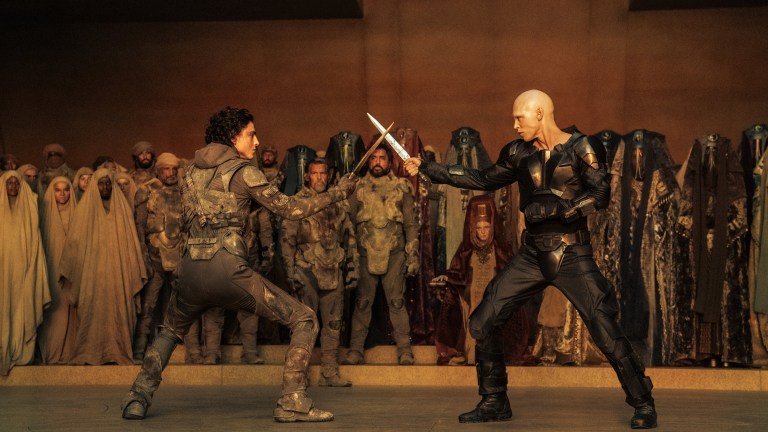
2. Dune: Part Two

Denis Villenueve’s Dune: Part Two took the learnings of the first film and doubled down on them even more to create a bigger, more expansive world from Herbert’s writing.

The fact that more happens in the second half of the book compared to the first is represented on-screen, with greater scale, jaw dropping set-pieces and just more oomph compared to the first film which prioritised more methodical, patient worldbuilding and establishing.

The Arrakis of Part Two looks incredible, with Greig Fraser once again using his eye for macro detail to shoot the deceptively beautiful sandy vistas at a high quality — earning him a deserved Best Cinematography nomination at the Oscars. That Villeneuve once again didn’t receive a Best Director nomination at this year’s Oscars is a massive miss on the Academy’s part, but Part Two‘s success at the box office and critical acclaim hopefully make up for that.

1. Furiosa: A Mad Max Saga

In what was my perhaps my most anticipated film of 2024, George Miller’s Furiosa: A Mad Max Saga blew me away, coming close to the perfection of Mad Max: Fury Road (2015).

No one understands this world better than Miller, and with Furiosa he’s gone for bigger and better at almost every turn. Looking back, my biggest fault with a pretty faultless film is that it’s still anchoring itself to the quasi-mythological Max character as its selling point (at least in the title, and towards the end). It’s hardly an issue, but Furiosa is very much a standalone piece from Miller’s original trilogy, with Fury Road even being a standalone given Mel Gibson obviously wasn’t involved in that film, and the screentime Hardy did have rendered him more a side-character to Charlize Theron’s Furiosa.

If any of that can be viewed as a shortcoming (and even I’m hardly convinced of it as I’m writing this), then Furiosa‘s high-points just took the cake for me ahead of anything else in 2024. It might be that seeing this in IMAX and hearing the roaring V8 engines in that soundscape was the cinema experience I’d be craving, but more than that, Miller’s prequel doesn’t compromise on creating a unique, new experience amidst all of the familiarity it’s bringing back to entice lovers of the previous films — Fury Road, especially.

From every car flip, gun shot and extraordinary set-piece, Furiosa is a ride worth taking and proves that taking a practical route to filmmaking wherever possible is what really creates the authentic, lived-in atmosphere that a post-apocalyptic film like this is striving to achieve.

Honourable mentions: Inside Out 2 and Monkey Man

Wolf Man takes a Bite out of a Monster Classic

Rating: 3 out of 5.

Wolf Man preview screening provided by Universal Pictures.

It’s been nearly five years since Leigh Whannell’s Invisible Man (2020) took audiences by surprise and became an instant hit while re-imagining a classic Universal Monsters story for a modern audience. His latest film, Wolf Man (2025), written along with co-writer and partner Corbett Tuck, and based on The Wolf Man (1941), offers a fresh new spin on another classic while touching on concerns around the duality of man and beast, sickness and health.

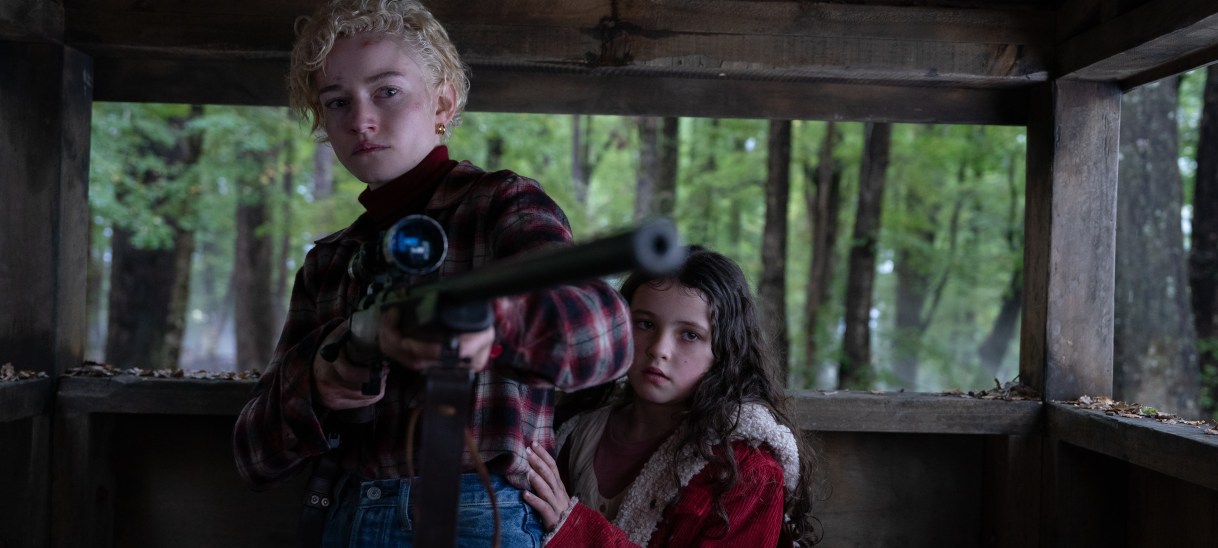
If Invisible Man was a compact horror/thriller that cleverly utilised space, subtle pans and tilts to create brewing tension, then Wolf Man scales things back even more, focusing its events around an eerie house in a grim Oregon, foresty setting where danger lurks. It’s where Blake (Christopher Abbott), his wife Charlotte (Julia Garner), and daughter Ginger (Matilda Firth), find themselves after a short New York-set introduction reveals that his father has passed away and he’s been left with the keys to his old house.

In true horror fashion, a tight strip of road with towering trees is the first sign of the unease and helplessness that awaits, sitting in stark contrast to the bustling, comfortable concrete jungle the family is used to. And it doesn’t take long for this little getaway to go south as their moving truck tumbles off the road after veering last minute from a figure in the middle of the road. A lot happens and it happens really quickly, including Blake’s gradual transformation into his wolf-esque appearance after he contracts a disease upon realising a cut he received on his arm came not from glass but from the devious figured that sent them tumbling.

In this way, Wolf Man is paced rather abruptly, with Whannell wanting to get you into the thick of the suspense as soon as possible. It’s a less daring exercise in tension compared to his last feature and feels more routine in how it hits genre beats. There’s nothing inherently wrong in this, it just feels like a return to earlier roots in that he could seemingly tackle something like Wolf Man in his sleep.

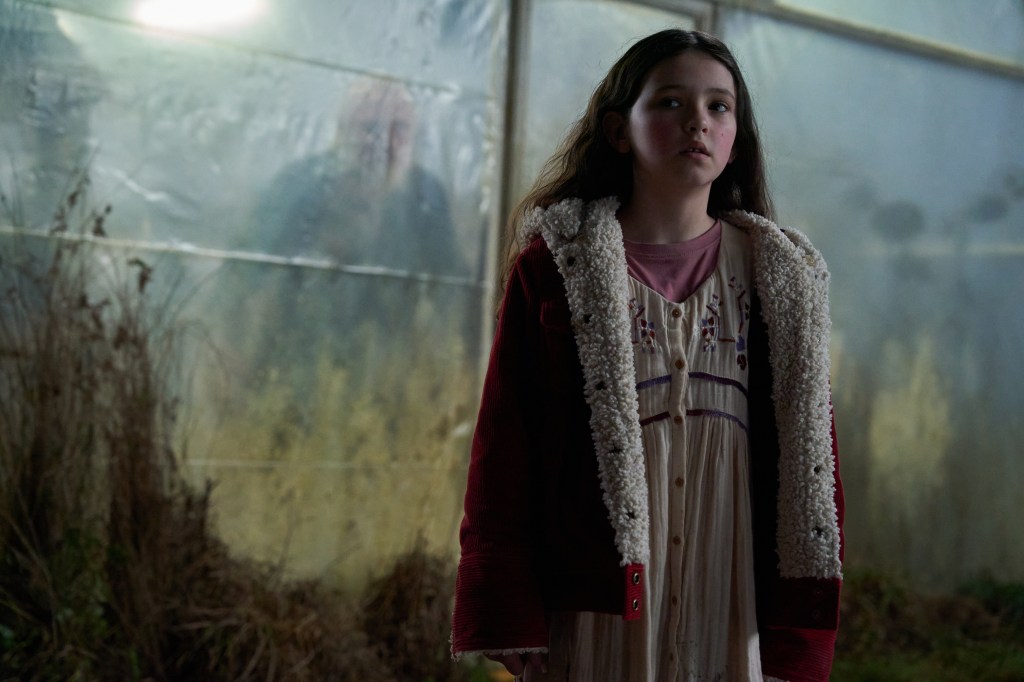
Ginger (Matilda Firth, right) in Wolf Man, directed by Leigh Whannell.

Unlike the subtly of the camerawork, which Stefan Duscio has managed to balance out quite nicely with Whannell’s stylish direction across their three film collaboration, the writing can feel on the nose at certain points like when Ginger indulges her father’s ‘guess what I’m thinking’ game at various points or the constant “daddy” and “mommy” dialogue which sticks out like a sore thumb.

Fortunately, like with Elisabeth Moss’ brilliantly grounded performance in Invisible Man, Julia Garner speaks as much through her eyes as she does through her mouth, with her signature fluttering eyelids at once conveying motherly resoluteness as she protects Ginger, while showing empathy for her husband’s deteriorating state. Her performance goes hand in hand with Whannell’s artful flourishes and Duscio’s tight camerawork, the latter of which seems to favour a more contemplative cinematic approach this time around, with shots that linger heavily before bursting to meet the frantic-ness of a chase.

There’s a few moments where the camera circles around Blake and his family and shows how his worsening state is affecting his vision, almost heightening his senses while blurring his vision to those around him; this is one of those stylistic choices that the film needed more of as it gave an extra layer to a character who might otherwise simply fall into the antagonist category.

While less horrific and more melancholic by the end, prior to the screening, Whannell revealed that part of the direction of the film was derived from a friend who had passed away after her health deteriorated, and just having that context added more weight to Blake’s rapid decline as his family try and keep him from falling out of himself. In this way, Wolf Man has a sentimentality about it and comes full circle in ways that will creep up on you as you feel the closing sequence nearing, with a final shot that will leave a mark.

Wolf Man opens nationally from today.

All We Imagine as Light is Unforgettable

Rating: 4.5 out of 5.

Screener provided by Rialto Pictures.

“I’ve lived here maybe 23 years. But I feel afraid to call it home. There’s always the feeling that I’ll have to leave.” These opening words, by a nameless individual, ring out throughout Payal Kapadia’s extraordinary film All We Imagine as Light (2024), shot against the backdrop of Mumbai, focusing on the women who inhabit it.

The most soulful film in years is also perhaps the best feature of the year, documentarian turned fiction filmmaker Kapadia exploding onto the scene with an honest and poetic portrait of humanity in modern India. A powerful blend of personal womanhood inside the political sprawled across modern Mumbai, Kapadia’s gorgeous and lyrical film centres on three multigenerational nurses navigating a world unwilling to accommodate their lives.

Centring on a pair of nurses, seasoned veteran Prabha (Kani Kusruti), and the youthful and expressive Anu (Divya Prabha), navigate an economically and politically uncertain time in Mumbai, along with older nurse Parvarty (Chhaya Kadam), who is facing eviction after the death of her husband. Prabha is dealing with the extended absence of her husband. This arranged marriage almost immediately left Mumbai to work in Germany, sending gestures to her home like a European rice cooker that only highlights the void he has left. On the other hand, Anu is attempting to balance her life while forming an interfaith romance with Muslim boy Shiaz (Hridhu Haroon), an increasingly contentious issue in current-day India.

Kani Kusruti as Prabha in All We Imagine as Light.

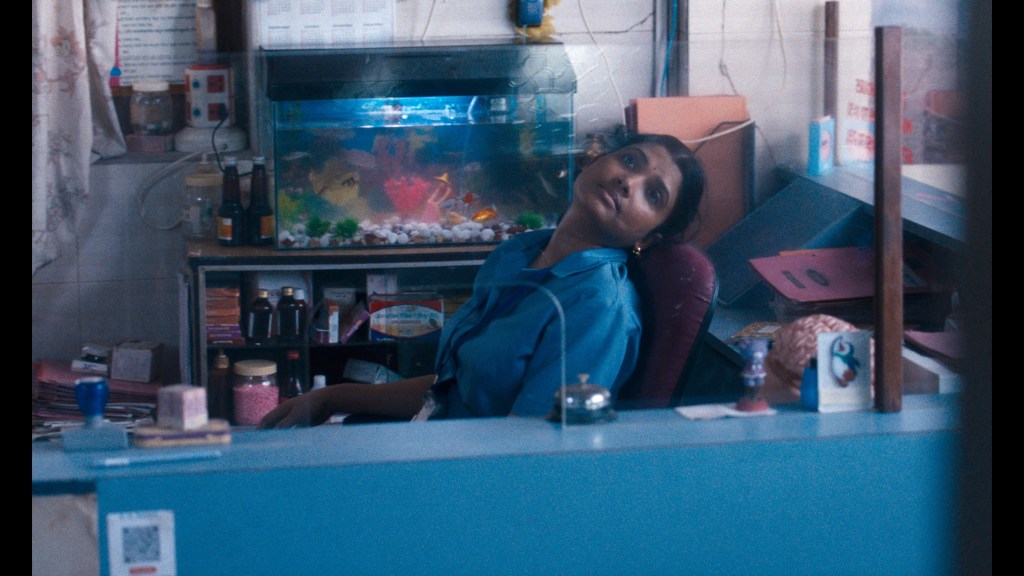
We first see Anu and Prabha on public transport on their way to work, inside the lyrical six-minute opening sequence that guides you immediately into the world Kapadia is sharing with us. Anu is asleep on her side on a train seat, demonstrating her naive sense of safety in her position while also telling the audience her level of preparedness to arrive at work. In the immediate next shot, we see Prabha, gracefully shown in a medium closeup holding onto the pole of the same train for stability (seen above). By only showing Prabha from the shoulders up here, Cinematographer and frequent collaborator Ranabir Das portrays the battle-hardened nurse in grace with the world around her, yet never settled into one place.

There is a fear this remarkable film will be lost in the awards race shuffle due to India’s increasingly conservative film body and government not submitting it for the Academy Awards, even with the film winning the Grand Prix at Cannes. This is a sad but unsurprising occurrence after Kapadia emerged onto the film scene with her 2021 documentary A Night of Knowing Nothing, also critical of India’s patriarchal system.

The sweet centre of the film lies in the blossoming romance between Anu and Shiaz, a relationship that blends religion and the modern political moment in the city. In a series of push-pull romantic moments which includes a heartbreaking yet comedic booty call where Anu must purchase a hijab to visit him in the Muslim district where he lives. Kapadia avoids easy exits with this romance, concluding powerfully with an honest and poetic moment of acceptance and beauty, tied into an honest moment of private security.

In contrast to this romance, Prabha and her complicated relationship with her absent husband fills the remaining emotional bandwidth. Born of an arranged marriage that ties her to the city she does not call her own. In the opening prologue, a resident tells us, “That’s life. You better get used to the impermanence”. In a film centred on the relationship between people and the places they inhabit, this line pangs with an honest awareness.

Divya Prabha as Anu in All We Imagine as Light.

A film that comes to mind while watching Kapadia’s film is Steve McQueen’s Lover’s Rock (2020) from his Small Axe series, and not just because composers Dhritiman Das and Topshe’s playful piano score could’ve fallen out of one of his films. The short and sweet feature is in contention for the film of the decade, a complicated work of desire and connection inside a wealth of sumptuous visual storytelling and guile that simply overwhelms you. Both films use colour and vivid travelogue-styled cinematography to embrace the human connection of place. What separates the two films is Kapadia’s deceptively critical eye when depicting modern Mumbai, especially the three women’s place within it. 

The slow, simmering drama underneath the film’s central pair is the wrongful eviction of a third nurse at the hospital, the older woman Parvaty. Her husband has died, removing her right to live in her own home. The potency of the feminist politics that simmer underneath All We Imagine as Light is in the grounded reality of the characters’ situation, one they are helpless to improve, finding solace in their own uneasy but accepting companionship.

The film operates within two acts, the first within the city that flows downstream into its latter half as the trio of women go to the beachside village that Parvaty grew up in. Kapadia, through her documentary lens, views characters as people who have been steeped in a certain place like tea, becoming more like a place the longer you inhabit it. While Mumbai is described as a place of impermanence and instability for the characters we meet, it is only in venturing out of the rapid city do they begin to view their life and their wants more clearly. In its final moments, would Anu and Shiaz ever have the courage to meet Prabha without this opportunity outside the city? And would Prabha’s spiritual exchange with her husband which opened her eyes to what she is holding onto and what she needs to give up to change have occurred in the melancholy that followed her throughout Mumbai?

Kapadia, with a refined hand through documentary work, flourishes in small moments. Whether it’s the embrace of a rice cooker given by a distant-slash-estranged husband working in Germany, or the small gesture of helping an older colleague move her things back to her old home after being wrongfully evicted, All We Imagine as Light embraces the aching emotionality of the quotidian, knowing these fleeting moments create a mosaic that reflects the light of human experience.

All We Imagine as Light is in select theatres now.

Swinton and Moore Excel in The Room Next Door

Rating: 3.5 out of 5.

The Room Next Door preview screening provided by Sony Pictures.

The blurred lines between long-term friends, and lovers, and the rapid progression of time once a career begins to slow have become legendary Spanish auteur, Pedro Almodóvar’s, chief fascination in recent years, percolating and expanding in unique ways that complicate his melodramatic stories. With an extensive filmography of Spanish melodramas and knotty adult dramas spanning almost 50 years, Almodóvar is exploring a new world of cinema with his new Golden Lion-winning feature The Room Next Door (2024); his first English-language feature film and only his third work of adaptation.

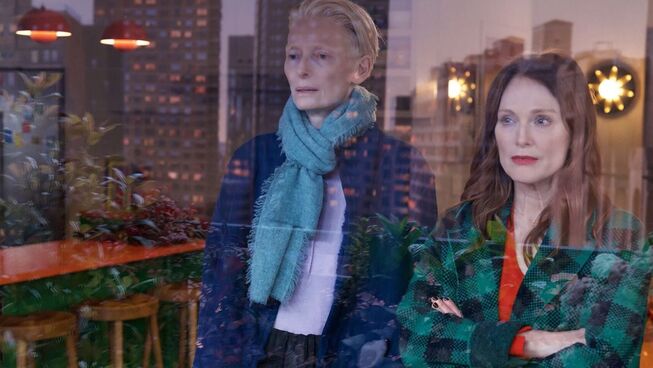
After learning of a recent cancer diagnosis from an old friend, novelist Ingrid (Julliane Moore) rekindles the relationship from her youthful days at a magazine with war correspondent Martha (Tilda Swinton). In light of this diagnosis, the rekindled friendship forms a compelling inseparability, tying the melodrama to some probing ideas on the connection between relationships of all kinds and the presence of death. This friendship is immediately pressurised as Martha decides she doesn’t want to continue treatment, instead acquiring illegal medication to end her life on her own terms, in a secluded house in Upstate New York, with Ingrid accompanying her in the room next door. While not always effective as a knotty dramedy, The Room Next Door is a worthy modern entry in this new phase of Almodóvar, a singular voice in cinema.

Merging a cinematic melodrama inside of an Edward Hopper-influenced (including a centrally placed painting for maximum impact) backdrop shouldn’t sing this harmoniously, but Almodóvar makes it look like breathing. In his first non-Spanish-language feature (after his uneven but charming short Strange Way of Life from last year), Almodóvar’s passion for American literature is evident. However, the chasm between his Spanish lyricism and his English translations flitters haphazardly throughout the film. Like panning for gold in a murky riverbed, The Room Next Door contains beautifully poetic moments of humanity in the face of the end, while many other lines and whole scenes fall flat. 

Tilda Swinton and Julianne Moore in The Room Next Door.

Luckily, the film is kept afloat by two of the best working actors and the best candidates to shepherd the Spanish auteur’s unique form of melodrama into the English language. Moore and Swinton are extraordinary together, quickly adapting to the certain quirks and manners that make Almodóvar’s style stand out in modern cinema. While the film relaxes into its story slower than his previous films, no doubt a complication from this being his first feature in English, its unique blend of offbeat humour and all-encompassing melodrama creates a luscious bedrock to lay in the sun with.

Even with the film adapted from the 2020 novel What Are You Going Through by Sigrid Nunez, The Room Next Door is a spiritual sequel to Almodóvar’s brilliant and tangly Pain and Glory (2019). While not as successful as the Antonio Banderas-led dramedy that operates achingly close to the auteur’s own life, The Room Next Door still excels in exploring contemporary ideas of loss and death in an increasingly uncertain world. In the second half of the film, fluttering between climate change doomsday scenarios brought on by John Turturro’s character Damian — an environmental academic and a previous lover of both Martha and Ingrid — and the criminal coverup necessary to keep Ingrid legally protected from Martha’s assisted suicide plan, is a rush of blood to the head, expanding this seemingly intimate story about two friends into a wider conversation about modern living. While unsuccessful in bridging this gap between late-stage friendship scenarios and the crushing weight of contemporary concerns, Almodóvar’s style still makes for an engaging and breezy ride through Upstate New York. 

A final poetic choice involving Swinton’s daughter Michelle will be divisive, simultaneously poking holes at the film’s clear eyed look at death while also exploring notions of interpersonal legacy in moments of tragedy. Much like Pain and Glory, Almodóvar has given audiences a full meal to chew on for years to come.

The Room Next Door is in select theatres Boxing Day.

Sonic the Hedgehog 3 Takes the Franchise to New Heights

Rating: 3.5 out of 5.

Sonic the Hedgehog 3 preview screening provided by Paramount Pictures

If Sonic the Hedgehog (2020) introduced audiences, both new and old, to Sega’s speedy blue gaming icon, and Sonic the Hedgehog 2 (2022) brought with it deeper lore surrounding the Sonic universe (like Chaos Emeralds and wider characters), then Sonic the Hedgehog 3 (2024) is the sum of those parts. At once taking the fun and action to new heights (literally) as well as introducing more new characters and doubling older ones up (even more literally), the third entry in this ever growing series —which has churned out three films in five years— continues the zoomy momentum by pulling out added franchise goodies and showing no signs of slowing down.

Returning to the director’s seat is Jeff Fowler who seems to have found his groove with these films, directing them like pop culture pinball machines, however the spiritual core of them resides with Pat Casey and Josh Miller whose script finds a unique blend between action, comedy and emotional intelligence that breathes life into this revered franchise for the big screen —meaning everyone can get in on the fun.

All that said, Sonic 3 is more interested in going bigger at every turn. Sonic (Ben Schwartz), Knuckles (Idris Elba) and Tails (voice acting veteran, Colleen O’Shaughnessey) are finally the trio the series has been building them out to be and face a new threat in the form of Shadow (an aptly cast Keanu Reeves), a darker hedgehog who harnesses chaos energy that renders him dangerous and unpredictable. He comes into the picture almost instantly after breaking out of prison following 50 years of controlled sedation (with more of his backstory slowly unraveling).

Shadow (Keanu Reeves) in Sonic the Hedgehog 3 from Paramount Pictures and Sega of America, Inc.

From there, the movie fires on all cylinders, with Fowler’s kinetic approach to direction and the haphazardness of the editing really coming together to keep from any real moments of respite. We get chases throughout Tokyo, a Mission Impossible esque climax in London and a battle outside of Earth’s atmosphere — it’s an accelerated experience, but one that never threatens to become anything less than mindless, popcorn fun.

Speaking of fun, Jim Carrey is the standout here, playing two characters this time around: Dr Ivo Robotnik and his grandfather, Gerald Robotnik. Carrey steals every scene he’s in and is at the top of his game as he brings his whole overzealous being into the performances, using every trick in his book of physical humour to give these characters their own special place in the Carrey-verse of whacky weirdos. Whether it’s the whimsical banter and affection Ivo shows Gerald, the grouchy, bad-Santa esque vibe that Gerald exudes, or simply the floor crawls and random dance breakouts — Carrey is clearly having a ball and is reason enough to see the film.

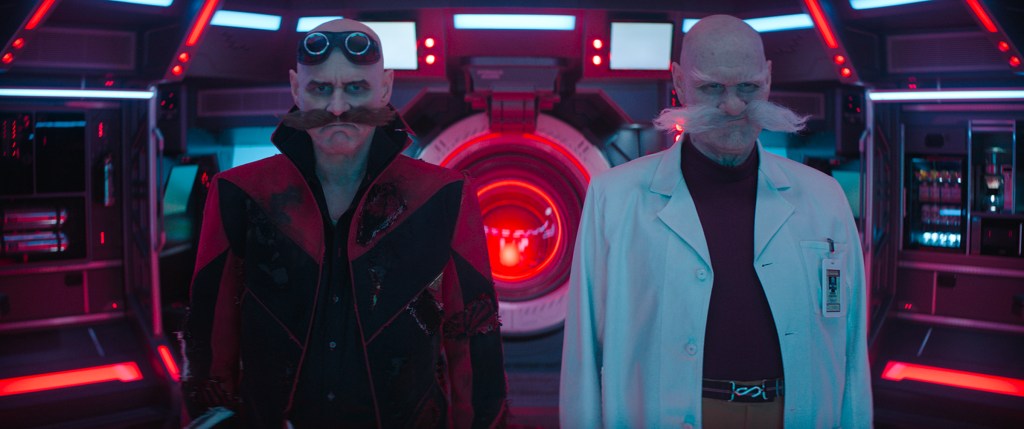
Jim Carrey as Ivo Robotnik and Gerald Robotnik in Sonic the Hedgehog 3 from Paramount Pictures and Sega of America, Inc.

There are other returning faces as well, namely in the form of Tom (James Marsden) and Maddie (Tika Sumpter), but like the humans in the latest spate of MonsterVerse films, they’ve really become more like a distraction rather than an addition to proceedings. Fowler uses Tom as an emotional bridge between Shadow and Sonic, to show they’re both fighting for the same thing (those they love, or the memory of those they love), but the film is at its boisterous best when it focuses on the fun and games.

For a trilogy of films that started off on the wrong foot with that atrocious initial Sonic design, to see just how well it’s recovered and continues to be received is a testament to the heart that Fowler and the rest of the cast and crew have poured into the franchise. Whether you take a liking to the Sonic universe or are just looking for something to see over the holiday season, Sonic 3 is the perfect family film with enough humour to not feel overbearing and enough action to keep you on the edge of your seat.

Sonic the Hedgehog 3 spins into cinemas from Boxing Day.

Mufasa: The Lion King is a Serviceable Origin Story
Rating: 3 out of 5.

Mufasa: The Lion King preview screening provided by Disney

When word first came that Barry Jenkins’ next project after his hit mini-series The Underground Railroad (2021) would be an origin story about Mufasa from The Lion King (1994), it’s safe to say that there were some brief head-scratch moments. After all, Jenkins hasn’t really had a miss in his filmography and there are always doubts when it comes to beloved IP taking similar or new directions. Mufasa: The Lion King (2024) is no Moonlight (2016), but it does offer a new light on one of Disney’s most celebrated animated characters, bringing his story (even if James Earl Jones’ iconic voice is no longer with us), to life on the big-screen.

From early on, it’s safe to say that Jenkins didn’t really have too much leg room to stretch out to, with the world of Mufasa being rooted in the Pride Lands of Africa. In that sense, his options were clearly limited in terms of scope and the type of origin story he could tell about a lion rising up through the ranks. In this way, Mufasa takes a bite out of The Lion King‘s notebook by focusing on a tragic event in the form of a flood (told through a flashback sequence by John Kani’s mandrill, Rafiki) that would shape cub Mufasa and inform his life thereafter.

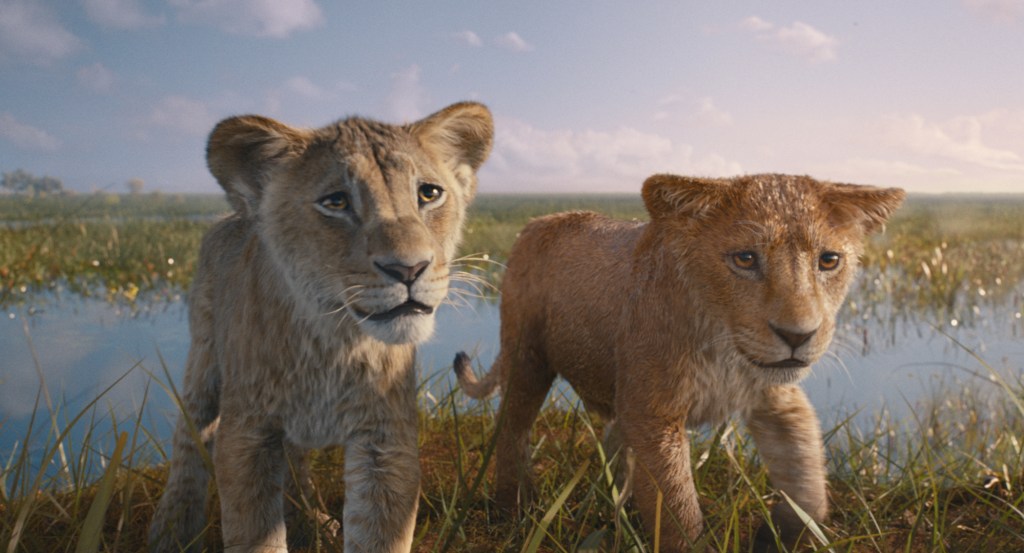
In the same way that his son Simba (Donald Glover) would be forced to reconcile with his situation of loss, Mufasa (Braelyn Rankins, later Aaron Pierre), too, is adopted, not by a warthog or meerkat but by a new pride some distance away from his old one. Key to his success in being accepted in that pride are Taka (Theo Somolu, later Kelvin Harrison Jr.) and his mother Eshe (Thandiwe Newton), much to the disdain of their father and husband Obasi (Lennie James), respectively.

(L-R): Taka (voiced by Theo Somolu) and Mufasa (voiced by Braelyn Rankins) in Disney’s live-action MUFASA: THE LION KING.

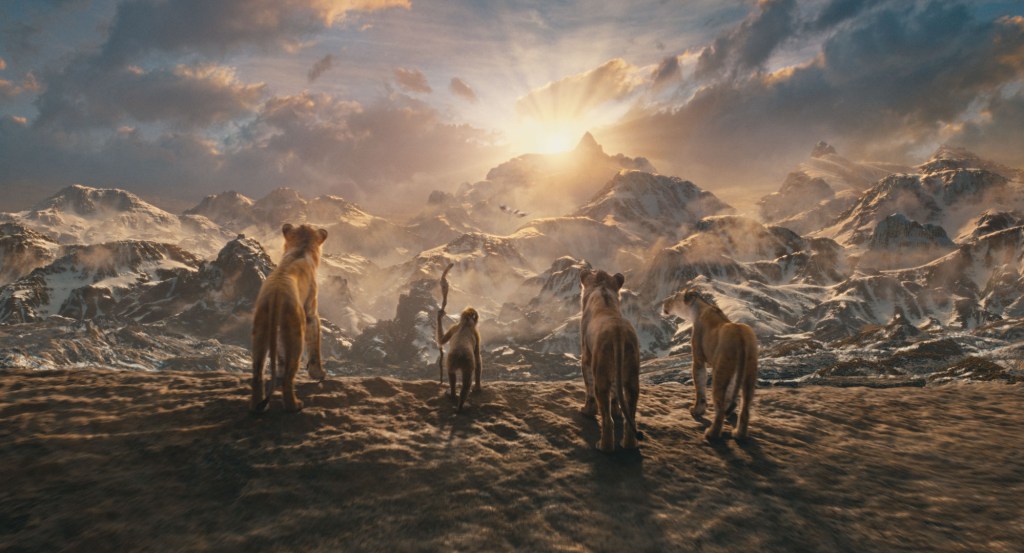
What ultimately tests these lions’ ability to act as a cohesive pride is a competing white pride of lions, led by Kiros (Mads Mikkelsen). It doesn’t take long for Taka and Mufasa to find themselves on the run, though, as they seek out Milele — a land deemed a fantasy. This journey between the step lions is where Jenkins aims to mine the emotional core of the film, testing the strength of their relationship by throwing in a love triangle with a lioness, Sarabi (Tiffany Boone), and really looking to flesh out what it means to be a “king”, whether it’s a birth right or something to be fought for and earned.

This brotherly tussle is what really holds the film together during moments where it threatens to nosedive, especially in the late second act as it brings in twists and starts to lay the groundwork for motives in The Lion King. The biggest hurdle, however, in a film about life-like lions who talk and sing, is building that connection to these characters, a shortcoming that marred Jon Favreau’s 2019 remake. As far as the technology has come since Favreau’s film, photorealistic lions just don’t have the same expressiveness as animated ones, especially when you consider the 1994 animation has aged gracefully while the 2019 remake hasn’t, and it’s only been five years.

Lin Manuel Miranda also seemingly swapped Moana 2 (2024) for Mufasa, with songs that are identifiable to him but similarly to Moana 2, fall short in creating memorable moments that will stick in your mind.

(L-R) Mufasa (voiced by Aaron Pierre), Young Rafiki (Kagiso Lediga), Taka (voiced by Kelvin Harrison Jr.) and Sarabi (Tiffany Boone).

The added element of having Rafiki do a retelling can also feel jarring at times, especially as it pulls you out of the story he’s trying to recite which interrupts the flow and pace. Most of us know what happens to Mufasa and who Taka eventually becomes, so that’s the least surprising thing about this film, but keeping us anchored to their journey and to the vistas of the Pridelands would have saved the filler scenes from being exactly that.

The Lion King‘s idea of the circle of life is about finding balance and harmony, something Jenkins’ film takes and glosses over in a similar light by creating a state of imbalance and power struggles that have to be overcome. In fact, most of Mufasa is a gloss over, sometimes for better (the visuals are still more refined than its live-action predecessor) and sometimes for worse (the retreading of old ground amidst the new ground covered, a shortcoming Moana 2 also suffers from). As a prequel, Mufasa makes sense (even if Jenkins’ involvement is bemusing) and it gives a welcome insight into one of Disney’s most beloved characters, coming full circle in the process.

Mufasa: The Lion King opens nationally from the the 19th of December.

Nosferatu is an Overwhelming Experience

Rating: 4 out of 5.

Nosferatu preview screening provided by Universal Pictures.

When you enter the world of Robert Eggers’ films, you are immediately placed within a space through a remarkable tactility. The old wooden walls of an estate have a smell, the dim candlelight dining halls have an air of repression and melancholy, and none of the performers carry with them the weight of modern knowledge (his actors rarely display an awareness of what an iPhone is which derails many modern period films). When you enter the world of Eggers’ Nosferatu (2024), you succumb to his whims just as the characters succumb to the enticements of the ghoulish Count Orlok (a never better Bill Skarsgård).

Adapting a 100-year-old film that defined all horror storytelling that came afterwards shouldn’t feel as comfortable as it does for Eggers and his creative team (highlighted by the extraordinary cinematographer Jarin Blaschke), but after three successful features steeped in immense period accuracy and style (2015’s The Witch, 2019’s The Lighthouse, 2021’s The Northman), Nosferatu feels like an inevitable next step for one of America’s most unique cinematic voices.

For those not up to speed on the Nosferatu story, originally an unauthorised adaptation of Bram Stoker’s Dracula novel in 1922, we follow newlyweds Ellen (Lily-Rose Depp) and estate agent Thomas Hutter (Nicholas Hoult), in 1838 Germany. Thomas is sent on a journey to Transylvania to secure the signature of the elusive Count Orlok, who is keen to purchase an old estate in town. Ellen pleads with her husband not to leave, sensing doom is quickly approaching them, a foreboding presence that she has carried with her most of her life. From the beginning of this updated version of the story, Ellen’s dark connection to Orlok is apparent, working as the film’s greatest strength. This key narrative propulsion is born from the silent era film’s greatest weakness, a focus on Thomas’ journey, eclipsing Ellen’s more internal struggle with the Count.

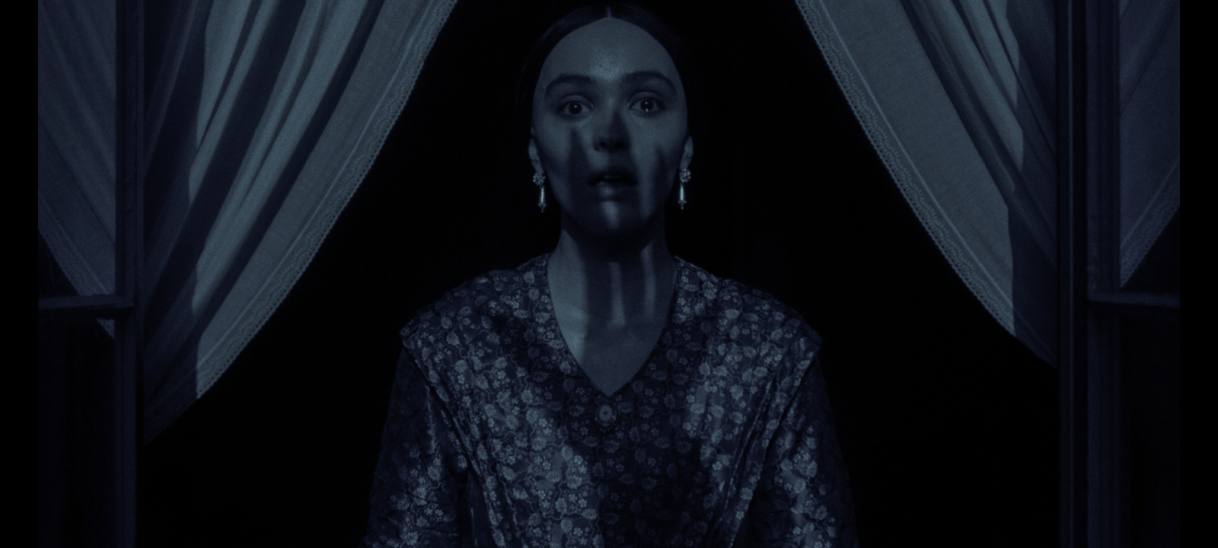
Lily-Rose Depp in Nosferatu. Credit: Courtesy of Focus Features

This focus on Ellen’s perspective and melancholy is felt even as the film shifts to Thomas’s trek to find the castle, an extraordinary sequence, propelled by both what he seeks and what has been left behind. Depp is incredible in the difficult role of Ellen, balancing her temperament seemingly as both possessor and possessed, with deep references to the genre-defining performances of Isabelle Adjani in Possession (1981) and Linda Blair in The Exorcist (1973). A performance of writhing spectacle that administers an impressive restraint when needed, wielding Eggers’ impressive ability to pen alluring scenes with no simple destination as well previous muses Anya Taylor-Joy (The Witch) and Robert Pattinson (The Lighthouse).

At the heart of this adaptation which is wholly absent from the previous two Nosferatu films is the seductive lure of the abyss that would have Nietzsche bursting out of his crypt like the Count. While the central tenet of the Nosferatu story is the psychic seduction that gives the Count power over those susceptible, a transformation is always an integral component, something Eggers removes here in place of Skarsgård’s increasingly terrifying presence.

The tightly held secret of Bill Skarsgård’s appearance as Nosferatu will not be spoiled here, just know it is worth the lock and key. Leave it to the obsessive Eggers to design a memorable and period-accurate depiction of Count Olak that expands on the original and Werner Herzog’s adaptation in 1979. Skarsgård’s count is slowly demystified across the film, creating a surprisingly destabilising experience. As an audience, we are so accustomed to the legendary character hiding and weaponising the shadows, which does occur in several key sequences in the film. Still, here, Count Orlok is brought more and more into the crisp moonlight, revealing the humanity underneath the creature of the night.

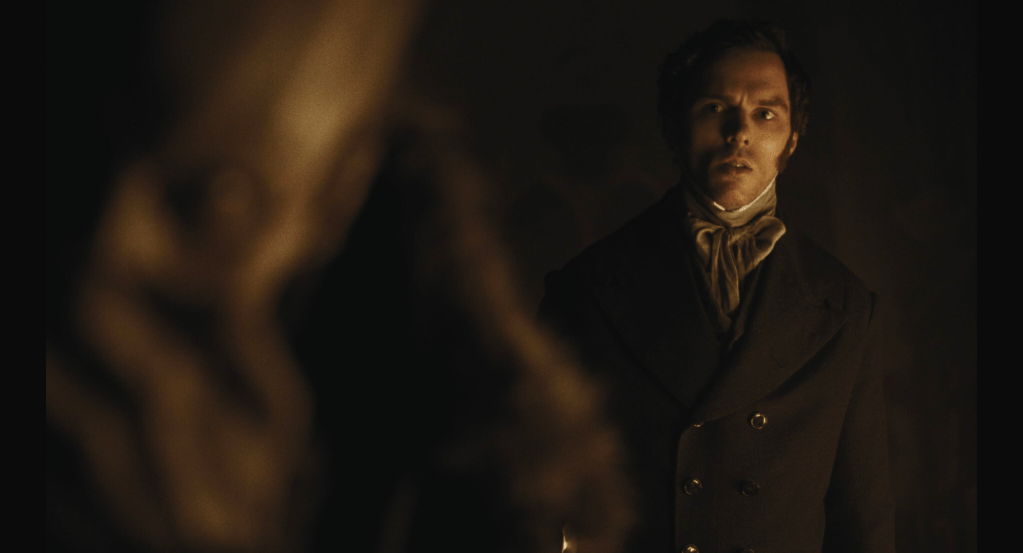
Nicholas Hoult in Nosferatu. Credit: Courtesy of Focus Features

Where the original film exploded the medium while also speaking to the modern reality of the Spanish Flu of 1918, Eggers opts instead to entrench himself in the imagery of the past. More than any of his other works, Nosferatu is a work of pure escapism, cementing the auteur as a formalist filmmaker whose worldview is tightly withheld from the work.

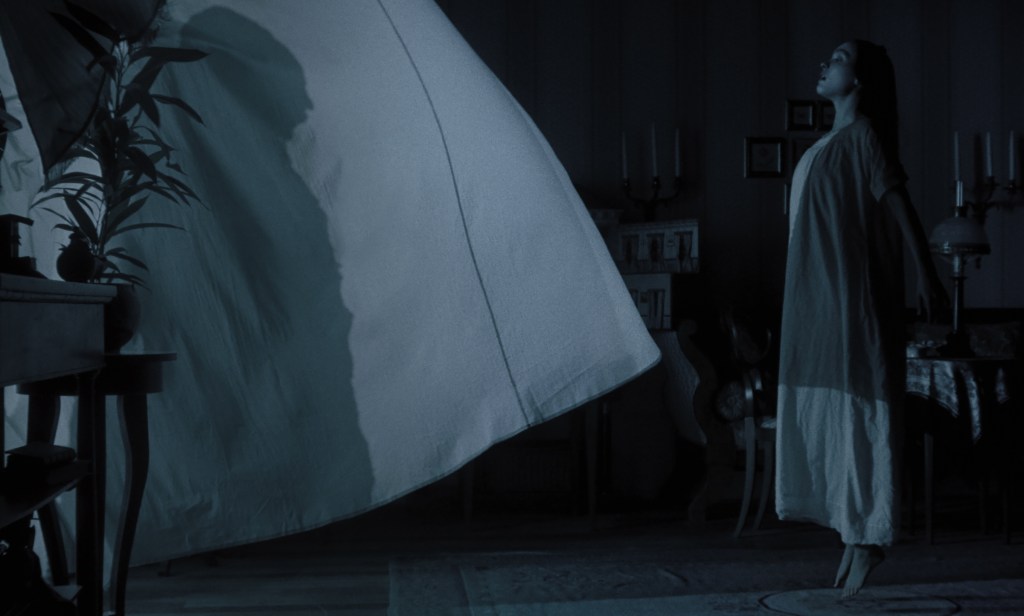
A filmmaking collaboration that extends environs into a three-dimensional cinematic space, Eggers and Blaschke evoke the very smells and textures that transform a text from period-accurate to fully inhabited. The film’s guiding light is Jack Clayton’s The Innocents (1961), a masterpiece in gothic literature adaptation that evokes a spellbinding atmosphere through its mixture of production design and cinematography. With its flowing curtains and long candlestick-lit hallways that invite a menacing darkness, Eggers’ Nosferatu is bringing the tentpoles of gothic storytelling to a new generation.

Gothic horror is deeply connected with the Gothic romance genres, and while the faithfulness to the original texts is admirable, it is in this expansion into other forms of gothic storytelling that Eggers’ iteration breathes new life. Through Depp’s singular performance at the heart of the film, we are compelled through the romance and horror that lurks in the shadows of every room, arriving at a near-operatic finale that never loses the wry humour that permeates through the filmmaker’s work.

However, it’s hard not to feel Eggers playing it safe across every moment of Nosferatu. Masked beneath the comfortable walls of period storytelling that rarely escapes the snowglobe-like structures he crafts in his work, it is difficult for the pangs of concern to creep in that one of America’s great craftsmen avoids the contemporary human moment like the plague. Whether it is fair to critique this absence or not, the feeling lingers. 

It is perhaps too much to ask of a filmmaker so equipped in transportational genre storytelling that allows you to smell the musk of an old library or the menace of an encroaching evil in your very marrow. Still, there is a level of artistic safety that is palpable throughout the film, leaving one aching for a little more dare and bite.

Nosferatu is in theatres January 1st.

Moana 2 is as Endearing as the Original but Suffers from Sea-quel Sickness

Rating: 2.5 out of 5.

Moana 2 preview screening provided by Disney

Upon rewatching Moana (2016) the other night, I was reminded just how special a place that film occupies in Disney’s catalogue of releases: it both captures and celebrates Polynesian culture so sincerely while at the same time offering a fresh spin on Disney’s heroine-oriented stories by avoiding becoming another princess film with tropes we’ve seen countless times over. Moana 2 is fine, but I found myself scratching my head throughout, not because I felt like there wasn’t an interesting adventure to be had, but because this adventure feels like it has been had.

After a thick-of-the-action opening where we find Moana (Auli’i Cravalho) scouring a cliff face in search of signs of other tribes and people, it doesn’t take long for the sea to once again call Disney’s beloved Polynesian not-princess, to its aid. There are no Lin-Manuel Miranda tunes to propel her forward this time around, with the Hamilton creator opting not to return for a second stint, but rather a vision from an ancestor that shows a new destiny — to seek out a lost island that would connect all the peoples from the near beyond.

To do so, she will have to overcome an ancient god, Nalo (Tofiga Fepulea’i), who has put a curse on the island, but first she has to find it. Of course, it wouldn’t be an adventure without her trustee demigod buddy Maui (Dwayne Johnson), who has found himself entangled in his own mess and needs saving. The duo will see themselves accompanied by old and new crew members alike, like the single brain-cell chicken and her porky friend.

Still from Moana 2

As sequels tend to go, bigger always seems to be the preferred option, otherwise you’re just treading old ground, right? While going bigger is what Moana 2 naturally has to do, what makes the first film so special is that it is an intimate film of self-discovery, of venturing into the unknown and realising your destiny. In expanding the second film, both in terms of characters and action on the screen, Dana Ledoux Miller, Jason Hand and David Derrick Jr.’s film sacrifices intimacy for a more generic storytelling approach.

That’s not to say that Moana 2 isn’t filled with thrills and spills: there’s a wider array of monsters, the set pieces are more rampant, the animations are the highlight as always, and there’s just more happening on the screen. Moana has also embraced the wayfinder lifestyle and doesn’t hesitate to seek out adventure, so there has been deeper character development on that level. It makes sense from a storytelling point of view to throw her into the deep end and have more to do and overcome. However, I couldn’t help but feel that that’s not what this story needed, especially when the first film was such a perfect standalone that at once pulled at your heartstrings but would also throw in a Jermaine Clement crab curveball every now and then to keep you on your toes and smiling where it counts.

The biggest fault in a film about going bigger and louder is that it’s often looking back to do so. Most of the humour banks on similar punchlines to the first film like constant cutaways to the chicken either picking at something or screaming, while the songs themselves by Abigail Barlow and Emily Bear don’t have the same flair or catchiness to Miranda’s, even though they’re very much striving to land in the same way. Kakamoras (those cute little coconut people) once again make an appearance, and it’s one of the better highlights of the film as they team up with Moana and co to take down a large clam-shaped mountain. In trying to offer something new, the directors have looked back in large part, and when they have offered something new, it hasn’t left a lasting impression.

Maui (Dwayne Johnson) in Moana 2

One such new offering is the villains (if we can call them that) with Nalo, and to a lesser degree Sina (Nicole Scherzinger). They’re two characters who serve less as villains and more as obstacles to overcome, and they’re offered little development and motive, with Nalo in particular whose whole shtick is he hates Maui and humans and wants to keep the island of Motufetu away from their grasp.

Moana 2, like most of Disney’s films, is a children’s movie first, one with adult themes that cater to audiences young and old, second. The child in me was having a ball for the most part, but also trying to find something to cling onto beyond the fun and games (or that second part), and that’s been my general sentiment towards some of these films in recent times. With the cliffhanger the film ends on (make sure to stay for the post-credits scene!) the second film always felt like a shoehorn for more to come, especially with a live-action remake of the original in the works. While I’m always dubious about such directions, the Moana IP is still rife with joy and potential, and it’s always a pleasure to see Polynesian culture still continue to be represented and resonate with audiences.

Moana 2 opens nationally from the 28th of November.

Gladiator II Continues the Original Story with Bigger, Wilder Action

Rating: 3.5 out of 5.

Gladiator II preview screening provided by Paramount Pictures
Some might say that retracing your steps is a copout, a way of looking back rather than forward. It’s why a film like Blade Runner 2049 (2017) is just as revered as the original, because it went with a new direction courtesy of Denis Villeneuve while remaining faithful to the ethos of the original film. But in the same way that JJ Abrams treaded old ground while elevating the look and feel of an iconic IP with Star Wars: The Force Awakens (2015), so too does Ridley Scott in Gladiator II (2024), his sequel to his critically acclaimed Gladiator (2000).

Gladiator stood out for many reasons, not least because it won Russell Crowe a rightful acting Oscar, but it also represented the merging of the old with the new, practicality with increased digitisation. It paved the way for films like Peter Jackson’s The Lord of the Rings trilogy and Gore Verbinski’s Pirates of the Caribbean trilogy, films that we now look back on with reverence because of how they combined scale (in setting, in action etc.) with those close, intimate moments of characterisation and the human condition.

Gladiator II doesn’t stray too far from the path of the original film, going so far as to retain the meagre visual effects, but it speaks to an era of filmmaking that caught audiences by surprise for all the right reasons.

Scott once again transports audiences back in time to arena battles, slave trading and overly pompous rulers. There’s no Maximus anymore but his presence is still felt. It’s Lucius (Paul Mescal), however, who, after attempting to defend his home in Numidia before it’s besieged by Roman battle ships, finds himself back in Rome as a captive years after fleeing from those who would have seen him killed.

Denzel Washington as Macrinus in Gladiator II.


Lucius, like Crowe’s Maximus but via different circumstances, is forced to reconcile with his destiny to restore order back to a Rome that’s being ruled by two incompetent emperors. It takes some time to get to that point though as he’s put through his paces in a brutal bout with enraged CGI baboons, impressing a slave trader in Macrinus (Denzel Washington) who buys him for his prospects in the gladiator arena.

If that all sounds familiar it’s because Scott has repurposed the plot of the original film and doubled down on everything from flashier set pieces to a wider array of production elements and even more CGI. There’s a great deal of fan service in this film in the same way that the aforementioned The Force Awakens or even Alien: Romulus (2024) cater to returning audiences.

There’s nothing inherently wrong with this approach, especially when an actor like Washington revels in his snakey, almost Baelish-Game-of-Thrones-esque approach to proceedings while delivering lines like Robert McCall if he lived hundreds of years ago (“gimme the bow”) — you just can’t quite read him. Even more than that, this genre of filmmaking is Scott’s bread and butter to the point where, regardless of its historical inaccuracies (sharks in the Colosseum anyone?), it never feels like he’s trying to outdo his past film, but give you more of the same.

Paul Mescal as Lucius and Pedro Pascal as Marcus Acacius in Gladiator II.


The biggest fault in a film about a man who’s lost it all and is coming back from the brink is that you need to be able to buy into his cause and feel his emptiness. While Mescal has cashed in some really soul-tugging performances like in Aftersun (2022) or All of Us Strangers (2023) he doesn’t command the screen with the same gravitas that Crowe did. It helped that in the original, Joaquin Phoenix delivered just as compelling a performance as Commodus and was given ample screen time to have you loathe him just as much as Maximus did.

This time around, you have whiny emperors, a slowly unraveling Macrinus, and a misunderstood General in Marcus Acacius (Pedro Pascal). In this way, Lucius’ battle is spread across characters who are also in one way or another, battling each other. As a result, the stakes don’t feel nearly as big as the scale of the rest of the film, as great as it is to see these various storylines and plot lines interconnect and clash.

There’s a lot going on this time around whereas the screenwriters of the original, (David Franzoni, John Logan, and William Nicholson) spent more time exploring who Maximus was and giving him that more refined arc that makes him so iconic to this day. The same can’t be said for David Scarpa’s script as it does lack the deeper exploration of character needed to get you that aforementioned buy-in. This is a Ridley Scott film, however, and what’s never lacking is a memorable time or several key memorable moments; it’s all the same at the end of the day, so there’s no need for another rhetorical “are you not entertained”, it’s enough for Scott to leave you entertained.

Gladiator II opens nationally from the 14th of November.