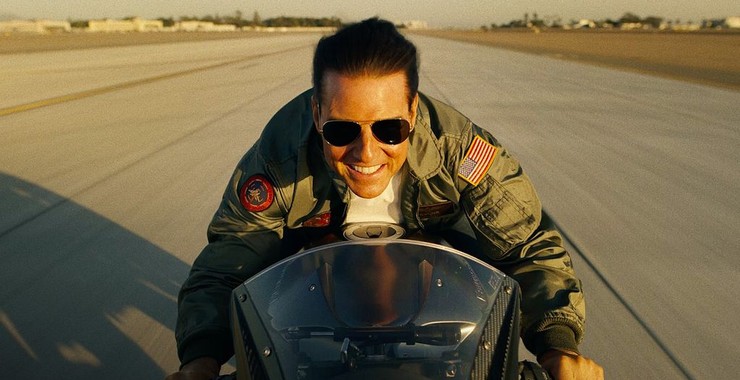
F1: Brad Pitt Plays a Past-His-Prime Prodigy in Joseph Kosinski’s Adrenaline Filled Follow-Up to Top Gun: Maverick

Rating: 3.5 out of 5.

F1 preview screening provided by Universal Pictures

Swapping the skies for the circuit, Joseph Kosinski’s F1 (2025) is a speedy, four wheeled follow up to his box office smash, Top Gun: Maverick (2022). While I’m not an F1 fanatic, there’s no doubt that the exhilaration of a race with cars that push past 300km/h is an adrenaline rush for those that love that sport, and especially for the drivers behind the wheel. But what happens when you peel back the veneer that is the glitz and glamour of podium finishes, and begin to look at the gruelling process that pit crews and drivers alike go through in the lead up to a race? Well, Kosiniski understood the assignment and has created a punchy drama that both tackles that question, and is rife with everything from technical language about racing, to the fall and rise of a prodigy.

In many ways, F1 feels like a spiritual successor to Maverick in that it traces the life of someone who was young and reckless, but is now more of a “has been” who is giving it one last crack against the new stars. On paper, Kosiniski’s film feels like it was very much geared towards casting Tom Cruise and continuing to put him in the cockpit of these lightning fast death machines, but with the Mission Impossible films taking up the majority of his focus, another aging yet still youthful star had to step in.

Cue Brad Pitt. Once you’ve seen this film, it’s easy to say that it’s hard to imagine anyone else playing this role other than Pitt, but Pitt makes the character of Sonny Hayes wholly his own that it’s really, truly impossible to imagine even Cruise in his position. There’s a boyish cockiness that Pitt translates so well to the screen, and it’s no different here as he carries himself with the same reckless edge he’s delivered time and time again. And it serves the premise perfectly: a former racing prodigy who is living in his van and sporadically competing in races is given the keys to the kingdom that is F1 by his former racing competitor-friend-turned-F1-owner, as a hail mary to pull them out of the rut they’re in.
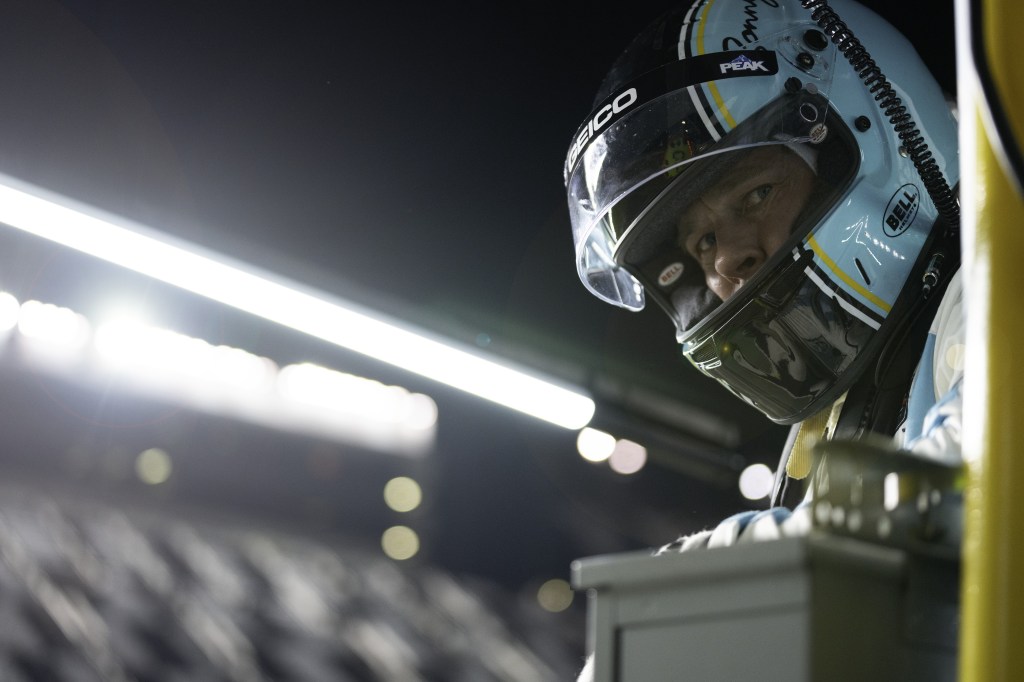
Brad Pitt as Sonny Hayes in F1 (2025)

You might be thinking: this sounds like every movie that has an ageing star who continues to try and compete at the highest level. While you might be right to a degree, on paper F1 isn’t remarkable as a fresh character study, but where it falters in storytelling it makes up for with fast paced action and a desire to authentically capture the F1 scene. Kosinski and frequent cinematographer Claudio Miranda’s work on getting the claustrophobic, tight spacing of fighter jets right in Maverick has helped them capture the same feeling of being in an F1 car; combine that with Hans Zimmer’s pulsating, punchy score, and the film has a video game simulator feel — keeping you at once on the edge of your seat and as though you’re there with Sonny.

Key to trying to give the film a little more egde beyond the generic script by Ehren Kruger is the addition of a young rookie, Josh Pearce (Damson Idris), who naturally takes the lead for the team, with Sonny serving more to amplify his movements on the track. Their dynamic helps shift the gears and keep the film from just being like every other racing film you may have seen. For one, Sonny doesn’t settle for second best and pushes Josh to be his competitor on the track so as to not have him be complacent and expecting everything will be handed to him. This push and pull between the two is like a passing of a baton but only if that baton was on a rope and it had to be caught first.

That’s all to say that F1, while a stellar showcase of zippy cinematography and snappy editing, derives its most heartfelt moments (even if the rest of the story is rather cookie-cutter) through Sonny’s redemption arc as he takes his track knowledge and turns it into a method for madness. What’s even more impressive is just how close to the real thing Kosinski has kept proceedings, with real-life racers like Max Verstappen and Lewis Hamilton cropping up (the latter being a producer as well who was involved with the project before Brad Pitt!). There’s a level of verisimilitude that the film is striving to capture, sometimes to the detriment of the wider drama that’s captured so well by films like Ferrari (2023) and Ford v Ferrari (2019), but often it nails this approach mainly because of how close each aspect of production is to the real thing, and with this approach Kosinski has clearly found himself a formula for success.

F1 opens nationally from the June 26.
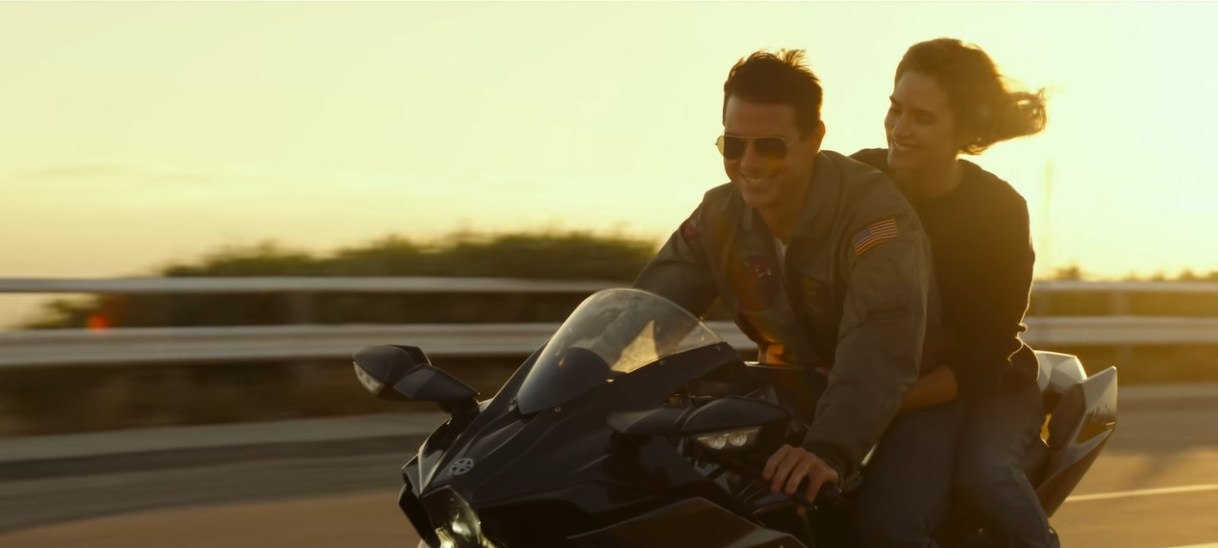
Top Gun: Maverick is the Perfect Sequel at the Perfect Time

Rating: 4.5 out of 5.

By all accounts, the 80s were quite the decade for the pop culture scene with rapturous music, unique fashion, and iconic films that spoke to the sentiment of the times. It was also an era coming to terms with the aftermath of the Vietnam war which saw a plethora of action-induced, patriotic films being churned out and inspiring the youth of the time.

The most profound of those films is easily Tony Scott’s now iconic Top Gun (1986), a film that both turned Tom Cruise into the poster-boy for American patriotism, and also captured the hearts of audiences young and old with its dazzling displays of all things 80s Americana. It’s telling then that 36 years later, Joseph Kosinski’s Top Gun: Maverick (2022) has managed to surpass the awe of its predecessor, and at the same time, deliver a sequel to rival all sequels.

It might be that the last few years have left an uncertainty in their wake in the same way that the Vietnam war did in the many years after its conclusion. The state of the world today is wrought with turmoil including ever-ravaging wars, a pandemic that continues to linger, the propulsion of gun violence in the USA, and growing speculation of an incoming recession (like the early 80s Reagan-recession). Maverick feels like a response to these last few years, or at the very least, a banner of hope that audiences have embraced with open arms.

Perhaps that’s because Kosinski’s film places audiences into a two hour, jet-fuelled cockpit of escapism that pauses all the worries in one’s mind and creates an unnatural sensibility for what is being showcased. It’s a polished and daring display of practicality that sends goosebumps across one’s body as soon as Kenny Loggins’ ‘Danger Zone’ roars in the opening sequence — and that’s before any of the “out-there” moments even come to pass.

Tom Cruise in Top Gun: Maverick

Narratively speaking, Maverick follows Pete ‘Maverick’ Mitchell (Tom Cruise) in the years after his short-lived spell at the Top Gun academy for aviation. Now in his mature years, Maverick has traded dog fights for test flights, taking some of the latest aircrafts and pushing them to their limits in the sky. It’s a fitting reintroduction to the character and the direction of his arc for the remainder of the film, as he himself becomes pushed to his limits in the events that unfold.

Most of the film revolves around reconciliation, or coming to terms with the past, with the clearest example being in the death of Maverick’s wingman “Goose” that continues to plague our otherwise steadfast protagonist. It’s through Goose’s son, Bradley “Rooster” Bradshaw (Miles Teller), that we see this internal struggle and guilt of Maverick’s, surface. The film rides this wave of reconciliation for its majority, but it works because there is no throwaway dialogue here. The screenwriters, helmed by a trio comprising Ehren Kruger, Eric Warren Singer, and frequent Cruise-collaborator, Christopher McQuarrie, do a great job of balancing Maverick’s place in the world with the passing-of-the-torch to the young.

But even with all the side characters —including a short, heartfelt appearance by Val Kilmer’s Tom “Iceman” Kazansky— Maverick is still unequivocally Cruise’s. The actor has come a long way since his Risky Business (1983) days, even if there is a part of me that still craves to see more performances in the vein of Jerry Maguire (1996) or Magnolia’s (1999) Frank T.J. Mackie. Maverick feels like the first real film to see the actor come to terms with his place in cinema. For all the ‘old-timer’ and ‘relic’ lines that are thrown around, Cruise is still the biggest blockbuster name outside of the Marvel engine, and it’s no surprise that he’s being hailed as the last major Hollywood star.

Tom Cruise in Top Gun: Maverick

The actor shows no signs of slowing down here, in fact, if his last few films are any indication, he still has some fuel left to burn. It helps that he has a young supporting cast that almost mirrors the antics of the original cast (Glen Powell’s Hangman is a spitting image of Val Kilmer’s young and cocky Iceman). He also has a new objective: to prepare these young pilots for a dangerous mission in enemy terrain.

The details of the mission aren’t nearly as important as the actual flying and shooting, or in other words, the stuff that gets you your money’s worth. The bravado of the film is nestled in the spectacle of its third act, where the cast is crammed into their F/A-18’s and made to feel the full force of the turns and hoops that ensue. Kosinski, clearly in his element here, shoots these death defying air-scapades with a desire to achieve as much realism as he can, and realism is what he gets, with heart-in-your-throat level action that makes Marvel seem like a rusty kids playground in need of a major renovation.

What’s true for Maverick is that it does feel like a polished playground of possibility, one that is set on pushing the limits of what’s possible for the cinematic medium. This has been true for anything Cruise related for years now, but with Maverick there is a bittersweetness in realising that films like this only get made because there is someone willing to push the medium to its breaking point and not play it safe — in that way, Cruise and Maverick aren’t so different.

Top Gun: Maverick is is currently screening in cinemas nationwide