Dune: Part Two preview screening provided by Universal Pictures
Few working directors have the capacity to deliver such audacious tentpole features like George Lucas and Sir Peter Jackson, and even fewer are able to do so authentically while ensuring that the end result is nothing short of spectacular. But that’s exactly what Denis Villeneuve has done with Dune: Part Two, his sequel to 2021’s Oscar winning Dune: Part One.
To call Dune: Part Two anything other than a generation defining Sci-Fi would be to undersell just how monumental an achievement the director has on his hands. Where Part One focused more on methodical world-building and planting the narrative seeds of Frank Herbert’s iconic novel (some might say in a much more trimmed down, thin fashion than expected), Part Two is all about scale and upping the ante.
And it picks up almost immediately after the first film, where Paul Atreides (Timothee Chalamet) has found his way to the Fremen and is working towards building their trust, learning to assimilate in their ways, and realising his potential as a Messiah. There is seemingly more pandering this time around, with the first film having the skeleton of what is sure to become a trilogy, established, but lacking that extra flesh for why we should care about these characters, the Kwisatz Haderach or any of the novel’s deeper lore.
The care for those aspects all starts with Paul though, with his plight becoming increasingly refined by screenwriters Villeneuve and Jon Spaihts, who inject more oomph into the script. Paul is much more nuanced here, having had to grow up faster than he would have liked, especially now that the Harkonnens have reoccupied Arrakis (or Dune) and are actively pursuing spice. In turn, time is of the essence for Paul and the Fremen, especially as the Harkonnens edge closer to their hidden locations.
(L-R JOSH BROLIN as Gurney Halleck and JAVIER BARDEM as Stilgar in Warner Bros. Pictures and Legendary Pictures’ action adventure “DUNE: PART TWO,” a Warner Bros. Pictures release. (PRESS KIT)
As a result the film places greater attention on the interplay between Paul and the Fremen. Fremen leader Stilgar (Javier Bardem) has become the guiding voice of reason who echoes the idea that the chosen one has arrived. He puts Paul through his paces via a series of trials that test out whether he truly lives up to all that was foretold. Whether that’s venturing out into the desert to overcome its harshness, battling the Harkonnens as they attempt to harvest spice, or riding a Shai-Hulud without guidance —there’s not shortage of incredible individual moments that both propel the narrative forward but also leave one in awe every time.
It’s in these moments that Part Two really shines and speaks to Villeneuve’s eye for detail and scale. It helps that the returning Greig Fraser (who won an Oscar for his cinematography for the first film) once again captures Dune’s deceptively beautiful vistas on a macro level, which allows that scale to shine through. Everything on Dune looks blown up in size which works to its advantage in creating this look of endlessness and enormity, a creative decision that speaks to the gravitas of the journey awaiting Paul. It’s all the more crystallised in the vibrancy of the desert colours, which further evoke that deceptive beauty of a world that will show you no mercy and swallow you whole.
For Paul, the only beauty that isn’t deceptive is that of young Fremen warrior, Chani (Zendaya). She helps him through his series of trials while continuing to hold her own as a character of interest that isn’t just sidelined to play second fiddle as a muse. Often she claps back against the popular opinion of Stilgar, and refuses to fall privy to what she sees as a cause that doesn’t exactly serve the interests of her people.
In fact, most of the female characters in Part Two play crucial roles in the film’s events, with Paul’s mother Jessica (Rebecca Ferguson) embracing her destiny as the Fremen’s Reverend Mother. Princess Irulan (Florence Pugh) has a much smaller part in proceedings as the Emperor’s (Christopher Walken) daughter, serving more as a springboard for the plot and entry point to its politics rather than anything else, which isn’t a problem per se.
A scene from Warner Bros. Pictures and Legendary Pictures’ action adventure “DUNE: PART TWO,” a Warner Bros. Pictures release.
On the flip side are the Harkonnens, with the Baron (Stellan Skarsgård) returning in his hauntingly enlarged state alongside his incompetent nephew Rabban (Dave Bautista) who is continually being outsmarted by the Fremen as he tries to gather spice on Arrakis. But it’s Austin Butler’s portrayal as the Baron’s nephew, Feyd-Rautha, that is a particular standout; he comes across across as both raw and subtle, at once menacingly distant yet eerily close.
When the Fremen do lock horns with the Harkonnens, the result is always jaw-dropping set pieces with well choreographed fights that are supported rather than supplanted by those unique visual effects. The battles are also much easier on the eye compared to a majority of recent blockbusters, in that the action is discernible rather than messy. To top it off, Hans Zimmer’s score is also complimentary rather than excessive, with his use of drums and sharp crescendos aptly suiting the various cultures and moments (I had literal goosebumps at moments as the soundscape reverberated through my seat and being).
If there was to be a shortcoming it would be that the closing sequence rounds off rather abruptly. At various points throughout the film I couldn’t help but wonder how Villeneuve would bring everything together as the finish line was becoming clearer and closer to the end. However, he had always said that this was a continuation rather than a direct sequel, and that aspect is felt, even though audiences might be left wondering by the end —with some threads left hanging.
That said, there are few directors who can create a spectacle at such a scale while leaving their own mark and remaining faithful to the source material. Dune: Part Two takes the best parts of the second half of Herbert’s novel —allegory and all— and serves them up in a digestible, refined and spectacular result that is reminiscent of some of the best sequels (or continuations) in cinema history.
Dune: Part Two opens nationally from the 29th of February.
Bob Marley: One Love preview screening provided by Paramount Pictures
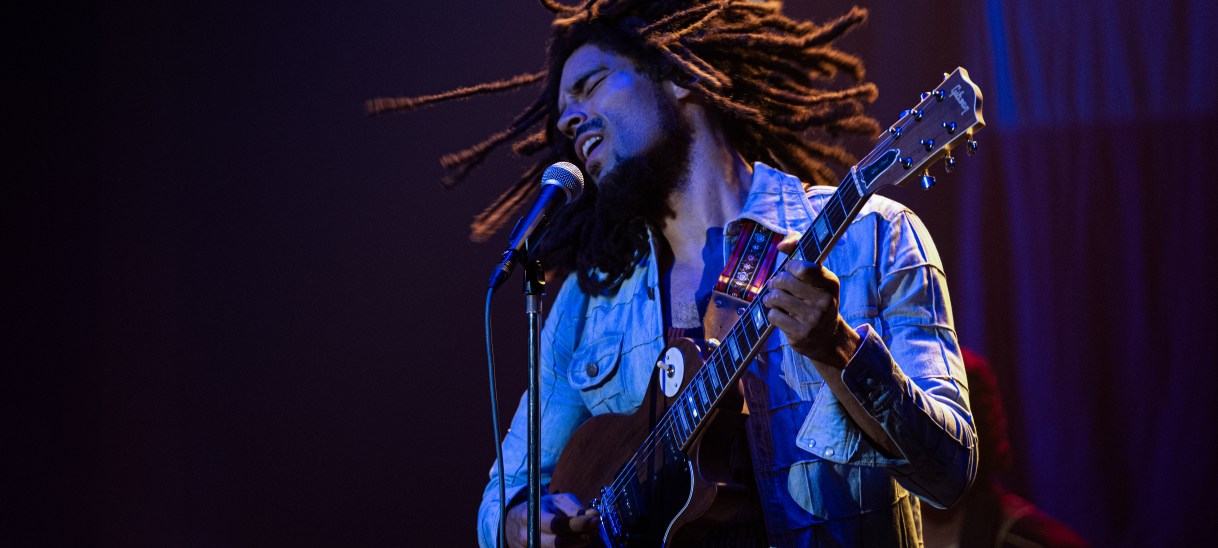
It’s telling that a film showcasing one of music’s most audacious artists who refused to ‘play it safe’ is the exact opposite in its approach to capturing his significance to history. Reggae icon Bob Marley is just that, an icon, which is why Reinaldo Marcus Green’s Bob Marley: One Love (2024) should feel like more than just a surface level recount of a trailblazing artist.
Unfortunately this exact problem has plagued a majority of recent films that have focused on iconic musicians. Film’s like Bohemian Rhapsody (2018), Elvis (2022) and Rocketman (2019) are all guilty of playing it too safely when it comes to taking a historical figure and adapting their story from a fictional lens. These film’s all ultimately lean too far into accuracy (or their version of it) at the expense of deeper character drama, a nurtured plot and an understanding that every nook and cranny of the musician’s life doesn’t need to be shown (we’ve got Wikipedia for that).
One Love falls into that category where it never really tells you more about the subject beyond what a simple google search might. If we consider A Star is Born (2018), Walk the Line (2005) and even The United States vs. Billie Holiday (2021), all of these films said more about the characters at their core through the very fact that they understood how to tow the line between fiction (of which A Star is Born is completely) and utilising drama to create tension ––– and that’s all while never losing sight of the protagonist at their core.
Marcus Green’s film picks up at a point in Marley’s (Kingsley Ben-Adir) life when he’s already reached a level of fame that has him ruffling a few political feathers. It’s a commendable point in his life to start at (in the mid-70s) rather than tracing the complete rags-to-riches story like some of the aforementioned titles.
Kingsley Ben-Adir as Bob Marley and Lashana Lynch as Rita Marley in Bob Marley: One Love from Paramount Pictures.
After being shot in an attempted murder, Marley is advised to leave Jamaica for a period of time while tensions ease at the top. This is much to his dismay since his wife Rita (Lashana Lynch) was also shot and narrowly avoided death. It proves to be a worthwhile move, with Marley finding inspiration in the UK music scene after arriving in London, and eventually releasing albums like Exodus which were undercut with political commentary and offered a twist on the sort of reggae beat he had become accustomed to in prior years.
If there’s one saving grace in a film about an iconic musician, it’s the music itself. There’s no shortage of hits that are played throughout like War, Exodus, I Shot the Sheriff, Three Little Birds and more. Fortunately they’re not showcased in the same way as the hits of Queen in Bohemian Rhapsody where they were seemingly devised on a whim and almost purely exist in that film for nostalgic purposes rather than to propel the narrative forward.
The film rounds off to a close after some 95 minutes which is a silver lining at a time where most overstay their welcome. This film doesn’t overstay its welcome and will no doubt be lopped up by an audience familiar with and intrigued by, Marley’s story. Should there have been a greater focus on accentuating that internal dialogue and sentiment Marley had towards the political situation in his country that ultimately led to his performance of unity at the One Love peace concert? Definitely. Ultimately the film gets you to that point, but the result is more of a split, cobbled-together look at key milestones rather than a deeper dive into a man who united a nation.
Bob Marley: One Love opens nationally from the 14th of February.
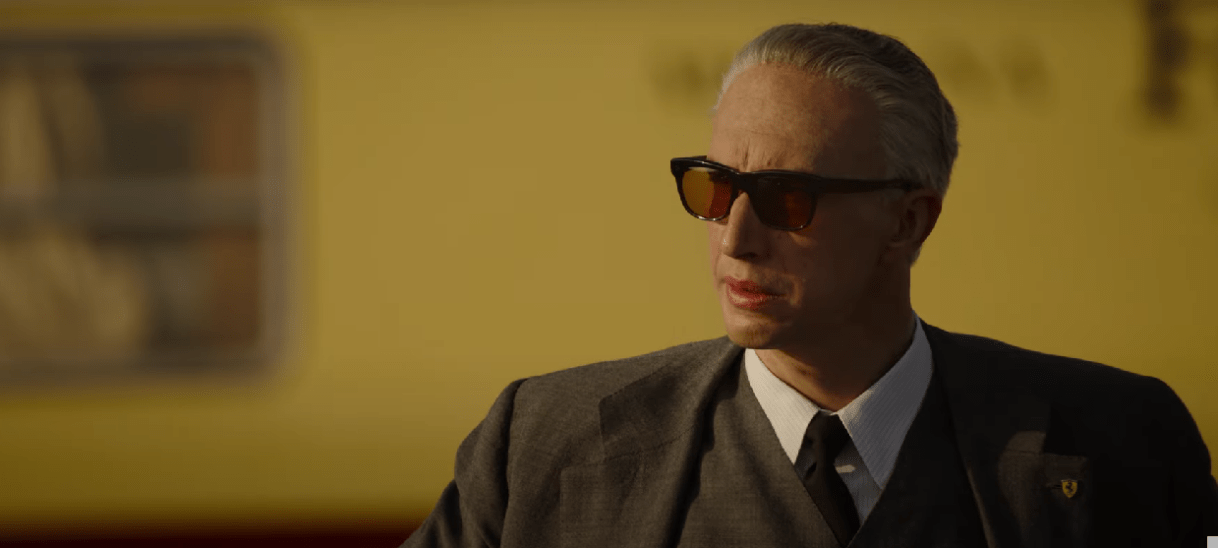
Driven, work-oriented men who struggle to balance the personal with the professional and are often trapped by their own desires has always been Michael Mann’s bread and butter. In Ferrari (2023), his latest foray into biopics after Ali (2001), Public Enemies (2009) and to a lesser extent, The Insider (1999), he tackles automotive titan Enzo Ferrari. A figure notorious for his desire to win at all costs, Ferrari fits perfectly into the book of self-destructive but purposeful protagonists that Mann has been exploring.
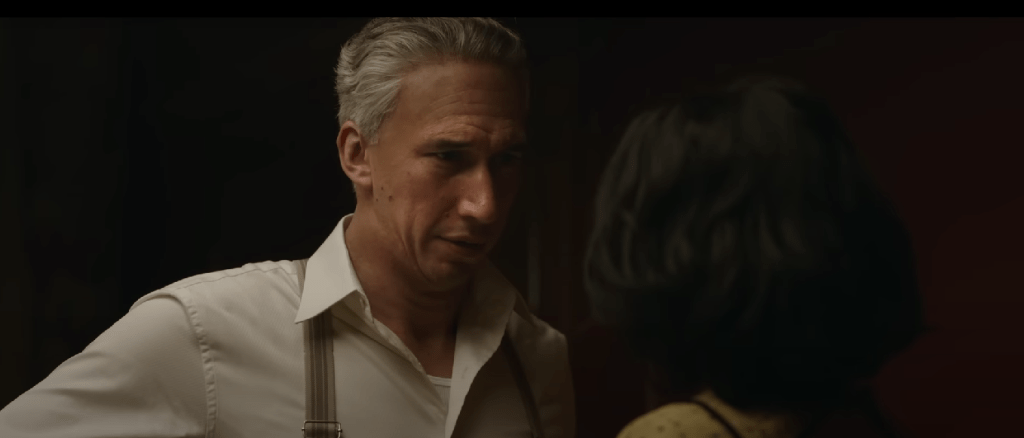
A perfectionist professionally but a loose cannon personally, Enzo Ferrari (Adam Driver) was a multi-faceted man, with his mind ever so focused on innovating and winning races but also ever so muddled when it came to his marriage and family life. Mann wastes no time in connecting those two worlds, introducing Ferrari (after a short montage of recreated black-and-white footage of a young Enzo behind the wheel) slipping out of the home of his mistress Lina (Shailene Woodley), slowly pushing a car downhill before jumping into it and speeding off. It’s a subtle introduction but helps establish what follows as a deeper look beneath the bonnet.
Where he’s speeding off to is his blindsided, somewhat estranged wife Laura (Penelope Cruz) whom he shares his struggling business with as well as a deceased son, Alfredo, whose death is a trigger point Mann continually comes back to over the course of the film to access that hidden internal layer that Enzo tries to hide.
It makes sense to ground the film to a particular moment in time rather than simply treating this as a by-the-books, cookie cutter biopic. The moment he chooses here is in 1957, with Enzo continuing to grapple with the loss of his son while living a double life with another woman and a second child, Piero. It’s a period in time where the Ferrari brand was at risk of collapse and the Mille Miglia race was a way for Enzo to clap back at doubters and hopefully, debt.
Mann is an expert at extrapolating key info from his subject matter, something Driver attests to in a Collider interview by stating that Mann’s characters “internal lives are so rich and so specific” and that “all of his notes are about character and internal life”. And Troy Kennedy Martin’s screenplay, based on Brock Yates’ Enzo Ferrari: The Man, the Cars, the Races, the Machine, offers enough legroom for Mann to build out the sort of bubbling tension that Enzo is harbouring over the course of the film where you feel that at any given moment, something will burst as it often does in his films.
Adam Driver is Enzo Ferrari in FERRARI, directed and produced by Michael Mann
As mentioned, the Mille Miglia feels like the Hail Mary for Enzo to redeem his brand, and across the film he tests cars around a track with professional drivers while reminding them that it’s a privilege to race in one of his cars. It’s in these very transaction-like conversations that his ruthlessness and hunger to win comes through, with Driver playing the Commendatore (as he was known) with a composed edge but towering presence as though he was truly a force of nature in this world. Not to take away from Driver, but at times his performance feels a little less accessible than some of Mann’s other characters who share similar traits but often have a more engaging charisma.
It’s in the more personal exchanges he has with those he cares about that the true duality of his life comes through. Laura matches him in bluntness, with the loss of their son evidently creating a rift between the two that’s left them stagnant in their marriage. Cruz’s performance here is up there with the best of the year as she plays Laura as a woman on the cusp of losing it, with her dark, hollow eyes and blank expressions evoking the rawness she stills feels for her son’s death and distance from her husband.
While the film is more of a melodrama in its muted moments, it wouldn’t be a Mann film without some thrills and spills. The racing sequences, including that of the track tests and the Miglia itself, are shot expertly by cinematographer Erik Messerschmidt with cameras situated in seemingly every part of the car except the drivers laps. The sound-design adds to the flair of the races and the sense of foreboding doom as the cars rocket around turns and narrowly avoid knocking into each other.
The closing sequence is one of the most confronting of Mann’s career and definitely of the last year, with a crash that kills nine onlookers at the Miglia. Sure the CGI feels a bit jarring in a film that focuses on practical effects for its majority, but the moment itself and Enzo’s reaction afterwards speaks to the coolness that he projects where things happen in this line of work and you move on, because that’s what winners do, no matter the cost.
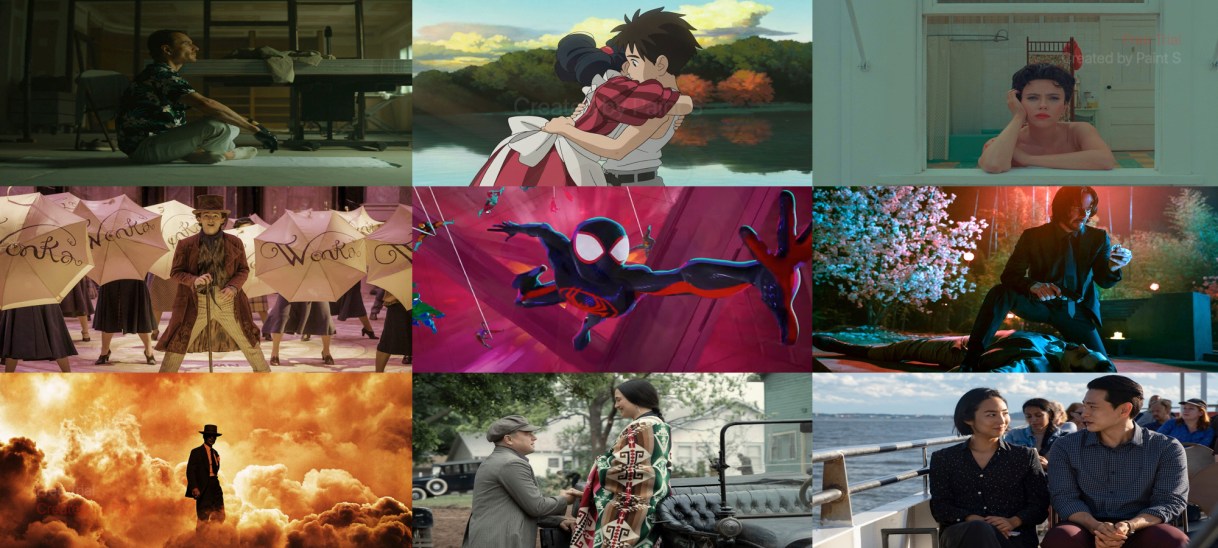
With 2023 drawing to a close, Rating Frames is looking back at the past twelve months of cinema and streaming releases that have come our way. In the third of our series of articles, Arnel Duracak is taking a look at his ten favourite films of the year that was.
In what was a year jam-packed with incredible film titles, a myriad of legendary directors continuing to deliver the goods, newcomers making their mark, and strikes that led to several delays for other anticipated releases, I only wish that I had spent more time in front of a silver screen.
Alas, I ventured to Europe for a good few months which limited my access to key titles early on in the year (though I did see Michael Mann’s 1995 classic Heat at London’s Prince Charles Cinema), but I was lucky to be able to witness some of the year’s best films at the cinema in the second half of 2023. There have been multiple other titles that I wish I had seen before the end of 2023 –––The Holdovers, Poor Things, Ferrari (which I will be reviewing for the site soon), to name a few––– but nonetheless I am satisfied with what I was able to see. Here’s to a 2024 with more of the same, happy watching!
10. Wonka
As I was looking at my ongoing 2023 ranking list, it turns out Wonka made the cut.
While I am a bit surprised, this film felt like the most deserving 3.5 star film from 2023 for me. It neither rocked my socks nor did it live up to the brilliance of Paul King’s modern classic Paddington 2 (2017), but my bar was set rather low for this title if not for the fact that it felt like an unnecessary foray into the background of one of cinema’s strangest characters, then definitely because I just wasn’t all that interested (Darcy will attest to that).
But being a King and Simon Farnaby screenplay, Wonka felt both fresh and unique, owing to the fact that it was imbued with the zany British humour that Paddington 2 excelled at, had an all-star cast who thrive as misfits and are just a joy to be around, contained some catchy musical set pieces (‘Scrub Scrub’ being a particular highlight), and never felt like it was trying to follow in the footsteps of the other two Willy Wonka films.
My only gripe would be that Wonka himself was less interesting as a character than any of the side characters. Whether or not that was because Chalamet’s performance was a bit overly boisterous or because 90% of the core cast meshed well with the British comedy by comparison, but Chalamet’s no Gene Wilder here (maybe for the best).
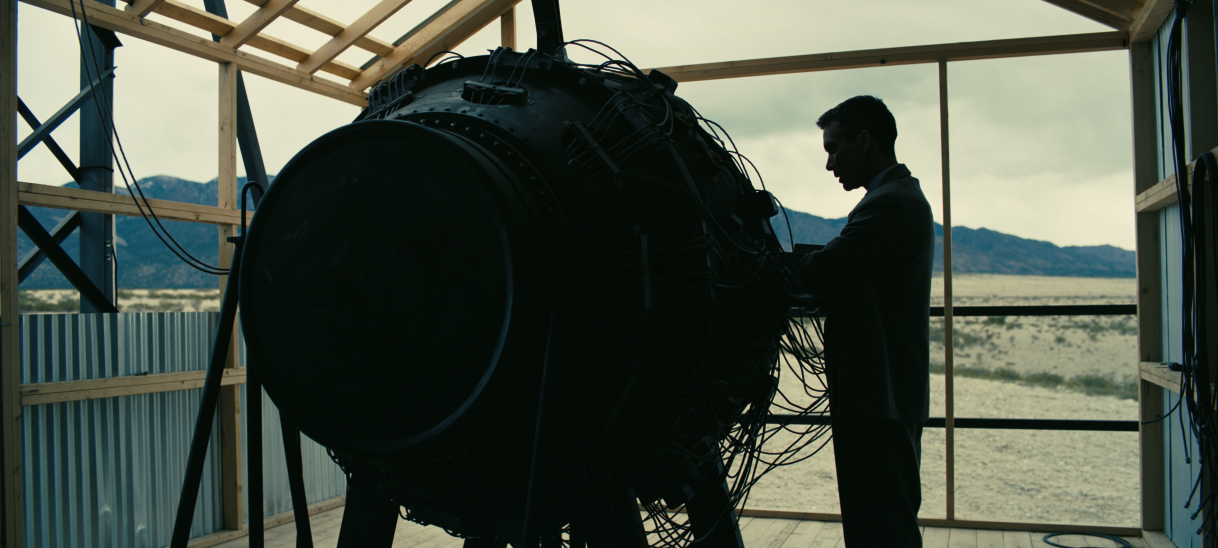
9. Oppenheimer
In what is perhaps Christopher Nolan’s most accomplished film for many (2008’s The Dark Knight still takes the cake for me), Oppenheimer is a magnetic feat in filmmaking that only Nolan could deliver at such a scale.
I’ve never been a big fan of the way that he writes dialogue, and Oppenheimer isn’t different in that regard for me as it tries to balance more heartfelt, interpersonal connections with more heavy handed themes and technical language (ultimately tailspinning into some less than convincing, at times eye-rolly back-and-forths). However, for a three hour film that is about one of history’s darkest periods, it flows rather well with crisp editing, excellent performances all around, a moody but effective score, and direction from Nolan at the peak of his powers. The film’s climax is one of the most cinematic this year and once cements Nolan’s status as the king of IMAX.
At the time of writing, it’s been about an hour since Oppenheimer swept up the Golden Globes, and if that isn’t a testament to just how deserving this film is to be on anyone’s top 10 list, then I’m sure the Oscars will have something to say about that.
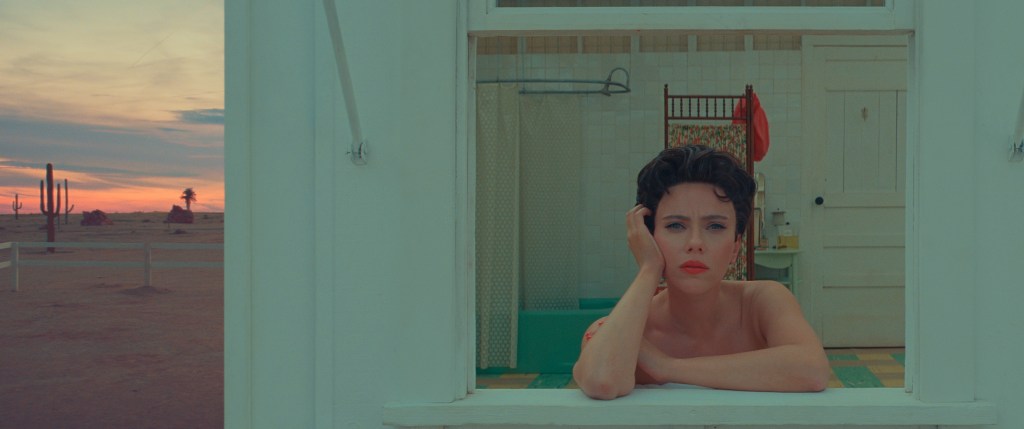
8. Asteroid City
In what is a film of layer upon layer upon layer, Wes Anderson’s Asteroid City is a film I’ve accepted I just have a love-hate relationship with.
Anderson, of course, probably has the most identifiable visual style of any working director at the moment, and he once again delivers incredible vistas in this desert doll-house diorama showcase. Asteroid City is also his most self-reflexive film, both on the art of being a storyteller and on the process leading up to the camera rolling.
Artifice and reality intersect on multiple occasions, with the film playing out through a series of chapters that pull you into the world itself, and then pull you back out to take a glance at how everything is coming together. At times the film can be beguiling, especially if you aren’t familiar with his previous stuff, but it’s also a rewarding insight into art of being a storyteller.
7. The Killer
Many (and by many, I mean Letterboxd users) have called David Fincher’s The Killer his most introspective, meditative film on the craft of doing your job, taking pride in your work and thinking you’re doing it so well to the point of perfection. I just think it’s his most comedic.
Michael Fassbender stars as the straight-faced, emotionless hitman who screws up a hit and now has to clean up his tracks and those that might wish to take him out for his shortcoming.
The Killer is a great study on the dissolution of identity, of a man coping with his inner thoughts and dismissing all empathy for those that don’t deserve it because he knows the game he’s playing and the players involved. As mentioned, I also think it’s a comedy or at the very least, unintentionally funny especially with various internal monologues by the character, describing what he sees and feels, that are followed by sharp interruptions.
While this isn’t Fincher’s best film or even in his top three, it’s a safe but well executed crime thriller that will satiate the desire of hardcore Finchonians who would wish to see him return to similar stories.
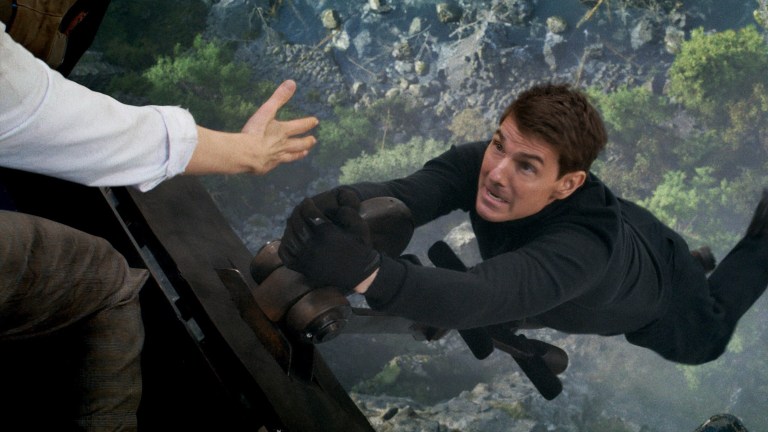
6. Mission: Impossible – Dead Reckoning Part One
I’ve continually been surprised by just how good each Mission Impossible film has gotten.
Christopher McQuarrie and Tom Cruise are like each other’s yin and yang as they seem to have found common ground since their first collaboration on Jack Reacher (2012) to the point where they’re willing to push the boundaries of what’s achievable on film at such a scale. Cruise especially is no stranger to putting his body and life on the line for an awesome shot, and in Dead Reckoning Part Onethere is everything from that iconic plummeting bike sequence off the top of a cliff to the creation and destruction of a whole train.
While Dead Reckoning Part One is pipped only by Mission: Impossible – Fallout (2018) in the franchise in terms of scale and death defying moments, it is pure action cinema that knows no bounds. I’m keen to see what Part Two will have to offer.
5. Past Lives
Celine Song’s debut feature is the sort of film that sneaks up and catches you off guard if you’re not prepared for its candid depictions of everyday people doing this thing we call life, and it leaves you feeling either optimistic or a tad wrecked by the time it’s over.
I generally gravitate towards fantasy, action and romance films, and I was pleasantly surprised that while this is a film about young love and looking back to move forward, it’s ultimately a film about reconciliation and friendship.
Song’s film cleverly captures how time passes in an instant; we try to hold on to the high points as much as we can, we’d put them in a bottle if we could, but that’s not how life works. In other words, things happen for a reason, but that doesn’t mean we have to forget the past, but rather learn to live with the present reality that we’ve been given.
The film is ultimately anchored by Greta Lee, Teo Yoo and John Magaro who form the emotional centre that allows Song to deliver this story as effectively as she does.
4. Spider-Man: Across the Spider-Verse
Across the Spider-Verse was one of the releases that I missed on the big-screen after going to Europe and only saw towards the close of the year on Prime Video.
I say that with a degree of sadness as this sequel to the Oscar winning hook-out-of-nowhere, Into the Spider-Verse (2018), absolutely floored me in just how creative it was in utilising the key moments of past Spider-man films and flipping them on their head to deliver an original, engaging, emotional and downright fun two and a half hours. The trio of writers, Phil Lord, Christopher Miller and Dave Callaham clearly understand this world and its characters, and it shows in all of its vibrancy.
Much has been said on the animation style of these films, and it once agains results in a colourful and unique display. Another Part Two I am ever so keen to see.
3. Killers of the Flower Moon
Martin Scorsese has been there, done that and gone back again, but even I couldn’t believe the brilliance I was seeing with Killers of the Flower Moon––– even though brilliance is what we’ve always known with this cinematic titan.
Killers of the Flower Moon is another film that passes the three hour mark this year, but if it went for another three, I don’t think there would be many complaints. And that’s owed largely to just how precise Thelma Schoonmaker’s editing is, which paces the film very tidily with no loose moments that don’t add up to a wider whole.
It’s also a testament to Scorsese’s brilliant direction and he and Eric Roth’s approach to the screenplay which they flipped on its head and decided to tackle from an inside point around the film’s perpetrators. The result is one where we still see all of Scorsese’s signature mobster embellishments and themes of betrayal, ambition and greed, but they’re repurposed in a more Western setting and allowed to simmer for the film’s lengthy runtime.
I’ve said it elsewhere, but Killers of the Flower Moon feels like the sum of all the best parts of Scorsese’s oeuvre. By that I mean not just in the little tell-tales and visual cues that scream Scorsese, but more in terms of how this film balances tension, develops character, incorporates louder moments with more muted ones, communicates more heavy handed themes like greed and corruption in a digestible way, and all while feeling fresh in the process.
The fact that this isn’t his magnum opus tells you everything you need to know about him, so let’s enjoy this legend while he’s still around.
2. (How Do You Live?) The Boy and the Heron
From one legend to another, Hayao Miyazaki’s decision to un-retire and make The Boy and the Heron was met with wide gasps, especially since The Wind Rises (2013) felt like the perfect capstone to his illustrious career.
Yet there was clearly some unfinished business in the director’s life that he no doubt felt compelled to express, and in his latest he once again takes a deep dive into the phantasmagorical through various creatures, concoctions and imagery, but with existentialism at the forefront.
The Boy and the Heron might well be seen as Miyazaki coming to terms with the limitations of the physical form and seeking out answers, or at least seeking to provide certain tools that might lead to the answers around what this thing called life is all about. Darcy has described the film as a “deep meditation on life and grief” and I think that’s the basis for what Miyazaki is going for here, along with the idea of carving something from nothing and doing your best to hold it together for as long as you can.
For the young character Mahito at the centre of it all, he is there to try and help take this bleakness and turn it into something redeemable now that his uncle (a very obvious injection of self from Miyazaki), cannot. It’s almost a futile request as everything around him crumbles, but it’s enough to believe he will take this with him in his own life and attempt to bring some order to it that way.
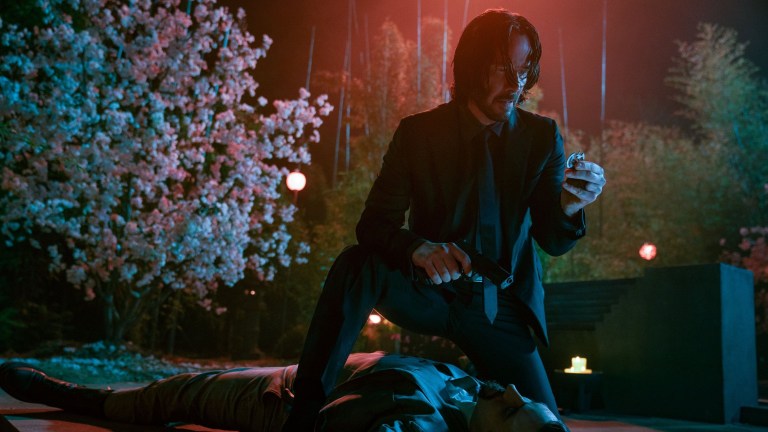
1. John Wick: Chapter 4
It feels like a millennium ago that I saw the fourth instalment in Chad Stahleski’s thriving John Wick franchise, and yet nothing this year has toppled it from the peak of my list.
Don’t get me wrong, any of my top three could just as easily be sitting in pole position, but Stahelski’s final John Wick film is a sensory overload that I feel like was made for me. Shay Hatten and Michael Finch’s ability to up the ante and deliver a screenplay that not only ties everything from the first three films together, but adds some more and then blows everything out of the water in the third act is truly mind-boggling (it’s a crime they weren’t nominated at the Golden Globes for Best Screenplay).
But that’s just the tip of the iceberg. I’ve long praised Stahelski for his understanding of actors and his ability to stage fight scenes, but in John WickChapter 4 he has once again managed to blend hand-to-hand combat and bullets galore with an appreciation for more grounded storytelling and the recognition that John Wick is the emotional anchor of this film even when he’s engaged in tense situations.
He’s not just a two-dimensional assassin or someone simply out for revenge, and Chapter 4 makes it clear that moving forward requires sacrifice. And this franchise has always been able to introduce anti-heroes and antagonists that are just as layered as Wick because they occupy the same space, under the same oversight, guided by the same principles ––– Wick just has the courage to stand against the system that has nurtured him and recognise the virus its rotten roots are spreading.
It feels like a fairytale ending that echoes the practicality and originality of Mad Max: Fury Road (2015) while standing out from anything else that has been released since Fury Road in the action genre. I can safely say I am eagerly anticipating Stahelski’s adaptation of Ghost of Tsushima.
While J. Robert Oppenheimer’s name might be synonymous with the deadliest device ever created, Christopher Nolan’s latest three hour biopic, Oppenheimer, looks at the man behind the atomic bomb through a much more introspective lens without ever insinuating that audiences should feel a sense of sympathy for his brilliant mistake/s. Of course, introspection is a key building block to any biopic, but given Nolan’s ouevre hasn’t ever focused on a historical figure of this magnitude —or any historical figure in this sense which still isn’t as big a shock as not casting Michael Caine—, there’s understandably a greater interest surrounding this biopic if not for the simple fact that it’s a Nolan film, then definitely because its subject is one of the most infamous, and misunderstood, scientific minds ever.
That Oppenheimer was a brilliant theoretical physicist who was the victim of his own belief that man could be trusted with forces larger than them, is undeniable. But Nolan’s film isn’t just concerned with the cookie-cutter facts that you can pull from a Wikipedia page. While the film is based on 2005’s Pulitzer winning novel, ‘American Prometheus’, Nolan’s interest jumps from the key, often glossed over moments in Oppenheimer’s life, and interrogates them more carefully.
Nolan’s Oppenheimer (a perfectly cast Cillian Murphy) is a man struggling to be faithful, who is always in his mind, viewing every next move like an equation on a chalkboard. His relationship to theory stretches into his everyday life as he struggles to maintain meaningful relationships, always approaching life by the numbers and relegating himself to a disconnected observer as opposed to a practical artisan. At one point he is in disbelief that scientists overseas have figured out how to split atoms from each other (or something to that effect), stating that it’s not possible from a theoretical point of view (POV), and it’s through this sort of mould that he carves his Oppenheimer from — a man unlike those around him, an outlier.
L to R: Florence Pugh is Jean Tatlock and Cillian Murphy is J. Robert Oppenheimer in OPPENHEIMER, written, produced, and directed by Christopher Nolan.
In this way, he isn’t too different from other Nolan characters like Bruce Wayne or Joseph Cooper in that he’s committed to what he knows, and does what he must for the greater good. His distant persona also affects his ability to build sustainable relationships, often pin-balling across various lovers and failing to forge a life beyond his commitment to his craft as exacerbated by a scene where he offers his crying baby to his friends as he doesn’t have the time to look after it (a selfish move he recognises).
Early in the film he’s encouraged to pursue his interest in theory and master it, and this is the point in his life that Nolan opts to introduce us to. And it’s in the early stages of the film that Nolan really portrays the internal struggle that will go on to plague Oppenheimer in the film’s later stages. He cleverly uses hazy, almost dreamlike visual motifs that equally look like beautiful stars and bomb fragments. These moments are some of the most thought-provoking as they provide a real deviation from the coolness and level head of Cillian Murphy’s performance that makes the character difficult to read — as though he’s got everything under his hat and under control.
It helps that multiple POV’s are being deployed by Nolan here in what is probably the most un-Nolan-esque part of this movie. Not only is Oppenheimer’s view of the world on display, but that of his early ‘affiliate’, Lewis Strauss (Robert Downey Jr. at his brilliant best). This duality helps build tension and allows the events of the third act to come together more tightly than might otherwise have been possible. Frequent Nolan cinematographer, Hoyte van Hoytema, shoots in colour for Oppenheimer and black and white for Strauss, further helping create this sense of separation through subjectivity and objectivity, ultimately adding to Oppenheimer’s unknowability and the difference in views that the two characters have. Whether or not this approach works in its entirety is difficult to tell from a first viewing, especially since it does tie events together, but equally throws one out of rhythm from time to time with the various timelines intersecting.
Robert Downey Jr is Lewis Strauss in OPPENHEIMER, written, produced, and directed by Christopher Nolan.
The most jarring instance of rhythmic intrusion is also the film’s best for the very fact that it’s the most speechless moment in the film. If you’ve followed the marketing, the controlled atomic set-piece (atomic in its own right) is where the full force of seeing this 70mm beast in IMAX really sells itself. By this point a lot of the establishing from the first half —namely around the politics of the Manhattan Project and the scientific lingo that will fly over most people’s heads— has been rounded off and Nolan finally gets to play with his own toys by unleashing the mother of all bombs, creating a spectacle that almost transports you to the New Mexico desert with the characters. It is really the punchline of the film, rewarding your patience by drowning out all of the noise in its countdown and the ensuing blast.
Whether or not Oppenheimer is the sort of Nolan film audiences are eager for is tough to say; there’s no tricky logic that fans of Interstellar (2014) or Inception (2010) wouldn’t wrap their heads around, but the film also sees Nolan at his rawest and most cynical, choosing to show a world destined to implode on itself just as it’s beginning to take shape. While The Dark Knight (2008) followed a similar path, there was at least the knowledge that its commentary was so distant from reality rather than a part of it. Yet in a film full of so many competing elements whether it’s the performances, the dialogue (which has has never really been the sweet-spot in a Nolan film as much as the moments around it are), the rapturous score from Ludwig Göransson, the staging of the key set piece or even the candidness of the story, there’s no doubt that like Oppenheimer, Nolan was all in on going big, and the final result is one that will stick with many long after the end credits roll by.
No one manages to blend crime and action on the big screen quite like Michael Mann. From the sprawling cityscapes that act as their own character, to the attention-to-detail with each and every aspect of production, Mann’s films are distinctively his own. It seems fitting then to look back on his stellar oeuvre and try and rank his titles based on my sentiment towards them at this moment in time. This is especially the case following his recent novel and sequel to the iconic Heat (1995), which he co-wrote with Meg Gardiner, and leading up to his Adam Driver-led, Enzo Ferrari biopic, Ferrari (2023).
Of course, like with any list, opinions are different and feelings towards films change as time goes by and depending on where in your life you find yourself. But for now, these are his films ranked from worst (if you can call them that) to best:
11. The Keep (1983)
The Keep
Whether it’s due to the fact that large chunks of this film were cut out, or because it’s the least Mann-esque title on the list, The Keep is what I like to call Mann’s brain fart.
His second feature following the brilliant Thief (1981) represents his first and clearest (as there are elements of this in his true crime thrillers) foray into the horror genre. It’s a film plagued by bland and uninspired performances; a nonsensical narrative involving Nazis, a devilish entity, a supernatural Scott Glenn and one of the strangest but best sex-scenes you’re likely to see in a Mann film or otherwise; an interesting production design; and a pretty neat synthy score by Tangerine Dream.
Given Mann has disowned the film because of Paramount’s treatment of it, one can only imagine what the unreleased director’s cut had in store — we can only hope it graces out screens someday.
10. Manhunter (1986)
Manhunter
Many might find my ranking of Manhunter to be completely against the grain, but this thriller revolving around capturing a psychotic serial killer just never resonated with me on a narrative level like some of the other titles on this list (and I still gave it 3.5/5).
Manhunter focuses on FBI agent Will Graham (William Peterson), a detective who’s come out of retirement to help locate an elusive serial-killer with strange motives. His past experiences hunting figures like Hannibal Lecter (a subtle performance by Brian Cox) means he’s the perfect guy for the job.
Manhunter uses Will and the serial killer he’s hunting to create an interesting parallel between the mind of a psychotic man and the man capable of catching him. Its use of home video and the focus on truly seeing almost posits that these two men aren’t so different in how they see the world, but to different ends and outcomes.
Whether or not I was expecting a more conventional voyeuristic mystery-thriller in the way that Se7en (1995) or Rear Window (1954) are —where the killer feels like they’re an arm’s length away, only for the satisfaction of catching them to be snatched from you— is difficult to say (perhaps that’s what people love about this?), but I found myself at a crossroads by the third act. I hope my opinion changes on a second viewing.
9. Ali (2001)
Ali
On the surface, a film about Muhammad Ali seems like the farthest thing from a Michael Mann joint. There’s no mesmerising cityscape, no sirens or gunfire, no real suspense in the way that his crime films create suspense, and the subject matter doesn’t exactly scream ‘Michael Mann’.
But this film about the greatest boxer of all time works because of Mann’s interest in figures that don’t play by the rules. Specifically, Ali focuses on the period of time between Ali’s (Will Smith) first major heavyweight bout, the court case filed against him for refusing conscription for the Vietnam War, and his famous win against George Foreman to reclaim the heavyweight title.
Ali’s unilateral decision to not be conscripted was momentous for the fact that he was the heavyweight champion of the world, and making such a decision could affect his ability to box in his prime (which it did). He also reinvented who he was by changing his name and living on his own terms — a staple of Mann characters, but for different reasons. Often his characters are trying to protect others from who they truly are whereas Ali was trying to break away from the branding that others (white slavers) had given him and his people centuries ago.
The opening 15 or so minutes are also arguably Mann’s most compelling in the way that he establishes character, creates purpose and builds tension. At times there’s a suddenness to proceedings where the film makes abrupt leaps in time between the court case announcement, the Joe Frazier fight, and the George Foreman fight, but overall Ali is a portrait of one man’s journey to becoming in the face of adversary.
8. The Last of the Mohicans (1992)
The Last of the Mohicans
Along with The Keep, The Last of the Mohicans represents a different sort of Mann.
Like with Peter Jackson’s first film experience with the classic King Kong (1933) and his eventual reimagining of that classic on his own terms in King Kong (2005), Mann’s first vivid film memory was of 1936’s The Last of the Mohicans.
Helmed by Daniel Day-Lewis as the adopted Mohican, Hawkeye, this period piece about everything from the damning effects of bureaucracy to the Tarzan-esque romanticism of the love affair between Hawkeye and Cora Munro (Madeleine Stowe), is the first Mann film to create a sense of scale that would have greatly shaped the way he approached his later films.
By that I mean Mann finds a balance between showcasing the wide and beautiful terrain of a primeval America against the harshness of the looming modernisation that threatens its existence. This translates onto how the characters react to each other, whether it be through Magua (a mesmerising Wes Studi) and his desire for revenge against the British (for what they took from him) as well as his forward thinking to help his tribe, or through the loud and rampant battle at Fort William Henry that threatens the peace of the land.
Guided by one of the greatest scores of any film ever by Trevor Jones and Randy Edelman which at once evokes hope and sadness, picturesque vistas, and gripping direction that never falters, this Mann-epic is Mann at his most untethered.
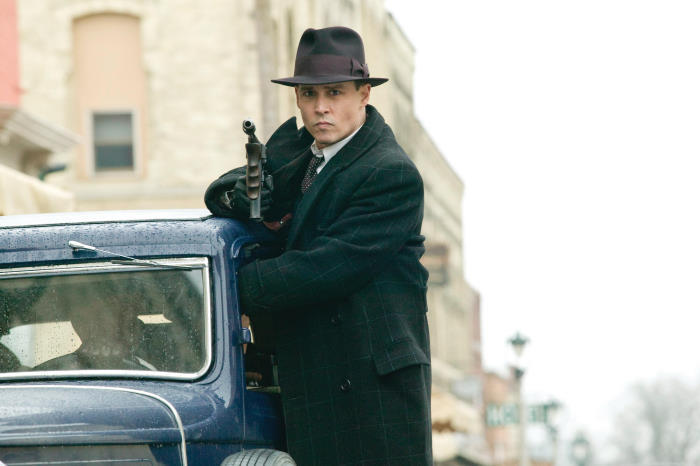
7. Public Enemies (2009)
Public Enemies
When it comes to famous outlaws, there are few that are as iconic as John Dillinger, especially given he was a man who wasn’t interested in stealing from regular people, but the state itself.
That’s partly why he’s the perfect historical figure for a Michael Mann film given his self-defined approach to life.
Public Enemies follows Dillinger (Johnny Depp) as he makes prison escape after prison escape, continuously evading capture and robbing banks before finding an added purpose in life in the form of one French-American, Billie Frechette (Marion Cotillard).
Like all of Mann’s anti-heroes, Depp’s Dillinger is charming and elusive all at once. He’s a character infused with an aura of mystique that Depp delivers with the casual suave that his own image beyond the screen has maintained.
But it’s in the reimagining of the period through a digital lens where Public Enemies really excels. The moody greys, dark passages and almost colourless world are so striking here that it creates a more profound hyper-realism — almost bringing the 1930s to life in a way that shooting on film wouldn’t.
6. The Insider (1999)
The Insider
A film about a man’s grapple with doing what’s morally right or being forced into silence by forces greater than him; The Insider, in true Mann-style, is an exercise in patience — in waiting for the right moment to make a move before it’s too late.
Unlike Mann’s other thrillers though, The Insider doesn’t have vans of heavily armed forces hiding around the corner, but it instead puts its faith in the truth overcoming the odds. That truth is in the form of former tobacco chemical scientist, Jeffrey Wigand (Russell Crowe) and the 60 Minutes producer looking to help bring his story to light, Lowell Bergman (Al Pacino). The odds are the Brown and Williamson Tobacco Company who are trying to keep Jeffrey, and this story around what really happens to tobacco, silent.
Guided by Mann’s brilliant direction, a well-crafted script by Mann and Eric Roth, and a standout performance from Al Pacino in an unfamiliar but equally familiar performance, The Insider paints a perplexing portrait of the lengths to which vindictive multi-billion dollar organisations will go to in order to supress information. It brings various parties with differing interests together, and creates a wide web of uncertainty for all involved — with no clear contingencies, but everything to lose for everyone involved.
5. Blackhat (2015)
Blackhat
Michael Mann’s most recent film feels like a sum of all of his best parts (it’s also been eight years since it was released!).
The film follows hacker Nicholas Hathaway (a career-best performance from Chris Hemsworth) who, after a series of awry events happen by an unknown source, is released from prison for the purpose of helping discover the person behind these events.
Blackhat is where ideas meet, characters converge, and where the tangible coalesces with the intangible.
In a similar way to Manhunter (but without the straining of classic thriller conventions) and Heat, this film once again depicts two sides of the same coin — Hathaway as the hacker-turned-FBI collaborator, and the unknown hacker blowing up coolant pipes and infiltrating wall-street. One is front and centre for the audience, while the other is kept faceless. While their intentions are different, they occupy a similar space like almost all of Mann’s characters do, but Blackhat is different to his past films because of how it bridges the characters worlds together and carries and communicates messages.
Mann uses modern technology to create a divide (the intangible), and forces his characters to embrace human interaction and connection (the tangible) if they are to overcome this threat.
His portrayal of the L.A. and Hong Kong maze of buildings and their bright lights speaks to the lack of personality or distinguished features in these settings, which fizzles down to the people who fade into each other like ones and zeros. It’s a wider critique on getting lost in the masses at a macro level, and getting lost in the code on a micro level.
Hathaway is the vessel Mann uses here to try and break through the code and by extension, this front that a world lacking real connections, has maintained — with Hemsworth using his size and stature to brilliant avail.
The closing sequence sees Hathaway concoct weapons and armour out of everyday tools, as though Mann is returning man to a primitive state before the world of data and technology became the guiding force. Hathaway gets the upper hand, and walks away in perhaps Mann’s most optimistic ending.
4. Thief (1981)
Thief
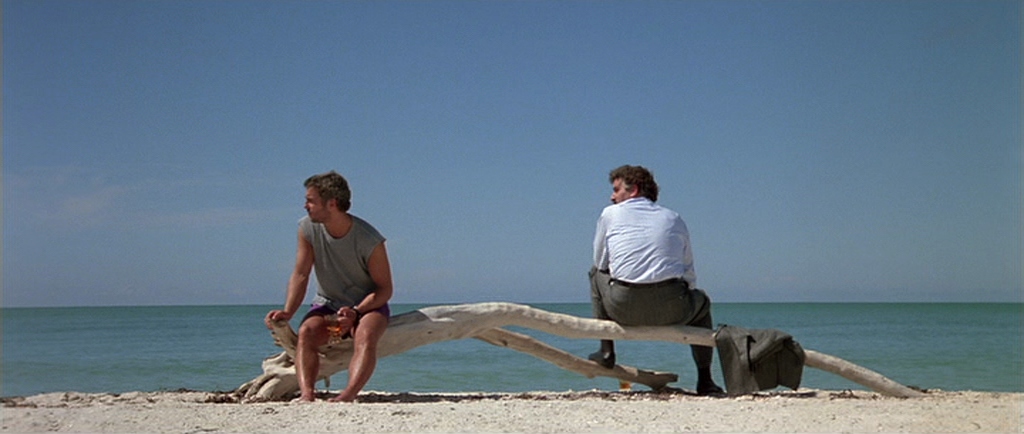
The OG Mann, Thief introduced audiences to this true-crime loving director who focuses on characters that take pride in the work they do, sometimes fall in love in the process, and live life on their own terms.
For expert safe-cracker and straight-talker, Frank (James Caan), he embodies the above perhaps more than any other character in Mann’s oeuvre. It might be because this is Mann’s most contained film in that it isn’t made up of major set pieces and crowded settings, but instead allows Caan to revel in the dialogue and the weight behind his words.
Thief is about a man on a mission to tick off his checklist of wants before cashing out. It’s also about a man refusing to bow down to the interests of others, instead taking it upon himself to shape his own destiny at any cost.
3. Collateral (2004)
Collateral
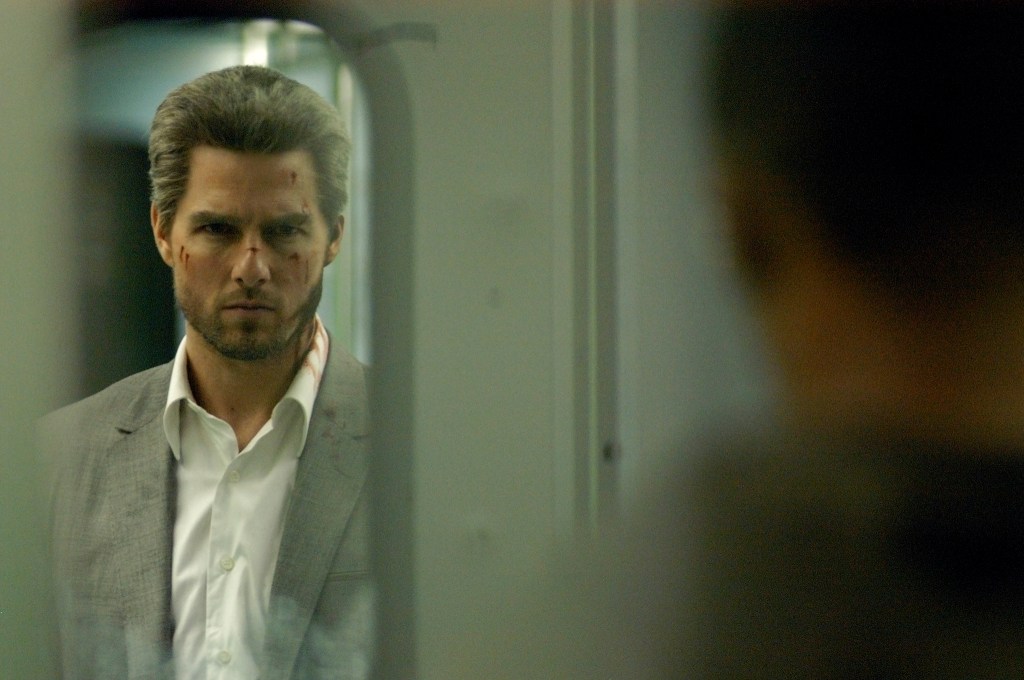
Two guys in a car, strangers to each other, both operating on a routine, a structure that they rarely break from, moving as one through the luminous L.A. night but to different ends.
Collateral is a wonderous neo-noir that pivots two men with differing moral compasses against each other: Max (Jamie Foxx), a slave to his inhibition, to his failure to act and make a difference to his life; and Vincent (Tom Cruise), a man untethered, a multi-faceted nihilistic hitman who gets in, gets out, and keeps moving forward.
Much has already been written on Collateral, from its vivid imagery to the rawness of its digitised look — at once enticing and haunting. Vincent poses a threat to Max’s idealised vision of tomorrow, but also an opportunity to start making things happen and not idle by.
2. Heat (1995)
Heat
What does one even say about what, in the eyes of many, is Mann’s magnum-opus?
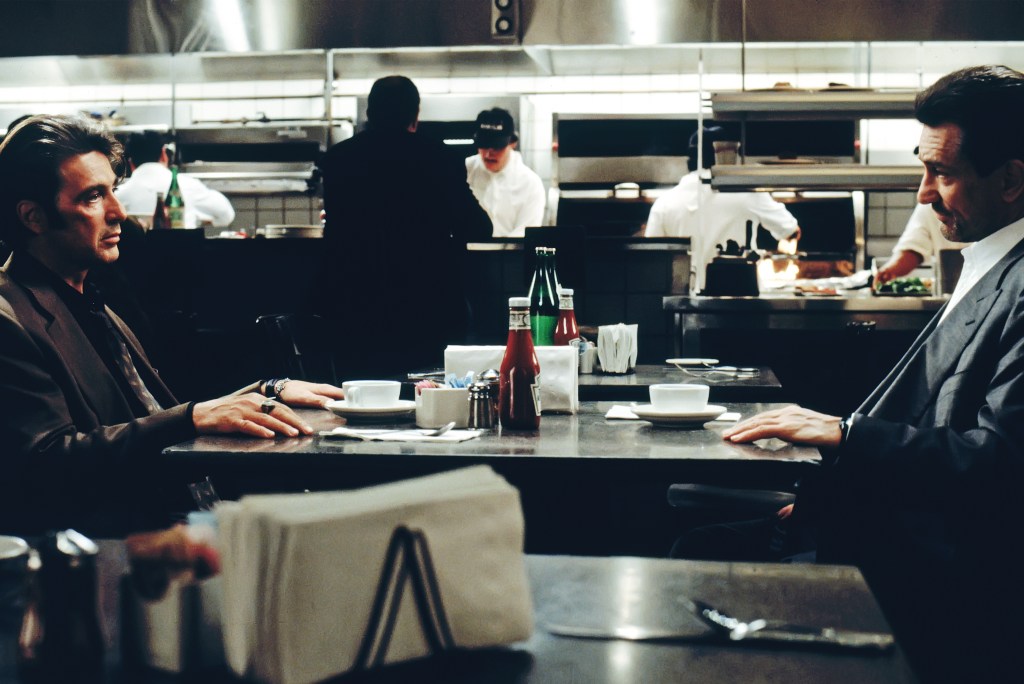
Heat is the sum of many parts, but it doesn’t work without its two key pieces: Al Pacino and Robert de Niro. The duo, reunited together on a feature for the first time (and for the first time ever in the same scene/s) since The Godfather Part II (1974), Pacino and de Niro are two sides of the same coin.
Vincent Hanna and Neil McCauley are like yin and yang — they don’t mix but they can’t function without one another. This speaks to Mann’s wider commentary on good vs evil, crime vs order which has been the focal point for 90% of his oeuvre. In Heat, Pacino and de Niro accentuate Mann’s fascination with these binary opposites to their full extent.
It’s as though these characters revel in the chase, of being the hunter and the prey, and they treat it like a drug that supersedes everything else in life. Mann brilliantly captures this through bright neon lights and the wider city which acts as its own sanctum that gives weight to the chase. Nothing is as beautiful as the city lights in a Mann film where cop cars race down the freeway in a storm of intensity.
But Heat is also made up of moments: the diner scene between Neil and Vincent is one of the greatest moments of character interaction in cinema history as these two men come face to face, pause the chase, and acknowledge each other; the downtown LA shootout where Mann shut down multiple blocks to shoot one of the most jaw-dropping scenes in any film ever; and the poignant finale where the two leads lock horns for the last time.
Without Heat, we may never have had The Dark Knight (2008), and that’s just one extra reason to watch this if you haven’t.
1. Miami Vice (2006)
Miami Vice
I’m sure Miami Vice is a top-three Mann on anyone’s ranking of his work, but this bustling neo-noir about two under-cover detectives goes beyond the 80s show of the same name to become a gripping tale of people accepting that they’re living on borrowed time and learning how to manage the time they have left.
On the surface, Miami Vice is a buddy-cop thriller about two detectives infiltrating an offshore drug operation where they act as the middle-man between the international supplier and the local Miami buyer. Their mission is to find out who the buyer is, but the deeper they find themselves in the operation, the more they realise they’ll never have an opportunity like this again.
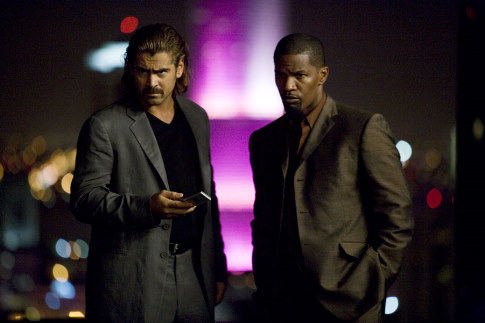
Jamie Foxx and Colin Farrell are the two leads here and (while already the case with Foxx) they instantly fit the Mann-model of characters who don’t always play by the books, are good at what they do, and sometimes make rash, emotionally led decisions.
But it’s through Mann’s ability to capture the fleeting nature of life, the suddenness of a bust and the shootouts that ensue, where Miami Vice makes a case for his best film. There’s a dream-like tranquillity to the use of digital footage here that might just be the best example of creating evocative images in the digital format. From the bright hues of the nightlife and its clubs to the more intimate sensual moments, there’s a sense of liveliness and temporality mixed together in the film’s visual language.
Mann’s growing fascination with the commodification and expendability of the human body really started gaining momentum here as well. Whether it be in the film’s final shootout where bodies drop at a whim or the use of people as shields for getting what you want (drugs, cash, obedience), it’s an aspect of his films that really does speak to how precious those moments of human interaction are for his characters when they do have them.
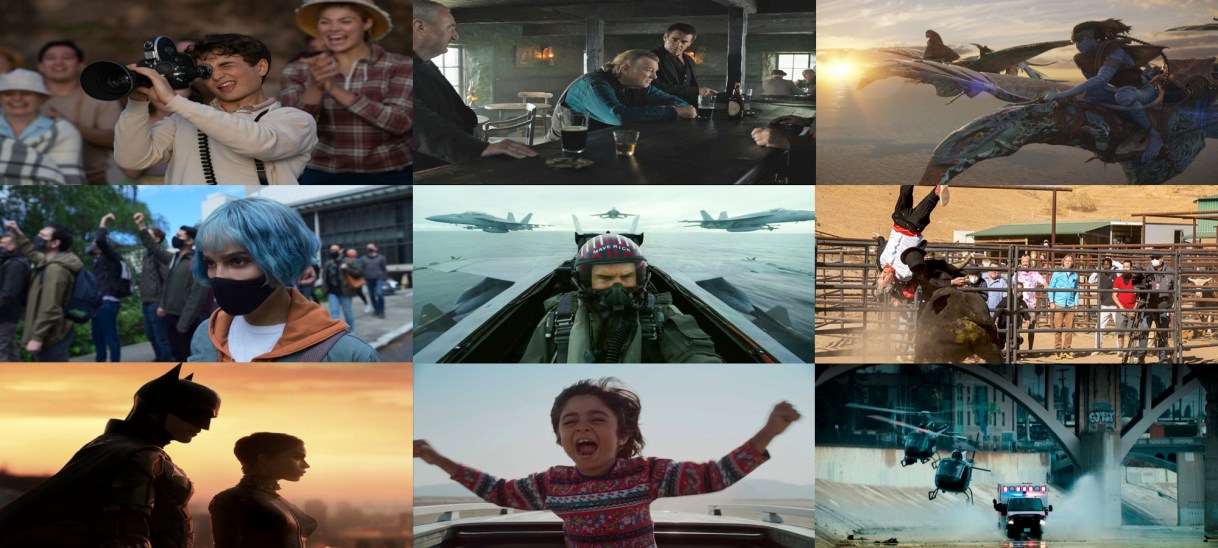
Picking out any 10 films from a year with stellar titles is never an easy task; this was especially the case for my 2022 list. In fact, not since 2017 have I had to think as much about the films on my end-of-year list. From David Cronenberg’s return to directing almost eight years since his last feature, to James Cameron’s return to Pandora almost 13 years since Avatar, right through to Tom Cruise’s return to the character that propelled him to A-class status — there was no shortage of the epic, iconic and memorable. That’s just a snippet of the below, so here’s my best 10 films of 2022.
10. Crimes of the Future
Having not directed a film since Maps to the Stars over eight years ago, David Cronenberg’s latest, Crimes of the Future, sees the body-horror mastermind return in resounding fashion.
The film, which I view as one of the dark-horse titles on my list, delivers all the signature Cronenberg goodies that audiences love (blood, guts and more guts) but in a much more toned down display. Of course, Cronenberg never does gore for the sake of it, but instead explores mankind’s deepest rooted fears —experiments gone wrong, tech turning on us etc.— while using the grotesque to amplify his concerns.
Crimes of the Future is no different in that regard, as it looks to a time ahead where humans have a changed digestive system and a hunger that can only be fed through the likes of plastic. Performance art meets the grotesque, with Saul Tenser (Viggo Mortensen) growing organs almost at a whim, and his partner in crime, Caprice (Léa Seydoux) removing them to a much appreciative audience.
Howard Shore’s hauntingly subtle score gives weight to the eeriness at play and even heightens Mortensen and Seydoux’s already brilliant, nonchalant performances. It’s a film that’s creepy but clever in its creepiness, one that captures the festering of the human body and the need to adjust the way we live as our bodies change. That’s only part of it, of course — the real crime is not watching the latest Cronenberg.
9. Hit the Road
There’s few films in 2022 that will throw you an emotional curveball like Panah Panahi’s Hit the Road. Panahi, son of legendary Iranian filmmaker Jafar Panahi, crafts a road trip story that explores the struggle of separation, something that is a staple of Iranian filmmaking and a harsh reality in a country with a turbulent political standing.
Politics aside, the film is peppered in the humour often found in similar works from the region —Jafar Panahi’s, in particular— as it incorporates everyday family bickering and banter that I’m sure everyone who has ever been on an “are we there yet” type road trip with their family, has experienced. Films like this often require a convincing ensemble to help hit home that tense but loving family feel, and fortunately the ensemble here do an excellent job.
8. Kimi
A covid-era film that doesn’t make covid its main story point? Count me in.
With an overlooked performance by Zoe Kravitz who nails the agoraphobia-isolated character with her very blank, “leave me alone” facial expressions, Kimi sees Steven Soderbergh pack a lot of nuance into this smaller-scale crime-thriller. The result is a nail-biting search for answers as Angela Childs (Kravitz) is forced by circumstance to venture outside after hearing what she suspects is a sexual assault or a murder, on the Kimi device (this film’s equivalent to Amazon Alexa).
Obvious comparisons have been made to Alfred Hitchcock’s Rear Window (1954), though the films are entirely separate in how they approach their subject matter.
7. The Batman
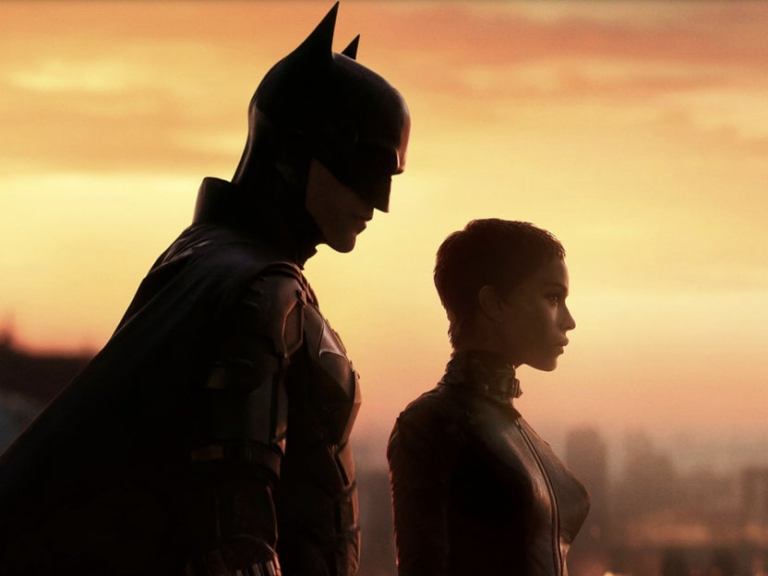
Matt Reeves’ The Batman represents a fresh take on the caped crusader, one that is more akin to the ‘Arkham’ video games in that it explores the Batman’s more detective leanings.
What follows is a crime-thriller worthy of the highest praise and one that is reminiscent of the likes of classics in the sub-genre including Seven (1995). Greig Fraser’s cinematography is wonderous and keeps in line with the very gothic leanings that Reeves is going for here. Michael Giacchino’s score is equally inspired, with the composer using church bells and low hums to create an eerie sensation.
Reeves no doubt looked to the Christopher Nolan and Tim Burton’s films when figuring out how he would approach this, and there are obvious correlations like the gothic-vibe from Burton’s films and the development of the Riddler being very similar to that of the Joker in Nolan’s The Dark Knight (2008). Yet, this film is unequivocally Reeves’. Sure he drew on the films that came before his, but this is a film made up of close-knit conversations, measured action sequences, and clever storytelling. The rowdiest this film gets is during a truly memorable chase sequence involving Batman’s custom V8 Batmobile.
The cast is just as committed, with Robert Pattinson’s emo-like appearance being fitting for the darker aesthetic; Zoe Kravitz once again fits the part perfectly playing Catwoman; Collin Farrell shines as Oswald Cobblepot in what has been a stellar year for him; and the likes of Paul Dano and Jeffrey Wright do well in their parts as well. In fact, all aspects of production come together brilliantly like cogs in a machine. The end product is a welcome addition to the ever-growing Batman story.
6. Jackass Forever
When it comes to practicality in filmmaking, Johnny Knoxville and his crew of misfits are the ones you can count on to put on a show.
Jackass Forever is a film nestled in its own comfy corner of cinema. Yes, Buster Keaton, Charlie Chaplin and Jackie Chan are incredible actors and stuntmen who have put their bodies on the line for the sake of entertainment, but it’s the man-child Jackass group who have done it because they find it fun to face death.
Yet, Jackass Forever isn’t just people doing things that are best left to the imagination, it’s also a culmination of 20+ years of commitment to pushing the boundaries of what can be done in front of the camera. For all of its death-defying moments, Jackass Forever feels like a warm hug that throws you a sucker punch when you’re least expecting it. Bringing in the classic faces that have laid the groundwork for Jackass, along with some new and equally risk-embracing ones, this is a film that celebrates the unimaginable, and doesn’t hold back on the bruises.
It’s a film, like the others in the series, that is built up of ‘firsts’ both in terms of what you’re seeing and for the cinema broadly, and deserves the highest of praise for what it achieves.
5. Ambulance
You either love him, hate him or tolerate him, but there’s no denying the Michael Bay is a man of the cinema — particularly action cinema.
Ambulance, like all of Bay’s previous films, is set on displaying the biggest and wildest action sequences you can get. The film hits like a heavy dose of adrenaline, and it keeps you infused right from its early stages until its heartfelt finale.
The film is a testament to Bay’s unabashed approach to direction where he keeps the tension boiling, turns up the temperature gradually, and then drops the heat to a boil again while never turning it off. The best examples of this are found in the way the film’s technical elements work together to sing Bay’s chaotic tune: the piercing score, the snappy cross-cutting, the canted camera angles, and the mobile drone camerawork that takes the audience and positions them in unfamiliar situations.
Ambulance works because even with all the absurdity leading up to the characters finding themselves in this dire chase situation (let’s face it, no one would escape that many LAPD officers and vehicles), there’s never any respite to dwell on that aspect of the film. Bay knows what he’s doing and you can either buckle up for the ride, or dive ride out the passenger seat.
4. The Banshees of Inishiren
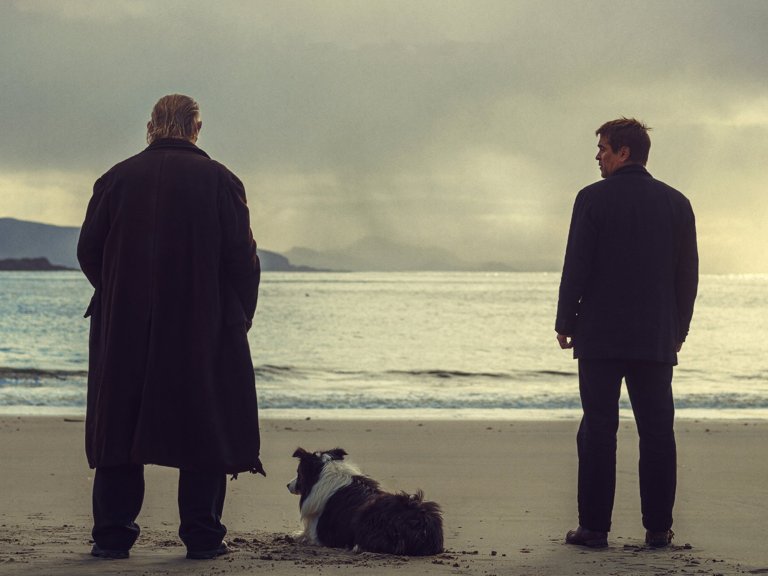
In what is quite clearly a spiritual successor to McDonagh’s equally witty and heartfelt debut feature In Bruges (2008), The Banshees of Inisherin paints a perplexing picture of the human condition against the beautiful backdrop of a fictional Irish town during the Irish Civil War.
It’s a story of two friends —Colm (Brendan Gleeson) and Pádraic (Colin Farrell)— who decide not to be friends anymore (well, at least one of them decides). But more than that, The Banshees of Inisherin is about the fleeting nature of life; the realisation that nothing lasts forever even if we want it to.
McDonagh’s script here is easily his most realised — even if In Bruges still contains some of my favourite lines from any movie ever. He manages to mesh together humour and poignancy in ways that no other director does, and it leaves you in a state where you’re not sure whether to laugh, cry or both.
Gleeson and Farrell are at the top of their game (as is the rest of the cast), and I wouldn’t be surprised if we see the male acting categories be swept up by this duo in the coming awards season.
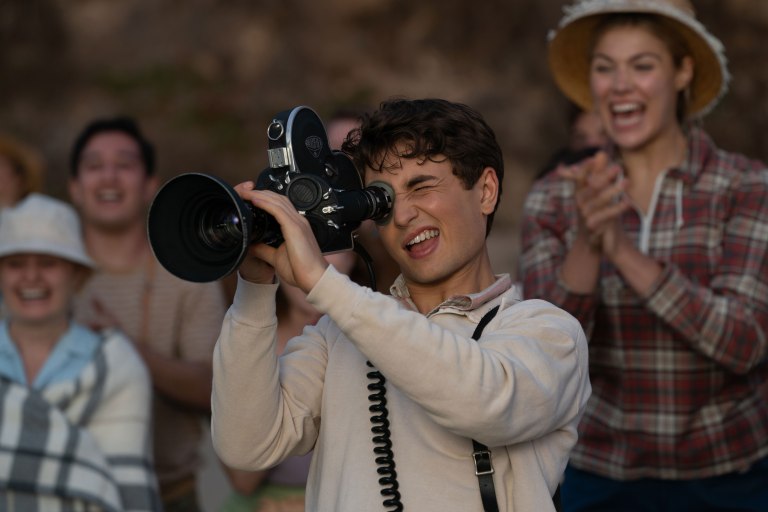
3. The Fabelmans
Anything I say about Steven Spielberg is superfluous at this stage, and honestly if The Fabelmans is anything to go by, Spielberg tells (or shows) you everything you need to know about him anyway.
This is ultimately Spielberg’s visual diary, one that at once examines the very youthful promise of endless possibility —with the only limitations being your imagination (as symbolised by the camera)—, and the navigation of expectation, of the un-imaginary and the tangible (the reality that hits when the record button is turned off).
It’s clear that Spielberg and co-writer and frequent collaborator, Tony Kushner, have dug into the nitty gritty of the directors’ life. There is a level of verisimilitude coursing through the film whether it be in the performances, the very raw and grounded screenplay that avoids glossiness, or John Williams’ moving score — the duo have cashed in all of the chips Spielberg has accrued and pulled no stops.
The Fabelmans paints an interesting portrait of self-actualisation, of finding your place in the world and pursuing what you love even if it means confronting hard truths in the process. This is Spielberg’s world, and we’re living in it.
2. Avatar: The Way of Water
No one does blockbusters quite like James “Jim” Cameron, and Avatar: The Way of Water is the proof in the pudding.
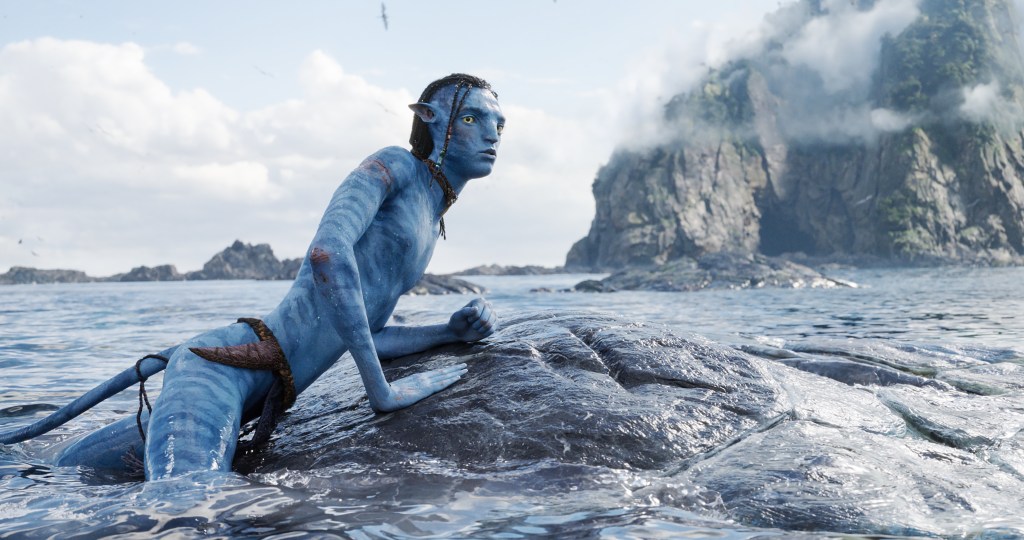
The Way of Water takes audiences to the far beyond of Pandora, namely to its oceanic vistas that, on their own, make the 13 year wait between the original and the sequel all the more worth it.
Cameron, of course, is no stranger to pushing the boundaries of what is achievable at such a scale; if a project isn’t ready to be pursued, be it because of a lack of technological development or the moment just not feeling right, he won’t pursue it. That was the case with Avatar (2009) which he decided to eventually make almost a decade after writing the treatment. He saw Peter Jackson’s development of motion capture with Gollum in The Lord of the Rings films and King Kong in King Kong (2005) as turning points for technology in cinema, as well as Davy Jones in Gore Verbinski’s The Pirates of the Caribbean films.
But The Way of Water blows all of these titles out of the water with what it achieves visually (and that’s coming from a died hard Jackson and Pirates fan). From the refined look of the Na’vi including the way they move under water and their human-like movement generally, to the bumped up frame rate at 48fps which adds extra fluidity to proceedings — The Way of Water is a visual masterpiece that represents a pivotal turning point in visual effects and motion capture.
Aside from its technical marvels, it’s also a sum of all of Cameron’s experiences up until now. His brilliance ultimately rests in his unmatched understanding of scale — of how to get all of his story points in a basket while showcasing them in the biggest way possible.
He clearly cares for this world and everything within it, and he pours his heart and soul into each and every frame to the point where you can’t help but care for it as well.
1. Top Gun: Maverick
Do you feel the need for speed? I sure did.
Top Gun: Maverick is the Terminator 2: Judgment Day (1991) of 2022. The perfect sequel to Tony Scott’s iconic Top Gun (1986) and one that goes above and beyond its predecessor in (almost) every department (save for maybe how iconic it is, though we should maybe give it 36 odd years).
Joseph Kosinski’s film is the one that I’ve though about the most throughout 2022, so much so that I’ve been desperate to buy its original poster which has now ignited a fascination with poster collecting that I never knew existed.
Whether it be the death-defying air-scapades that prove how much of a madman Tom Cruise truly is, or the care with which this sequel is able to revisit and reimagine its titular character — there’s no shortage of brilliance behind every decision. The stakes are raised, and Maverick is forced to come to terms with his past, find his place in the world, and pass the torch on to the younger generation — directions in characterisation that screenwriters Ehren Kruger, Eric Warren Singer, and frequent Cruise-collaborator, Christopher McQuarrie, do a great job of balancing.
This film will make you nostalgic, will leave you in awe, and will sit with you long after its end credits roll by.
Honourable Mentions:Glass Onion: A Knives Out Mystery, Ticket to Paradise, Guillermo del Toro’s Pinocchio, Puss in Boots: The Last Wish, The Northman and Good Luck to You, Leo Grande.
Avatar: The Way of Water preview screening provided by Disney
In a year where caped crusaders have played second fiddle to F18’s and dinosaurs, Avatar: The Way of Water sees James Cameron swimming in his exclusive pool of opportunity; a sandbox style, open world, video game feeling film that is as hearty as it is beefy. Cameron, unsurprisingly, is no stranger to pushing the boundaries of what a high concept blockbuster looks like. Setting the trend with The Terminator (1984), he’s always been out to entertain first, and worry about everything else second. The Way of Water speaks to that sentiment and culminates in a sensory experience unlike any at the cinema this year.
This is, after all, a film that —like the original Avatar (2009) before it— places an emphasis on out-of-body living, on connecting with the surrounding world and learning how to nurture and care for it. Cameron, an environmental activist in his own right, made Avatar and has pursued these sequels in part because he sees them as an opportunity to raise more awareness about our own world and environment.
In The Way of Water, he follows similar concerns to that of the first film, but trades the fullness of the foresty terrain, for the breadth and depth of the oceanic surroundings. The Na’vi continue to thrive, with Jake Sully (Sam Worthington) now leading the tribe alongside his partner Neytiri (Zoe Saldana). They also have a few mini-Sully’s of their own: two sons —Neteyam (Jamie Flatters) and Lo’ak (Britain Dalton)— and a daughter, Tuk (Trinity Jo-Li Bliss). They also care for Kiri (Sigourney Weaver) who has a connection to Weaver’s character from the first film, but one that is kept intentionally vague.
The actual events of the film take place some 10 years after those of the first one. Humans continue to arrive to Pandora to harvest resources, and are even continuing to create avatars of their own. One of those is Colonel Miles Quartich (Stephen Lang), whose DNA and memories have been imbued in one of the lab grown blue beings to the point where he acts and talks like the Colonel in the first film, but he’s not him per se.
In essence, the stakes feel similar: Jake and co are on the backfoot while the Sky People pursue and hunt them. Sometimes the actual motive behind this continued hunting isn’t explained all that clearly — the Colonel seems to have retained the same grudge for Sully in his avatar form as he had in his human form, but beyond that, the plot plays out like a game of hide and seek. Most of that hiding happens in the distant islands far off the mainland, where other tribes reside and have grown and learned the way of water. A good chunk of the film is spent leading up to Sully’s retreat into this unseen part of Pandora, but once out in open waters, the film opens up both visually and sonically.
Cameron has a penchant for anything aqua related, and it shows in these deep diving areas. The flora and fauna pop in ways that make one believe this world is tucked away somewhere in our own oceanic backyard. Maybe seeing all of this unfold through Cameron’s other love, 3D, might have heightened the immersion? But there is an evident care for this world that entraps and allures you, and makes you believe it’s real, if but for a split second.
It helps that the frame rate is bumped up to 48fps at certain parts. Character movements are crisp and almost life-like, where there is a fluidity to the motion. This is especially noticeable in the underwater portions of the film that are as visceral as they are breathtaking, with colours popping out like a Van Gogh painting as you try and absorb each section of the frame.
Cameron makes it easy to care for these characters, who have more nuance splashed across their digital faces and more realness behind their big anime-like eyes, than any of the beings before and since Avatar. The technology is a large reason why this film works, because there just hasn’t been anything like it in cinemas previously, Avatar included. The film’s weakest link tends to be anything that isn’t digitised to the gills, like the Tarzan-esque boy Spider (Jack Champion) who was left an outcast and was essentially adopted by the Sully’s. While the film justifies his presence, it’s more jarring to spend time with anything that isn’t wholly CGI.
Cameron’s brilliance ultimately rests in his unmatched understanding of scale — of how to get all of his story points in a basket while showcasing them in the biggest way possible. He swiftly transitions from moments of bonding and connection between tribes and creatures, to large battles sequences involving these tribes and creatures as they glide over the ocean. You might not end up caring for the whale like Tulkin beasts that end up playing a more vital role in the plot than anything else, but it’s enough to believe that Cameron does. It’s a large reason he takes so long with these films, and especially with The Way of Water, as he finds that balance between telling a story about big blue people and everything in between that’s worth caring about, with the trailblazing action and scenery on display.
Even if the plot is very akin to that of the original film, The Way of Water is a sum of all of Cameron’s experiences and experiments up until now, where he pours his heart and soul into each and every frame, as though this could be the last ride in Pandora even with most of the sequels penned and planned out. The Way of Water hits like a tidal wave, and it’s worth getting drenched for.
Breathing life into an intellectual property (IP) that has had countless iterations is no easy feat, yet Guillermo del Toro has done exactly that with his unique and heartfelt take on Disney’s iconic wooden boy, Pinocchio. In fact, Guillermo del Toro’s Pinocchio (2022) —or just Pinocchio— might be the best entry in this fabled story, and it’s easily one of del Toro’s best.
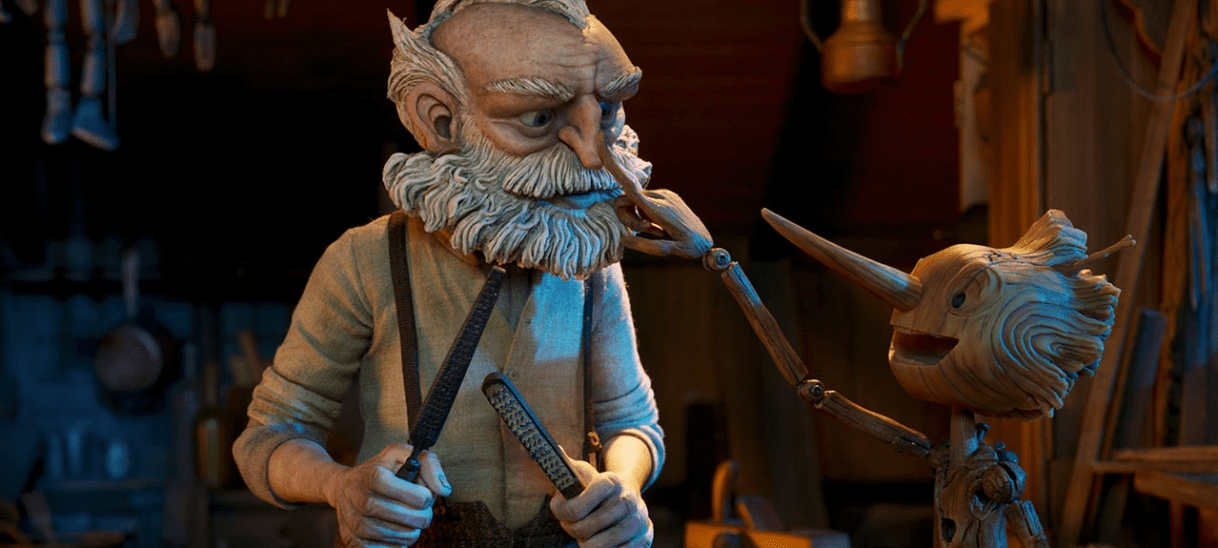
Like the careful craftwork of Geppetto, the woodcarver that creates Pinocchio, del Toro masterfully creates a heartfelt story of grief and loss through the lens of a fascist-set Italy. Unlike the year’s other Pinocchio film which felt like a sanded-down, stringless remake of the celebrated original, this one is coated in all the gloss that epitomises del Toro’s career: otherworldly creatures, a looming air of gloominess, a darker palette, religious commentary and evocative imagery. It’s in the un-del Toro-ness of the visual component —stop motion animation— that all of those ingredients shine, and where the film separates itself from the director’s past films.
Pinocchio has some of the best stop motion work, period; unsurprising given that del Toro co-directed the film with Fantastic Mr. Fox (2009) Animation Director, Mark Gustafson. The world has an air of freshness and almost appears like a series of dioramas that have been stuck together. The details of the world are sharp and striking, right from the spaces the characters inhibit like a church and foresty area earlier on, to the underworld and Monstro scenes in later stages. It’s an enticing vista that sucks you in the more the film unfolds, and it’s clear that animators were given ample time to carefully workshop the look and feel that del Toro was going for. When coupled with Alexandre Desplat’s spine-tingling score that is in the vein of his score for The Shape of Water (2017), there is an added layer of enchantment that emerges.
In terms of the story itself, it hits all of the key beats from Carlo Colldi’s original book —the circus scenes, the water monster Monstro in the later stages, etc.— but del Toro works around these moments to add his own flourishes and feel. Whether that be the aforementioned fascist leanings, where he explores the loss of innocence from children in the face of conscription and nationalism, right through to those underworld moments where he asks questions pertaining to mortality and the significance of life and death.
They’re heavy themes and leanings for a story that has always been depicted as light and fluffy, and has mainly covered ideas relating to growing up and fitting in. It helps that del Toro immediately jumps into a moment of anguish, as Geppetto (voiced with a gut wrenching croakiness by David Bradley) mourns the loss of his son, Carlo (voiced by Gregory Mann who also voices the titular character), after a bomb is dropped on the town church by unsuspecting war planes above. This whole opening sequence that explores the prelude to Geppetto’s grief and prolonged mourning, establishes the sort of grimness that will persist.
Pinocchio (Gregory Mann) and Count Volpe (Christoph Waltz) in Guillermo del Toro’s Pinocchio (2022)
It also introduces the running commentary on religion that has underpinned most of del Toro’s oeuvre from and since The Devil’s Backbone (2001). For instance, the destruction of the church and its subsequent rebuilding goes on to symbolise Geppetto’s own rebuilding of his son. This is especially true as Pinocchio (after he has been magically brought into being) assumes the role of Carlo by helping Geppetto build out a wooden Jesus in the church (the last task the father and son shared). He goes on to raise one of the film’s most significant lines relating to why everyone likes the wooden Jesus but not him. This undercuts the road to self-discovery that Pinocchio ultimately takes as he faces death and rebirth numerous times, before enacting a moment of selflessness in the film’s final act that would bring him as close to ‘being a real boy’ as he can come.
In order to get to that point though, he has to face various hurdles including a money-hungry circus ringmaster, Count Volpe (Christoph Waltz); a fascist government official from the town, who is set on sending the puppet with immortality to war (del Toro’s frequent go-to, Ron Perlman); the prospect of living forever and seeing those around him die; and his own desire to experience the fullness of the world.
Along the journey he is also accompanied by the talking cricket Sebastian (formerly, Jiminy) voiced by a comforting Ewan McGregor who injects the film with some of the comedic relief (e.g. being squashed countless times, being interrupted just as he’s about to break-away into song). Tilda Swinton also has a subtle role as an angelic spirit of life that brings Pinocchio into the world, and she also plays the sphinx-looking, death alter-ego that meets him every time he dies. Each of these characters have a distinct look that is both familiar and different in the ethereal way that del Toro’s creatures tend to be.
While finding one’s purpose and identity comes with its challenges, Guillermo del Toro’sPinocchio helps the wooden puppet get there, and at the same time creates an experience with a unique identity of its own.
Guillermo del Toro’s Pinocchio is in select cinemas and will be streaming on Netflix from December 9.
The heyday of the rom-com might be behind us, but a film like Ol Parker’s Ticket to Paradise (2022) is a stark reminder that there may still be hope for the subgenre. In fact, a ‘ticket to paradise’ is exactly what’s on offer in this George Clooney/Julia Roberts helmed feel-good flick, and that might just be what the once thriving subgenre has been missing.
That’s not to say that there hasn’t been the odd romedy in recent years, with Long Shot (2019), Marry Me (2022) and Crazy Rich Asians (2018) all coming to mind. But until Ticket to Paradise, there hasn’t really been a rom-com that one can firmly say is reminiscent of the biggest and best the subgenre has to offer. Titles like Notting Hill (1999), Pretty Woman (1990), Sleepless in Seattle (1993), and my personal favourite, Forgetting Sarah Marshall (2008), in many ways defined what a romantic comedy is, what it looks like, and what sort of faces work in bringing these far-fetched stories to life.
One of those —and perhaps the most prominent— is Julia Roberts. No other name is as synonymous with rom-coms as her, with the proof being in the pudding of some of those aforementioned titles. She brings a certain warmth and infectious magnetism that reminds viewers that everything will be okay, even though that is known long before you’ve even entered the cinema. But when you pair Roberts with Clooney, you’ve got a recipe for success.
The dynamic duo, re-united for the first time since Money Monster (2016), play a divorced couple who want nothing to do with each other. It’s their daughter Lily (Kaitlyn Dever), however, who acts as the bridge that keeps the two connected; this so much so that her abrupt decision to marry a Balinese seaweed farmer, Gede (Maxime Bouttier) while holidaying in Bali is the perfect dilemma to bring her estranged parents back together, but for a common cause — to prevent her from throwing her life and career away in a rash decision.
(from left) Wren (Billie Lourd, back to camera), Gede (Maxime Bouttier) and Lily (Kaitlyn Dever) in Ticket to Paradise, directed by Ol Parker.
The premise is about as rom-com centric as can be: you have a star-led couple who loathe each other (tick), you have the obstacle that ultimately brings the characters together (tick), and you have a tropical setting that builds and restores love (tick). These are obviously ingredients that have been employed in films like Couples Retreat (2009) and Just Go With it (2011), and they can be moulded to fit different romedies.
With Ticket to Paradise, however, Parker knows how to make the most of these elements. He lets his star duo play off of each other with such an ease and with the room to adlib if necessary. Of course, being the Hollywood heavyweights that they are and maintaining a great friendship off screen, that’s hardly difficult for Clooney and Roberts. But it’s in the way Parker frames his actors and how, even with the predictability of where the film is going, he is able to maintain this finesse in getting you where you need to go plot wise.
It’s something that’s often lacking in modern romedies where, like Couples Retreat or Just Go With It, too often the dialogue falls flat as most of it is throwaway for the sake of a cheap laugh. Even with the constant verbal jousts that Clooney and Roberts display, there is a method to their madness, and it isn’t without purpose. It ultimately makes that predictable ending all the more worthwhile as, like the characters who fall for each other either for the first time or those that fall for each other all over again, the audience is nurtured to fall for them as well when all is said and done.
In order to get that point though, Georgia (Roberts) and David (Clooney) have to act like the cool, calm and collected adults they know they aren’t. Doing all they can to sabotage the wedding, Georgia and David engage in childlike antics. Whether that’s nabbing the rings from the young and oblivious child ring bearer or setting up a tour of a temple that curses all unmarried couples, there isn’t a shortage of things they won’t do to prolong the wedding.
At the end though, Ticket to Paradise is a reminder that no two people are the same, and by extension no two paths are the same. Nothing is ever set in stone if you don’t want it to be, be it a career choice or a divorce. Love ultimately triumphs, or at the very least, the realisation that not everything has to be planned out — sometimes you just have to take a leap of faith.
Ticket to Paradise is screening in cinemas nationwide.