“Life could be pretty boring if we didn’t make it funnier.”
Eight years have passed since Australia, and the world lost legendary satirist John Clarke, a New Zealander whose comedic alter-ego made him a national celebrity, before he made the trip across the Tasman, called Melbourne home and delighted another whole country with his distinct brand of humour. His death in 2017 was met with the kind of despair our brethren generally reserve for athletes, movie stars or royalty; praise came forth from all quarters – journalists, thespians, second-rate critics and the very individuals he so often lampooned, politicians, all effusively praising his wit and drawing attention to his huge body of work in written, aural and visual formats.
No figure is better placed to tell the story of this Kiwi multihyphenate than his eldest daughter Lorin, who emulates his diverse artistic talents by performing the manifold roles of director, producer, writer, interviewer and narrator of the very documentary that bares his name: But Also John Clarke (2025). Through monologues, conversations, anecdotes and a treasure-trove of archival footage – including home-videos, and Lorin’s own conversations with her father before his untimely death – viewers are presented with a captivating and amusing portrait that cordially pays homage to its eponymous focal point.
Much of the narrative’s first half is spent (as is often the case with stories of a biographical nature) exploring Clarke’s younger days in his mother-country, detailing a tumultuous upbringing that saw his creative spirit very nearly stymied by an oppressive boarding school, and a court blame him for the failed marriage of his parents rather than the more logical explanations of “irreconcilable differences” or “emotional trauma stemming from the horrors experienced in the Second World War”. Such torment would have broken an ordinary man, but not John Clarke, who overcame this animosity by way of several failed university courses, a brief sojourn to Europe and applying himself to the scene of theatre. This, of course, begat the persona we know as Fred Dagg.
Our attention is soon diverted to happenings in Australia, where John raised his family, refined his craft and began making allegorical waves via supporting roles on ABC Radio’s Science Show – despite having virtually no knowledge of any scientific pursuits – and ABC TV’s The Gillies Report, on the latter programme earning recognition as the globe’s foremost authority on farnarkeling. Then came sketches with Bryan Dawe on A Current Affair, in which Clarke masterfully impersonated political dignitaries and those of a comparable persuasion through the simple act of bearing their name and emulating their mannerisms, followed by the equally-innovative mockumentary series The Games.
Shaun Micallef (left) is one of several talking-heads acquiesced for But Also John Clarke
Parties from Clarke’s homeland and adopted nation lend their voices to the film on a pro rata basis, ranging from his theatrical contemporaries to the funnymen he himself would go on to inspire, and some fellow NZ expatriate by the name of Sam Neill (we’re told he’s quite famous). As director, editor et al, Lorin utilises their insights to craft a story warm and moving without succumbing to the egregious crime of saccharinity that all too often befalls personality-driven documentaries. More impressive still is her compelling argument put forward that Fred Dagg, and by extension John not only gave birth to New Zealand’s comedy scene, but also helped to foster an irreverent, self-deprecating sense of national pride.
Faults in the picture are few and far between, especially when viewed on a cinema screen via digital projection. A more discerning eye may be saddened by the lack of consideration given to Clarke’s international standing, with an opening remark from Britain’s Stephen Fry being the only moment to suggest he had any influence outside of the Antipodes; others will be left to ponder why nothing is said of him providing his vocal talents to Wal in the Footrot Flats movie, The Dog’s Tail Tale (1986).
One element certainly not lacking is a steady provision of humorous clips from John’s frequent and plentiful appearances on the stage and screen during his lifetime. Some of these extracts are four or even five decades in age, yet timeless in terms of their amusement value – at the Melbourne International Film Festival screening this reviewer attended, hearty laughs were often elicited from audience members young and old. Most hilarious of all proved to be a very early sketch involving a Fred Dagg precursor named Farmer Brown, the punchline of which had yours truly succumbing to fits of tittering long after the credits had rolled.
Countless luminaries have dreamed of being the subject of a critically-acclaimed documentary that bears their name in years gone by; now, they’ll be hoping such a production is as earnest, mirthful and brilliantly told as what Lorin Clarke has put together in honour of her forebear. But Also John Clarke is a more-than-fitting tribute to a man of infinite jest who meant so much to so many people, not least his ever-talented daughter.
But Also John Clarke is screening in limited release now.
Another year, another chaotic year of MIFF. With some dizzying heights and impressive debuts, cinema feels in good hands as we march headfirst into the tail end of the 2020s (a wild thought). The festival is the highlight of the cinematic calendar for the city, defining the landscape as it shifts towards awards season, with a tremendous work of curation and bold decisions as addressed below that make August the best month of the year.
Twinless (2025) – James Sweeney
⭐⭐⭐⭐
Rating: 3.5 out of 5.
A proper dramedy with a complicated but compelling pair at its core, Twinless is a charming and confident debut not weighed down by its writer, director James Sweeney’s decision to also star in the film. Following a pair of twins who have recently lost their other half and meet at a support group, Dylan O’Brien’s Roman (and Rocky) and Sweeney’s Dennis fall into a quick friendship as they look to fill the void.
Would make an interesting double feature with Andrew DeYoung’s Friendship (2024) as a perceptive and darkly funny look at the pursuit of modern male friendship, with many screwball moments in Sweeney’s film feeling like I Think You Should Leave (2019) pitches. Sweeney excels in wrongfooting the audience into a charming dramedy that gives space to both sides of the genre mash.
The Mastermind (2025) – Kelly Reichardt
⭐⭐⭐⭐
Rating: 4 out of 5.
No one is operating on Kelly Reichardt’s small but vital level. With an autumnal romp that makes way for a surprisingly poignant introspection into one’s relationship to political change, Reichardt’s period heist mood piece captures you in a breathing world, and will linger on you long after you leave like the smell of last night’s smoke break.
Josh O’Connor’s niche as a dirtbag charmer continues with his best Elliot Gould here (absolute cinematic catnip for me) as an art school washout living in suburbia with a wife (an underused Alana Haim) and two kids who have a side hustle-slash-obsession with art heists. While not on the level of O’Connor’s recent classic La Chimera (2023), this cool, warm-hued hangout film will only expand as the months go on, where I would not be surprised if it lands on end-of-year lists and amongst Reichardt’s most beloved films.
Blue Moon (2025) – Richard Linklater
⭐⭐⭐⭐
Rating: 3.5 out of 5.
A frenetic script by novelist Robert Kaplow and a high-level performance from Ethan Hawke allow Richard Linklater’s Blue Moon to shine through its humble boundaries as a film that should’ve been a play. Set against the background of the opening night of Oklahoma! On Broadway in 1943, Hawke plays the famed but troubled songwriter Lorenz Hart, who is stewing at Sardi’s, the bar soon to be the venue for the show’s party.
Hawke is flanked by a terrific cast who bounce off and counter his manic energy wonderfully, including Bobby Cannavale, Margaret Qualley, Andrew Scott, and Patrick Kennedy as an array of famous names the film nods to. Thankfully, Linklater’s love and curiosity for these artists and individuals dance energetically around the screen, allowing even those with no Broadway knowledge to understand and appreciate the film.
Sirât (2025) – Oliver Laxe
⭐⭐⭐⭐
Rating: 4 out of 5.
In a year of great horror and thrillers, there is no more visceral or dire theatre going experience than Óliver Laxe’s Cannes Jury Prize winning film Sirāt. Aided by the festival’s bold decision to screen this anxiety ridden, grim family nightmare at IMAX. We follow father and son Luis (Sergi López) and Esteban (Bruno Núñez Arjona) into the Moroccan desert in search of their daughter and sister Mar, leading them into an EDM festival where they are briefly liberated from the bounds of society. With its pounding techno score and 16mm film stock, Sirāt is a sensory marvel that pulls you into its world and commands you to walk desperately into the desert and into the unknown.
With a political undercurrent and bare-boned family drama, Sirāt uses the visual language of the immortal William Friedkin fever dream Sorcerer (1977) to illustrate an Odyssey-like adventure in a world quickly becoming unrecognisable. This is a film that will take days to process, asking unique questions of yourself and to what extent you’ll chase exhilaration in your own life and in an experience on screen.
Exit 8 (2025) – Genki Kawamura
⭐⭐⭐⭐
Rating: 3.5 out of 5.
No experience illustrates the power the festival has over the city than the sold-out IMAX screening of Genki Kawamura’s Exit 8, a chaotic and mesmerising Escher painting of a horror film about being trapped in a loop in Shinjuku station. With a dozen references to The Shining (1980), Kawamura focuses on mood and engagement with a game audience to draw us along its short and concise runtime. We are given just enough narrative to fill a feature, trapped in a propulsive active viewing experience, a wonderful feeling in a sold-out crowd. In a great year for horror, this is not one to miss when it enters theatres.
Resurrection (2025) – Bi Gan
⭐⭐⭐⭐
Rating: 3.5 out of 5.
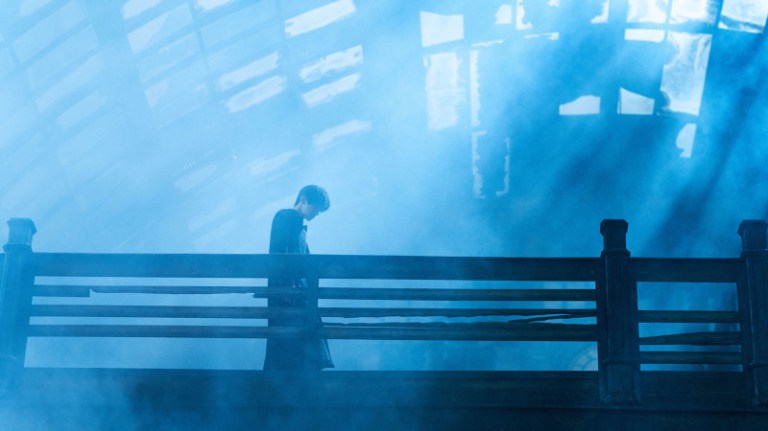
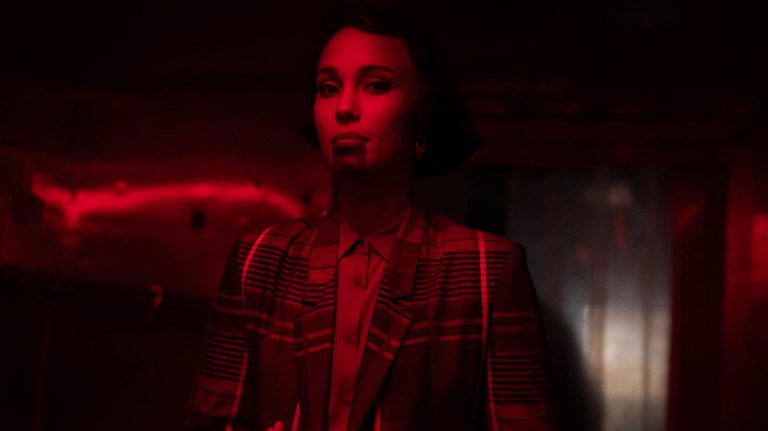
What to say about the film that has everything. Bursting at the seams with plots in miniature and arthouse bravura, Bi Gan’s follow-up to the extraordinary Long Days Journey into Night (2018) is the cinematic odyssey Resurrection. An undefinable tapestry that wears many genre hats as a sci monster powered like a projected as the line dreamer in a world that has learnt the secret to eternal life, so long as they don’t dream. Or something like that. While Gan’s previous film is expansive but intimate in its storytelling scope, Resurrection operates as basically six short genre pieces that have the density and plot to inhabit for its entire 160-minute run-time. That is a testament to Gan’s visual style and conceptual scope, even if he can get caught up in its own luxuriating to succeed as a narrative.
An interesting film to compare this expansive odyssey with is Bertrand Bonello’s The Beast (2023). Both grand-scale odysseys following a pair of characters that can’t help but pursue one another, across time or across cinematic dreams. The key distinction is that Resurrection is a work of sentiment told across cinematic history, akin to Babylon (2022), whereas Bonello’s film operates as an incisive look at relationships through the lens of their pair.
With wonderful performances by Jackson Yee and Shu Qi, played across many genres including silent film, noir, and a gangster vampire romance shot as a 30 minute oner on New Years’ Eve 1999, Resurrection can and will show you its whole heart if you’ll let it, overwhelming you with ideas and concepts rooted in the undeniable truth that the cinematic dream is irreplaceable.
Dreams (Sex Love) (2025) – Dag Johan Haugerud
⭐⭐⭐
Rating: 3 out of 5.
A delicate exploration of teenage love and obsession that treats it with sensuality and respect, while allowing space for realism and reflection. The third part of Norwegian Dag Johan Haugerud’s collection of films on love and desire made in quick succession, Dreams (Sex Love) centres on a teenage art student Johanne (Ella Øverbye) who pines for her new teacher Johanna (Selome Emnetu), eventually pouring her feelings and desires into a book she gives to her poet grandmother.
The film shifts in unexpected ways while still following Johanne’s emotional journey that resonates with the fresh wisdom of a good teen romance novel. The prolific nature of Haugerud’s work does not diminish the literary quality of his films, which leave room for many poignant interpersonal conversations that span generations. I was only able to catch this single entry in the collection, but I will endeavour to complete the trilogy by year’s end.
BLKNWS: Terms & Conditions (2024) – Kahlil Joseph
⭐⭐⭐⭐⭐
Rating: 4.5 out of 5.
Kahlil Joseph did not set out to make a documentary. Expanding on his two screen art installations of the same name, Joseph explodes his vision of an intertwining Black past and future through an extravagant reimagining of history and form with a frenetic energy that bounces from lush Afrofuturist narratives with some of the best production design of the year to reaction memes.
With cinematography from the great Bradford Young and a pulsating score by experimental artist Klein, BLKNWS: Terms & Conditions sees beauty in the interplay between sweeping science fiction storytelling with dense, academic dialogue and modern internet culture, something rarely seen projected on a large screen. While not an easy film to grasp or comprehend in real-time, Joseph and his writing collective have crafted a dizzying piece of art that will hopefully inspire new nonfiction visual artists to explore their craft in inventive and genre-breaking ways. The film of the festival for me.
Cloud (2024) – Kiyoshi Kurosawa
⭐⭐⭐⭐
Rating: 3.5 out of 5.
A cynical master storyteller returning to the twisty world of revenge cinema through the lens of a modern huckster dirtbag trying to turn a quick buck as an online reseller, Kiyoshi Kurosawa’s Cloud forces us to confront our relationship to ground-level late-stage capitalism in unexpected and darkly comedic ways. Unaware of the mild carnage he leaves behind him as he attempts to secure a comfortable life on his own terms, Masaki Soda’s Ryôsuke Yoshii is just smart enough to spot an opportunity to coldly swindle desperate people out of their undervalued goods, but not smart enough to avoid danger and risk.
There’s no greater feeling in the theatre than when Kurosawa is moving through his spider web plots with the tension of a vintage paranoia thriller. When a true master of form and craft is still interested in the modern world and can critique and perceive it in compelling ways, we can’t afford to ignore it. Especially when they’re this enjoyable in a crowd.
Brand New Landscape (2025) – Yuiga Danzuka
⭐⭐⭐
Rating: 3 out of 5.
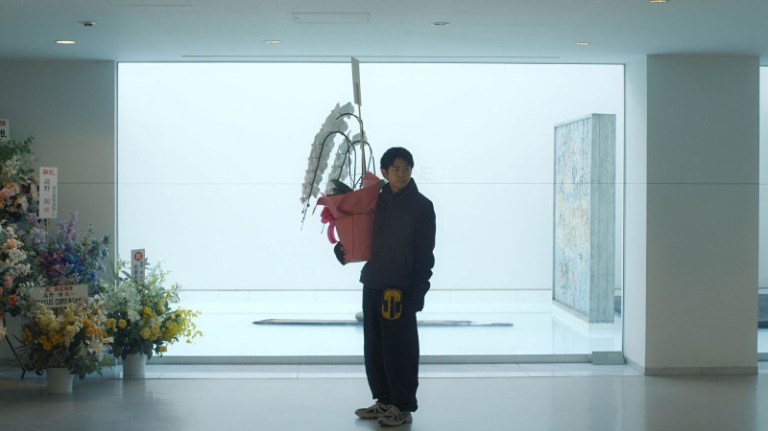
Danzuka’s debut feature made waves as the youngest Japanese director ever to be featured in the Directors’ Fortnight at Cannes, beginning with an extended Ozu-like exploration of a family in quiet crisis. Brand New Landscape wears its compelling, if slightly clouded themes proudly of a shifting Tokyo, and more specifically Shibuya, as a space aimed to accommodate a younger generation, even if it harms its current occupants.
The film displays the ripple effects from an unimaginable event that fractures a familiar family structure alongside the construction and evolution of several key spaces in the famous Tokyo area. Brand New Landscape never reaches a triumphant peak of dramatic storytelling, but it does leave you with both a unique perspective of Tokyo and of your own experiences in your own city and neighbourhood. A rather remarkable feat for a young filmmaker to garner.
Sorry, Baby (2025) – Eva Victor
⭐⭐⭐⭐
Rating: 4 out of 5.
The most assured and confident debut of the year, Eva Victor writes, directs, and stars in a playful yet poignant dramedy on the lasting impacts of trauma that finds new ground in the familiar lane of modern storytelling. As a liberal arts grad still living near campus and on the verge of starting a full-time teaching position while still processing and working through deep trauma, Agnes (Victor) feels stuck while her closest friend Lydie (Naomie Ackie) returns to tell her she’s pregnant.
A film about the adult anxiety of never being sure of the right thing to do or feel in any situation, Victor is perceptive with a sharp eye for when to be kind and when to be cutting. Sorry, Baby has such a strong command of a difficult tone throughout that the audience quickly settles into the hands of a commanding filmmaker, a rare feat in a first feature. There may be no better scene in indie cinema this year than the jury duty scene in this film with its ability to float between wry humour, female camaraderie in unlikely situations, and quiet character storytelling that announced Victor as am impressive filmmaker and performer.
The End (2024) – Joshua Oppenheimer
⭐⭐⭐⭐
Rating: 3.5 out of 5.
A film about a family resolute in their self delusion, unflinching in their avoidance of personal reckoning after a climate apocalypse they helped create, played out as a musical, the genre defined by its characters constantly reckoning with their own feelings and decisions through song.
A remarkable ensemble that elevates the film above an impressive academic genre experiment, particularly George Mackay, who, after starring in Bonello’s The Beast (wow, two nods in one festival for this film), has more than proven his bona fides as a young star able to breathe life into some art cinema trappings. Oppenheimer clearly has a lot on his mind with the ability of the most powerful people in the world to craft self-delusions to survive within and what happens when others encounter and potentially destabilise those delusions, a throughline that ties his totemic documentary films to The End. The decision to mine new thematic ground in a wildly different way may go down as a defining cinematic decision of the decade, and while this film does not reach some of the transcendent moments of The Act of Killing (2012) or The Look of Silence (2014), The End is certainly worth your time and hopefully not a final foray into narrative film.
It can be daunting being the first. The first people in space. The first superheroes in the world, uncertain of the responsibility their power demands. The first child. Crossing that uneasy bridge from the familiar into the depths of the unknown. This was once a core aspect of superhero storytelling, but after thirty-seven entries in the compounding Marvel enterprise, it feels impossible to return to. Even the recent release of James Gunn’s Superman (2025) — a new frontier on the DC side of larger storytelling building blocks, while successful in its storytelling — had notes of this and still couldn’t help itself surround their central figure with larger but unnecessary chatter.
But this is where The Fantastic Four: First Steps (2025) succeeds and earns its colonised titling and a real throwback to why the MCU has built a legacy on quality films. Set in an alternate Earth from the familiar stomping ground of the MCU, and heavily focused on its famous foursome and not its larger worldbuilding, director Matt Shackman has crafted a brisk and entertaining sci-fi-focused ride that will leave you wholly satisfied; a feeling Marvel films used to give us.
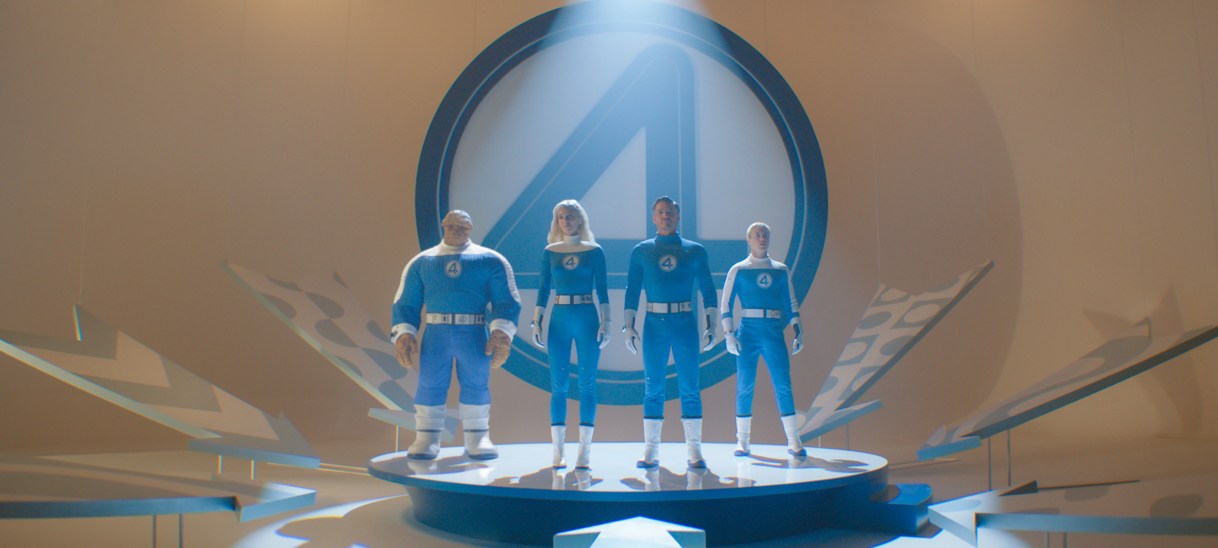
the Fantastic Four, led by Reed Richards and Sue Storm, brought to life better than ever by Pedro Pascal and Venessa Kirby, and flanked by Ben Grimm (Ebon Moss-Bachrach) and Johnny Storm (Joseph Quinn), arrive on screens in an Jetsons-themed alternate reality giving them the freedom of not needing less compelling super friends to give passing screen time too. Portrayed with enthusiasm and sincerity that reflects outwards into the whole film while still avoiding a saccharine mawkishness, making this Fantastic Four entry feel like a delightful throwback.
Four years into their journey, that is just settling in until the unexpected arrives both in-house and extra-terrestrially; the surprising pregnancy of Sue and the arrival of the Herald of Galactus (Ralph Ineson), The Silver Surfer (played with a pride and melancholy by the great Julia Garner), spelling doom for the Earth.
Joseph Quinn and Pedro Pascal in The Fantastic Four: First Steps
Building a competent film around these four characters has proved difficult in the past (this is the fourth go around for the crew in cinema, maybe they needed the luck?), but writers Eric Pearson, Josh Friedman, Jeff Kaplan, and Ian Springer have found success by properly centering the four actors, allowing plot and CGI battles to whizz past their family sci-fi soap opera. Told with sincerity and a deep love of the characters strengths and weaknesses, Shackman is allowed to stretch out and tell a full story, showing the potential from his directorial work on WandaVision (2021), perhaps the only successful Marvel TV show post Daredevil, even if it relied on a lazy final battle to conclude its story.
By centring two terrific performers who have shown the ability to operate in an old Hollywood mode, Pedro Pascal (in full Clark Gable mode) and Venessa Kirby jump off the screen with a chemistry and guile built from the characters out. Even as the world around them monumentally shifts with the arrival of a new child and a new Earth-destroying threat, we constantly see them lock eyes and respond to each other with a depth of understanding and empathy that wouldn’t be amiss in an awards season marriage drama. Pascal is at his best as a supportive scene partner, an invisible hand that allows others to shine instead of absorbing the audience’s attention.
Rounding out the team is Ebon Moss-Bachrach and Joseph Quinn who have an easy banter built on warmth and care that adds to scenes. Quinn in particular is given a full story that is surprising and compelling, improving on the reductive framing we often see of the Human Torch.
A refreshing turn in the superhero genre that is potentially in its death throes, The Fantastic Four: First Steps focuses on an older sci-fi genre package with longer dialogue scenes, fewer action moments with a passing amount of care and attention to story, and a visual language that mostly grounds itself in its own reality (several scenes still feel deeply 2020s which the film seemed intent on avoiding in its first hour).
Pedro Pascal in The Fantastic Four: First Steps
With special effects that actually looked like the VFX team was given time to fully render and actualise ideas from scratch, The Fantastic Four: First Steps withheld the action at the centre of the story in place for a simple but emotive narrative built on a new, emerging family. Even Galactus, once portrayed as a large cloud in a film too embarrassed by its own sci-fi story, is given a tactile nature and a quality performance by Ineson, perhaps the best voice in the industry. In few words, Ineson displays a menace to his words but a clarity in character motivation one wouldn’t expect from an enormous villain desperate to consume planets. It’s not just that Shackman found space for the key six characters to show dimension and character through considered relationship work within a sci-fi framework; it’s that we could achieve this while wrapping up the film in under two hours.
The Fantastic Four: First Steps is a fast-moving train that has a real destination in mind, an aspect of American genre storytelling we took for granted and allowed to bloat and stagnate, too satisfied with its own navel-gazing to realise they were left as the only people looking. With a recent run of superhero films, Thunderbolts* (2025), Superman, and The Fantastic Four: First Steps, we are potentially rounding the corner into the enjoyment and craft that built this genre into the cinematic tentpole that it strives to hold onto.
By giving these characters a fully rounded narrative that satisfies more than stringing you along with the promise of a larger experience in the future, Shackman and co have achieved what was supposed to be the goal of cinematic genre storytelling; something familiar and something new, contained in an entertaining and sometimes emotional time at the movies. Where James Gunn’s Superman stretched far and wide to populate his emerging franchise venture, making for a fun but frustrating experience, The Fantastic Four: First Steps focuses on a small collection of characters where the biggest spectacle is the arrival of a new family member, the largest event in most audience members’ lives as well.
The Fantastic Four: First Steps is in theatres now.
Superman preview screening provided by Universal Pictures
When Guardians of the Galaxy (2014) hit screens some eleven years ago, there was a shift in the superhero movie paradigm that up until then was often focused on darker stories and more mature themes, most of which went hard on action but stepped away from the jovial playfulness that animated shows often captured so well. That shift is owed in large part to James Gunn who managed to find a nice middle ground between getting you your dose of power ups and battle scenes with the humanity and flaws behind these heroes. He also (unintentionally) set off a chain of events for superhero films that would see them sway too much towards silliness and cheesy one-liners that they eventually became devoid of any uniqueness or balance.
In the time since his original Guardians film, Gunn has gone onto deliver two more for Marvel before being headed up as Co-chairman and Co-CEO of DC Studios in a bid to try and turn the tide DC’s way — after all, their catalogue of heroes is much stronger than that of Marvels. While The Suicide Squad (2021) represented his first real foray into the DC universe, it’s his long awaited reinvention of Superman (2025) that has felt like the true starting point that is supposed to set the tone for what is to come.
To do so, Gunn has opted to throw the whole ‘origin story’ approach out the window and instead, throw viewers right into the thick of things. Superman (a perfectly cast David Corenswet) is three years into his Superman reveal, with all of the crash landing and coming-to-terms-with-his-powers backstory, left implied. It’s a bold choice from Gunn but it makes sense as it gives him the room to cram more into the plot rather than tread old ground.
Whether the cramming tickles your fancy or not, is another question. There’s a lot going on in Gunn’s film, much to the detriment of building out a cohesive plot. Gunn is at once interested in diving into the humanity behind the God figure and hitting him with countless obstacles and side quests, with the result being glimmers of deeper interrogation —one occurring early on as Superman in his Clark Kent guise, chats with his fellow reporter girlfriend Lois Lane (an equally fitting Rachel Brosnahanin) in an impromptu interview— but an overall surface level exercise.
(L to r) NICHOLAS HOULT as Lex Luthor and DAVID CORENSWET as Superman in Warner Bros. Pictures’ “SUPERMAN”
And that’s before we start talking about the wider plot which includes Lex Luthor (Nicholas Hoult) trying to get dirt on Superman so he has justification to kill him, a trio of ‘Justice Gang’ sub-heroes who pop in every now and then to aid Superman and (really) fill-in during his absence, a weird middle-eastern conflict that threatens to boil over but that Superman is embroiled in, and a wonky love-story between Luthor’s side-piece and a a journo helping to get dirt on Luthor. In other words, it’s a stuffy room with little air left to breathe, which at best gets you a little laugh and at worst, an eye roll.
But while Gunn might not be focusing on Superman’s origin story, he’s definitely focusing on his own, taking his learning’s from his time at Marvel and Marvel-ising them here. No one can accuse Gunn of making something that’s boring, after all, the ethos of Superman has always been built around a level of silliness and charm that starts right from his vibrant, cartoonish costume. Gunn understands that in order to make this version of Superman any different from past iterations, he would have to cut the preamble and focus on the wonder that comes from seeing frost breathe, laser eyes and flying while keeping it as lighthearted as possible — keep the message simple and ensure the goofiness is there, even if the stakes never feel like they match up.
I have to admit, while I’m not a Zack Snyder shill, I appreciate the darker tones and comic-book wham’s and pow’s he brought to Man of Steel (2013), Batman v Superman: Dawn of Justice (2016) and his version of the Justice League (2021). Gunn’s version has gone a completely different direction and I can respect the decision to do so since the other approach wasn’t putting bums in cinema seats. Whether or not this film sets the tone for this new DC universe though, is hard to tell, especially with Matt Reeves’ The Batman (2022) feeling more akin to what would have existed in the old universe (I’m sure we’ll see Cornswet’s Superman and Robert Pattinson’s Batman cross paths in some way — though I smell tonal whiplash from a mile away). Regardless, Superman is imbued with the same level of goofiness as Gunn’s other films, and while it probably would have felt fresher had it been released eleven years ago, it still packs an entertaining punch.
F1 preview screening provided by Universal Pictures
Swapping the skies for the circuit, Joseph Kosinski’s F1 (2025) is a speedy, four wheeled follow up to his box office smash, Top Gun: Maverick (2022). While I’m not an F1 fanatic, there’s no doubt that the exhilaration of a race with cars that push past 300km/h is an adrenaline rush for those that love that sport, and especially for the drivers behind the wheel. But what happens when you peel back the veneer that is the glitz and glamour of podium finishes, and begin to look at the gruelling process that pit crews and drivers alike go through in the lead up to a race? Well, Kosiniski understood the assignment and has created a punchy drama that both tackles that question, and is rife with everything from technical language about racing, to the fall and rise of a prodigy.
In many ways, F1 feels like a spiritual successor to Maverick in that it traces the life of someone who was young and reckless, but is now more of a “has been” who is giving it one last crack against the new stars. On paper, Kosiniski’s film feels like it was very much geared towards casting Tom Cruise and continuing to put him in the cockpit of these lightning fast death machines, but with the Mission Impossible films taking up the majority of his focus, another aging yet still youthful star had to step in.
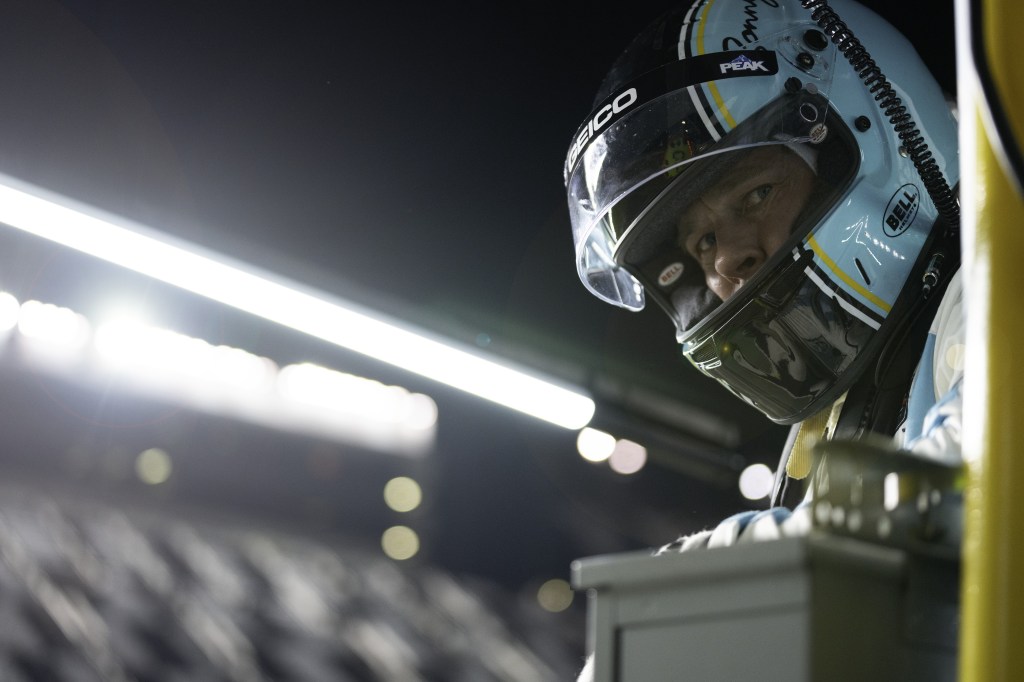
Cue Brad Pitt. Once you’ve seen this film, it’s easy to say that it’s hard to imagine anyone else playing this role other than Pitt, but Pitt makes the character of Sonny Hayes wholly his own that it’s really, truly impossible to imagine even Cruise in his position. There’s a boyish cockiness that Pitt translates so well to the screen, and it’s no different here as he carries himself with the same reckless edge he’s delivered time and time again. And it serves the premise perfectly: a former racing prodigy who is living in his van and sporadically competing in races is given the keys to the kingdom that is F1 by his former racing competitor-friend-turned-F1-owner, as a hail mary to pull them out of the rut they’re in.
Brad Pitt as Sonny Hayes in F1 (2025)
You might be thinking: this sounds like every movie that has an ageing star who continues to try and compete at the highest level. While you might be right to a degree, on paper F1 isn’t remarkable as a fresh character study, but where it falters in storytelling it makes up for with fast paced action and a desire to authentically capture the F1 scene. Kosinski and frequent cinematographer Claudio Miranda’s work on getting the claustrophobic, tight spacing of fighter jets right in Maverick has helped them capture the same feeling of being in an F1 car; combine that with Hans Zimmer’s pulsating, punchy score, and the film has a video game simulator feel — keeping you at once on the edge of your seat and as though you’re there with Sonny.
Key to trying to give the film a little more egde beyond the generic script by Ehren Kruger is the addition of a young rookie, Josh Pearce (Damson Idris), who naturally takes the lead for the team, with Sonny serving more to amplify his movements on the track. Their dynamic helps shift the gears and keep the film from just being like every other racing film you may have seen. For one, Sonny doesn’t settle for second best and pushes Josh to be his competitor on the track so as to not have him be complacent and expecting everything will be handed to him. This push and pull between the two is like a passing of a baton but only if that baton was on a rope and it had to be caught first.
That’s all to say that F1, while a stellar showcase of zippy cinematography and snappy editing, derives its most heartfelt moments (even if the rest of the story is rather cookie-cutter) through Sonny’s redemption arc as he takes his track knowledge and turns it into a method for madness. What’s even more impressive is just how close to the real thing Kosinski has kept proceedings, with real-life racers like Max Verstappen and Lewis Hamilton cropping up (the latter being a producer as well who was involved with the project before Brad Pitt!). There’s a level of verisimilitude that the film is striving to capture, sometimes to the detriment of the wider drama that’s captured so well by films like Ferrari (2023) and Ford v Ferrari (2019), but often it nails this approach mainly because of how close each aspect of production is to the real thing, and with this approach Kosinski has clearly found himself a formula for success.
How to Train Your Dragon preview screening provided by Universal Pictures
Whenever news breaks out that a studio is developing a live-action version of a beloved animated feature, a collective sigh followed by a “but why?” tends to ring out. After all, we’ve seen Disney try and (often) fail to bring their iconic animations back, with bigger budgets and fancier visual effects, only to see them turn out feeling devoid of the heart and soul that made those animations so great (see Aladdin, The Lion King, The Little Mermaid,Snow White, Dumbo etc.) Occasionally though, there is an anomaly, and fortunately it’s How to Train Your Dragon (2025).
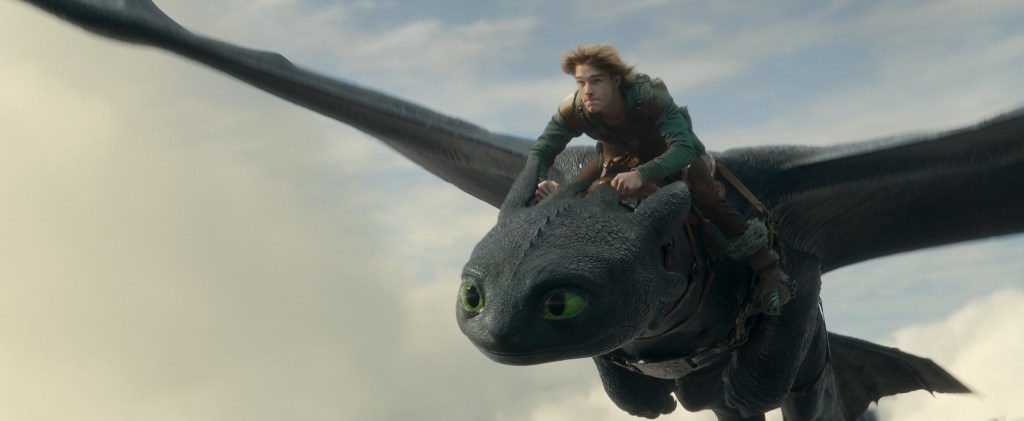
That Dean DeBlois has been trusted to continue directing the How to Train Your Dragon series with this live action, is a testament to the success (both critical and commercial) he has found with the series as a whole. After all, how hard is it to make animated dragons look like real dragons while keeping the warmth that an animation lends? Well, it’s definitely no easy feat (I’m looking at you, expressionless lions in 2019’s The Lion King). But that’s ultimately what this film boils down to: can DeBlois and his team retain the charm of the 2010 classic? The short answer is, definitely. Mason Thames, while not sounding like Jay Baruchel, looks like Hiccup, and Night Fury looks like Night Fury. It’s clear that a lot of care was taken to be faithful to the look and feel of the 2010 film while delivering a version that felt larger-than-life and a world that looks lived-in.
(from left) Night Fury dragon, Toothless, and Hiccup (Mason Thames) in Universal Pictures’ live-action How to Train Your Dragon, written and directed by Dean DeBlois.
If you haven’t seen the animated original (I mean, you’ve only had 15 years), then, first and foremost, go and see that film, but also, you may not be too fazed as to whether this version is faithfully done or not. For what it’s worth, it’s about as close to the first as you can come, right down to the dragon designs and casting choices like Gerard Butler reprising his role as Stoick the Vast and delivering just as profound a performance. It also helps that the humour has translated across as well, something that’s probably helped by there being no musical numbers that come across as cheesy and eye rolling.
Beyond simply comparing the animated film to the live action, it’s hard to note anything else given this feels incredibly one-to-one in script, tone and look. If the dragons had looked lifeless or devoid of expression, then it’d be easy to call that out, but I guess my only grievance can be that instead of a fourth animated film, we’re getting live action cash grabs. There’s nothing inherently wrong with that (if it attracts an audience, that’s a win), but there has long been a reluctance to experiment with big budget films and try something different for fear of having it bomb — so much so that a sequel was green-lit before this film was even released, which is both bold, but also speaks to the faith that the studio has in a return on investment for an already successful intellectual property.
Perhaps more than any other animation in recent years, I’ve loved the How to Train Your Dragon series the most so I still had a ball with this live action and there’s no doubt that others will too. In my particular screening in Melbourne, visual effects artists who worked on the dragons were in attendance (with most of the work done here in Melbourne), and it’s great to see local creative studios continue to represent Australia and lead the way in digital effects for some of the biggest blockbusters in the world.
How to Train Your Dragon opens nationally from June 12.
Mission: Impossible – The Final Reckoning preview screening provided by Paramount Pictures.
Whether it’s hanging suspended inside a secret vault, rock climbing on cliff faces, climbing the Burj Khalifa, HALO jumping, flying helicopters between cliffs, dangling off the side of airplanes or diving to deep depths, for the past 29 years the Mission: Impossible franchise has pushed the boundaries of what the cinematic experience can offer. The latest and last addition to this exercise, The Final Reckoning (2025), manages to impress one last time, leaving no stone unturned and no jaw undropped.
It feels as though Director Christopher McQuarrie and Tom Cruise’s bond since first collaborating on Jack Reacher (2012) has only strengthened the work they’ve done on this franchise, with The Final Reckoning representing the sixth time they’ve worked together. The duo are clearly in sync with one another, and their relationship has seen McQuarrie produce a number of other titles Cruise has starred in — their collab might just be the Robert de Niro/Martin Scorsese of modern action films.
While all of the Mission films are interlinked, they always tend to have a new threat for Ethan Hunt (Cruise) to take on. Of course, these final two are more connected than the others (title aside). Kicking off almost immediately after Dead Reckoning Part One (2023), The Final Reckoning finds Hunt once again in hiding as his narrow escape from the previous film’s derailed-train-finale has left him with the key to the vault of the lost Sevastopol submarine. The dangerous AI known as the ‘Entity’ continues to pose a risk to the survival of the world, and it’s up to Hunt to track down the sub, contain the entity, and prevent the world from becoming an ash wasteland. Just another day for cinema’s most rouge operative, right?
Tom Cruise plays Ethan Hunt in Mission: Impossible – The Final Reckoning from Paramount Pictures and Skydance.
The Final Reckoning takes Hunt to new heights as well as depths, with Cruise once again putting his body on the line for the sake of realism. It takes some time to get to the almost playful-like vibe that previous installments have been so good at capturing, though. You feel more of the dialogue this time around, with the first act in particular having a greater weightiness to it. When I think about my favourite film in the franchise, Fallout (2018), no line ever feels wasted and always drives the plot forward, but it’s as though the punchy, in-your-face-ness of dialogue this time around is a bit more… measured (I guess being the final film, there’s some understandable caution of trying to make every moment count).
Once the flood gates open, however, it’s a hold-onto-your-horses kind of ride. The elation of watching a Mission film is in the knowing that what you’re seeing isn’t a gimmick, and to add an extra layer to it, that the film’s star is the one doing it. A tank was purpose built (the largest ever for this kind of production) to have Cruise dive into, and the tension of seeing him clamber under water while the sound design holds him (and by extension, the audience) to ransom, is spine tingling, on-the-edge-of-your-seat stuff. At a later point, Cruise is literally dangling from the thin bars of a biplane in what is perhaps the most death defying stunt ever performed by the star of a movie for the big-screen. The high of seeing Cruise scramble as the plane barrel rolls and twists and turns, is just as exhilarating as you’d imagine, and it’s one of the clearest examples of the symbiotic relationship between Hunt and Cruise, a point where these two personas meet as they both battle to get into the cockpit — a feeling best exacerbated by the G-force struggle on Cruise’s face.
Tom Cruise plays Ethan Hunt, Pom Klementieff plays Paris, Greg Tarzan Davis plays Degas, Simon Pegg plays Benji Dunn and Hayley Atwell plays Grace in Mission: Impossible – The Final Reckoning from Paramount Pictures and Skydance.
Ethan’s moral compass has always been the core of what makes this franchise standout. He’s a character of conviction, one who chooses right over right and pays the consequences time and time again. Fallout really brought the fire that burns within him —for those he cares about— out to the max. These final two films have felt more mellow when it comes to character development (we know what makes him tick), but the idea that he’s not facing any one person this time around, but an AI, really brings the focus back on him and his ability to make decisions on the fly, something that really homes in on the idea that his biggest enemy is himself.
At this point, the “Tom Cruise is secretly trying to kill himself” memes are comical, but for every broken bone the actor has endured (and there have been a few), hundreds of thousands of jaws have dropped. If the Mission: Impossible films have taught us anything it’s that Cruise, like Ethan Hunt, has continued to choose the mission and risk his life for the benefit of those he will never truly meet, and cinema is all the better for it.
Mission: Impossible – The Final Reckoning opens nationally from today.
Marketed with a keen focus on its crew’s previous work with the production company de jour A24, Marvel’s attempted rebound back into the public consciousness has arrived in the Florence Pugh led Thunderbolts* (2025). The film is emotional and built from the inside out with a commitment to its characters, a collection of misfit Marvel characters played by an incredible cast of emerging talents that shows when the call is made, they will deliver.
Much like an aggressive chiropractic session, the Marvel project desperately needed realignment, no matter the clunkiness to achieve it. By bringing in emerging creatives to develop a more personal character story — what used to be the MCU’s calling card in the early years — Thunderbolts* arrives fashionably late to a series in need of rescue. While modest in its pursuits (for a blockbuster feature), Thunderbolts* is built off the back of two terrific performances in Pugh as Helena and Lewis Pullman as Bob. Their chemistry stems from the characters’ visible mental health struggles that long for meaning and connection in a world devoid of both, a difficult idea to place front and centre in a film with multiple car flips.
After a haphazard and almost impressively uninspired handover film Captain America: A Brave New World (2025), Marvel’s loaded release schedule picks back up with a darker, sharper, and wittier ensemble film that stands on its own feet before the navel-gazing returns with a new Fantastic Four and Avengers films in the next 12 months.
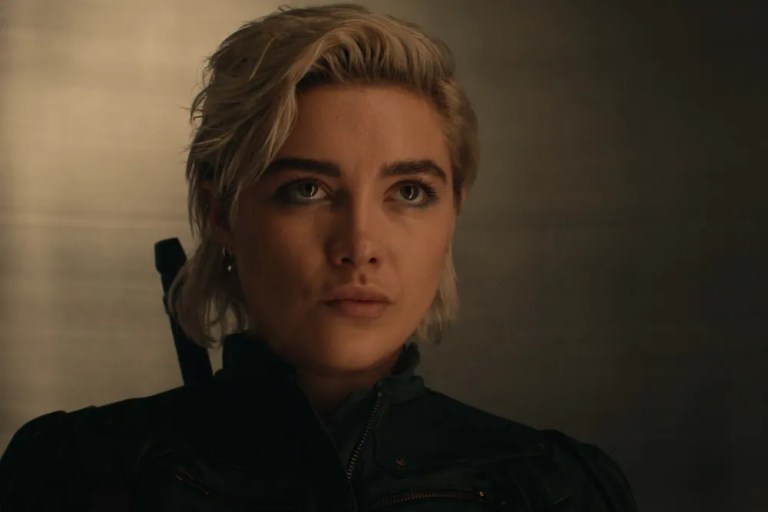
Florence Pugh in Thunderbolts*.
Beef’s (2024) Jake Schreier, alongside many of his collaborators on the acclaimed series, puts character above all in a seemingly obvious pivot away from the plug-and-play style of most post-Endgame MCU films that has put the company on the brink.
Never undercutting its emotional weight with a cheap joke in the same sentence, screenwriters Eric Pearson and Joanna Calo keep their characters, in particular Yelena (a tremendous Florence Pugh), on clearly defined and recognisable tracks. Even as one of the world’s best assassin’s, Yelena’s mental health struggles and ennui is expressed with a profound clarity that underscores the entire film.
By taking their story of literalising mental health struggles to a fulfilling breaking point, Thunderbolts* shows what can be achieved in the best comic book stories by reflecting these superpowered people’s humanity out into the world. Thunderbolts* elicits an unusual feeling: nostalgia for the early entrants in the Marvel cinematic project. Slimmed down to bare essentials with an antagonist that reflects the interior conflicts of our soon-to-be heroes, the film knows the power it holds with its outstanding cast and when to cede ground to their talents.
Sebastian Stan in Thunderbolts*.
From the outset, the score out of electronic trio Son Lux stands apart from the swathe of superhero cinema. In many critical scenes, their emotional intelligence shines through, giving the story of depression and reconciliation a clarity of vision that easily could’ve fallen through our hands like sand. The acoustic and electronic work sustains an unexpected grace that should be applauded.
With an eventual villain in The Sentry that embodies the call of the void itself, Thunderbolts* excels in grounding every element of its story within its characters. Much like Tony Stark being forced to reckon with his role in war profiteering to survive, Yelena must contend with her depression and learn to live alongside it.
The film excels in its modesty, even if it sets a pivotal confrontation in the old Avengers tower (baby steps!). Thunderbolts* uses a potent mix of humour and contemporary emotional turmoil to place itself a tier above the durge of action cinema that doesn’t even arrive at the boilerplate. While striving to be remembered as more than a footnote on the way to back-to-back billion-dollar cheques, Schreier’s film places potent themes of loneliness and emptiness at the forefront of a superhero story that separates itself from the studio’s recent shortfalls.
Drop preview screening provided by Universal Pictures.
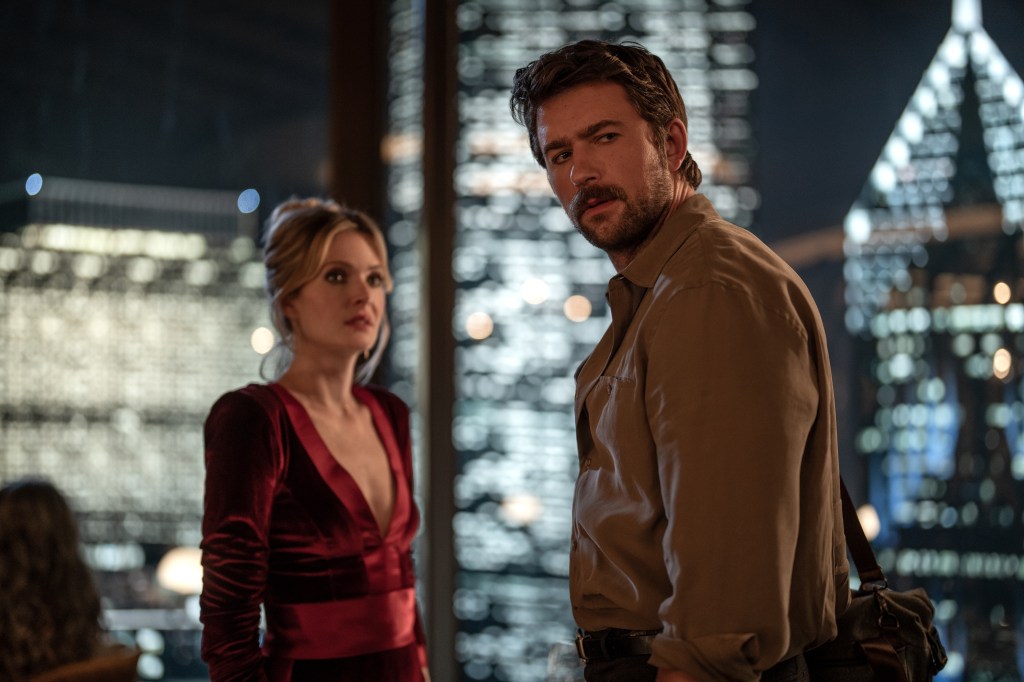
Have you ever been on a date where you’re getting random AirDrops from someone in your vicinity, threatening your family unless you kill your date? Me neither, and that’s another reason I’m sticking with Android. But mobile ecosystems aside, that’s exactly what Christopher Landon’s (2017’s Happy Death Day and 2020’s Freaky) textbook thriller, Drop, anchors its focus around for its tight 90 minute runtime. As far as thrillers go, Drop is neither groundbreaking nor is it something you’ll be eager to revisit, but it’s kooky and self assured in an M Night Shyamalan-esque way with a neat twist at the end.
That approach will fly with audiences who like cheesy dialogue that regular people probably wouldn’t say, and movies that take a simple activity like a date and give it some sinister flavour. Landon’s film captures the angst of putting oneself back into the dating sphere by taking single mum Violet (Meghann Fahy) and having her meet up with Henry (Brandon Sklenar) in a highrise restaurant for the first time after 3 months of texting.
Similar to other Screenlife movies that focus on the dangers of screen culture like Searching (2018) or Missing (2023), Landon’s film builds its tension by capturing the modern dread of being watched, of having multiple eyes on you through surveillance or simply using your own surveillance against you. The latter is true for Violet who, after settling in with her date at the dinner table, is told to check her security cameras by her anonymous AirDropper where she sees a masked man in her house with a gun, with the choice being: do as I say or we kill your sister and son (if her first date jitters around what to wear weren’t scary enough, that really complicates things).
(from left) Violet (Meghann Fahy) and Henry (Brandon Sklenar) in Drop, directed by Christopher Landon.
This is where Landon’s film kicks into gear as it wastes no time in building out all of the directions that Violet will have to follow while focusing on keeping her date going as smoothly as possible. Fahy and Sklenar’s dynamic is what the film really banks on to sell the premise, with little actual room to cut to anything beyond the restaurant. There’s also the added element of shifty side-characters, all of whom could be the AirDropper making her life difficult; whether it’s the boisterous first-time waiter, the distant bartender or the Jamie Dornan-looking businessman who can’t seem to stop running into Violet (literally) — Drop is to Knives Out (2019) what mini-golf is to golf… a smaller playing field but just as satisfying.
The title, a play on words, might also describe the shift in pace in the final third, where there is almost a literal drop as the heat intensifies and as plot threads start to come together. For one, Violet literally hangs out of the highrise by a tablecloth. While this final third does feel like it’s been crammed into an otherwise tight screenplay, it gives the film some added momentum, even if the result feels like it gets away from the better part of the build up to it. That said, Drop is clean and will get a chin scratch or two as you try to piece together its puzzle, and proves that you may never know where your next date might take (or drop) you.
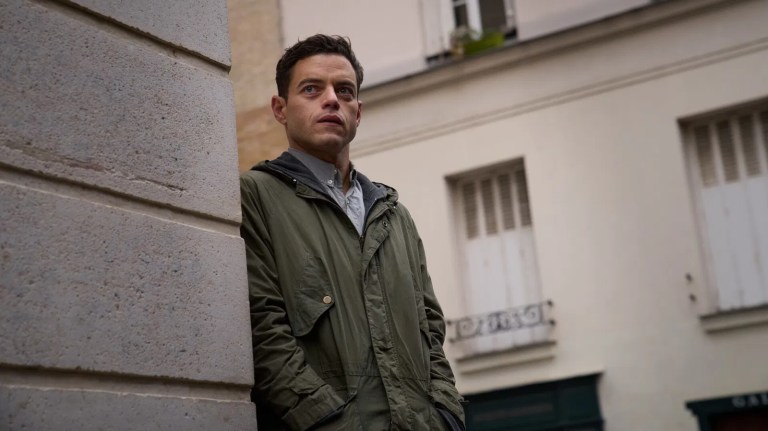
Helmed by British Television veteran James Hawes, The Amateur is a spy thriller unable to capture its own personality or separate itself from the recently booming subgenre. Focusing on a CIA data analyst-slash-hacker (Rami Malek, in his wheelhouse) who forces himself into the field by any means necessary after the death of his wife (Rachel Brosnahan) during a terrorist hostage crisis in London, the film’s fractured cadence and lack of narrative momentum despite this inciting incident means you don’t know where you’ll be taken next, but also uncertain about whether you’ll care.
Based on Robert Litell’s 1981 spy novel of the same name and adapted by Black Hawk Down (2001) screenwriter Ken Nolan and Gary Spinelli, The Amateur plays both sides of the Atlantic with its approach to the spy thriller. This, unfortunately, means the film never finds a singular drive or point of view but is made with a great cast and a refined crew that keeps the train on the tracks.
A surprisingly small-scale espionage thriller even as Malek makes his way through many cities, The Amateur shuffles along from moment to moment, with many cast members rarely appearing in multiple locations, restricting the narrative momentum of every sequence. Even the pivot hostage scene with Brosnahan plays out in short news clipping bursts, forcing Malek to shoulder the weight of every emotional and narrative beat, something very few actors can manage.
Rami Malek combined his experiences in the TV series Mr Robot (2015-2019) and No Time to Die (2021) to lead his own spy thriller in the vein of Jason Bourne if his amnesia expanded to include the trainee manual. With a tremendous cast of faces alongside Malek with Laurence Fishburne, Brosnahan, Jon Bernthal, Michael Stuhlbarg, Caitríona Balfe, Holt McCallany, and Julianne Nicholson, elevate rote scenes with barely a hint of drama or characterisation.
Rami Malek in The Amateur. Screening provided by 20th Century Studios.
Malek’s compelling anti-chemistry as a leading man works in fits and starts, primarily when he is acting alongside some of the best working actors in Bernthal, Stuhlbarg, and Fishbourne. Mr Robot thrived in its ability to work to Malek’s strength as a performer by constantly giving him unique counterweights to act against. In a surprisingly thin script, Malek and the other actors are repeatedly left out to dry, forced to fend for themselves while the ship chugs along to a near nonstop score.
The film is not assisted by Oscar-winning composer Volker Bertelmann’s austere score that opts to flatten much of the proceedings. The constant score certainly elevates the uncompelling exposition scenes but never highlights the entertaining and thrilling set pieces that are the film’s shining light.
However, almost in spite of itself, the film comes together in a worthwhile and satisfying way, even as it frays around the edges of time and drama. This is largely due to its creative action set pieces where each element, especially Malek’s performance, clicks into place into pure enjoyment. While the revenge narrative is established with a reckless abandon, it is thrilling to see where Hawes places these pivotal scenes, including a highrise pool and a final confrontation in the Russian-Finnish ocean border.
Due to this narrative style, The Amateur is not dissimilar to Tenet (2020) in how it moves quickly between setting up and executing inventive action set pieces instead of exploring the characters within its espionage world. This is surprising given The Amateur’s stellar cast, even if they are rarely given any meat on the bone.
Ultimately, there were high hopes for The Amateur due to its cast and veteran crew in a subgenre currently in a mini-boom. Still, without a unique style or handle on tone, the film moves shakily between sequences, never arriving sure of foot. Thankfully, the film’s trump card for a final sequence, a charming and compelling Michael Stuhlbarg performance, pretty successfully ties up a desperately fraying narrative yearning for a satisfying end note.













 Rating Frames