A caustic character study of depression, expressed in a near limitless capacity of anger and frustration, the legend Mike Leigh and Marianne Jean-Baptiste reunite for a potent and captivating film like no other. At times an excruciating viewing experience, Hard Truths (2024) is as rewarding a film as you’ll find this year, sneaking up on you with seasoned patience so few filmmakers deploy.
John Waters lovingly called Jean-Baptiste’s Pansy “the most unpleasant sourpuss in the history of cinema”, and it’s hard to argue with him. An open wound that reacts to every possible moment like a critically endangered animal hoping to survive another day, even if they’re unsure why they cling to life so hard.
An ornery and occasionally cruel working-class mother of an adult-at-home son, Pansy doesn’t drift across days as much as she bulldozes through every waking moment. We learn everything you need to know about Pansy by the way she wakes up. In multiple instances across Hard Truths, we grow desperately empathetic to the peacefulness she exudes while sleeping, but is constantly jolted awake, activating an instantaneous fight mode.
While Jean-Baptiste is prone to blot out the sun with her performance, Leigh leaves room for some truly remarkable supporting performances. David Webber and Tuwaine Barrett, as Pansy’s husband Curtley and reclusive and introverted son Moses, manage to withstand the ocean storm that is Pansy through a deep connection to characters given little room to breathe but require a wide berth.
Marianne Jean-Baptiste in Hard Truths
Leigh is a cinematic master through his ability to create a cumulative character experience that bursts at the seams of its final ensemble sequence. Like a well-crafted play, Hard Truths walks you towards a profound moment of empathy and attachment in a naturally unexpected cadence. With little plot outside of a Mother’s Day date for Pansy and her sister Chantelle (Michele Austin), Leigh gives his ensemble enormous space to fill the frame with nuanced character portraits that will feel like mirrors into the soul of the modern-day middle-class, seen with honesty and respect.
While Pansy is increasingly vocal about an uncertain ailment that is fuelling a violent discomfort with life, she harbours a real hesitation in improving her situation. From a doctor’s appointment to a trip to the dentist (with Leigh using a real dentist!), these scenes carry a weight that sustains the film’s second half, as the audience grows increasingly desperate for the reason in all this internal suffering perpetually boiling over. She is nothing but a raw nerve, longing for a connection without the capability to find it.
A desperate need to be understood and heard hidden within a desperate need to be left alone, Jean-Baptiste, with Leigh by her side, reflects a moment of modern life not seen in the old cinematic masters. While Leigh’s best films are where he forces his fractured characters into unfamiliar places (Topsy Turvy,Naked), Hard Truths can be placed among a select few films that express the early 2020s with an honest reflection you’d more likely see in a period piece made decades after. We cannot take his movies for granted.
With 2024 having drawn to a close, Rating Frames is looking back at the past twelve months of cinema and streaming releases that have come our way. In the third and final of our series of articles, Tom Parry is taking a look at his ten favourite films of the year that was.
The resilience of the medium we know as cinema truly knows no bounds. Having survived a once-in-a-century pandemic and endured the dual strikes of unions representing America’s screenwriters and performers, 2024 proved – from an artistic perspective, at least – that the industry is as strong and creative as ever, with several titles catching the eye of yours truly.
As with previous end-of-year reflections compiled by this writer, the list below is dominated by English-language and blockbuster pictures, in part due to the shortage of arthouse theatres in regional Victoria and lack of opportunities to visit Melbourne; but had circumstances been different, he is confident the structure of this list would remain much the same.
10. The Apprentice
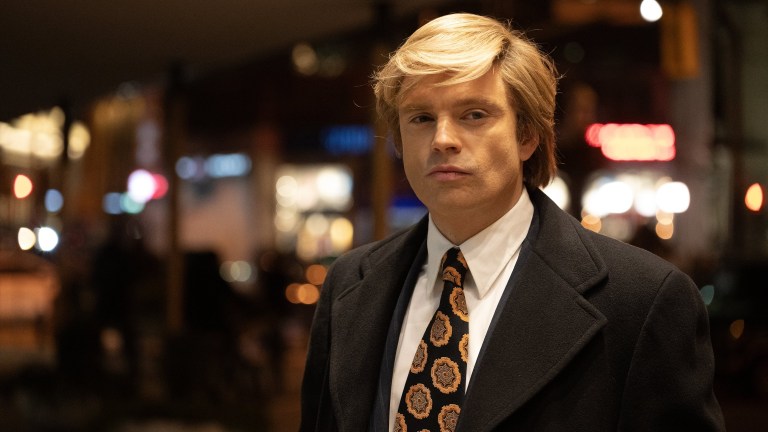
Director Ali Abbasi envisaged this biopic would sway undecided voters ahead of last year’s U.S. Presidential Election, though as the box-office returns and subsequent vote-count suggest, he failed miserably in achieving that goal. Yet what he does succeed in doing with The Apprentice is offer an astonishing re-creation of 1970s New York; elicit uncanny, lifelike performances from Sebastian Stan and Jeremy Strong; and provide a surprisingly nuanced examination of a man whose single-minded pursuit of wealth and fame turned him into the physical embodiment of every negative stereotype we associate with his countrymen.
9. Conclave
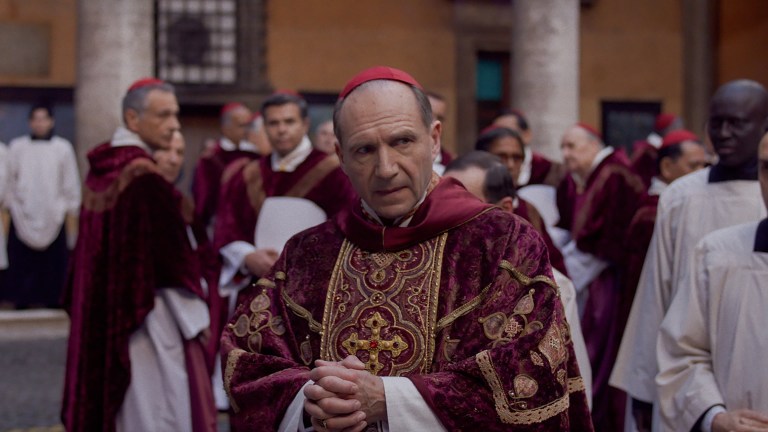
Applying the term “mature” to a feature-length drama, for most, conjures in the mind imagery, actions, themes and language inappropriate for younger audiences; yet it can also be used to define a production which is nuanced, composed and cerebral – all apt descriptions for Conclave. Here is what can be considered a political thriller without politicians, or Glengarry Glen Ross (1992) without the excessive swearing, taking viewers behind the façade of pageantry and into the halls of power, complete with excellent performances, great dialogue and a fantastic narrative that hooks until the very last twist.
8. Anora
For the better part of a decade, Sean Baker has made it his mission to document those on the margins of American society, a pursuit that has rightfully brought him countless accolades and admirers. He may well have reached his directorial and screenwriting peak with his latest effort Anora, a film so mesmeric that it has placed within in the Top Ten of this year’s Best-Of lists by all three of Rating Frames’ resident scribes – though Arnie and Darcy both seem to have neglected mentioning the ever-delightful Igor (Yura Borisov), one of the best characters of any picture in recent years.
7. Perfect Days
Despite earning high praise at the Sydney and Melbourne International Film Festivals the year prior, it wasn’t until March of 2024 that Wim Wenders’ Japanese drama received a theatrical release in Australia. That decision flies in the face of what is a beautiful story, one that’s tranquil and almost poetic in its observations of an otherwise unremarkable man who cleans toilets for a living. Add to that the gorgeous cinematography and impeccable soundtrack, and Perfect Days pretty much lives up to its title.
6. Super/Man: The Christopher Reeve Story
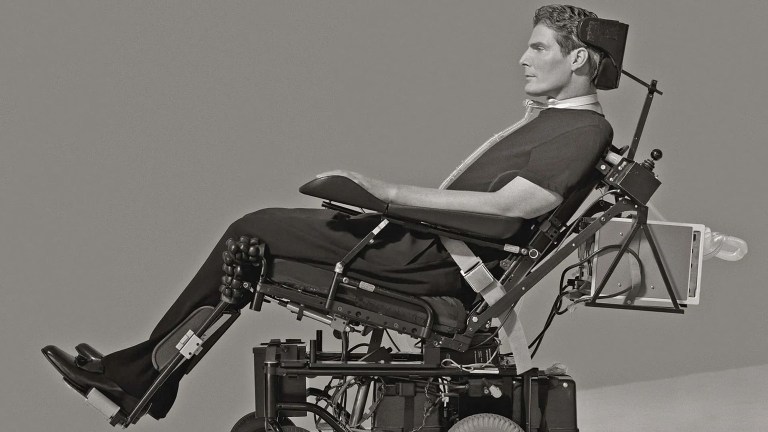
The 72nd iteration of MIFF was the first time since a certain global pandemic that yours truly attended an in-person screening in the Festival’s namesake city, an occasion marked at The Capitol with this very documentary. Its moving screenplay – yes, tears were shed – explores Reeve’s upbringing, early career as stage actor, casting as the Man of Steel, paralysis and charity work, told via interviews with some very famous and unexpected talking-heads (Jeff Daniels! Glenn Close! Susan Sarandon!) plus unseen home-videos and archival footage. An intimate portrait that offers a heartfelt tribute to its subject while not shying away from his faults.
5. The Wild Robot
Amid Disney’s ongoing cultural and commercial dominance, and increasing competition from Sony Pictures Animation, the once-mighty DreamWorks had in recent times gone from being a pioneer of the industry to a studio at-risk of losing its prestige. That belief was immediately dispelled with the arrival of The Wild Robot, a feature-length production which not only proved a better film than any of its animated contemporaries released last year, but is also its studio’s most-impressive effort since the How to Train Your Dragon movies, complete with a talented voice-cast, stunning visuals, touching screenplay and rousing score from Kris Bowers.
4. The Iron Claw
Here lies a biographical narrative far better than it has any right to be. Distributed on our shores last January and lost in the thick of Awards Season, The Iron Claw recounts the lives of the famed Von Erich brothers, their contributions to the sport of wrestling, and the tragedies which impacted them as they pursued glory. Among its impressive elements are the cinematography, perfectly-curated rock soundtrack, and raw, compelling script that, astonishingly, had to be toned-down because the family’s actual story proved too sad and unbelievable. A must-watch, even for non-wrestling types (this writer included).
3. The Holdovers
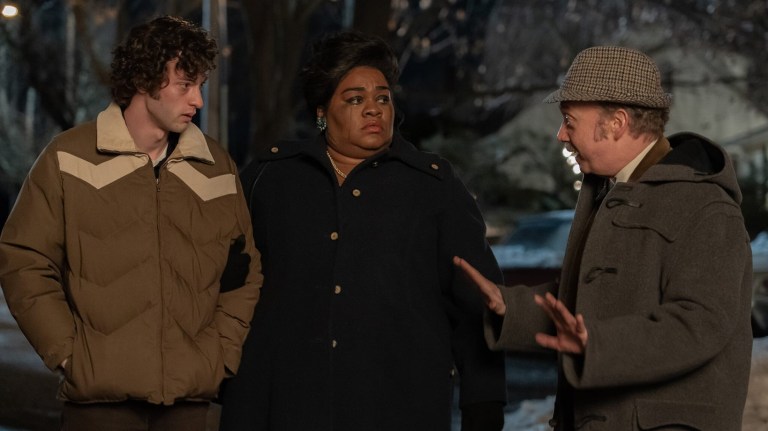
Yet another release that made a belated appearance in Australian theatres, and unfairly so, since The Holdovers would have made for ideal festive viewing had it been brought here just one month earlier. Beneath the sardonic, caustic veneer of a history teacher (Paul Giamatti), anarchic rebellion of a student (Dominic Sessa) and remoteness of a cook in mourning (Da’Vine Joy Randolph) lies a transfixing, warm and sweet – yet never saccharine – tale embodying all the best qualities of Christmas.
2. Dune: Part Two
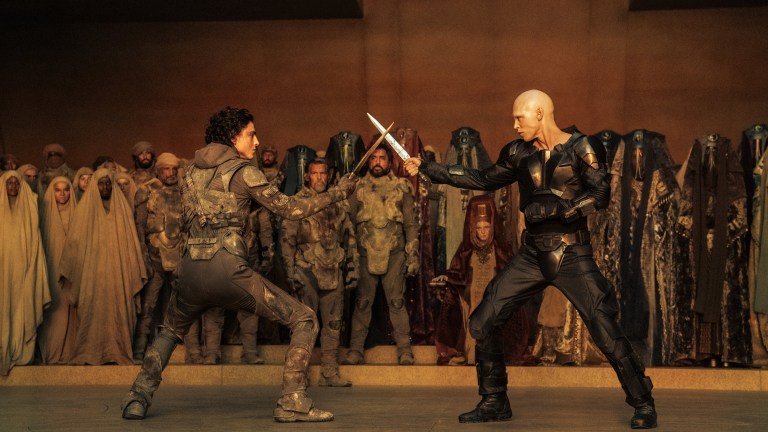
Arnie and myself have quite differing tastes when it comes to cinema, but on one count we are in strong agreement: the sequel to 2021’s Duneis the second-best release of 2024. Canadian auteur Denis Villeneuve provides with Dune: Part Twothe Empire Strikes Back (1980) to its predecessor’s New Hope (1977), a follow-up that builds upon the lore of its established characters and setting, and pairs them with even-more impressive visuals, sound and music. Also, kudos to Villeneuve for leaning heavily into the religious allegories of Frank Herbert’s original text.
1. Challengers
The sheer number of quality pictures meant choosing this final list of ten proved much harder than in previous years, and deciding where to place the Top Five was a more difficult decision still. All came close to usurping the honour of being this writer’s ultimate favourite of 2024, yet only one prevailed – chiefly due to its flamboyance and idiosyncrasy.
Expertly helmed by Luca Guadagnino, Challengers boasts a tense, pulsating techno soundtrack from Trent Reznor and Atticus Ross; a non-linear narrative with a conflict that remains engaging throughout; fun camera angles and photography during its tennis sequences; and morally-ambiguous characters who defy the traditional concepts of a protagonist, yet never succumb to being antagonists. Put simply, there’s been no other film quite like it in the previous 12 months – and perhaps ever.
The Room Next Door preview screening provided by Sony Pictures.
The blurred lines between long-term friends, and lovers, and the rapid progression of time once a career begins to slow have become legendary Spanish auteur, Pedro Almodóvar’s, chief fascination in recent years, percolating and expanding in unique ways that complicate his melodramatic stories. With an extensive filmography of Spanish melodramas and knotty adult dramas spanning almost 50 years, Almodóvar is exploring a new world of cinema with his new Golden Lion-winning feature The Room Next Door (2024); his first English-language feature film and only his third work of adaptation.
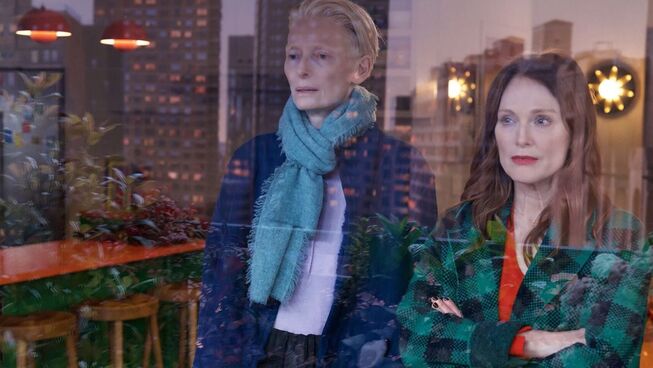
After learning of a recent cancer diagnosis from an old friend, novelist Ingrid (Julliane Moore) rekindles the relationship from her youthful days at a magazine with war correspondent Martha (Tilda Swinton). In light of this diagnosis, the rekindled friendship forms a compelling inseparability, tying the melodrama to some probing ideas on the connection between relationships of all kinds and the presence of death. This friendship is immediately pressurised as Martha decides she doesn’t want to continue treatment, instead acquiring illegal medication to end her life on her own terms, in a secluded house in Upstate New York, with Ingrid accompanying her in the room next door. While not always effective as a knotty dramedy, The Room Next Door is a worthy modern entry in this new phase of Almodóvar, a singular voice in cinema.
Merging a cinematic melodrama inside of an Edward Hopper-influenced (including a centrally placed painting for maximum impact) backdrop shouldn’t sing this harmoniously, but Almodóvar makes it look like breathing. In his first non-Spanish-language feature (after his uneven but charming short Strange Way of Life from last year), Almodóvar’s passion for American literature is evident. However, the chasm between his Spanish lyricism and his English translations flitters haphazardly throughout the film. Like panning for gold in a murky riverbed, The Room Next Door contains beautifully poetic moments of humanity in the face of the end, while many other lines and whole scenes fall flat.
Tilda Swinton and Julianne Moore in The Room Next Door.
Luckily, the film is kept afloat by two of the best working actors and the best candidates to shepherd the Spanish auteur’s unique form of melodrama into the English language. Moore and Swinton are extraordinary together, quickly adapting to the certain quirks and manners that make Almodóvar’s style stand out in modern cinema. While the film relaxes into its story slower than his previous films, no doubt a complication from this being his first feature in English, its unique blend of offbeat humour and all-encompassing melodrama creates a luscious bedrock to lay in the sun with.
Even with the film adapted from the 2020 novel What Are You Going Through by Sigrid Nunez, The Room Next Door is a spiritual sequel to Almodóvar’s brilliant and tangly Pain and Glory (2019). While not as successful as the Antonio Banderas-led dramedy that operates achingly close to the auteur’s own life, The Room Next Door still excels in exploring contemporary ideas of loss and death in an increasingly uncertain world. In the second half of the film, fluttering between climate change doomsday scenarios brought on by John Turturro’s character Damian — an environmental academic and a previous lover of both Martha and Ingrid — and the criminal coverup necessary to keep Ingrid legally protected from Martha’s assisted suicide plan, is a rush of blood to the head, expanding this seemingly intimate story about two friends into a wider conversation about modern living. While unsuccessful in bridging this gap between late-stage friendship scenarios and the crushing weight of contemporary concerns, Almodóvar’s style still makes for an engaging and breezy ride through Upstate New York.
A final poetic choice involving Swinton’s daughter Michelle will be divisive, simultaneously poking holes at the film’s clear eyed look at death while also exploring notions of interpersonal legacy in moments of tragedy. Much like Pain and Glory, Almodóvar has given audiences a full meal to chew on for years to come.
The Room Next Door is in select theatres Boxing Day.
Joker: Folie à Deux preview screening provided by Universal Pictures.
When word came out that Todd Phillips’ sequel to his box office hit, Joker (2019), would take the form of a quasi-musical for large parts, intrigue with a sprinkle of hesitation was coursing through the veins of pop culture discourse. After all, Phillips’ track record with sequels, namely the Hangover sequels, isn’t exactly the most compelling; but when you’ve got Joaquin Phoenix helming your film, anything is possible.
It wasn’t until news of Lady Gaga’s involvement with the sequel, however, that interest really started picking up. Here’s a director who’s landed arguably the greatest actor of his generation for a second roll of the dice, AND he’s got one of the biggest pop stars in the world as well? Well, If A Star is Born (2018) was a recipe for success, Joker: Folie à Deux was practically a delicious dish waiting to be served.
And to be fair, that intrigue carries into the first 20 or so minutes of Folie à Deux, with the events of the first film where Arthur Fleck (Joaquin Phoenix) blew out the brains of a hit late-night talk-show host live on TV, permeating. Arthur is now a martyr of sorts to other troubled minds, with a TV movie charting his killings earning him far reaching recognition, however he’s also in Arkham Asylum and hardly reaping the benefits of his infamous status.
It’s in these first 20 minutes that Phillips also sets the stage for Arthur’s eventual relationship with Harleen ‘Lee’ Quintal (Lady Gaga), an arsonist who catches Arthur’s eye from within the prison’s singing group for inmates. After Arthur is enrolled in the class by a brutal prison guard (played by the legendary Brendan Gleeson), it’s easy to see where this thread is going.
Whether or not Lee is drawn to the real Arthur or his alter-ego Joker, is still relatively vague at this stage, but it’s a concern that Phillips leans on for a majority of the film’s tension — the distortion between reality and fantasy. The idea of unpacking where Arthur Fleck ends and where the Joker begins is an interesting one, if it wasn’t already so fleshed out in the first film.
(L to r) JOAQUIN PHOENIX as Arthur Fleck and LADY GAGA as Lee Quinzel in Warner Bros. Pictures’ “JOKER: FOLIE À DEUX,” a Warner Bros. Pictures release.
It’s also what the film’s many jazzy musical numbers serve to emphasise, as they speak to Arthur’s attempt to cope with and manage the reality he’s been dealt and the fantasy he’s created for himself. Oftentimes I found myself at odds with these numbers, where at once they offer little glimpses into the psyche of a self-absorbed psychopath, but also act as distracting detours that seem to be the only opportunity to give Gaga some leg room to do… well… anything (though I’m mindful this is a film about the titular character and not the Harley Quinn show).
These numbers become even more prevalent as the film kicks into the second act where Arthur is on trial for his murders, as the jury seeks to determine whether he’s downright insane, or playing things up for show — essentially the film’s primary concern. This whole courtroom drama, second act overstays its welcome, with drawn out nothingness that reminded me of just how well other film’s manage similar situations (like 2023’s Killers of the Flower Moon). Phoenix gets some brief moments to lean into his even thinner physique, but beyond that this whole middle section feels like its treading old ground that the first film already established and resolved.
The brilliance of the Joker character in the DC universe has tended to shine through his caped crusader counterpart. It’s why Nolan’s version of Joker is so memorable, because he feels like a larger than life presence — something that’s earned in those films through methodical world building. In Folie à Deux, Arthur is contending with himself for a large majority of the film, trying to redeem himself in parts while succumbing to the voices within, in others. For such a big film, in this way it feels rather small which comes at the expense of the sort of substance you might expect from a film about such a recognisable character. As a result, a lot is banking on Phoenix’s performance to carry the often dull moments, but the shock factor of seeing him embody the character in the same way he did in the first film flies out the window this time around, so the shortcomings in the script are more noticeable.
While reducing the scale and confining audiences to Arthur’s world is a welcome subversion to what audiences might expect, it comes at the cost of an entertaining narrative. There are no mind blowing set pieces or scenes that build momentum into something; the biggest moment of the film comes rather late on, and even then it closes itself up faster than it opened (which will make sense as you watch the movie). Arthur —and by extension, the Joker— is relegated to the sidelines: he poses no palpable threat in the same way he did in the first film, and as a result the stakes don’t feel nearly as significant because he’s contained. Whether or not that’s a satiating enough angle for audiences by the time the credits roll is hard to say, but you may be left hungry for more.
With heavy handed issues such as dementia and rape, films always run the risk of oversimplification and misrepresentation in less-than capable hands. Michel Franco’s Memory (2023) tackles these issues with a sincerity and empathy that doesn’t demote or reduce them, but rather examines them from the perspective of two struggling souls.
It’s through Sylvia (Jessica Chastain), a recovered alcoholic who was raped when she was 12, and Saul (Peter Sarsgaard), a widower with onset dementia, that Franco’s examination unfolds. If the situations of the two aforementioned characters are anything to go by, Memory is the sort of film that could very easily tailspin into, and be written off as, a grim and depressing sob story that treads old ground that similar films have already excelled at (like 2020’s The Father); fortunately, it does not.
The film’s tone is set from the outset, with Sylvia attending an AA meeting with her daughter, immediately establishing the sort of emotional roller-coaster that awaits. Clearly in a better place in her life now, Sylvia’s past deliberately remains unclear for most of the film (at least until a wider reveal in the third act) to ensure that enough tension remains throughout the modest 99-minute runtime.
Franco frames her as uneasy and on-edge, as she pedantically locks her apartment door, sets her alarms and assumes a guarded position when in uncomfortable situations, something that she extends to her daughter in an instinctively maternal, but overprotective, way.
It’s not until an evening at a high-school reunion, that the direction of Memory becomes clear. Sylvia is followed home by a man who casually approached and sat next to her, going so far as to sleep outside of her apartment in a tyre with nothing but a rubbish bag as a blanket. Saul is his name, and Sylvia quickly finds out that he’s not well.
It’s from here that Franco takes the duo and their past and current problems, and uses them as a catalyst for exploring how peoples situations and serious problems can so easily be reduced by those closest to them, that these people ultimately gravitate towards other troubled souls to find solace and understanding. And that approach is felt mainly because Chastain and Sarsgaard deliver profoundly moving and complex performances. The duo capture the trauma and pain their characters are going through in a way that elevates what, on paper, could have been a very basic thematic exercise that comfortably ticks the sort of boxes you’d expect from a film about grief.
Sarsgaard is subtle as Saul, giving enough from his performance to capture a man who is on the brink of losing his sense of self, while never losing the warmth he brings that draws you in; in this way, I was reminded a lot of Robin Williams’ Oscar-winning performance in 1997’s Good Will Hunting. Chastain is just as compelling, playing off of Sarsgaard effortlessly, and giving greater depth to Sylvia the more the two are on the screen together, slowly opening up as she builds trust for him after being asked to be his caretaker by his brother. It’s hard to take your eyes off of them, and if there is something that will stick with you beyond the end credits, it’s definitely the choices they make in bringing these characters to life.
Bubbling beneath the surface of the film’s central duo is a dysfunctional family thread that, while relevant in understanding the circumstances of Sylvia’s situation, does almost pop up at a wobbly moment. That said, it speaks to the idea that there never really is a great time to confront your past, especially when it’s as harrowing as Sylvia’s — it just presents itself in a tacked-on kind of fashion (especially when the film is at its strongest when it’s solely with Sylvia and Saul).
While the relationship that develops between Sylvia and Saul might not sit comfortably with everyone (given Saul’s growing dementia and need for specialist care), Memory asks its audience to see beyond circumstance and try to empathise with two damaged human beings who understand each other more than their own families do — something that its non-ending ending, invites.
Memory will be screening as part of MIFF 2024 in August.
Challengers preview screening provided by Universal Pictures
Challengers feels like both a breath of fresh air for sports movies and a film struggling to find air, mainly because it’s less about the act of winning and more about savouring the build up to a point, soaking in the tension, and when Luca Guadagnino is the director, pushing the boundaries of continuous edging that only free spirited, experimental youths seem to bring. Make no mistake, tennis is the lens through which we untangle Guadagnino’s webs and fascination with youths being unorthodox, but this is by no means a sports rags-to-riches story like King Richard (2021) or a light-hearted underdog tale like Next Goal Wins (2023).
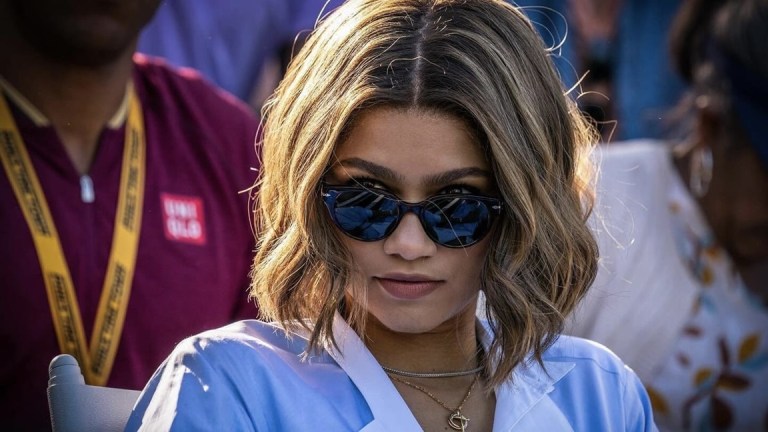
It follows two up-and-coming tennis prodigies, childhood friends Art Donaldson (Mike Faist) and Patrick Zweig (Josh O’Connor), and an established youth pro, Tashi Duncan (Zendaya). Things get a little complicated for this trio who meet long before Art becomes a touring pro and Tashi, his coach and wife. In fact, Guadagnino’s film takes many turns, often dovetailing from one moment in time to another, with Marco Costa’s editing giving the film this back-and-forth rally like quality, sometimes a bit too excessively but enough to keep you on your toes.
We open in the present, where Art’s game isn’t as great as it once was and Tashi signs him up for a challenger event in New Rochelle to find some flair before the US Open. Unbeknownst to Art, Patrick, now his former friend, will also be competing. It’s from here that Guadagnino cuts between the present and the past, sometimes for a matter of days, other times for years. It becomes clear that there’s some unresolved history between the trio who first met 12 years ago at a juniors tournament where they hit it off both on and off the court.
Guadagnino, an expert at extrapolating meaning from odd situations, uses Tashi as a catalyst for carnage, or to put it in her own words, a “homewrecker”. From early stages, her motivations aren’t entirely clear in terms of her fascination with the duo —there’s a steamy scene where the trio lock lips before Tashi pulls back and leaves Art and Patrick still going at it before she admires her work and ducks out— but she’s clearly the focal point that pushes the narrative forward. And that’s largerly because Zendaya does a great job at conveying this larger than life presence, mainly since that’s how she’s perceived in pop culture more broadly. Guadagnino is able to tap into that to a greater degree, working with cinematographer Sayombhu Mukdeeprom to box her into the frame through tight close-ups and really portray her as a figure of authority who has a grip on Art and Patrick that can’t be shaken off.
The enjoyment of the film comes from the tension that is bubbling beneath the surface, after all this is a story about competing and winning no matter the cost. That’s at least the mentality that Tashi has instilled into both Art and Patrick who, no matter their rankings in the wider sense, constantly seem to be tussling with one another. At the same time, this tussle seems to be less about proving anything to themselves and more about proving something to Tashi.
Ultimately, tennis provides the perfect platform for Guadagnino to pivot such ideas against one another, with the underlying horniness of it all working to give the film a unique edge —especially when paired with Trent Reznor and Atticus Ross’ pulsating techno score which further breathes life in any given moment. Whether or not this is the sort of film you’ll walk away from and continue to ponder isn’t clear, especially with an ending that doesn’t exactly prod you to ask any more questions but almost leaves you wanting more answers in the same unfulfilled way the trio have been all movie.
Challengers opens nationally from the 18th of April, 2024.
While J. Robert Oppenheimer’s name might be synonymous with the deadliest device ever created, Christopher Nolan’s latest three hour biopic, Oppenheimer, looks at the man behind the atomic bomb through a much more introspective lens without ever insinuating that audiences should feel a sense of sympathy for his brilliant mistake/s. Of course, introspection is a key building block to any biopic, but given Nolan’s ouevre hasn’t ever focused on a historical figure of this magnitude —or any historical figure in this sense which still isn’t as big a shock as not casting Michael Caine—, there’s understandably a greater interest surrounding this biopic if not for the simple fact that it’s a Nolan film, then definitely because its subject is one of the most infamous, and misunderstood, scientific minds ever.
That Oppenheimer was a brilliant theoretical physicist who was the victim of his own belief that man could be trusted with forces larger than them, is undeniable. But Nolan’s film isn’t just concerned with the cookie-cutter facts that you can pull from a Wikipedia page. While the film is based on 2005’s Pulitzer winning novel, ‘American Prometheus’, Nolan’s interest jumps from the key, often glossed over moments in Oppenheimer’s life, and interrogates them more carefully.
Nolan’s Oppenheimer (a perfectly cast Cillian Murphy) is a man struggling to be faithful, who is always in his mind, viewing every next move like an equation on a chalkboard. His relationship to theory stretches into his everyday life as he struggles to maintain meaningful relationships, always approaching life by the numbers and relegating himself to a disconnected observer as opposed to a practical artisan. At one point he is in disbelief that scientists overseas have figured out how to split atoms from each other (or something to that effect), stating that it’s not possible from a theoretical point of view (POV), and it’s through this sort of mould that he carves his Oppenheimer from — a man unlike those around him, an outlier.
L to R: Florence Pugh is Jean Tatlock and Cillian Murphy is J. Robert Oppenheimer in OPPENHEIMER, written, produced, and directed by Christopher Nolan.
In this way, he isn’t too different from other Nolan characters like Bruce Wayne or Joseph Cooper in that he’s committed to what he knows, and does what he must for the greater good. His distant persona also affects his ability to build sustainable relationships, often pin-balling across various lovers and failing to forge a life beyond his commitment to his craft as exacerbated by a scene where he offers his crying baby to his friends as he doesn’t have the time to look after it (a selfish move he recognises).
Early in the film he’s encouraged to pursue his interest in theory and master it, and this is the point in his life that Nolan opts to introduce us to. And it’s in the early stages of the film that Nolan really portrays the internal struggle that will go on to plague Oppenheimer in the film’s later stages. He cleverly uses hazy, almost dreamlike visual motifs that equally look like beautiful stars and bomb fragments. These moments are some of the most thought-provoking as they provide a real deviation from the coolness and level head of Cillian Murphy’s performance that makes the character difficult to read — as though he’s got everything under his hat and under control.
It helps that multiple POV’s are being deployed by Nolan here in what is probably the most un-Nolan-esque part of this movie. Not only is Oppenheimer’s view of the world on display, but that of his early ‘affiliate’, Lewis Strauss (Robert Downey Jr. at his brilliant best). This duality helps build tension and allows the events of the third act to come together more tightly than might otherwise have been possible. Frequent Nolan cinematographer, Hoyte van Hoytema, shoots in colour for Oppenheimer and black and white for Strauss, further helping create this sense of separation through subjectivity and objectivity, ultimately adding to Oppenheimer’s unknowability and the difference in views that the two characters have. Whether or not this approach works in its entirety is difficult to tell from a first viewing, especially since it does tie events together, but equally throws one out of rhythm from time to time with the various timelines intersecting.
Robert Downey Jr is Lewis Strauss in OPPENHEIMER, written, produced, and directed by Christopher Nolan.
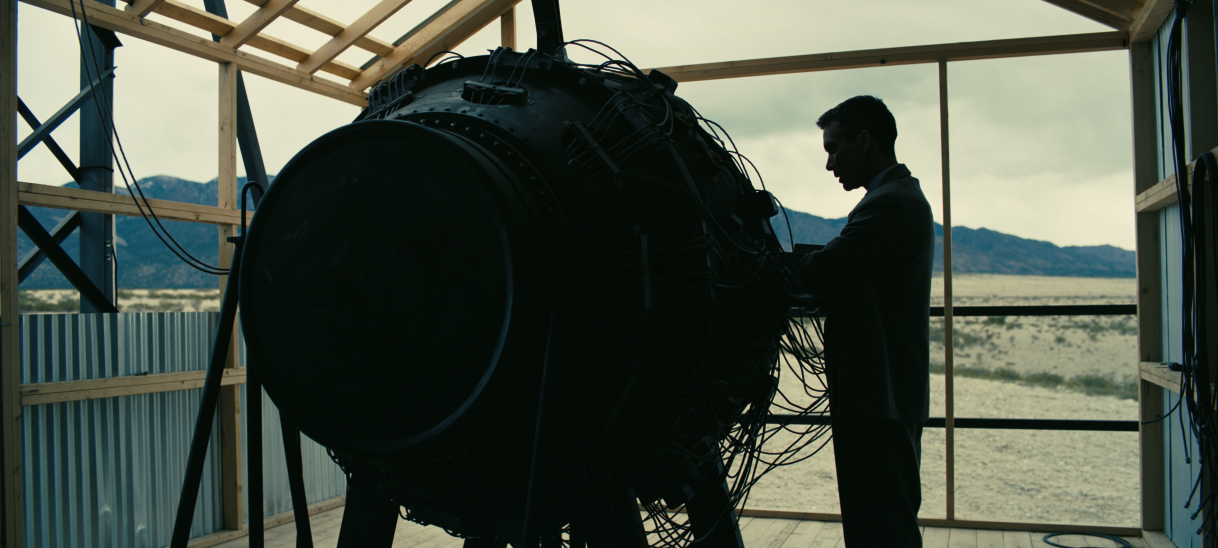
The most jarring instance of rhythmic intrusion is also the film’s best for the very fact that it’s the most speechless moment in the film. If you’ve followed the marketing, the controlled atomic set-piece (atomic in its own right) is where the full force of seeing this 70mm beast in IMAX really sells itself. By this point a lot of the establishing from the first half —namely around the politics of the Manhattan Project and the scientific lingo that will fly over most people’s heads— has been rounded off and Nolan finally gets to play with his own toys by unleashing the mother of all bombs, creating a spectacle that almost transports you to the New Mexico desert with the characters. It is really the punchline of the film, rewarding your patience by drowning out all of the noise in its countdown and the ensuing blast.
Whether or not Oppenheimer is the sort of Nolan film audiences are eager for is tough to say; there’s no tricky logic that fans of Interstellar (2014) or Inception (2010) wouldn’t wrap their heads around, but the film also sees Nolan at his rawest and most cynical, choosing to show a world destined to implode on itself just as it’s beginning to take shape. While The Dark Knight (2008) followed a similar path, there was at least the knowledge that its commentary was so distant from reality rather than a part of it. Yet in a film full of so many competing elements whether it’s the performances, the dialogue (which has has never really been the sweet-spot in a Nolan film as much as the moments around it are), the rapturous score from Ludwig Göransson, the staging of the key set piece or even the candidness of the story, there’s no doubt that like Oppenheimer, Nolan was all in on going big, and the final result is one that will stick with many long after the end credits roll by.
No one manages to blend crime and action on the big screen quite like Michael Mann. From the sprawling cityscapes that act as their own character, to the attention-to-detail with each and every aspect of production, Mann’s films are distinctively his own. It seems fitting then to look back on his stellar oeuvre and try and rank his titles based on my sentiment towards them at this moment in time. This is especially the case following his recent novel and sequel to the iconic Heat (1995), which he co-wrote with Meg Gardiner, and leading up to his Adam Driver-led, Enzo Ferrari biopic, Ferrari (2023).
Of course, like with any list, opinions are different and feelings towards films change as time goes by and depending on where in your life you find yourself. But for now, these are his films ranked from worst (if you can call them that) to best:
11. The Keep (1983)
The Keep
Whether it’s due to the fact that large chunks of this film were cut out, or because it’s the least Mann-esque title on the list, The Keep is what I like to call Mann’s brain fart.
His second feature following the brilliant Thief (1981) represents his first and clearest (as there are elements of this in his true crime thrillers) foray into the horror genre. It’s a film plagued by bland and uninspired performances; a nonsensical narrative involving Nazis, a devilish entity, a supernatural Scott Glenn and one of the strangest but best sex-scenes you’re likely to see in a Mann film or otherwise; an interesting production design; and a pretty neat synthy score by Tangerine Dream.
Given Mann has disowned the film because of Paramount’s treatment of it, one can only imagine what the unreleased director’s cut had in store — we can only hope it graces out screens someday.
10. Manhunter (1986)
Manhunter
Many might find my ranking of Manhunter to be completely against the grain, but this thriller revolving around capturing a psychotic serial killer just never resonated with me on a narrative level like some of the other titles on this list (and I still gave it 3.5/5).
Manhunter focuses on FBI agent Will Graham (William Peterson), a detective who’s come out of retirement to help locate an elusive serial-killer with strange motives. His past experiences hunting figures like Hannibal Lecter (a subtle performance by Brian Cox) means he’s the perfect guy for the job.
Manhunter uses Will and the serial killer he’s hunting to create an interesting parallel between the mind of a psychotic man and the man capable of catching him. Its use of home video and the focus on truly seeing almost posits that these two men aren’t so different in how they see the world, but to different ends and outcomes.
Whether or not I was expecting a more conventional voyeuristic mystery-thriller in the way that Se7en (1995) or Rear Window (1954) are —where the killer feels like they’re an arm’s length away, only for the satisfaction of catching them to be snatched from you— is difficult to say (perhaps that’s what people love about this?), but I found myself at a crossroads by the third act. I hope my opinion changes on a second viewing.
9. Ali (2001)
Ali
On the surface, a film about Muhammad Ali seems like the farthest thing from a Michael Mann joint. There’s no mesmerising cityscape, no sirens or gunfire, no real suspense in the way that his crime films create suspense, and the subject matter doesn’t exactly scream ‘Michael Mann’.
But this film about the greatest boxer of all time works because of Mann’s interest in figures that don’t play by the rules. Specifically, Ali focuses on the period of time between Ali’s (Will Smith) first major heavyweight bout, the court case filed against him for refusing conscription for the Vietnam War, and his famous win against George Foreman to reclaim the heavyweight title.
Ali’s unilateral decision to not be conscripted was momentous for the fact that he was the heavyweight champion of the world, and making such a decision could affect his ability to box in his prime (which it did). He also reinvented who he was by changing his name and living on his own terms — a staple of Mann characters, but for different reasons. Often his characters are trying to protect others from who they truly are whereas Ali was trying to break away from the branding that others (white slavers) had given him and his people centuries ago.
The opening 15 or so minutes are also arguably Mann’s most compelling in the way that he establishes character, creates purpose and builds tension. At times there’s a suddenness to proceedings where the film makes abrupt leaps in time between the court case announcement, the Joe Frazier fight, and the George Foreman fight, but overall Ali is a portrait of one man’s journey to becoming in the face of adversary.
8. The Last of the Mohicans (1992)
The Last of the Mohicans
Along with The Keep, The Last of the Mohicans represents a different sort of Mann.
Like with Peter Jackson’s first film experience with the classic King Kong (1933) and his eventual reimagining of that classic on his own terms in King Kong (2005), Mann’s first vivid film memory was of 1936’s The Last of the Mohicans.
Helmed by Daniel Day-Lewis as the adopted Mohican, Hawkeye, this period piece about everything from the damning effects of bureaucracy to the Tarzan-esque romanticism of the love affair between Hawkeye and Cora Munro (Madeleine Stowe), is the first Mann film to create a sense of scale that would have greatly shaped the way he approached his later films.
By that I mean Mann finds a balance between showcasing the wide and beautiful terrain of a primeval America against the harshness of the looming modernisation that threatens its existence. This translates onto how the characters react to each other, whether it be through Magua (a mesmerising Wes Studi) and his desire for revenge against the British (for what they took from him) as well as his forward thinking to help his tribe, or through the loud and rampant battle at Fort William Henry that threatens the peace of the land.
Guided by one of the greatest scores of any film ever by Trevor Jones and Randy Edelman which at once evokes hope and sadness, picturesque vistas, and gripping direction that never falters, this Mann-epic is Mann at his most untethered.
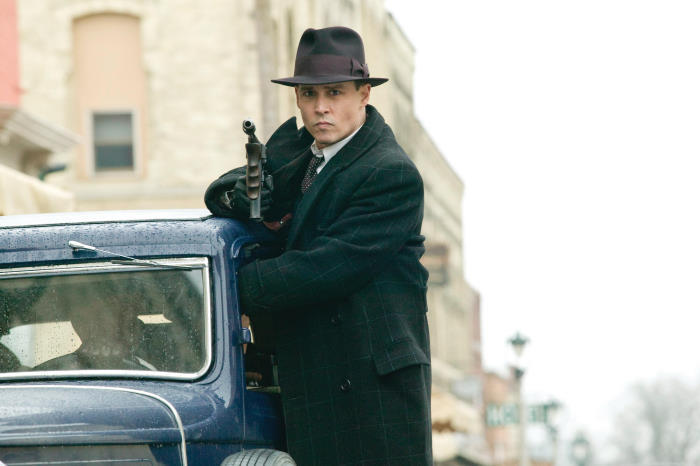
7. Public Enemies (2009)
Public Enemies
When it comes to famous outlaws, there are few that are as iconic as John Dillinger, especially given he was a man who wasn’t interested in stealing from regular people, but the state itself.
That’s partly why he’s the perfect historical figure for a Michael Mann film given his self-defined approach to life.
Public Enemies follows Dillinger (Johnny Depp) as he makes prison escape after prison escape, continuously evading capture and robbing banks before finding an added purpose in life in the form of one French-American, Billie Frechette (Marion Cotillard).
Like all of Mann’s anti-heroes, Depp’s Dillinger is charming and elusive all at once. He’s a character infused with an aura of mystique that Depp delivers with the casual suave that his own image beyond the screen has maintained.
But it’s in the reimagining of the period through a digital lens where Public Enemies really excels. The moody greys, dark passages and almost colourless world are so striking here that it creates a more profound hyper-realism — almost bringing the 1930s to life in a way that shooting on film wouldn’t.
6. The Insider (1999)
The Insider
A film about a man’s grapple with doing what’s morally right or being forced into silence by forces greater than him; The Insider, in true Mann-style, is an exercise in patience — in waiting for the right moment to make a move before it’s too late.
Unlike Mann’s other thrillers though, The Insider doesn’t have vans of heavily armed forces hiding around the corner, but it instead puts its faith in the truth overcoming the odds. That truth is in the form of former tobacco chemical scientist, Jeffrey Wigand (Russell Crowe) and the 60 Minutes producer looking to help bring his story to light, Lowell Bergman (Al Pacino). The odds are the Brown and Williamson Tobacco Company who are trying to keep Jeffrey, and this story around what really happens to tobacco, silent.
Guided by Mann’s brilliant direction, a well-crafted script by Mann and Eric Roth, and a standout performance from Al Pacino in an unfamiliar but equally familiar performance, The Insider paints a perplexing portrait of the lengths to which vindictive multi-billion dollar organisations will go to in order to supress information. It brings various parties with differing interests together, and creates a wide web of uncertainty for all involved — with no clear contingencies, but everything to lose for everyone involved.
5. Blackhat (2015)
Blackhat
Michael Mann’s most recent film feels like a sum of all of his best parts (it’s also been eight years since it was released!).
The film follows hacker Nicholas Hathaway (a career-best performance from Chris Hemsworth) who, after a series of awry events happen by an unknown source, is released from prison for the purpose of helping discover the person behind these events.
Blackhat is where ideas meet, characters converge, and where the tangible coalesces with the intangible.
In a similar way to Manhunter (but without the straining of classic thriller conventions) and Heat, this film once again depicts two sides of the same coin — Hathaway as the hacker-turned-FBI collaborator, and the unknown hacker blowing up coolant pipes and infiltrating wall-street. One is front and centre for the audience, while the other is kept faceless. While their intentions are different, they occupy a similar space like almost all of Mann’s characters do, but Blackhat is different to his past films because of how it bridges the characters worlds together and carries and communicates messages.
Mann uses modern technology to create a divide (the intangible), and forces his characters to embrace human interaction and connection (the tangible) if they are to overcome this threat.
His portrayal of the L.A. and Hong Kong maze of buildings and their bright lights speaks to the lack of personality or distinguished features in these settings, which fizzles down to the people who fade into each other like ones and zeros. It’s a wider critique on getting lost in the masses at a macro level, and getting lost in the code on a micro level.
Hathaway is the vessel Mann uses here to try and break through the code and by extension, this front that a world lacking real connections, has maintained — with Hemsworth using his size and stature to brilliant avail.
The closing sequence sees Hathaway concoct weapons and armour out of everyday tools, as though Mann is returning man to a primitive state before the world of data and technology became the guiding force. Hathaway gets the upper hand, and walks away in perhaps Mann’s most optimistic ending.
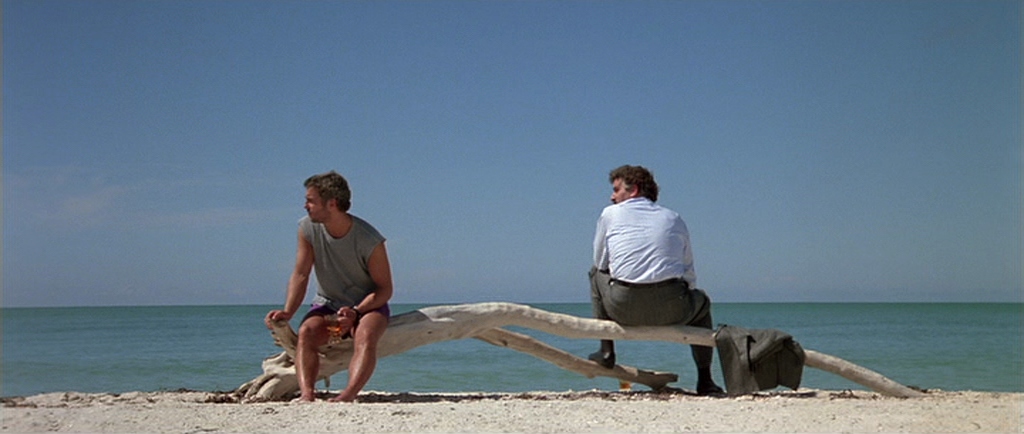
4. Thief (1981)
Thief
The OG Mann, Thief introduced audiences to this true-crime loving director who focuses on characters that take pride in the work they do, sometimes fall in love in the process, and live life on their own terms.
For expert safe-cracker and straight-talker, Frank (James Caan), he embodies the above perhaps more than any other character in Mann’s oeuvre. It might be because this is Mann’s most contained film in that it isn’t made up of major set pieces and crowded settings, but instead allows Caan to revel in the dialogue and the weight behind his words.
Thief is about a man on a mission to tick off his checklist of wants before cashing out. It’s also about a man refusing to bow down to the interests of others, instead taking it upon himself to shape his own destiny at any cost.
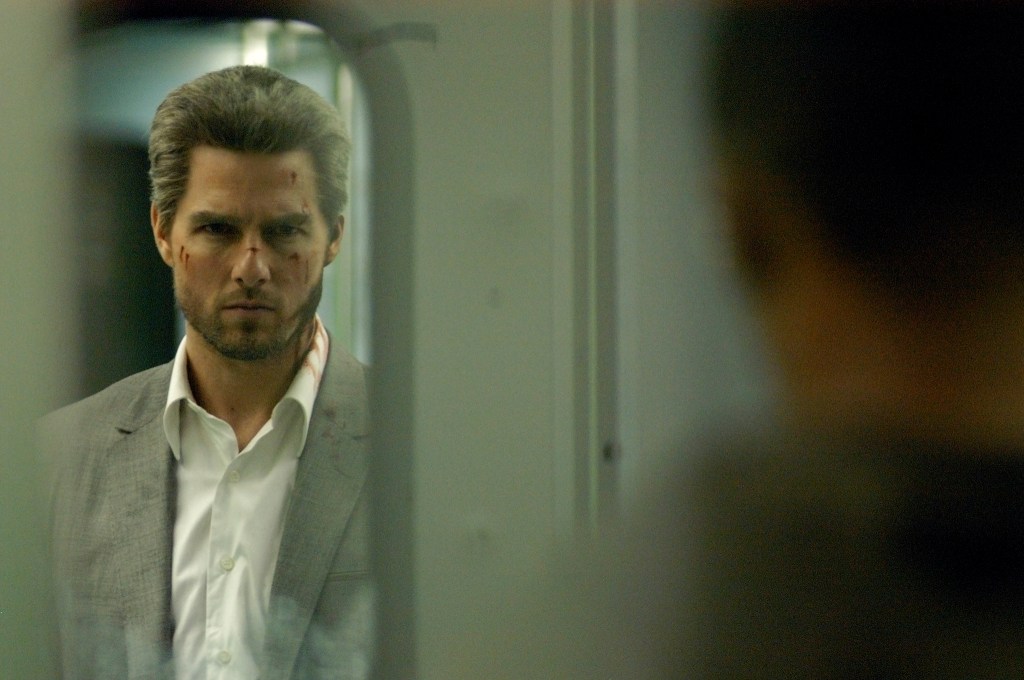
3. Collateral (2004)
Collateral
Two guys in a car, strangers to each other, both operating on a routine, a structure that they rarely break from, moving as one through the luminous L.A. night but to different ends.
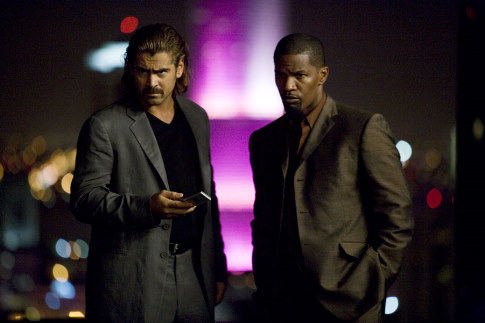
Collateral is a wonderous neo-noir that pivots two men with differing moral compasses against each other: Max (Jamie Foxx), a slave to his inhibition, to his failure to act and make a difference to his life; and Vincent (Tom Cruise), a man untethered, a multi-faceted nihilistic hitman who gets in, gets out, and keeps moving forward.
Much has already been written on Collateral, from its vivid imagery to the rawness of its digitised look — at once enticing and haunting. Vincent poses a threat to Max’s idealised vision of tomorrow, but also an opportunity to start making things happen and not idle by.
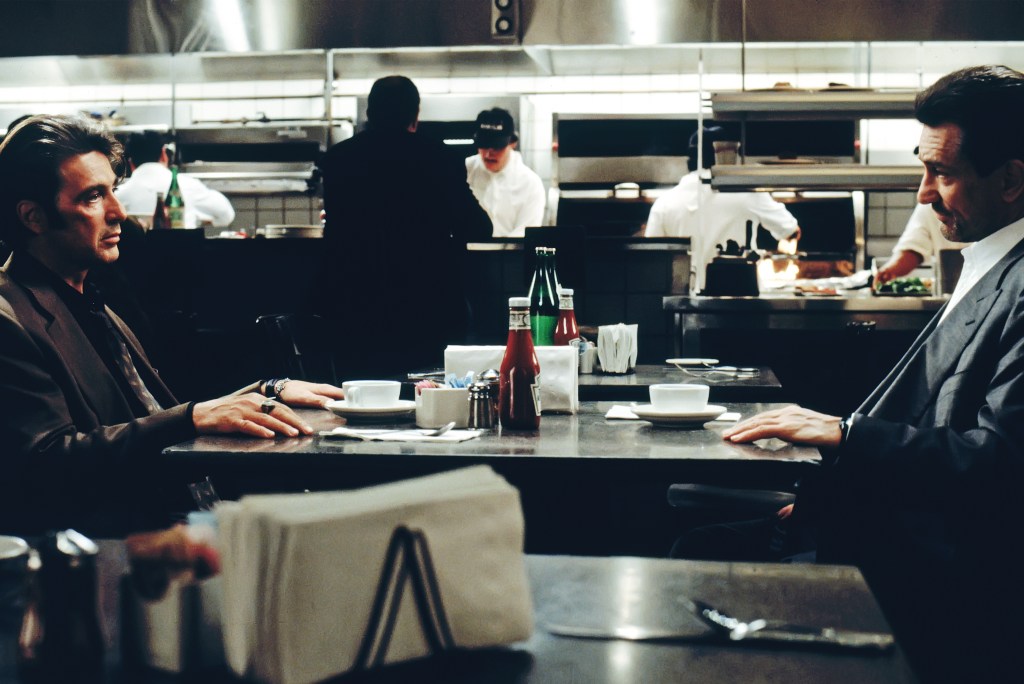
2. Heat (1995)
Heat
What does one even say about what, in the eyes of many, is Mann’s magnum-opus?
Heat is the sum of many parts, but it doesn’t work without its two key pieces: Al Pacino and Robert de Niro. The duo, reunited together on a feature for the first time (and for the first time ever in the same scene/s) since The Godfather Part II (1974), Pacino and de Niro are two sides of the same coin.
Vincent Hanna and Neil McCauley are like yin and yang — they don’t mix but they can’t function without one another. This speaks to Mann’s wider commentary on good vs evil, crime vs order which has been the focal point for 90% of his oeuvre. In Heat, Pacino and de Niro accentuate Mann’s fascination with these binary opposites to their full extent.
It’s as though these characters revel in the chase, of being the hunter and the prey, and they treat it like a drug that supersedes everything else in life. Mann brilliantly captures this through bright neon lights and the wider city which acts as its own sanctum that gives weight to the chase. Nothing is as beautiful as the city lights in a Mann film where cop cars race down the freeway in a storm of intensity.
But Heat is also made up of moments: the diner scene between Neil and Vincent is one of the greatest moments of character interaction in cinema history as these two men come face to face, pause the chase, and acknowledge each other; the downtown LA shootout where Mann shut down multiple blocks to shoot one of the most jaw-dropping scenes in any film ever; and the poignant finale where the two leads lock horns for the last time.
Without Heat, we may never have had The Dark Knight (2008), and that’s just one extra reason to watch this if you haven’t.
1. Miami Vice (2006)
Miami Vice
I’m sure Miami Vice is a top-three Mann on anyone’s ranking of his work, but this bustling neo-noir about two under-cover detectives goes beyond the 80s show of the same name to become a gripping tale of people accepting that they’re living on borrowed time and learning how to manage the time they have left.
On the surface, Miami Vice is a buddy-cop thriller about two detectives infiltrating an offshore drug operation where they act as the middle-man between the international supplier and the local Miami buyer. Their mission is to find out who the buyer is, but the deeper they find themselves in the operation, the more they realise they’ll never have an opportunity like this again.
Jamie Foxx and Colin Farrell are the two leads here and (while already the case with Foxx) they instantly fit the Mann-model of characters who don’t always play by the books, are good at what they do, and sometimes make rash, emotionally led decisions.
But it’s through Mann’s ability to capture the fleeting nature of life, the suddenness of a bust and the shootouts that ensue, where Miami Vice makes a case for his best film. There’s a dream-like tranquillity to the use of digital footage here that might just be the best example of creating evocative images in the digital format. From the bright hues of the nightlife and its clubs to the more intimate sensual moments, there’s a sense of liveliness and temporality mixed together in the film’s visual language.
Mann’s growing fascination with the commodification and expendability of the human body really started gaining momentum here as well. Whether it be in the film’s final shootout where bodies drop at a whim or the use of people as shields for getting what you want (drugs, cash, obedience), it’s an aspect of his films that really does speak to how precious those moments of human interaction are for his characters when they do have them.
Critics are fast running out of superlatives to describe the filmography of Pixar Animation Studios. Every release by the company, especially of late, has possessed a rousing soundtrack, heartfelt screenplay, top-notch voice-acting and of course, computer-generated illustrations beyond compare, almost to the point of conformity. That all changes with this production, and for the better.
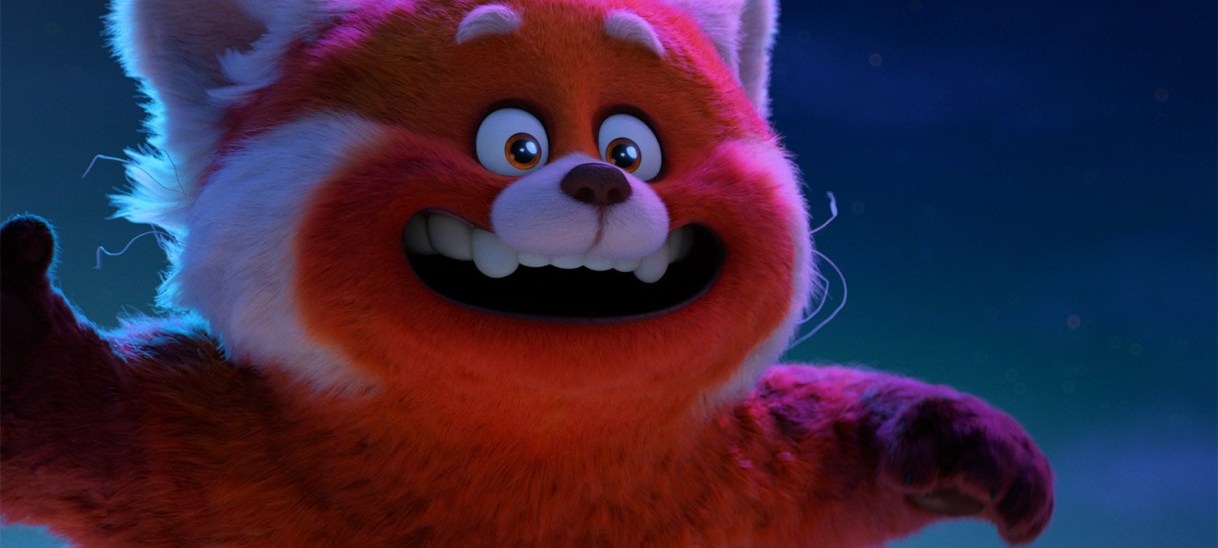
Toronto resident Meilin Lee (Rosalie Chiang) is on the verge of adolescence, lusting after boys she ordinarily wouldn’t and engaging in activities that draw the disapproval of her otherwise doting mother, Ming (Sandra Oh). But puberty is not the only drastic change the youngster is having to contend with – now that she’s a teenager, Mei finds herself transforming into a giant red panda whenever her emotions are heightened, a source of embarrassment greater than any other in her life.
The driving force behind Turning Red (2022) is writer-director Domee Shi who, just like Mei, is a proud Torontonian with Chinese heritage. Shi’s career trajectory is more interesting than most, having joined Pixar as an intern before garnering widespread acclaim with her allegorical short film Bao (2018). After this success, Shi was promoted to Pixar’s “Brain Trust” and given the opportunity to craft her own feature-length production; in turn, the film-maker has concocted the most energetic, inimitable Pixar film yet.
The most distinguishing element of Turning Red is the art-style. While there are shades of Pixar’s influence in the design of the characters and settings, the look of the film is distinct from any of the studio’s previous feature-length productions, a change that is most welcome. Soft colours dominate the architecture of Toronto, and clothing of those who inhabit its surroundings; humans of all sizes and body types interact with one-another, while their faces are adorned with large teeth and pupils that comically dilate or contract depending on their mood.
The animation, too, is a point of difference from other Pixar films. Where in the past, a character would move smoothly and gracefully (one could even say “realistically”), in Turning Red, the movement of the protagonists is quick and frenzied, welcomely leading to some well-timed physical gags that border on slapstick. Adding to this witty and frantic vibe is the editing, which occasionally employs some Edgar Wright-style quick cuts to further discern the picture from its contemporaries. Yet the differences go even deeper than that.
Ming Lee and daughter Meilin are often at odds in Turning Red.
Further distinctions are found in the screenwriting, which matches the vibrancy of Turning Red’s visuals. The plot is narrated in the first-person by a self-aware figure who frequently breaks the fourth wall and wears her geekiness with pride, forgoing the usual stereotype of an introverted, awkward teenager. Likewise, her friends are eccentric, outgoing and unashamedly nerdy, offering the perfect social and moral support – another rarity in coming-of-age tales. Additionally, it’s a tale that feels quite timeless, despite the film’s early-2000s setting.
Yet for all the freshness this script provides, it is stymied by the occasional flaw. One such example is the antagonistic Tyler (Tristan Allerick Chen), who is underwritten and poorly developed – efforts made by the film to complexify and soften his character are tame at best and confusing at worst. Another letdown is the third act, relinquishing the vim and momentum present elsewhere in Turning Red, slowing events to an underwhelming conclusion, and providing a left-field revelation about Tyler that bears no relevance to the conflict.
The one upside to these blemishes is that they aren’t a common sight in Pixar’s filmography, offering further proof that the team at Emeryville are no longer adhering to a formula or norm. Between this flick and Luca (2021), it looks as though Pixar is shying away from being a safe, comfortable brand and instead following the route of its fellow CGI powerhouses, DreamWorks and Sony in taking risks – they’re hiring new people, toying with different art-styles and telling more diverse stories.
Turning Red heralds a promising future for Pixar Animation Studios, providing the medium with a fresh and distinctive voice in Domee Shi. Viewers will find themselves drawn to the quirky characters, original story, lively animation and bright illustrations of a stylised Toronto, making for an entertaining and resonant experience regardless of one’s background.
Turning Red is now available on home-video and on-demand services, and streaming on Disney+.
So rarely will a group of people in a theatre howl with glee and terror in equal measure while watching a film, but that is the reaction that directing duo Daniel’s (Dan Kwan and Daniel Scheinert) newest feature Everything Everywhere All at Once elicits throughout its 144-minute runtime.
The film follows the Wang family, helmed by matriarch Evelyn (the legendary Michelle Yeoh), who is preparing for an audit from the IRS, full-time work in her struggling laundromat, Evelyn’s father Gong Gong (James Hong) arriving that morning from China, her husband Waymond (Ke Huy Quan) trying to give her divorce papers, and her daughter Joy (Stephanie Hsu) trying to get her mother to accept her girlfriend Becky (Tallie Medel). Everything is happening everywhere all at once for Evelyn, and this is all before the threat of the multiverse collapsing has entered their lives. Shock and extremity is the name of the game for Daniels so I won’t be spoiling any moment here as they would lessen the impact.
It would be so simple for Daniel’s to toss aside this opening act to get into the zany adventures in the centre of the film, but it is clear from the jump that the entire emotional weight is set up at the beginning and is allowed to mature over the runtime. This is what makes the great weird films like Back to the Future (1984) work for audiences, a clear goal and set of stakes for the story being told that is established in the opening 20-minutes, working as the firm ground to stand on as a hurricane of madness whirs around you for the rest of the film.
Those unfamiliar with the directing duo’s previous film Swiss Army Man (2016) will be taken aback by the pair’s slapstick and crude humour, as well as their frenetic pace between visually creative moments. Daniel’s crashed into the scene with their work in music videos – a common pathway for some of the industry’s best visual stylists (Michael Bay and David Fincher to name a few) – with the iconic Turn Down for What by DJ Snake and Lil Jon, one of the most-watched music videos ever. While it’s clear in their previous works the directing pair have filmmaking chops to spare, they achieve a greater scope and emotional weight in Everything Everywhere that matches with their visual creativity, a balancing act that is quite astounding.
Stephanie Hsu (left) as Joy, Michelle Yeoh (centre) as Evelyn, and Ke Huy Quan (right) as Waymond in Everything Everywhere All at Once
Floating along a constant stream of intertextuality, self-referentiality, and reverence to the films that paved the way to gift this film into audiences’ laps (The Matrix (1999), In The Mood for Love (2000), any Charlie Kaufman film), Everything Everywhere feels like a cinematic miracle that is at risk of breaking at any point. We’ve all made food (let’s say, a bagel) that we’ve overstuffed with nothing but things we enjoy eating, not realising until it’s too late that the meal has tipped over the edge into being inedible, or at the very least a meal spoilt by clashing ingredients. Like tastebuds, every person will respond to the film’s propulsive mania in different ways which are exciting, making the viewing experience with a packed audience all the more rewarding.
Everything Everywhere is a technical marvel of small budget filmmaking, from its mind-blowing costume and production design to its sound design and visual effects, but the real hero of the film is editor Paul Rogers. Rogers’ work here is nothing short of miraculous. Tasked with building a feverish momentum for over two hours while having each individual emotional moment land as impact-fully as each comedic or absurdist one. Rogers moulds the filmmaking duo’s creative madness into a deeply resonant and enjoyable film, not just another overly ambitious indie that feels more like a creative dare than a work of art with deep truths.
The film also wouldn’t work as well as it does without a perfect collection of onscreen talent that is all game for the absurdity being thrown at them. Whether it’s with IRS agent Jamie-Lee Curtis who is up for all manner of madness here and is having a blast, to Stephanie Hsu as Joy, who quickly becomes the emotional and narrative crux of the narrative, elevating an already entertaining film to transcendent levels. I am deeply looking forward to what else Hsu and Daniels can achieve together.
The film works similarly to the hyper pop genre in modern music. Both Everything Everywhere and hyper pop are mining pure emotion within the heart of excess and artifice. The movement is a direct response to the nihilism and despair of the 90s and 00s with artists like Charli XCX and the PC Music label paving the way. This form of hyper-aware, hyper-stylised emotive filmmaking operates just like a Charli XCX album; bouncing around multiple ideas with youthful energy, whilst never losing its heart and emotion. It is truly thrilling to see a similar approach made in cinema.
Some may call this film exhausting, and perhaps on a different day I may agree, so I can’t guarantee how you will feel until you witness what Daniels are doing here. But, I would stress to anyone who has seen the film and felt it exhausting, please see it again as your mood at the time you see this will heavily influence what you think of it, and it is definitely worth your time.
The Everything Everywhere All at Once is in theatres now.



















 Rating Frames