Best of 2022: Darcy’s Picks

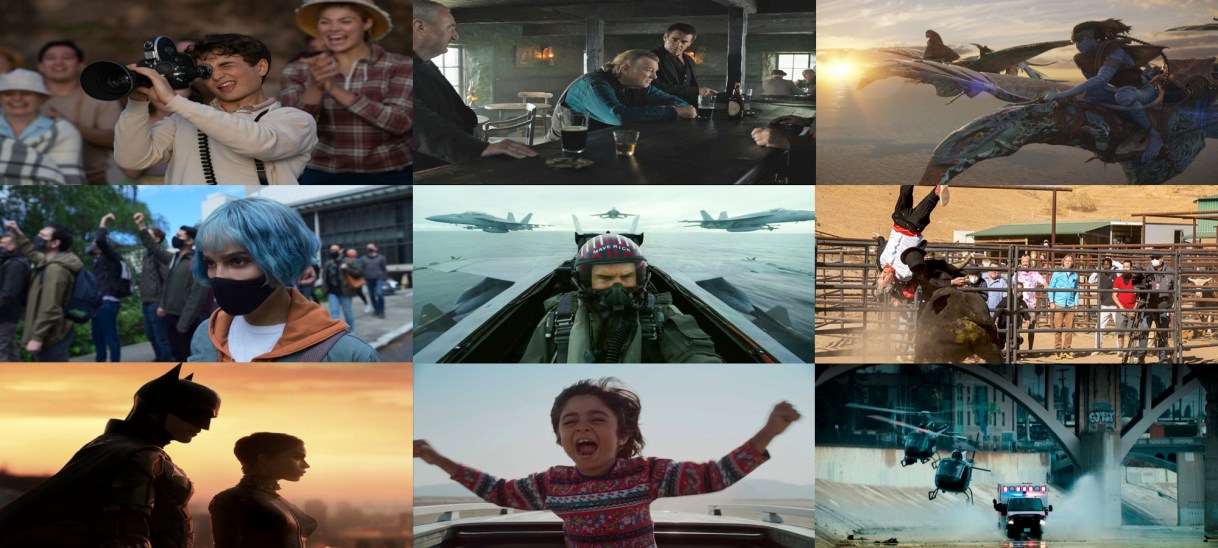
With films returning to their native home of the theatre, 2022 delivered an interesting year of releases. Returning to some sort of cinema normalcy, even if the industry has been quite radically changed by Covid, the year has been full of quality films, including a large suite of self-reflexive stories from filmmakers old and new, to surprising and uber-entertaining box office hits, and the return to form for some incredible directors.

My 2022 list is surprisingly different to my most anticipated list from March, with Nope being on both lists, as my favourite works of the year came from unexpected places. This list includes two debut features (Hit the Road, Aftersun), a film from a filmmaker I’ve struggled with in the past (Armageddon Time), and a filmmaking blindspot I need immediately filled (Tár). While no five-star classics exist in this year of film, an impressive level of depth made this a difficult list to order and will no doubt change years from now. But for now, here is my list of the best films of 2022.

10. Hit the Road

A cheeky but politically and thematically resonant road trip dramedy of a young Iranian family attempting to smuggle their son out of the country to avoid military duty.

Panah Panahi, son of legendary filmmaker Jafar Panahi, is no stranger to the industry, but what he is still able to achieve on a debut feature is remarkable. Weaving in a deft political statement with a director well aware of where he is crafting his films, Hit the Road is elevated by a delightful and emotive family ensemble, centred by a lightning rod performance by Rayan Sarlak as the little brother.

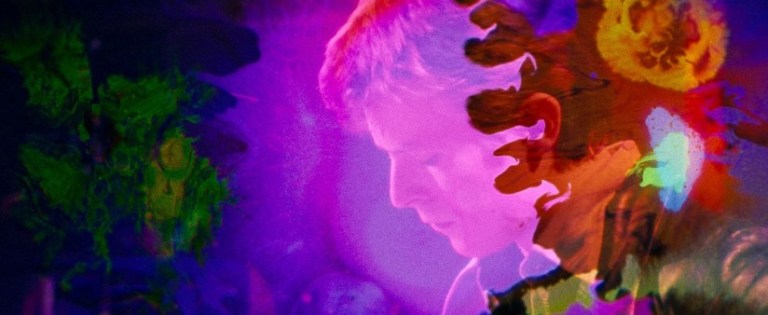
9. Moonage Daydream

Filmmaker Brett Morgen, known for his wonderful 2015 documentary, Cobain: A Montage of Heck, declared this an experience about Bowie, not a biography of David Jones, and he truly delivered on this promise. Moonage Daydream (2022) is a deeply arresting piece of nonfiction cinema that operates as a mood piece that will be put up next to the very best in the genre.

The film weaponises its breathless propulsion in sly and interesting ways that sneaks up on you emotionally, much like Bowie’s very best work. It takes time to show its form to you, but once it does its effect is moving and profound. Morgen found something deeply relatable in his pursuit of capturing the figure of Bowie on film, unveiling a beautiful portrait of isolation for an artist that created community, showing us an image of the chameleonic legend that you won’t soon forget.

8. Broker

A master of humanist cinema, Hirokazo Kore-eda has crafted his most challenging makeshift family yet. Following a duo of child brokers of babies left at the local church’s baby box, Broker is complicated but deeply enriching in its portrayal of morality in the greyest of areas. Not of the same quality as Kore-eda’s Japan set masterpieces After Life (1999) and Shoplifters (2017), but is still one of the year’s best.

7. Nope

The film that grew on me the most this year. Peele has crafted a deeply engaging and entertaining riot of a sci-fi, Hollywood western that breezes through its first two acts to crescendo at a massive final act with a truly unique antagonist. While the film does lack in character work, its wielding of spectacle while also throwing those audience compulsions back in our faces is extraordinary, and is a brilliant use of the massive studio budget Peele is able to receive for these original stories.

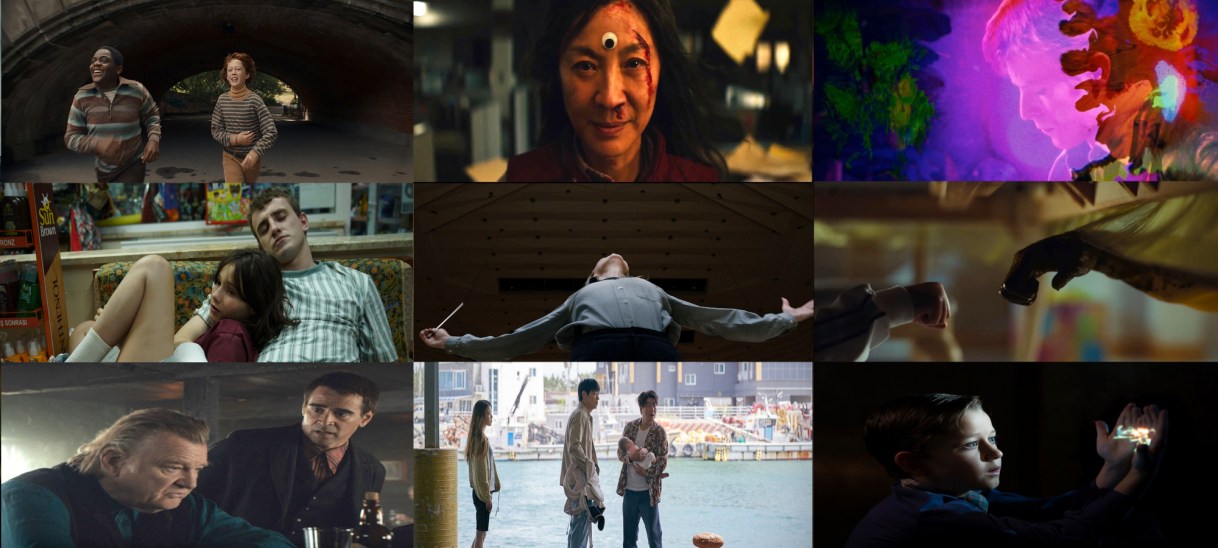
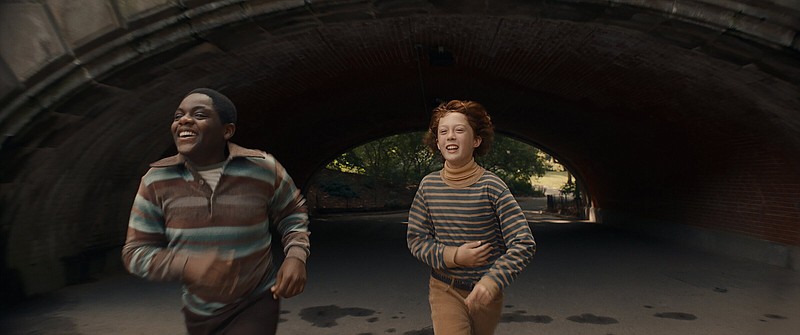
6. Armageddon Time

Armageddon Time is emotionally devastating in ways that evolve beautifully over time, lingering long in the heart like a critical memory. What allows the emotion to thrive is the outstanding cast that could all individually contend come awards season. A gorgeous ensemble that introduced layers of nuance and understanding to each character over the runtime, highlighted by Banks Repeta and Anthony Hopkins.

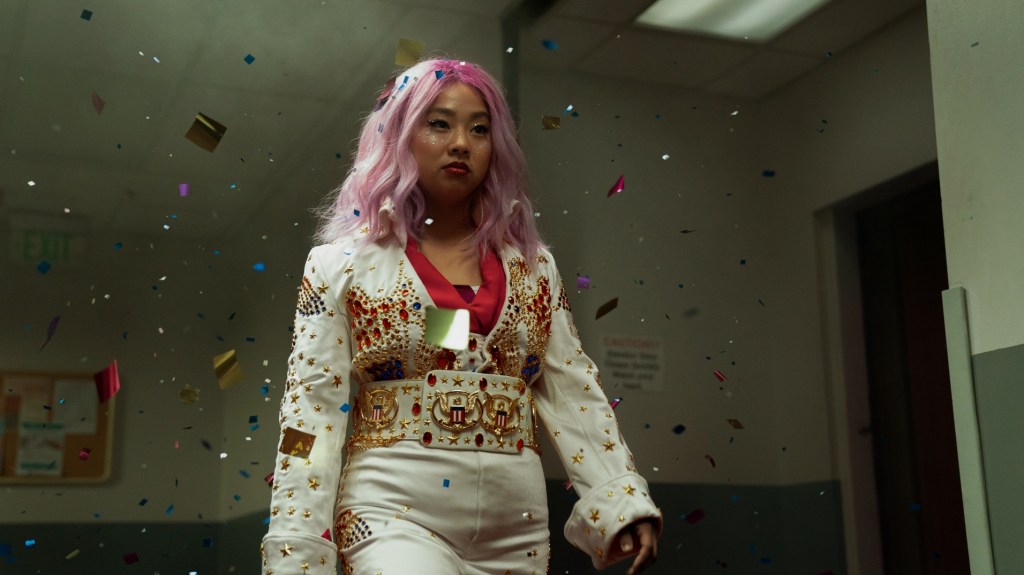
5. Everything Everywhere All at Once

Floating along a constant stream of intertextuality, self-referentiality, and reverence to the films that paved the way to gift this film into audiences’ laps—The Matrix (1999), In The Mood for Love (2000), any Charlie Kaufman film—Everything Everywhere feels like a cinematic miracle that is at risk of breaking at any point.

Everything Everywhere is a technical marvel of small-budget filmmaking, from its mind-blowing costume and production design to its sound design and visual effects, but the real hero of the film is editor Paul Rogers. Rogers’ work here is nothing short of miraculous. Tasked with building a feverish momentum for over two hours while having each individual emotional moment land with as much impact as each comedic or absurdist one. Rogers moulds the filmmaking duo’s creative madness into a deeply resonant and enjoyable work, not just another overly ambitious indie that feels more like a creative dare than a work of art with deep truths. Don’t take for granted what an achievement this film is.

4. Aftersun

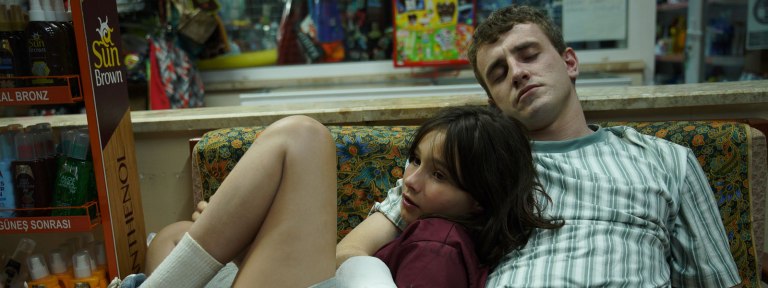
The debut feature of the year (in a uniquely stacked debutant class), Charlotte Wells’ memory drama of a young father bringing his 12-year-old daughter on a holiday to Turkey is so beautifully crafted, teeming with empathy and respect for the perspectives of both individuals’ experiences. Paul Mescal is enthralling in the year’s best performance as Calum, a tortured bird that must force himself to put up a front to protect his daughter. There are some ideas explored in Aftersun, like the fear of parents with mental illnesses handing it down somehow to their child, that will obliterate you. Wells wields a flexible script that is explored with care and restraint that is extraordinary for a first-time feature filmmaker, making her the director to watch in the next few years.

3. The Fabelmans

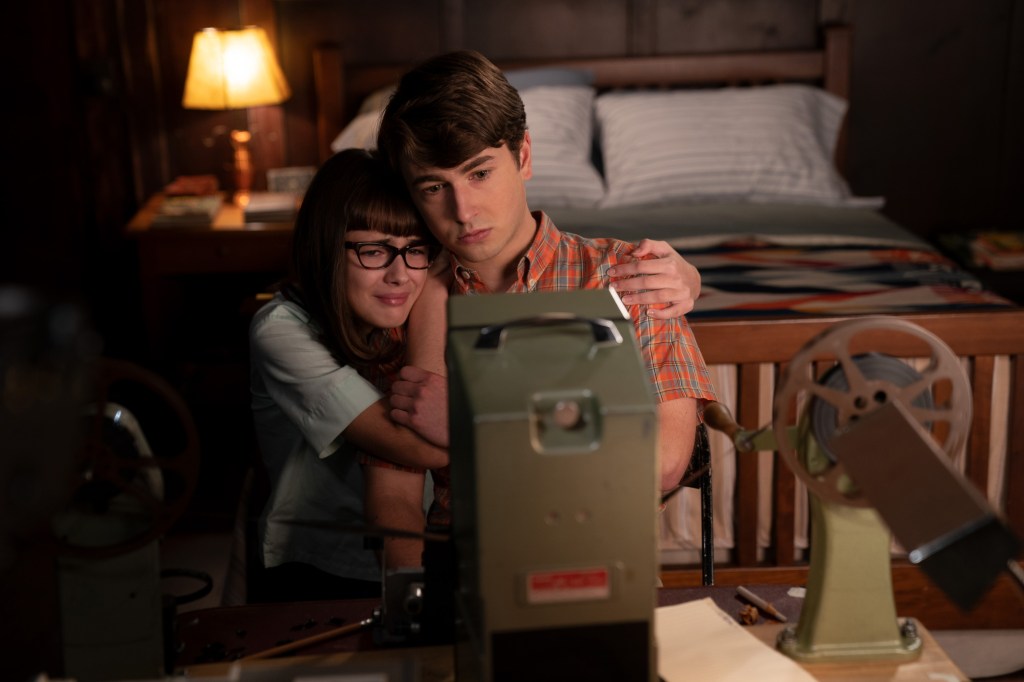
Spielberg’s whole heart is on the screen, warts and all. What makes The Fabelmans succeed is its lack of pure saccharine while still maintaining his signature warmth. The power of Spielberg’s clear-eyed and impassioned filmmaking, mixed with Kushner’s deft hand at profound characterisation, allows the audience to see themselves in every character. This is as much a film about Mitzi and Burt as it is about Sammy, with Kushner able to establish an extraordinary amount of emotional depth out of these personal stories for Spielberg whilst never feeling overly soft or cruel to their lives. 

2. The Banshees of Inisherin

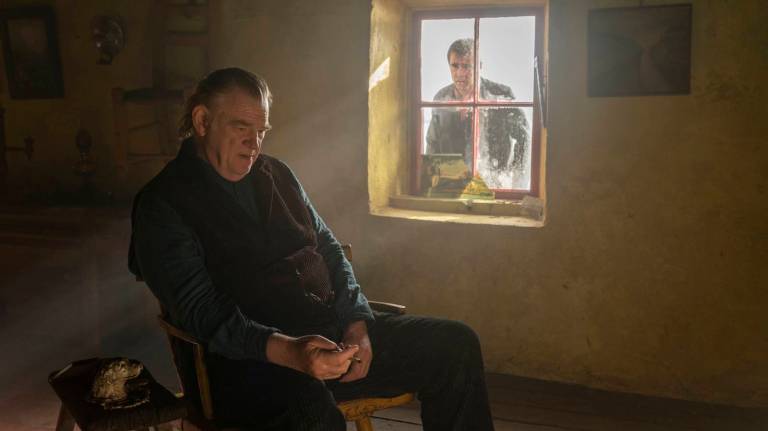
A densely compacted fable on friendship, breakups, art, passions, and how one chooses to spend a life, that is never less than wonderfully entertaining. A brilliant balancing act that consistently grounds itself in the earth of its characters, never allowing its more ethereal themes to float into wistful abstraction. McDonagh is at the top of his game both as a writer and director here, allowing the non-dialogue-heavy moments to shine as much as the musicality of his feckin’ barbs.

McDonagh has grown exponentially as a visual storyteller, allowing his sharp pen to relax and using the other aspects of cinema to communicate his themes and ideas in deeply rewarding ways. 

1. Tár

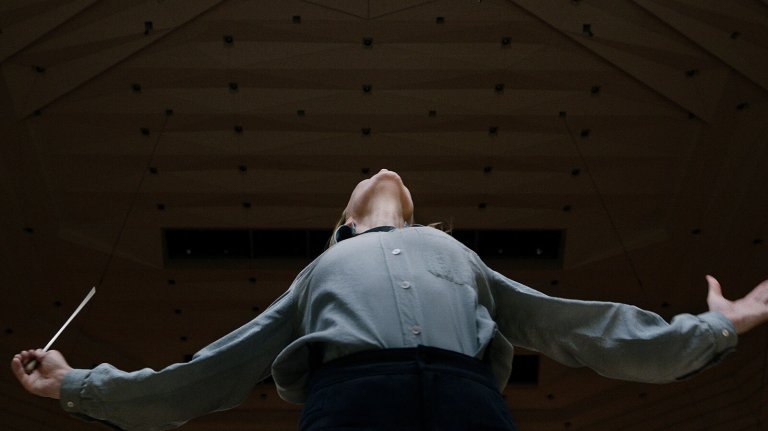
In a year without a true five-star film, several films on this list could have made it to number one, and perhaps in a couple years this order will change, but as of posting, this film has a way of burrowing into my subconscious and bubbling up every other day. American films just aren’t like this anymore. A provocative thriller that has no easy answers that will have you enthralled over its long but rewarding 158-minute runtime.

Todd Field returns after a 16-year absence from the cinema with the year’s best film about a deeply flawed figure that’s warts are shown under a fierce precision, never allowing a scene to end with an easy answer. Tár is a tangled web of clashing ideas that have sparked some of the best film writing around an American film in who knows how long. Field has crafted a film of ideas that gives nothing to the audience easily, but rewards all who view this strange and entrancing object.

Tony Gilroy described the film as “hard and perfect on the outside. Mayhem brewing within. Masterwork.” These competing forces of interiority and external poise are the powerful tempest that builds throughout Tár, creating a singular viewing experience, and one of the year’s best films.

Honourable Mentions: After Yang, Barbarian, Crimes of the Future, Kimi, Top Gun:Maverick, RRR, The Northman, and Lingui

The Fabelmans is a Surprisingly Thorny Origin Tale

Rating: 4.5 out of 5.

Pauline Kael in her legendary review for Steven Spielberg’s pre-Jaws (1975) breakout feature The Sugarland Express (1974), a film she called “one of the most phenomenal debut films in the history of movies”, that Spielberg “isn’t saying anything special in The Sugarland Express, but he has a knack for bringing out young actors and a sense of composition and movement that almost any director might envy.” This note encapsulates the pantheon filmmaker’s now long-serving skill set and potential flaws as an empty escapist entertainer (a critique Spielberg agreed with as something he had to grow into). 

This should be kept in mind while watching his most personal film yet, The Fabelmans (2022), both in following our budding protagonist’s journey as a filmmaker, but also in Spielberg’s own journey behind the camera to arrive at a place where he felt daring enough to put his life on screen in this openly vulnerable way. 

The film follows Sammy (Mateo Zoryan as young Sammy, Gabriel LaBelle as teenage Sammy) and the family Fabelman from a child to 18, tracing the journey from New Jersey, to Phoenix, and finally to California as he discovers his love for film. This love, however, begins to complicate as Sammy grows more invested in cinema, an investment that intertwines and impacts his love, both internally and externally, for his family.

The opening scene is a microcosm of the film, with Sammy and his parents Mitzi (Michelle Williams) and Burt (Paul Dano), going to a showing of Cecil B. Demille’s The Greatest Show on Earth (1952), his first film experience. Sammy is scared to go in, with Spielberg opening the frame from his perspective, with his parents’ legs looming over the screen like Charlie Brown adults, so the pair do their best to reassure their child in their own ways. Burt believes this can be achieved by explaining to Sammy how the projector operates on a mechanical level, while Mitzi rebuts by expressing to him that “movies are a dream”. This duality plays throughout the film, with Spielberg with Sammy as his stand-in, as a budding craftsman that has the soul of a big-dreaming artist.

(from left) Paul Dano, Mateo Zoryan, and Michelle Williams in The Fabelmans.

On its surface, The Fablemans has the appearance of the ultimate final Spielberg film. In a half-century-long career, the legendary filmmaker is looking back at his upbringing, mining the depths of his childhood to create a truly individual coming-of-age story that he has more than deserved to make. Whether intentional or not, Spielberg has created an aura around The Fabelmans as the film he has wanted to make his whole life and feels may not get another chance besides now. There is an urgency to the storytelling that creates propulsion from scene to scene. Spielberg is the ultimate sentimentalist filmmaker, but this may be his most naked and open-hearted. Surprisingly though, the film is a more biting reflection on one’s upbringing as a young artist than it is perceived and is a truly unique film experience by modern Hollywood’s most important filmmaker. 

The film has a truly fascinating origin and is worth adding an extra chapter to the documentary Spielberg (2017), with the filmmaker shifting his focus during Covid, which forced West Side Story (2021) to delay a year, and for his children to be at home with him in lockdown. He also began working on this film shortly after his parents passed away (his father living to 103!) which should be noted in the context of the film. The pandemic is a large reason for this glut of memoiristic films by seasoned veteran filmmakers, with Spielberg being no exception. And, to no surprise, the master filmmaker has made the best film of the class.

Divorce is a defining aspect of Spielberg’s career so depicting the ur-separation that defines him is deeply compelling. Family units being separated can be seen throughout Spielberg’s filmography, from E.T. (1982), Indiana Jones and the Last Crusade (1989), Catch Me if You Can (2002), A.I. Artificial Intelligence (2001), and Close Encounters of the Third Kind (1977), all mining from similar experiences and placing them inside of other stories. In the Fabelmans, his relationship with his family changes and shifts in interesting and messy ways, especially in relation to his obsession with the camera and the power he wields in it. Seeing Sammy be oblivious to the power and destruction that his filmmaking obsession has on his family, with the emotional journey we see him go through, eventually unravels to him by the end of The Fabelmans that with great power comes great responsibility.

Frequent writing partner Tony Kushner has discussed how he believes Steven needed someone outside of the family to help work on the script. Anne Spielberg (Steven’s sister portrayed by Julia Butters in the film) wrote a script I’ll Be Home in 1999 about their childhood that they considered making into a film but never did. Their relationship is so connected at this stage, Kushner is able to balance the necessary mix of therapeutic memoir ghostwriter, and close filmmaking partner to create a truly special film. Using Kushner’s masterful skills in humanising and empathising with each character, Spielberg is able to create an honest love letter to his parents and those that made him who he is.

The power of Spielberg’s clear-eyed and impassioned filmmaking, mixed with Kushner’s deft hand at profound characterisation, allows the audience to see themselves in every character. This is as much a film about Mitzi and Burt as it is about Sammy, with Kushner able to establish an extraordinary amount of emotional depth out of these personal stories for Spielberg whilst never feeling overly soft or cruel to their lives. 

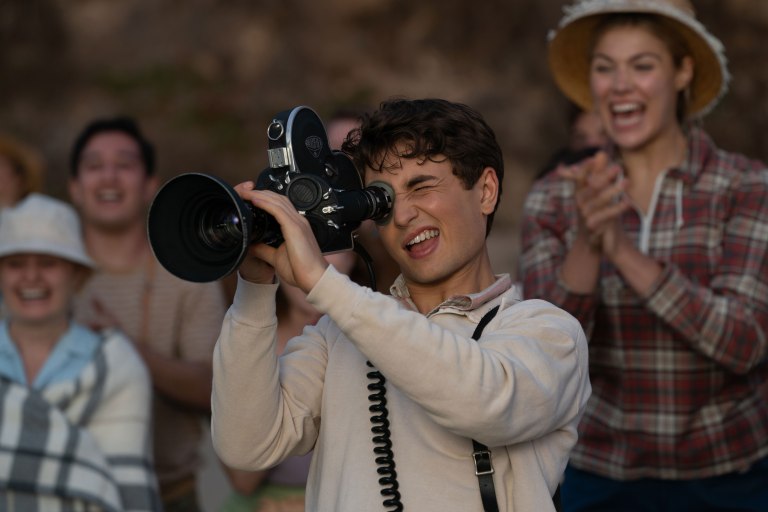
(from left) Julia Butters and Gabriel LaBelle in The Fabelmans.

The film mines aspects of Spielberg’s childhood that were not known, as he was clearly not ready to discuss in interviews or in the 2017 documentary, opting instead to express it the only way he knows how: by putting it on celluloid. The revelations made in The Fabelmans are clearly so personal to him that it is so heartwarming and heart-wrenching to see them rendered on screen for the world to see in some of the best scenes of the year. 

A personal favourite scene of the film and perhaps of the year, is the pivotal scene of Sammy deciding to show Mitzi the camping trip edit that has been eating him up and could rupture his family. Every moment of this scene is emotionally charged and perfect, leading to perhaps the most important use of Spielberg Face in his career. Beginning with a collection of insert shots, delicately showing the tactile and personal process of setting up his projector, adding to the weight of Sammy’s decision. Nothing illustrates his character more than choosing to show this film to his mother as his voice in an argument, both in his fear and his unknowing power his camera has. This moment also illustrates the evolution Mitzi and Sammy’s relationship has with these films in the closet, from humble childhood beginnings to emotionally shattering ends.

What allows The Fabelmans to expand past an individual coming-of-age story is the connection Kushner and Spielberg give to supporting characters in Sammy’s life. Woven delicately underneath the film is Reggie, (played wonderfully by Once Upon a Time in Hollywood 2019 breakout Julia Butters) and her emotional connection with her mother Mitzi. In the mother’s dress rehearsal for her piano performance, on the camping trip as the men are enraptured by Mitzi’s dance, and after the parents announce their divorce, Reggie is defending her mother, someone she is clearly emotionally in tune with while others are merely drawn to it. The Fabelmans is more than just Sammy’s story, through these other characters the film has shown a wider lens at this family as it emerges through crisis and change in an emerging America.

(from left) Gabriel LaBelle and Judd Hirsch

Biopics often fall into a trap of whipping through the subject’s life at a rapid pace, never allowing the film to ground itself in a place for long stretches, with important figures whipping through their life scene to scene. The Fabelmans has several scenes that play out that way, like the abrupt entrance of Uncle Boris (with an awards-worthy performance by Judd Hirsch), as well as a chance meeting with John Ford (I won’t spoil who he is played by) that closes the film. But there is never an air of dishonesty or hokiness to these moments, especially the Uncle Boris scene which really illuminates to Sammy his connection to his mother and their familial bond to art which is sure to lead to heartbreak. 

Spielberg’s whole heart is on the screen, warts and all. What makes The Fabelmans succeed is its lack of pure saccharine while still maintaining his signature warmth. It is a crucial scene that can be put up against any of his totemic scenes, showing Mitzi and Burt sitting down with their children to tell them about the divorce, which devolves into a shouting match. While frozen by what’s happening, Sammy isolates himself on the staircase while his family sits around the couch, he sees himself in the mirror, holding a camera up to this distressing confrontation. With an audible groan coursing through the audience, this is perhaps the most critical Spielberg has ever been about himself and how he uses filmmaking as a way to both reveal and hide behind his personal life.

Pair that with the pivotal scene of the antisemitic bully Logan (Sam Rechner in a quietly brilliant performance) confronting Sammy after the burgeoning filmmaker decided to capture him as the golden child of the school, and we have a truly unique experience of watching a masterful artist trying to come to terms with his camera-wielding compulsions.

The Fabelmans is in select theatres from January 5th.

The Banshees of Inisherin is a Feckin’ Good Time

Rating: 4.5 out of 5.

A densely compacted tragic fable on friendship, breakups, art, passions, and how one spends one’s life, Banshees of Inisherin is one of the year’s most rewarding films, with a collection of brilliant performances by Colin Farrell, Brendan Gleeson, Kerry Condon, and Barry Keoghan amplifying an extraordinary script by Oscar winning filmmaker Martin McDonagh.

At the tail end of the Irish Civil War in 1923, on the outskirts of the conflict sits the fictitious isle of Inisherin, a quiet town that feels universal in both place and time. The conversations and bickering being had on Inisherin could be happening in the 1920s, 1820s, or even today. Revered playwright turned filmmaker Martin Mcdonagh often plays with the idea of places as a form of purgatory for his characters, with Inisherin being no exception.

Reuniting after 14 years, Mcdonagh, Farrell, and Gleeson echo their masterpiece In Bruges (2008) throughout Banshees, making for a perfect double feature. Gleeson plays Colm, a folk musician in Inisherin who decides, for unclear reasons, to abruptly ignore and reject his long-time friend Pádraic, played by Farrell. He tells Pádraic he finds him dull and would rather spend the rest of his days composing music, wanting to leave behind a legacy rather than drink at the pub and listen to idle conversation. The actors seem to mirror the disposition of the other in these two films, with Farrell turning from a vessel of guilt to a sweetheart, and Gleeson from a kind and endearing soul to a self-absorbed and increasingly cruel man. 

The setup is simple with the characters devolving as Pádraic’s desire to understand and rekindle this relationship with his closest friend persists. As Pádraic continues in his endeavour, Colm’s threats towards him to be left alone grow more and more extreme, leading to truly shocking places.

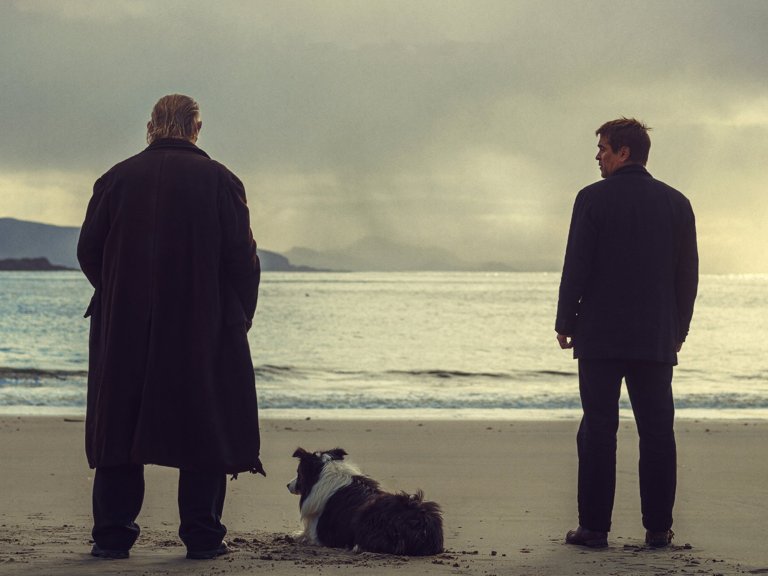
Brendan Gleeson (left) and Colin Farrell in The Banshees of Inisherin

What allows Banshees to thrive is its ability to entertain throughout as a film of friendship, art, and finding meaning in one’s life, as well as operating at an incredibly high level of thematic and political resonance. McDonagh has grown exponentially as a visual storyteller, allowing his sharp pen to relax and to allow the other aspects of cinema to communicate his themes and ideas in deeply rewarding ways. 

A series of thematic ties to Colm and Van Gogh plays both into the conflict the musician is feeling about his life and his work, and his desire to emit a legacy in a town that is absent of one. Gleeson gives a nuanced and subtle performance that should hopefully be rewarded in the awards season, exuding pathos and despair in a world he finds incredibly meaningless. In an interview with GQ, production designer Mark Tildesley describes Colm’s home like a Van Gogh painting;

“When you get into Colm’s house, the inside is almost like a Van Gogh painting. It’s yellow, bright. It has a red floor, which is an old oilskin from sailcloth, and a black ceiling, [which] are strong colours for a period film.”

Hannah Strong, GQ

These striking visual choices and the obvious allusion to Van Gogh’s ear with Colm’s threat of mutilation further cement the comparison between artists. The genius of this thematic connection is in how the filmmakers create the ties through the character Colm’s own choices, not their own. The sadness of the Colm story is his desperate need to have his work evaluated and celebrated, something we are never actually shown. We never hear his completed works so his projected idea of himself as this tortured artist is never redeemed for us as the audience, allowing only the pathos and cruelty of his decisions to fester throughout. What allows the very best character-led dramas to succeed is in creating a world that is believably crafted by its characters, something Banshees achieves superbly.

Brendan Gleeson (right) and Colin Farrell in The Banshees of Inisherin

The war of friends is a microcosm of the civil war taking place on its fringes in heartbreaking ways. There are better places to learn of the Irish civil war, but in essence, it was an internal struggle between the Irish about the ownership of land by the British, occurring shortly after the Irish War of Independence that created the free state. Viewing Colm and Pádraic’s falling out between brothers, devolving into increasing brutality (both to their land and personhood) in this historical sense allows the weight of this quirky comedy to ascend to greater heights. The heartbreak at the conclusion of the film is further extended with the knowledge of the troubles to come.

But to call The Banshees of Inisherin a political film about the Irish Civil War would be to reduce the breadth of ideas McDonagh is working with here. Complicated characters working against each other and their place in the world for seemingly asinine reasons, inside a deeply enjoyable and melancholic comedy, is the work of a master writer at the top of his game.

Banshees is a brilliant balancing act that consistently grounds itself in its characters, never allowing its more ethereal themes to float away into wistful abstraction. McDonagh is at the top of his game both as a writer and filmmaker here, allowing the non dialogue heavy moments to shine as much as the musicality of his feckin’ barbs to create one of the year’s best films.

The Banshees of Inisherin is in select theatres from Boxing Day.

Avatar: The Way of Water Sees Pandora Return Bigger and Better Than Ever

Rating: 4.5 out of 5.

Avatar: The Way of Water preview screening provided by Disney

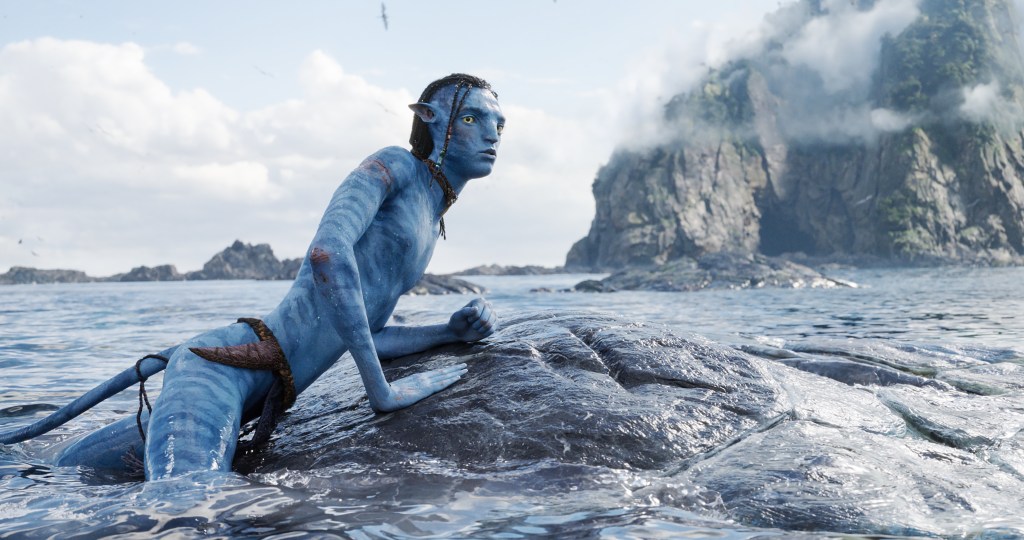
In a year where caped crusaders have played second fiddle to F18’s and dinosaurs, Avatar: The Way of Water sees James Cameron swimming in his exclusive pool of opportunity; a sandbox style, open world, video game feeling film that is as hearty as it is beefy. Cameron, unsurprisingly, is no stranger to pushing the boundaries of what a high concept blockbuster looks like. Setting the trend with The Terminator (1984), he’s always been out to entertain first, and worry about everything else second. The Way of Water speaks to that sentiment and culminates in a sensory experience unlike any at the cinema this year.

This is, after all, a film that —like the original Avatar (2009) before it— places an emphasis on out-of-body living, on connecting with the surrounding world and learning how to nurture and care for it. Cameron, an environmental activist in his own right, made Avatar and has pursued these sequels in part because he sees them as an opportunity to raise more awareness about our own world and environment.

In The Way of Water, he follows similar concerns to that of the first film, but trades the fullness of the foresty terrain, for the breadth and depth of the oceanic surroundings. The Na’vi continue to thrive, with Jake Sully (Sam Worthington) now leading the tribe alongside his partner Neytiri (Zoe Saldana). They also have a few mini-Sully’s of their own: two sons —Neteyam (Jamie Flatters) and Lo’ak (Britain Dalton)— and a daughter, Tuk (Trinity Jo-Li Bliss). They also care for Kiri (Sigourney Weaver) who has a connection to Weaver’s character from the first film, but one that is kept intentionally vague.

The actual events of the film take place some 10 years after those of the first one. Humans continue to arrive to Pandora to harvest resources, and are even continuing to create avatars of their own. One of those is Colonel Miles Quartich (Stephen Lang), whose DNA and memories have been imbued in one of the lab grown blue beings to the point where he acts and talks like the Colonel in the first film, but he’s not him per se.

(L-R): Jake Sully, Ronal, and Tonowari in 20th Century Studios’ AVATAR: THE WAY OF WATER. Photo courtesy of 20th Century Studios. © 2022 20th Century Studios. All Rights Reserved.

In essence, the stakes feel similar: Jake and co are on the backfoot while the Sky People pursue and hunt them. Sometimes the actual motive behind this continued hunting isn’t explained all that clearly — the Colonel seems to have retained the same grudge for Sully in his avatar form as he had in his human form, but beyond that, the plot plays out like a game of hide and seek. Most of that hiding happens in the distant islands far off the mainland, where other tribes reside and have grown and learned the way of water. A good chunk of the film is spent leading up to Sully’s retreat into this unseen part of Pandora, but once out in open waters, the film opens up both visually and sonically.

Cameron has a penchant for anything aqua related, and it shows in these deep diving areas. The flora and fauna pop in ways that make one believe this world is tucked away somewhere in our own oceanic backyard. Maybe seeing all of this unfold through Cameron’s other love, 3D, might have heightened the immersion? But there is an evident care for this world that entraps and allures you, and makes you believe it’s real, if but for a split second.

It helps that the frame rate is bumped up to 48fps at certain parts. Character movements are crisp and almost life-like, where there is a fluidity to the motion. This is especially noticeable in the underwater portions of the film that are as visceral as they are breathtaking, with colours popping out like a Van Gogh painting as you try and absorb each section of the frame.

Lo’ak (Britain Dalton) in 20th Century Studios’ AVATAR: THE WAY OF WATER. Photo courtesy of 20th Century Studios. © 2022 20th Century Studios. All Rights Reserved.

Cameron makes it easy to care for these characters, who have more nuance splashed across their digital faces and more realness behind their big anime-like eyes, than any of the beings before and since Avatar. The technology is a large reason why this film works, because there just hasn’t been anything like it in cinemas previously, Avatar included. The film’s weakest link tends to be anything that isn’t digitised to the gills, like the Tarzan-esque boy Spider (Jack Champion) who was left an outcast and was essentially adopted by the Sully’s. While the film justifies his presence, it’s more jarring to spend time with anything that isn’t wholly CGI.

Cameron’s brilliance ultimately rests in his unmatched understanding of scale — of how to get all of his story points in a basket while showcasing them in the biggest way possible. He swiftly transitions from moments of bonding and connection between tribes and creatures, to large battles sequences involving these tribes and creatures as they glide over the ocean. You might not end up caring for the whale like Tulkin beasts that end up playing a more vital role in the plot than anything else, but it’s enough to believe that Cameron does. It’s a large reason he takes so long with these films, and especially with The Way of Water, as he finds that balance between telling a story about big blue people and everything in between that’s worth caring about, with the trailblazing action and scenery on display.

Even if the plot is very akin to that of the original film, The Way of Water is a sum of all of Cameron’s experiences and experiments up until now, where he pours his heart and soul into each and every frame, as though this could be the last ride in Pandora even with most of the sequels penned and planned out. The Way of Water hits like a tidal wave, and it’s worth getting drenched for.

This post was originally published on SYN

Avatar: The Way of Water opens nationally from the 15th of December, 2022.  

Guillermo del Toro’s Pinocchio is the Year’s Best Animation, and it isn’t Even Close

Rating: 4 out of 5.

Breathing life into an intellectual property (IP) that has had countless iterations is no easy feat, yet Guillermo del Toro has done exactly that with his unique and heartfelt take on Disney’s iconic wooden boy, Pinocchio. In fact, Guillermo del Toro’s Pinocchio (2022) —or just Pinocchio— might be the best entry in this fabled story, and it’s easily one of del Toro’s best.

Like the careful craftwork of Geppetto, the woodcarver that creates Pinocchio, del Toro masterfully creates a heartfelt story of grief and loss through the lens of a fascist-set Italy. Unlike the year’s other Pinocchio film which felt like a sanded-down, stringless remake of the celebrated original, this one is coated in all the gloss that epitomises del Toro’s career: otherworldly creatures, a looming air of gloominess, a darker palette, religious commentary and evocative imagery. It’s in the un-del Toro-ness of the visual component —stop motion animation— that all of those ingredients shine, and where the film separates itself from the director’s past films.

Pinocchio has some of the best stop motion work, period; unsurprising given that del Toro co-directed the film with Fantastic Mr. Fox (2009) Animation Director, Mark Gustafson. The world has an air of freshness and almost appears like a series of dioramas that have been stuck together. The details of the world are sharp and striking, right from the spaces the characters inhibit like a church and foresty area earlier on, to the underworld and Monstro scenes in later stages. It’s an enticing vista that sucks you in the more the film unfolds, and it’s clear that animators were given ample time to carefully workshop the look and feel that del Toro was going for. When coupled with Alexandre Desplat’s spine-tingling score that is in the vein of his score for The Shape of Water (2017), there is an added layer of enchantment that emerges.

In terms of the story itself, it hits all of the key beats from Carlo Colldi’s original book —the circus scenes, the water monster Monstro in the later stages, etc.— but del Toro works around these moments to add his own flourishes and feel. Whether that be the aforementioned fascist leanings, where he explores the loss of innocence from children in the face of conscription and nationalism, right through to those underworld moments where he asks questions pertaining to mortality and the significance of life and death.

They’re heavy themes and leanings for a story that has always been depicted as light and fluffy, and has mainly covered ideas relating to growing up and fitting in. It helps that del Toro immediately jumps into a moment of anguish, as Geppetto (voiced with a gut wrenching croakiness by David Bradley) mourns the loss of his son, Carlo (voiced by Gregory Mann who also voices the titular character), after a bomb is dropped on the town church by unsuspecting war planes above. This whole opening sequence that explores the prelude to Geppetto’s grief and prolonged mourning, establishes the sort of grimness that will persist.

Pinocchio (Gregory Mann) and Count Volpe (Christoph Waltz) in Guillermo del Toro’s Pinocchio (2022)

It also introduces the running commentary on religion that has underpinned most of del Toro’s oeuvre from and since The Devil’s Backbone (2001). For instance, the destruction of the church and its subsequent rebuilding goes on to symbolise Geppetto’s own rebuilding of his son. This is especially true as Pinocchio (after he has been magically brought into being) assumes the role of Carlo by helping Geppetto build out a wooden Jesus in the church (the last task the father and son shared). He goes on to raise one of the film’s most significant lines relating to why everyone likes the wooden Jesus but not him. This undercuts the road to self-discovery that Pinocchio ultimately takes as he faces death and rebirth numerous times, before enacting a moment of selflessness in the film’s final act that would bring him as close to ‘being a real boy’ as he can come.

In order to get to that point though, he has to face various hurdles including a money-hungry circus ringmaster, Count Volpe (Christoph Waltz); a fascist government official from the town, who is set on sending the puppet with immortality to war (del Toro’s frequent go-to, Ron Perlman); the prospect of living forever and seeing those around him die; and his own desire to experience the fullness of the world.

Along the journey he is also accompanied by the talking cricket Sebastian (formerly, Jiminy) voiced by a comforting Ewan McGregor who injects the film with some of the comedic relief (e.g. being squashed countless times, being interrupted just as he’s about to break-away into song). Tilda Swinton also has a subtle role as an angelic spirit of life that brings Pinocchio into the world, and she also plays the sphinx-looking, death alter-ego that meets him every time he dies. Each of these characters have a distinct look that is both familiar and different in the ethereal way that del Toro’s creatures tend to be.

While finding one’s purpose and identity comes with its challenges, Guillermo del Toro’s Pinocchio helps the wooden puppet get there, and at the same time creates an experience with a unique identity of its own.  

Guillermo del Toro’s Pinocchio is in select cinemas and will be streaming on Netflix from December 9.

You Will Be Satisfied By The Menu

Rating: 3.5 out of 5.

A high-tension, comedic thriller on a bed of murky yet compelling satire, The Menu (2022) blends many styles and influences together with an entertaining wit and snark that is sure to delight audiences. With a strong combination of performances from Anya Taylor-Joy and Ralph Fiennes heightening this loosely structured comedy, The Menu manages to maintain an impressive level of tension and suspense that elevates some of its lacking cultural critiques.

We begin almost in media res as Tyler (Nicolas Hoult) and Margot (Taylor-Joy) wait to board a boat en route to the prestigious and uber-exclusive Michelin three-star restaurant Hawthorn headed by the revered Chef Slowik (Fiennes). By beginning moments before the arrival at the restaurant where the entire film will take place, we are given an active role in sleuthing out details about Tyler and Margot, as well as the other guests and the restaurant. This allows The Menu to be wonderfully engaging, giving the film an almost Agatha Christie-like momentum to the narrative.

Succession director Mark Mylod and writer Will Tracy collaborate with The Onion writer Seth Reiss (Tracy also worked at The Onion for a period) on this uniquely satisfying thriller comedy that blends styles of modern satire, to mostly enjoyable results. Unlike the Palme D’Or winning high-class satire of Triangle of Sadness (2022), the targets of satire in The Menu are not always clear. As the untethering of Chef Slowik’s mind allows an undercutting of his goals to widen the scope of the movie’s satire, Reiss and Tracy take aim more at the culture around the industry through a wider range of archetypes and ideas than cheaply mocking the individuals. This cloudiness may not add depth to its satirical lens, but it certainly adds intrigue through its obscuration. 

Nicholas Hoult and Anya Taylor-Joy in The Menu

Mylod’s style of heightened realism mixes compellingly with long-time Lynch collaborator Peter Deming’s work as a cinematographer to create a series of tense but compelling images that you will want to savour. Mocking the foodie content that permeates the internet while also executing it to an absurd degree, Deming and Mylod allow the audience to laugh alongside them, while also enjoying the voyeurism of experiencing fine dining from a theatre seat.

Working with three-star Michelin chef Dominique Creen as a consultant, there is an air of realism to this highly arch film that allows the comedic moments to flourish. The best of these moments are handled by the maître d’ Elsa, played by the perfectly cast Hong Chau, who makes an absolute meal out of this script.

Having a compass realignment structure of the courses, formalised in the metronomic Slowik clap, allows the film to bounce around different ideas and set pieces over the night. A series of comedic set pieces set out in an episodic format established by the meal courses, The Menu feels at times like a free-flowing sequence of comedic bits, attached to a lifeline of the structure established by the restaurant. This freedom allows the film to have its cake and eat it too; exploring different characters and comedic moments, while always having the ability to return to the tense thriller story with a powerful clap.

Certain writing decisions feel rebellious, like allowing us access to Chef Slowik’s motives early on, destabilising your expectations of where the night will take you. This creates an almost free-associative middle act that makes each individual moment enjoyable but lacks a certain level of cohesion (a comment literally made on one of the film’s many spinning-food-plate sequences) that leaves a unique taste in the mouth. This complication of knowing whether these decisions improve the film or work to its detriment will make The Menu a fascinating rewatch.

Ralph Fiennes in The Menu

A consistently compelling and interesting script, critiquing a form of art culture in a very similar style to 2019’s Velvet Buzzsaw, without the third-act issues that derailed that film. Where filmmaker Dan Gilroy asked the most from Jake Gyllenhaal in a truly bombastic performance, Mylod has Fiennes working with a sense of reserved enlightenment that allows the film to thrive in a truer thriller sense, while still achieving a wonderfully arch critique on both the creators and consumers of a certain high art field.

Joining a group of truly enjoyable all-in-one-night films, The Menu thrives more in its balance of genuine tension and comedy than its biting satire of high-end dining culture. It does, however, leave the audience much to chew on about the codependent relationship between consumer and creator in all forms of art mediums, with high-end dining as the most literal example. It’s impossible not to empathise with Slowik when he asks his regular customers to tell him what their last meal was, his existential dread permeating out of the screen, to find his obsessive devotion to his craft has not been responded to in kind.

Whilst not overly successful as a satire (we may be in a cinematic era that is impossible to craft a successful satire), The Menu is highly enjoyable as a comedic thriller in the world of fine dining. Like any great restaurant or food spot, it’s important to appreciate a location on its own terms, and the film’s like The Menu are no different. Anchored by terrific genre performances by Fiennes and Taylor-Joy, you will be charmed by the biting and absurdist humour while you also find yourself on the edge of your seat.

The Menu is in theatres now.

Nicholas Stoller Interview

Our very own, Arnie, spoke to film Director Nicholas Stoller (Forgetting Sarah MarshallNeighborsThe Five Year Engagement) about his latest rom-com Bros, starring Billy Eichner and Luke Macfarlane.

The film is Billy’s first major leading role, he’s the first openly gay man to co-write and star in his own major studio film, it’s the first romantic comedy from a major studio about two gay men, and it’s also the first studio film in history with an entirely LGBTQ+ principal cast.

This interview was originally published on SYN

Bros is screening in cinemas nationwide from October 27.

Barbarian Lights Up Halloween Season

Rating: 4 out of 5.

There are two forms of successful horror film: one that plays the notes on the familiar scale of horror tropes and ideas, and one that is aware of those notes and plays around them deliberately, keeping you off balance. The latter form is much harder to pull off, as when it lands flat, you can feel audiences disengage and get frustrated with the filmmakers.

To say Barbarian pulled off this magic trick is underselling how enjoyable a theatrical experience it was. This wildly entertaining, formally inventive horror film will have you hiding between your fingers, cackling with glee, and clamouring to see it again all within its tight 102-minute runtime.

To set the table, we begin on a rainy night in a dishevelled area of outer Detroit. Tess (Georgina Campbell) arrives alone at her Airbnb, only to discover the house has been double booked by a man (Bill Skarsgård). With as much of a guard as Tess can put up, she enters the house to get out of the rain as she just wants to sort out this mess.

The power of a great horror film is in its believable conceit, allowing the protagonist to become our avatar throughout the story. What feels certain from the opening moments of Barbarian is that writer-director Zach Cregger is making a film that is keenly aware of audience expectations at every single moment. With the success of Jordan Peele and now Cregger (who got his start with the online series Whitest Kids U’ Know), there’s something about being a sketch comedy filmmaker that clearly makes you keenly aware of what your audience expects from a horror film, and how to lean into or subvert those expectations.

This begins with the casting, perhaps Barbarian’s greatest strength. Georgina Campbell (known for her terrific performance in the Black Mirror episode ‘Hang the DJ’), as Tess, exudes stern confidence, making it clear from the opening moments that she is possibly within the framework of a horror film and working to prevent that from happening. She is locking every door she enters, with her guard all the way up. And then there is the casting of Bill Skarsgård, which allowed a level of subversion to take place within the narrative. Garnering a reputation as a horror villain icon, Skarsgård’s character seems keenly aware of this audience awareness and Tess’ weariness of the situation, attempting to put everyone at ease while also heightening the tension with his every action. Too many horror films are weighed down by the baggage of casting bigger actors, but in this situation, the baggage Skarsgård brings to the story only heightens the viewing experience.

Finally, there is the casting of the criminally underused Justin Long as the garbage person AJ. The less said about his character before audiences have seen the film, the better, but there is a surprising amount of social commentary being made in Barbarian that will be great to unpack at a later stage.

Georgina Campbell in Barbarian.

Barbarian is a rare type of gear shift film that makes you want to immediately return for another viewing. Perhaps due to its high level of craft or the stellar casting, Barbarian does not hang solely off its off-kilter structure the same way other similarly structured films do. I am hesitant to even use comparative films to talk about Barbarian, as it may give away some of the shifts that had the audience enraptured. 

It can’t be stated enough how enjoyably bananas Barbarian is. Cregger builds tension to a perfect crescendo only to wrong-foot you on multiple occasions that will elate, not aggravate you. This is a film both intelligent and enjoyable enough to warrant a potential follow-up piece as it is increasingly difficult to discuss this film without specifics. Luckily it should arrive on Disney+ later in the year.

What stands out about Barbarian is the level of visual craft on display that is striking while never overwhelming. A beautiful visual motif is introduced with Tess reflecting sunlight onto a full-length mirror to illuminate what is essentially a dungeon inside this Detroit home, which follows through multiple levels of the film as we delve deeper. Just as Tess is illuminating a new area in this home, Cregger is illuminating new elements to this truly disorientating film experience. Barbarian is designed to spring new elements around every corner to shock and surprise the audience, something it achieves consistently over its entire runtime with a visual flourish that is always aiming to entertain the audience first.

There are rollercoaster films, and then there are films that give you an all-access pass to the amusement park. Barbarian is the latter. With a pitch-perfect cast and a surprisingly deft hand from Cregger, Barbarian is elevated to the best horror film of the year, and a must-see this Halloween.

Barbarian is in theatres now.

Everything in Between Falls Short, But Shows Promise

Rating: 2 out of 5.

Taking place in Sydney, Everything in Between is a debut feature by local filmmaker Nadi Sha that centres on Jason (Jordan Dulieu) and Liz (Freyja Benjamin), who find themselves in hospital for very different reasons. Jason has just arrived after a harrowing suicide attempt, giving the audience a pit in their stomach that lingers throughout the film. Introducing us to the lead of a film this way before we understand anything about them is a bold decision that feels exceedingly callous towards both Jason and the audience the longer the film goes on.

We are introduced to Liz through a smoking ceremony and psychedelic sequence which includes a vision of herself on an operating table. The next time we see Liz is at the same hospital Jason arrived at, setting up a meet-cute. At this stage, the narrative seems destined to walk the same path as similar coming-of-age medical romance The Fault in Our Stars (2014), but with a messier, but perhaps more compelling origin. Instead, the pair spend little time at the hospital, but their circumstances create a lingering atmosphere that never leaves the story.

While Everything in Between is a decently made debut feature, where the film falters is in its strange lack of empathy, opting instead for an angered detachment and cynicism, from Jason’s parents to the doctors. This is designed to elevate the scenes with Liz, but even they are tinged with a level of cynicism that drags down even those parts. A decision at the midpoint of Everything in Between puts it onto a path of pathos and frustration over empathy and warmth that flattens a lot of scenes out that should be its emotional centre.

Freyja Benjamin (left) and Jordan Dulieu in Everything in Between.

As an astrology obsessive, Jason bumps up against Liz’s optimism with his existential nihilism. Astrological cynicism versus positivity is a deeply engaging idea for a film and as a bedrock for this relationship that is larger than romance. Unfortunately, these ideas are only explored in a few scenes, outweighed by scenes with Jason’s parents Meredith (Gigi Edgley) and Dave (Martin Crewes) instead. Expanding this story into the whole family would’ve been an interesting decision, combining their issues and narratives into Jason and Liz’s, but they never do, ultimately feeling like distractions instead.

There is an absence of a school or life outside of the home which feels unique to this sort of story, which allowed for a tighter plot centred purely on the four characters. However, too often these absences are filled with extended scenes that neither further the plot nor the emotionality of the film, like seeing Meredith anxious about Jason scratching her car, or seeing Dave’s failed lunch with his mistress Sammy (Ayeshah Rose).

The parents are a real drag to the story (deliberately so), which wouldn’t be an issue if they didn’t overwhelm many of the stronger moments between Jason and Liz. This is their story together and the film would’ve been stronger by focusing more on that relationship over the outside influences of the world, whether it be Jason’s parents or Liz’s illness.

Visually, the film is impressive for a first feature. Well composed and shot throughout, with several well-constructed locations, especially the wonderfully shot final scene with Jason and Liz at the hospital. 

Liz’s illness reduces the light she shone onto Jason’s life, who is seen to be thriving as she is wilting. There is a strangely vampiric sense to this exchange that is jarring and disconnects the film from its earlier stages, muddying the ideas the film introduces. 

The final scenes between Jason and Liz are where Everything in Between really shines through. Too many scenes get away from this story throughout the film but when we are given the two of them, the film shows real promise. The runtime allows this relationship to mature over time, but we are too often distracted by side characters that lack dimension to expand the central narrative.

Everything in Between will be screening at 31 cinemas nationally from October 20th, with an additional 18 Hoyts locations commencing from October 27th.

A Taste of Hunger is a Satisfying Food Drama

Rating: 3 out of 5.

The best restaurants, no matter where in the world, tell their story through food. A beautiful combination of complimentary flavours and textures, coalescing into one satisfying meal. A Taste of Hunger attempts to weave the story of the relationship of Danish restaurant owners Maggie (Katrine Greis-Rosenthal) and Carsten (Nikolaj Coster-Waldau), through their relationship with food. Resting on a bed of passion and desire, A Taste of Hunger flutters between flashbacks of their relationship fermenting and a present-moment quest to obtain a Michelin star for their restaurant. 

The enchanting chemistry between Coster-Waldau and Greis-Rosenthal that begins right from the opening frames allows us to immediately invest in this pairing. Greis-Rosenthal especially is electric in every scene, it is impossible not to get caught up in her charm and passion the same way Carsten does. Unfolding slowly is Carsten’s need for control butting up against Maggie’s free-flowing and spontaneous nature, something that created the spark in their relationship.

The stakes of the present tense narrative are low, even taking into consideration the character’s driven pursuit of a Michelin star. Director Cristoffer Boe attempts to heighten the stakes by adding a clock to the scenes, but it is hard to invest in this aspect of the story. Perhaps it is due to the film’s lack of time spent in the restaurant, but the audience’s engagement is squarely focused on the family dynamic, not on the success of their already successful restaurant.

Katrine Greis-Rosenthal and Nikolaj Coster-Waldau in A Taste of Hunger

Outside forces are usually the antagonist in these restaurant dramas, so it was refreshing to spend time in this family, understanding where the original passion came from, while also understanding how that same passion works against them. The passion between Carsten and Maggie sustains the entire course, allowing small moments to flourish, especially scenes with their children August and Chloe, characters that are usually sidelined in these stories but felt integral to the film as a whole.

There is a wonderful patience to the edit, rare for the usual frenetic restaurant drama. This decision prevents the film from being a collection of foodie insert shots, instead allowing the audience’s gaze to fall upon those making and eating the food. The most sensual moments of cooking are scenes when the pair are cooking together, a stark contrast to their restaurant when Maggie is not around. A Taste of Hunger is a drama about a family making food and how it consumes them, with the food itself operating as the object of passion for the characters more than the passion for the filmmakers.

A Taste of Hunger shines in its structural pairing of its flashbacks, contextualising the present tense scenes wonderfully. By attributing cooking components of sweet, fat, salt, sour, and heat, to sequences, director Christoffer Boe guides us through the story while still allowing the audience room to perceive the characters more honestly.

Unfortunately, A Taste of Hunger lacks a depth of flavour in its storytelling that becomes apparent the longer this simple story stretches out. Co-writers Boe and the acclaimed Tobias Lindholm (2012’s The Hunt, 2020’s Another Round) use a few thematic prop crutches in its narrative (the knife, the hot dog, the letter), that work well in isolating sequences, but as a collective story, there is a strained repetition that undermines what originally felt satisfying. A good story and script is dense enough in its thematic ideas to not need them littered in every scene, so when they arrive later down the road, they leave a more satisfying taste on the palette.

All the flavours are here for a dense and rich film, but the ideas never get pushed into truly compelling places. Save for some Giallo lighting choices, the film is very plain, which is not to say it was unsatisfying, but it could’ve been an expansive drama and one of the year’s best. 

A Taste of Hunger is in select theatres now.