Dune: Part Two: A Sequel Worthy of Joining the Mount Rushmore of Sci-Fi Blockbusters

Rating: 4.5 out of 5.

Dune: Part Two preview screening provided by Universal Pictures

Few working directors have the capacity to deliver such audacious tentpole features like George Lucas and Sir Peter Jackson, and even fewer are able to do so authentically while ensuring that the end result is nothing short of spectacular. But that’s exactly what Denis Villeneuve has done with Dune: Part Two, his sequel to 2021’s Oscar winning Dune: Part One.

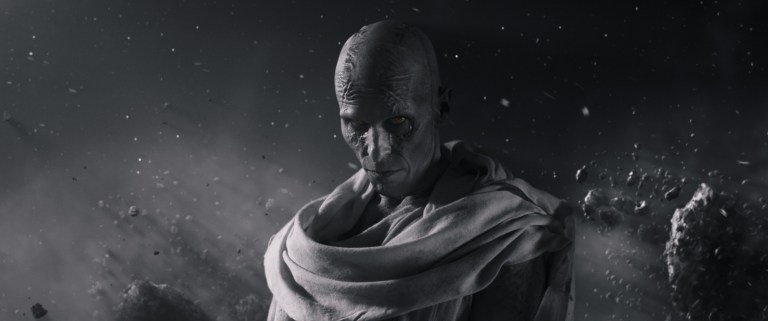
To call Dune: Part Two anything other than a generation defining Sci-Fi would be to undersell just how monumental an achievement the director has on his hands. Where Part One focused more on methodical world-building and planting the narrative seeds of Frank Herbert’s iconic novel (some might say in a much more trimmed down, thin fashion than expected), Part Two is all about scale and upping the ante.

And it picks up almost immediately after the first film, where Paul Atreides (Timothee Chalamet) has found his way to the Fremen and is working towards building their trust, learning to assimilate in their ways, and realising his potential as a Messiah. There is seemingly more pandering this time around, with the first film having the skeleton of what is sure to become a trilogy, established, but lacking that extra flesh for why we should care about these characters, the Kwisatz Haderach or any of the novel’s deeper lore.

The care for those aspects all starts with Paul though, with his plight becoming increasingly refined by screenwriters Villeneuve and Jon Spaihts, who inject more oomph into the script. Paul is much more nuanced here, having had to grow up faster than he would have liked, especially now that the Harkonnens have reoccupied Arrakis (or Dune) and are actively pursuing spice. In turn, time is of the essence for Paul and the Fremen, especially as the Harkonnens edge closer to their hidden locations.

(L-R JOSH BROLIN as Gurney Halleck and JAVIER BARDEM as Stilgar in Warner Bros. Pictures and Legendary Pictures’ action adventure “DUNE: PART TWO,” a Warner Bros. Pictures release. (PRESS KIT)

As a result the film places greater attention on the interplay between Paul and the Fremen. Fremen leader Stilgar (Javier Bardem) has become the guiding voice of reason who echoes the idea that the chosen one has arrived. He puts Paul through his paces via a series of trials that test out whether he truly lives up to all that was foretold. Whether that’s venturing out into the desert to overcome its harshness, battling the Harkonnens as they attempt to harvest spice, or riding a Shai-Hulud without guidance —there’s not shortage of incredible individual moments that both propel the narrative forward but also leave one in awe every time.

It’s in these moments that Part Two really shines and speaks to Villeneuve’s eye for detail and scale. It helps that the returning Greig Fraser (who won an Oscar for his cinematography for the first film) once again captures Dune’s deceptively beautiful vistas on a macro level, which allows that scale to shine through. Everything on Dune looks blown up in size which works to its advantage in creating this look of endlessness and enormity, a creative decision that speaks to the gravitas of the journey awaiting Paul. It’s all the more crystallised in the vibrancy of the desert colours, which further evoke that deceptive beauty of a world that will show you no mercy and swallow you whole.

For Paul, the only beauty that isn’t deceptive is that of young Fremen warrior, Chani (Zendaya). She helps him through his series of trials while continuing to hold her own as a character of interest that isn’t just sidelined to play second fiddle as a muse. Often she claps back against the popular opinion of Stilgar, and refuses to fall privy to what she sees as a cause that doesn’t exactly serve the interests of her people.

In fact, most of the female characters in Part Two play crucial roles in the film’s events, with Paul’s mother Jessica (Rebecca Ferguson) embracing her destiny as the Fremen’s Reverend Mother. Princess Irulan (Florence Pugh) has a much smaller part in proceedings as the Emperor’s (Christopher Walken) daughter, serving more as a springboard for the plot and entry point to its politics rather than anything else, which isn’t a problem per se.

A scene from Warner Bros. Pictures and Legendary Pictures’ action adventure “DUNE: PART TWO,” a Warner Bros. Pictures release.

On the flip side are the Harkonnens, with the Baron (Stellan Skarsgård) returning in his hauntingly enlarged state alongside his incompetent nephew Rabban (Dave Bautista) who is continually being outsmarted by the Fremen as he tries to gather spice on Arrakis. But it’s Austin Butler’s portrayal as the Baron’s nephew, Feyd-Rautha, that is a particular standout; he comes across across as both raw and subtle, at once menacingly distant yet eerily close.

When the Fremen do lock horns with the Harkonnens, the result is always jaw-dropping set pieces with well choreographed fights that are supported rather than supplanted by those unique visual effects. The battles are also much easier on the eye compared to a majority of recent blockbusters, in that the action is discernible rather than messy. To top it off, Hans Zimmer’s score is also complimentary rather than excessive, with his use of drums and sharp crescendos aptly suiting the various cultures and moments (I had literal goosebumps at moments as the soundscape reverberated through my seat and being).

If there was to be a shortcoming it would be that the closing sequence rounds off rather abruptly. At various points throughout the film I couldn’t help but wonder how Villeneuve would bring everything together as the finish line was becoming clearer and closer to the end. However, he had always said that this was a continuation rather than a direct sequel, and that aspect is felt, even though audiences might be left wondering by the end —with some threads left hanging.

That said, there are few directors who can create a spectacle at such a scale while leaving their own mark and remaining faithful to the source material. Dune: Part Two takes the best parts of the second half of Herbert’s novel —allegory and all— and serves them up in a digestible, refined and spectacular result that is reminiscent of some of the best sequels (or continuations) in cinema history.

Dune: Part Two opens nationally from the 29th of February.
Ferrari: Michael Mann’s Measured Portrait of Enzo Ferrari is one to Savour

Rating: 4.5 out of 5.

Driven, work-oriented men who struggle to balance the personal with the professional and are often trapped by their own desires has always been Michael Mann’s bread and butter. In Ferrari (2023), his latest foray into biopics after Ali (2001), Public Enemies (2009) and to a lesser extent, The Insider (1999), he tackles automotive titan Enzo Ferrari. A figure notorious for his desire to win at all costs, Ferrari fits perfectly into the book of self-destructive but purposeful protagonists that Mann has been exploring.

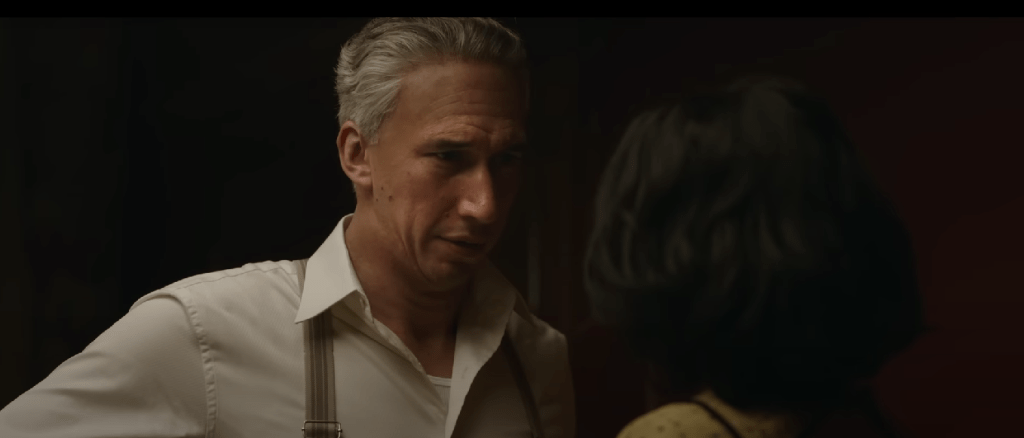
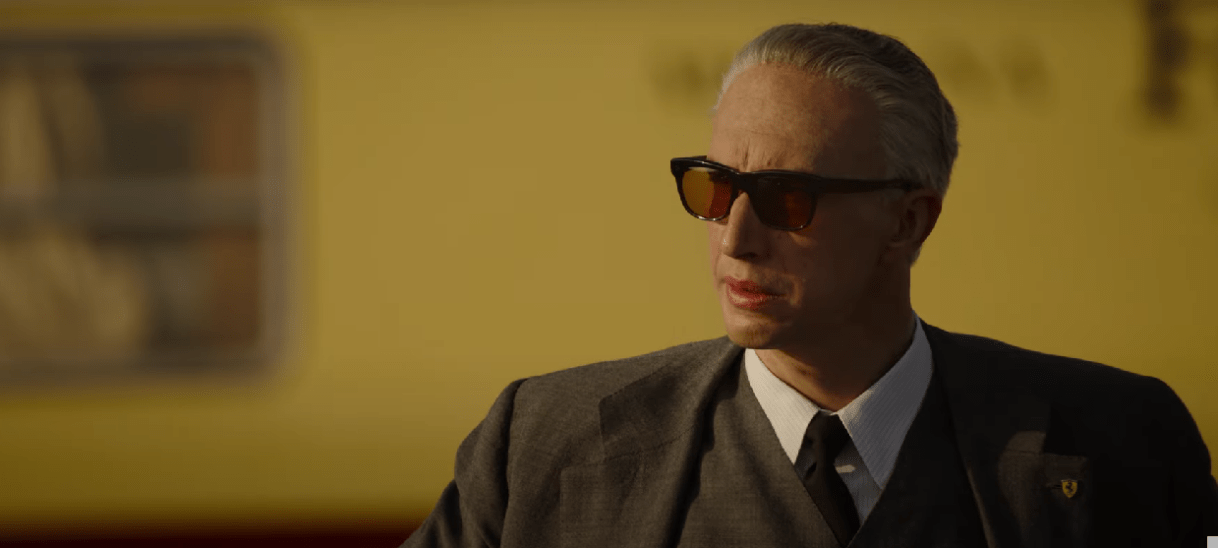
A perfectionist professionally but a loose cannon personally, Enzo Ferrari (Adam Driver) was a multi-faceted man, with his mind ever so focused on innovating and winning races but also ever so muddled when it came to his marriage and family life. Mann wastes no time in connecting those two worlds, introducing Ferrari (after a short montage of recreated black-and-white footage of a young Enzo behind the wheel) slipping out of the home of his mistress Lina (Shailene Woodley), slowly pushing a car downhill before jumping into it and speeding off. It’s a subtle introduction but helps establish what follows as a deeper look beneath the bonnet.

Where he’s speeding off to is his blindsided, somewhat estranged wife Laura (Penelope Cruz) whom he shares his struggling business with as well as a deceased son, Alfredo, whose death is a trigger point Mann continually comes back to over the course of the film to access that hidden internal layer that Enzo tries to hide.

It makes sense to ground the film to a particular moment in time rather than simply treating this as a by-the-books, cookie cutter biopic. The moment he chooses here is in 1957, with Enzo continuing to grapple with the loss of his son while living a double life with another woman and a second child, Piero. It’s a period in time where the Ferrari brand was at risk of collapse and the Mille Miglia race was a way for Enzo to clap back at doubters and hopefully, debt.

Mann is an expert at extrapolating key info from his subject matter, something Driver attests to in a Collider interview by stating that Mann’s characters “internal lives are so rich and so specific” and that “all of his notes are about character and internal life”. And Troy Kennedy Martin’s screenplay, based on Brock Yates’ Enzo Ferrari: The Man, the Cars, the Races, the Machine, offers enough legroom for Mann to build out the sort of bubbling tension that Enzo is harbouring over the course of the film where you feel that at any given moment, something will burst as it often does in his films.

Adam Driver is Enzo Ferrari in FERRARI, directed and produced by Michael Mann

As mentioned, the Mille Miglia feels like the Hail Mary for Enzo to redeem his brand, and across the film he tests cars around a track with professional drivers while reminding them that it’s a privilege to race in one of his cars. It’s in these very transaction-like conversations that his ruthlessness and hunger to win comes through, with Driver playing the Commendatore (as he was known) with a composed edge but towering presence as though he was truly a force of nature in this world. Not to take away from Driver, but at times his performance feels a little less accessible than some of Mann’s other characters who share similar traits but often have a more engaging charisma.

It’s in the more personal exchanges he has with those he cares about that the true duality of his life comes through. Laura matches him in bluntness, with the loss of their son evidently creating a rift between the two that’s left them stagnant in their marriage. Cruz’s performance here is up there with the best of the year as she plays Laura as a woman on the cusp of losing it, with her dark, hollow eyes and blank expressions evoking the rawness she stills feels for her son’s death and distance from her husband.

While the film is more of a melodrama in its muted moments, it wouldn’t be a Mann film without some thrills and spills. The racing sequences, including that of the track tests and the Miglia itself, are shot expertly by cinematographer Erik Messerschmidt with cameras situated in seemingly every part of the car except the drivers laps. The sound-design adds to the flair of the races and the sense of foreboding doom as the cars rocket around turns and narrowly avoid knocking into each other.

The closing sequence is one of the most confronting of Mann’s career and definitely of the last year, with a crash that kills nine onlookers at the Miglia. Sure the CGI feels a bit jarring in a film that focuses on practical effects for its majority, but the moment itself and Enzo’s reaction afterwards speaks to the coolness that he projects where things happen in this line of work and you move on, because that’s what winners do, no matter the cost.

Ferrari is in theatres now.

Oppenheimer: Christopher Nolan Casts some Light on the Darkness Covering the Atomic Bomb’s Father

Rating: 3.5 out of 5.

While J. Robert Oppenheimer’s name might be synonymous with the deadliest device ever created, Christopher Nolan’s latest three hour biopic, Oppenheimer, looks at the man behind the atomic bomb through a much more introspective lens without ever insinuating that audiences should feel a sense of sympathy for his brilliant mistake/s. Of course, introspection is a key building block to any biopic, but given Nolan’s ouevre hasn’t ever focused on a historical figure of this magnitude —or any historical figure in this sense which still isn’t as big a shock as not casting Michael Caine—, there’s understandably a greater interest surrounding this biopic if not for the simple fact that it’s a Nolan film, then definitely because its subject is one of the most infamous, and misunderstood, scientific minds ever.

That Oppenheimer was a brilliant theoretical physicist who was the victim of his own belief that man could be trusted with forces larger than them, is undeniable. But Nolan’s film isn’t just concerned with the cookie-cutter facts that you can pull from a Wikipedia page. While the film is based on 2005’s Pulitzer winning novel, ‘American Prometheus’, Nolan’s interest jumps from the key, often glossed over moments in Oppenheimer’s life, and interrogates them more carefully.

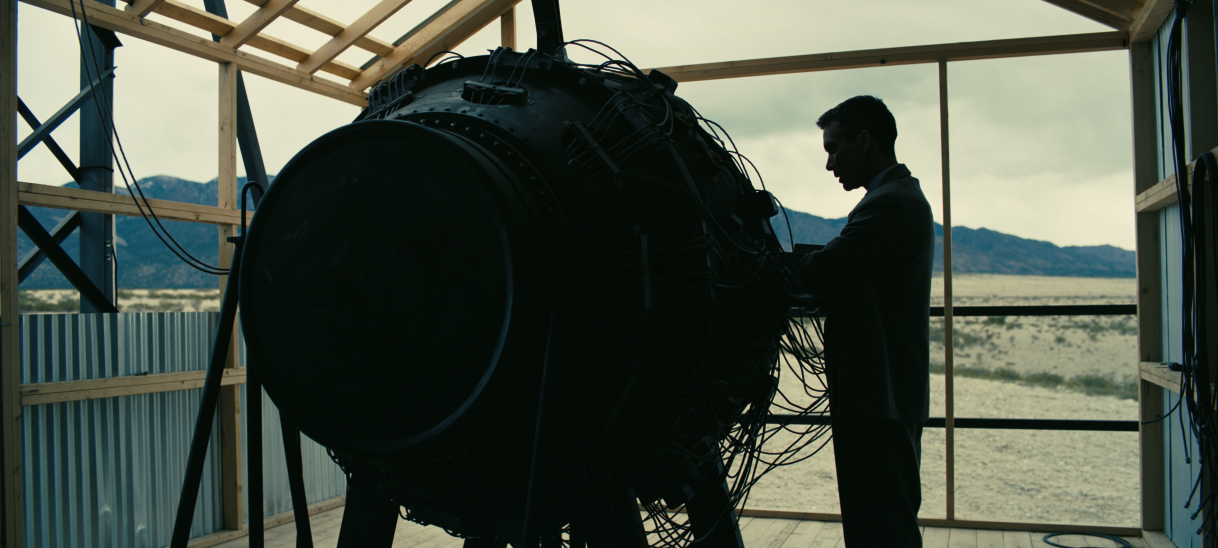
Nolan’s Oppenheimer (a perfectly cast Cillian Murphy) is a man struggling to be faithful, who is always in his mind, viewing every next move like an equation on a chalkboard. His relationship to theory stretches into his everyday life as he struggles to maintain meaningful relationships, always approaching life by the numbers and relegating himself to a disconnected observer as opposed to a practical artisan. At one point he is in disbelief that scientists overseas have figured out how to split atoms from each other (or something to that effect), stating that it’s not possible from a theoretical point of view (POV), and it’s through this sort of mould that he carves his Oppenheimer from — a man unlike those around him, an outlier.

In this way, he isn’t too different from other Nolan characters like Bruce Wayne or Joseph Cooper in that he’s committed to what he knows, and does what he must for the greater good. His distant persona also affects his ability to build sustainable relationships, often pin-balling across various lovers and failing to forge a life beyond his commitment to his craft as exacerbated by a scene where he offers his crying baby to his friends as he doesn’t have the time to look after it (a selfish move he recognises).

Early in the film he’s encouraged to pursue his interest in theory and master it, and this is the point in his life that Nolan opts to introduce us to. And it’s in the early stages of the film that Nolan really portrays the internal struggle that will go on to plague Oppenheimer in the film’s later stages. He cleverly uses hazy, almost dreamlike visual motifs that equally look like beautiful stars and bomb fragments. These moments are some of the most thought-provoking as they provide a real deviation from the coolness and level head of Cillian Murphy’s performance that makes the character difficult to read — as though he’s got everything under his hat and under control.

It helps that multiple POV’s are being deployed by Nolan here in what is probably the most un-Nolan-esque part of this movie. Not only is Oppenheimer’s view of the world on display, but that of his early ‘affiliate’, Lewis Strauss (Robert Downey Jr. at his brilliant best). This duality helps build tension and allows the events of the third act to come together more tightly than might otherwise have been possible. Frequent Nolan cinematographer, Hoyte van Hoytema, shoots in colour for Oppenheimer and black and white for Strauss, further helping create this sense of separation through subjectivity and objectivity, ultimately adding to Oppenheimer’s unknowability and the difference in views that the two characters have. Whether or not this approach works in its entirety is difficult to tell from a first viewing, especially since it does tie events together, but equally throws one out of rhythm from time to time with the various timelines intersecting.

Robert Downey Jr is Lewis Strauss in OPPENHEIMER, written, produced, and directed by Christopher Nolan.

The most jarring instance of rhythmic intrusion is also the film’s best for the very fact that it’s the most speechless moment in the film. If you’ve followed the marketing, the controlled atomic set-piece (atomic in its own right) is where the full force of seeing this 70mm beast in IMAX really sells itself. By this point a lot of the establishing from the first half —namely around the politics of the Manhattan Project and the scientific lingo that will fly over most people’s heads— has been rounded off and Nolan finally gets to play with his own toys by unleashing the mother of all bombs, creating a spectacle that almost transports you to the New Mexico desert with the characters. It is really the punchline of the film, rewarding your patience by drowning out all of the noise in its countdown and the ensuing blast.

Whether or not Oppenheimer is the sort of Nolan film audiences are eager for is tough to say; there’s no tricky logic that fans of Interstellar (2014) or Inception (2010) wouldn’t wrap their heads around, but the film also sees Nolan at his rawest and most cynical, choosing to show a world destined to implode on itself just as it’s beginning to take shape. While The Dark Knight (2008) followed a similar path, there was at least the knowledge that its commentary was so distant from reality rather than a part of it. Yet in a film full of so many competing elements whether it’s the performances, the dialogue (which has has never really been the sweet-spot in a Nolan film as much as the moments around it are), the rapturous score from Ludwig Göransson, the staging of the key set piece or even the candidness of the story, there’s no doubt that like Oppenheimer, Nolan was all in on going big, and the final result is one that will stick with many long after the end credits roll by.

This post was originally published on SYN

Oppenheimer is in theatres now

Guillermo del Toro’s Pinocchio is the Year’s Best Animation, and it isn’t Even Close

Rating: 4 out of 5.

Breathing life into an intellectual property (IP) that has had countless iterations is no easy feat, yet Guillermo del Toro has done exactly that with his unique and heartfelt take on Disney’s iconic wooden boy, Pinocchio. In fact, Guillermo del Toro’s Pinocchio (2022) —or just Pinocchio— might be the best entry in this fabled story, and it’s easily one of del Toro’s best.

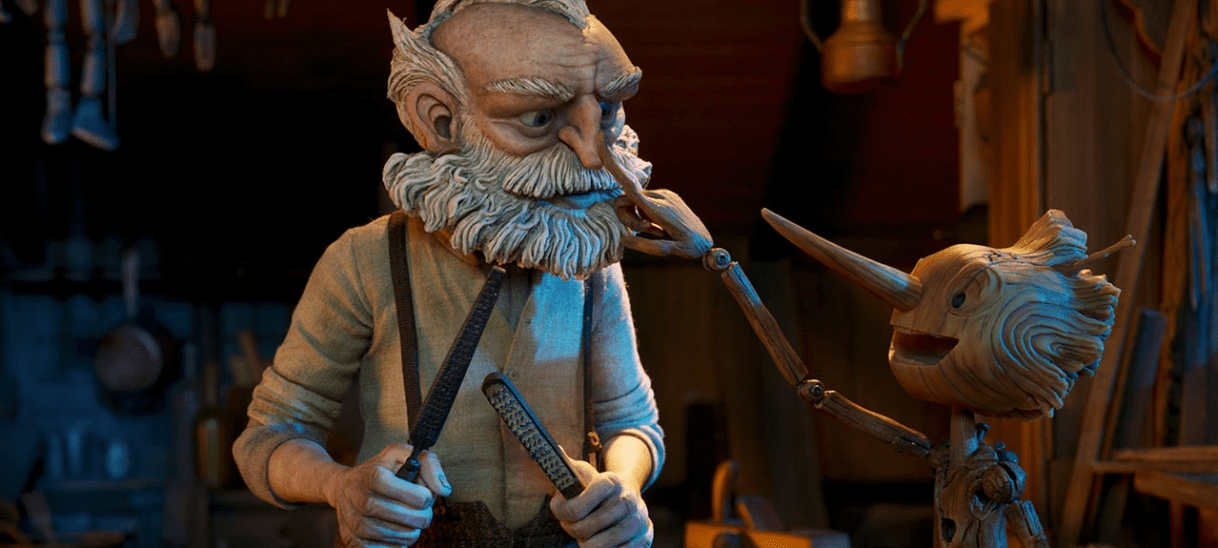
Like the careful craftwork of Geppetto, the woodcarver that creates Pinocchio, del Toro masterfully creates a heartfelt story of grief and loss through the lens of a fascist-set Italy. Unlike the year’s other Pinocchio film which felt like a sanded-down, stringless remake of the celebrated original, this one is coated in all the gloss that epitomises del Toro’s career: otherworldly creatures, a looming air of gloominess, a darker palette, religious commentary and evocative imagery. It’s in the un-del Toro-ness of the visual component —stop motion animation— that all of those ingredients shine, and where the film separates itself from the director’s past films.

Pinocchio has some of the best stop motion work, period; unsurprising given that del Toro co-directed the film with Fantastic Mr. Fox (2009) Animation Director, Mark Gustafson. The world has an air of freshness and almost appears like a series of dioramas that have been stuck together. The details of the world are sharp and striking, right from the spaces the characters inhibit like a church and foresty area earlier on, to the underworld and Monstro scenes in later stages. It’s an enticing vista that sucks you in the more the film unfolds, and it’s clear that animators were given ample time to carefully workshop the look and feel that del Toro was going for. When coupled with Alexandre Desplat’s spine-tingling score that is in the vein of his score for The Shape of Water (2017), there is an added layer of enchantment that emerges.

In terms of the story itself, it hits all of the key beats from Carlo Colldi’s original book —the circus scenes, the water monster Monstro in the later stages, etc.— but del Toro works around these moments to add his own flourishes and feel. Whether that be the aforementioned fascist leanings, where he explores the loss of innocence from children in the face of conscription and nationalism, right through to those underworld moments where he asks questions pertaining to mortality and the significance of life and death.

They’re heavy themes and leanings for a story that has always been depicted as light and fluffy, and has mainly covered ideas relating to growing up and fitting in. It helps that del Toro immediately jumps into a moment of anguish, as Geppetto (voiced with a gut wrenching croakiness by David Bradley) mourns the loss of his son, Carlo (voiced by Gregory Mann who also voices the titular character), after a bomb is dropped on the town church by unsuspecting war planes above. This whole opening sequence that explores the prelude to Geppetto’s grief and prolonged mourning, establishes the sort of grimness that will persist.

Pinocchio (Gregory Mann) and Count Volpe (Christoph Waltz) in Guillermo del Toro’s Pinocchio (2022)

It also introduces the running commentary on religion that has underpinned most of del Toro’s oeuvre from and since The Devil’s Backbone (2001). For instance, the destruction of the church and its subsequent rebuilding goes on to symbolise Geppetto’s own rebuilding of his son. This is especially true as Pinocchio (after he has been magically brought into being) assumes the role of Carlo by helping Geppetto build out a wooden Jesus in the church (the last task the father and son shared). He goes on to raise one of the film’s most significant lines relating to why everyone likes the wooden Jesus but not him. This undercuts the road to self-discovery that Pinocchio ultimately takes as he faces death and rebirth numerous times, before enacting a moment of selflessness in the film’s final act that would bring him as close to ‘being a real boy’ as he can come.

In order to get to that point though, he has to face various hurdles including a money-hungry circus ringmaster, Count Volpe (Christoph Waltz); a fascist government official from the town, who is set on sending the puppet with immortality to war (del Toro’s frequent go-to, Ron Perlman); the prospect of living forever and seeing those around him die; and his own desire to experience the fullness of the world.

Along the journey he is also accompanied by the talking cricket Sebastian (formerly, Jiminy) voiced by a comforting Ewan McGregor who injects the film with some of the comedic relief (e.g. being squashed countless times, being interrupted just as he’s about to break-away into song). Tilda Swinton also has a subtle role as an angelic spirit of life that brings Pinocchio into the world, and she also plays the sphinx-looking, death alter-ego that meets him every time he dies. Each of these characters have a distinct look that is both familiar and different in the ethereal way that del Toro’s creatures tend to be.

While finding one’s purpose and identity comes with its challenges, Guillermo del Toro’s Pinocchio helps the wooden puppet get there, and at the same time creates an experience with a unique identity of its own.  

Guillermo del Toro’s Pinocchio is in select cinemas and will be streaming on Netflix from December 9.

Ticket to Paradise Revives the Rom-Com

Rating: 4 out of 5.

The heyday of the rom-com might be behind us, but a film like Ol Parker’s Ticket to Paradise (2022) is a stark reminder that there may still be hope for the subgenre. In fact, a ‘ticket to paradise’ is exactly what’s on offer in this George Clooney/Julia Roberts helmed feel-good flick, and that might just be what the once thriving subgenre has been missing.

That’s not to say that there hasn’t been the odd romedy in recent years, with Long Shot (2019), Marry Me (2022) and Crazy Rich Asians (2018) all coming to mind. But until Ticket to Paradise, there hasn’t really been a rom-com that one can firmly say is reminiscent of the biggest and best the subgenre has to offer. Titles like Notting Hill (1999), Pretty Woman (1990), Sleepless in Seattle (1993), and my personal favourite, Forgetting Sarah Marshall (2008), in many ways defined what a romantic comedy is, what it looks like, and what sort of faces work in bringing these far-fetched stories to life.

One of those —and perhaps the most prominent— is Julia Roberts. No other name is as synonymous with rom-coms as her, with the proof being in the pudding of some of those aforementioned titles. She brings a certain warmth and infectious magnetism that reminds viewers that everything will be okay, even though that is known long before you’ve even entered the cinema. But when you pair Roberts with Clooney, you’ve got a recipe for success.

The dynamic duo, re-united for the first time since Money Monster (2016), play a divorced couple who want nothing to do with each other. It’s their daughter Lily (Kaitlyn Dever), however, who acts as the bridge that keeps the two connected; this so much so that her abrupt decision to marry a Balinese seaweed farmer, Gede (Maxime Bouttier) while holidaying in Bali is the perfect dilemma to bring her estranged parents back together, but for a common cause — to prevent her from throwing her life and career away in a rash decision.

(from left) Wren (Billie Lourd, back to camera), Gede (Maxime Bouttier) and Lily (Kaitlyn Dever) in Ticket to Paradise, directed by Ol Parker.

The premise is about as rom-com centric as can be: you have a star-led couple who loathe each other (tick), you have the obstacle that ultimately brings the characters together (tick), and you have a tropical setting that builds and restores love (tick). These are obviously ingredients that have been employed in films like Couples Retreat (2009) and Just Go With it (2011), and they can be moulded to fit different romedies.

With Ticket to Paradise, however, Parker knows how to make the most of these elements. He lets his star duo play off of each other with such an ease and with the room to adlib if necessary. Of course, being the Hollywood heavyweights that they are and maintaining a great friendship off screen, that’s hardly difficult for Clooney and Roberts. But it’s in the way Parker frames his actors and how, even with the predictability of where the film is going, he is able to maintain this finesse in getting you where you need to go plot wise.

It’s something that’s often lacking in modern romedies where, like Couples Retreat or Just Go With It, too often the dialogue falls flat as most of it is throwaway for the sake of a cheap laugh. Even with the constant verbal jousts that Clooney and Roberts display, there is a method to their madness, and it isn’t without purpose. It ultimately makes that predictable ending all the more worthwhile as, like the characters who fall for each other either for the first time or those that fall for each other all over again, the audience is nurtured to fall for them as well when all is said and done.

In order to get that point though, Georgia (Roberts) and David (Clooney) have to act like the cool, calm and collected adults they know they aren’t. Doing all they can to sabotage the wedding, Georgia and David engage in childlike antics. Whether that’s nabbing the rings from the young and oblivious child ring bearer or setting up a tour of a temple that curses all unmarried couples, there isn’t a shortage of things they won’t do to prolong the wedding.

At the end though, Ticket to Paradise is a reminder that no two people are the same, and by extension no two paths are the same. Nothing is ever set in stone if you don’t want it to be, be it a career choice or a divorce. Love ultimately triumphs, or at the very least, the realisation that not everything has to be planned out — sometimes you just have to take a leap of faith.

Ticket to Paradise is screening in cinemas nationwide.

Thor: Love and Thunder Brings Both in Equal Measure

Rating: 3.5 out of 5.

Before Taika Waititi and Chris Hemsworth collaborated on the wonderful Thor: Ragnarok (2017), no one would have foreseen the Marvel character entering its 11th year of films, with the possibility of many more, but here we are. The God of Thunder returns to the Marvel franchise with possibly the best comedy of the year in Thor: Love and Thunder (2022), the 4th instalment in a character that Waititi and Chris Hemsworth are able to bring the best out of consistently.

This time around, Natalie Portman’s Jane Foster returns to breathe new life into the franchise in a wonderfully charming performance. Her return feels like a notable response to the criticisms of the previous film, Thor: Ragnarok, which lacked a true emotional throughline. Adding to the emotional weight of the film is the inclusion of Christian Bale as Gorr the God Butcher, who is able to toe the line of outrageous superhero villain with real pathos that made Josh Brolin’s Thanos such a hit with audiences.

There are a suite of comedic bits throughout the film that place you firmly within the returning vibe of Waititi’s previous Marvel film, feeling closer in parts to his earliest work with Flight of the Conchords and What We Do in the Shadows (2014) —the distant girlfriend-as-weapon bit feels taken straight from the show— a distinctly comedic tone that feels oftentimes removed from the Marvel house style. The film revolves more around its comedy set-pieces than its action ones, a refreshing shift for the franchise that has often had lacking action moments. Love and Thunder is a comedy-focused superhero film, with Waititi clearly given carte blanche to make the silliest and most enjoyable film possible. 

The more recent Marvel films, especially Sam Raimi’s Doctor Strange in the Multiverse of Madness (2022), have such a burden of being more than just a film about their hero that it drags down the emotional and narrative weight of the individual films. A key reason Love and Thunder works is due to its breezy and fresh narrative that flows in the absence of these burdens, allowing it to thrive in a similar way the first phase of Marvel properties do. Unfortunately, this appears to be a rarity in this newest phase of Marvel.

Chris Hemsworth as Thor in Marvel Studios’ THOR: LOVE AND THUNDER. Photo by Jasin Boland. ©Marvel Studios 2022. All Rights Reserved.

What really allows Love and Thunder to excel is the level of filmmaking craft top to bottom throughout. Chief Mandolorian cinematographer Barry Idoine joins the franchise, which is a major step up for him after working many years as a camera operator for the upper echelon of filmmakers in the industry including Paul Thomas Anderson and Steven Soderbergh. Love and Thunder is constantly seeking to expand the visual dynamism of the Marvel style that has become well-trodden and allows it to feel weightless in comparison to other recent Marvel entries. 

Idoine and Waititi use the tone of the Thor scenes and the audience’s expectations for the film as a compelling counterpoint to the scenes with Bale’s Gorr, shot in borderline german expressionist shadows, mostly without a score or soundtrack, with one striking sequence taking place in a world with no colour. Being able to display a superhero story through tone and colour is an impressive feat the film is able to achieve and is the sort of craft audiences should seek out, even in franchise blockbuster entertainment.

Christian Bale as Gorr in Marvel Studios’ THOR: LOVE AND THUNDER. Photo courtesy of Marvel Studios. ©Marvel Studios 2022. All Rights Reserved.

Sadly for audiences, the film is also potentially Taika’s final involvement with Marvel, moving onto a yet unnamed Star Wars film, as well as being in production on a live-action adaptation to the iconic 80’s anime film Akira (1988). Waititi is so comfortably able to imprint his writing and filmmaking style onto these super-budgeted films that are so beyond other filmmakers in the medium of the franchise blockbuster. It was great to see him branch out into a film like Jojo Rabbit (2019), but what makes him a truly singular talent is his ability to scale up without ever diminishing the product or undercutting the story in any way.

Surprisingly, after winning his Oscar for Jojo Rabbit, Waititi has operated mainly in the television space, writing, acting, and producing in fantastic series’ What We Do in the Shadows, Reservation Dogs (one of the best new shows of last year), and Our Flag Means Death. He is one of the brightest lights in the industry with one of the most fascinating careers to follow, becoming one of the most must-see filmmakers working.

Love and Thunder is a real throwback to older Marvel sequels like Iron Man 3 (2013), (a film I will defend as possibly the franchise’s best), where a writer-director auteur is allowed to throw their weight around inside a mega-franchise structure without breaking any load-bearing walls. The film thrives in its eccentricities and the ensemble’s commitment to Waititi’s tone, making it a great watch that feels more of an established, stand-alone piece, rather than a stepping stone to something larger.

Thor: Love and Thunder is is currently screening in cinemas nationwide.

Top Gun: Maverick is the Perfect Sequel at the Perfect Time

Rating: 4.5 out of 5.

By all accounts, the 80s were quite the decade for the pop culture scene with rapturous music, unique fashion, and iconic films that spoke to the sentiment of the times. It was also an era coming to terms with the aftermath of the Vietnam war which saw a plethora of action-induced, patriotic films being churned out and inspiring the youth of the time.

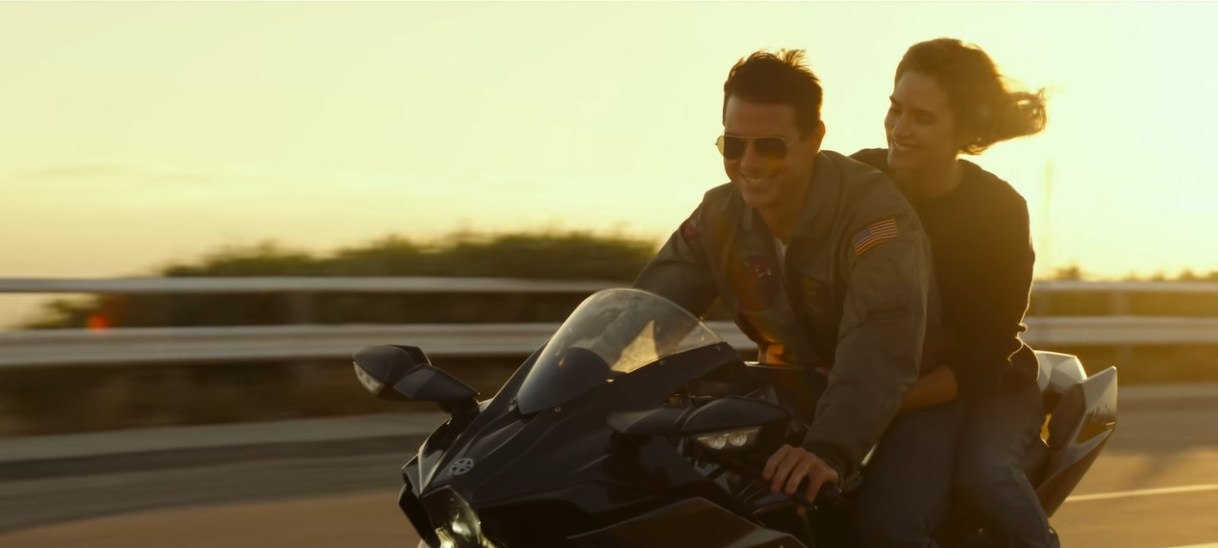
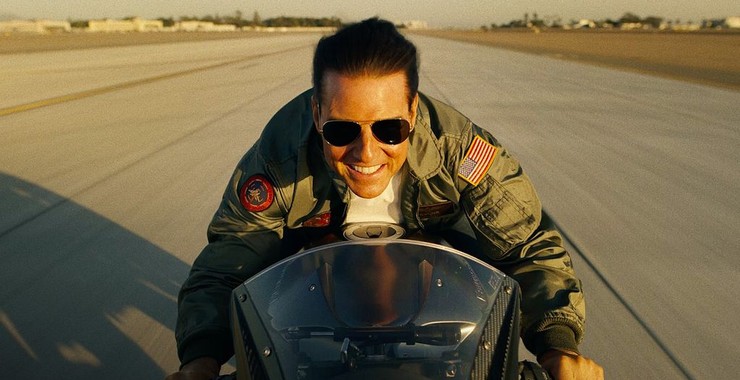
The most profound of those films is easily Tony Scott’s now iconic Top Gun (1986), a film that both turned Tom Cruise into the poster-boy for American patriotism, and also captured the hearts of audiences young and old with its dazzling displays of all things 80s Americana. It’s telling then that 36 years later, Joseph Kosinski’s Top Gun: Maverick (2022) has managed to surpass the awe of its predecessor, and at the same time, deliver a sequel to rival all sequels.

It might be that the last few years have left an uncertainty in their wake in the same way that the Vietnam war did in the many years after its conclusion. The state of the world today is wrought with turmoil including ever-ravaging wars, a pandemic that continues to linger, the propulsion of gun violence in the USA, and growing speculation of an incoming recession (like the early 80s Reagan-recession). Maverick feels like a response to these last few years, or at the very least, a banner of hope that audiences have embraced with open arms.

Perhaps that’s because Kosinski’s film places audiences into a two hour, jet-fuelled cockpit of escapism that pauses all the worries in one’s mind and creates an unnatural sensibility for what is being showcased. It’s a polished and daring display of practicality that sends goosebumps across one’s body as soon as Kenny Loggins’ ‘Danger Zone’ roars in the opening sequence — and that’s before any of the “out-there” moments even come to pass.

Tom Cruise in Top Gun: Maverick

Narratively speaking, Maverick follows Pete ‘Maverick’ Mitchell (Tom Cruise) in the years after his short-lived spell at the Top Gun academy for aviation. Now in his mature years, Maverick has traded dog fights for test flights, taking some of the latest aircrafts and pushing them to their limits in the sky. It’s a fitting reintroduction to the character and the direction of his arc for the remainder of the film, as he himself becomes pushed to his limits in the events that unfold.

Most of the film revolves around reconciliation, or coming to terms with the past, with the clearest example being in the death of Maverick’s wingman “Goose” that continues to plague our otherwise steadfast protagonist. It’s through Goose’s son, Bradley “Rooster” Bradshaw (Miles Teller), that we see this internal struggle and guilt of Maverick’s, surface. The film rides this wave of reconciliation for its majority, but it works because there is no throwaway dialogue here. The screenwriters, helmed by a trio comprising Ehren Kruger, Eric Warren Singer, and frequent Cruise-collaborator, Christopher McQuarrie, do a great job of balancing Maverick’s place in the world with the passing-of-the-torch to the young.

But even with all the side characters —including a short, heartfelt appearance by Val Kilmer’s Tom “Iceman” Kazansky— Maverick is still unequivocally Cruise’s. The actor has come a long way since his Risky Business (1983) days, even if there is a part of me that still craves to see more performances in the vein of Jerry Maguire (1996) or Magnolia’s (1999) Frank T.J. Mackie. Maverick feels like the first real film to see the actor come to terms with his place in cinema. For all the ‘old-timer’ and ‘relic’ lines that are thrown around, Cruise is still the biggest blockbuster name outside of the Marvel engine, and it’s no surprise that he’s being hailed as the last major Hollywood star.

Tom Cruise in Top Gun: Maverick

The actor shows no signs of slowing down here, in fact, if his last few films are any indication, he still has some fuel left to burn. It helps that he has a young supporting cast that almost mirrors the antics of the original cast (Glen Powell’s Hangman is a spitting image of Val Kilmer’s young and cocky Iceman). He also has a new objective: to prepare these young pilots for a dangerous mission in enemy terrain.

The details of the mission aren’t nearly as important as the actual flying and shooting, or in other words, the stuff that gets you your money’s worth. The bravado of the film is nestled in the spectacle of its third act, where the cast is crammed into their F/A-18’s and made to feel the full force of the turns and hoops that ensue. Kosinski, clearly in his element here, shoots these death defying air-scapades with a desire to achieve as much realism as he can, and realism is what he gets, with heart-in-your-throat level action that makes Marvel seem like a rusty kids playground in need of a major renovation.

What’s true for Maverick is that it does feel like a polished playground of possibility, one that is set on pushing the limits of what’s possible for the cinematic medium. This has been true for anything Cruise related for years now, but with Maverick there is a bittersweetness in realising that films like this only get made because there is someone willing to push the medium to its breaking point and not play it safe — in that way, Cruise and Maverick aren’t so different.

Top Gun: Maverick is is currently screening in cinemas nationwide

The Unbearable Weight of Massive Talent Celebrates Nicolas Cage

Rating: 4 out of 5.

There are actors and then there are actors, but there’s also Nicolas Cage, a thespian unlike any other who has long been swimming in his own pool of creativity, films and the characters left in their wake. The Unbearable Weight of Massive Talent (2022) represents a celebration of all things Nic Cage, serving as its own museum that displays (quite literally) some of Nic’s most iconic on-screen moments, characters and artifacts while at the same time offering an enjoyable buddy-up action comedy.

Out of all the odd and unique actors throughout cinema history, it seems fitting that it would be Nicolas Cage who would play a hyper-fictionalised version of himself to such an extent. The actor’s unrivalled commitment to exploring all aspects of his craft has seen him play some of the most craze-filled (Red in 2019’s Mandy, Caster Troy/Sean Archer in 1997’s Face/Off) and heartfelt (Robin in 2021’s Pig, Joe Ransom in 2013’s Joe) characters of all time.

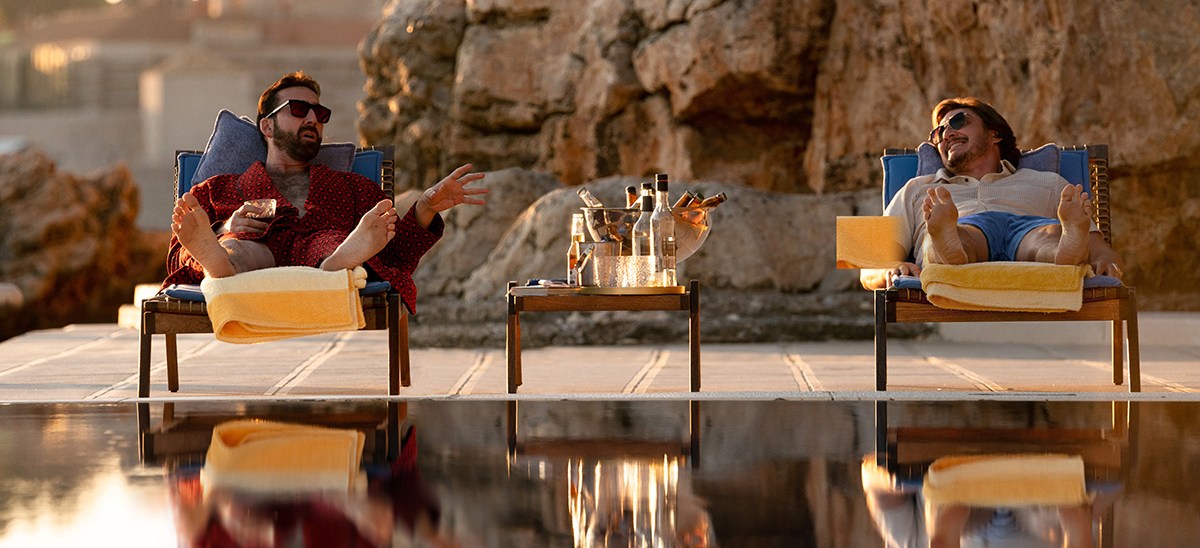
What Director Tom Gormican has provided with The Unbearable Weight of Massive Talent is a service to all fans of Cage. With Nick Cage (Nicolas Cage) running short on money and struggling to balance his work and home life, he decides to take his agent’s (Neil Patrick Harris) advice to attend a birthday party for Cage superfan Javi Gutierrez (Pedro Pascal) and get paid $1 million. What Nick doesn’t realise is that behind the lovey-dovey, Cage-admiring Javi, is a drug kingpin, crime family and a missing girl. Unbeknownst to Nick, CIA agent Vivian (Tiffany Haddish) plants a tracking device on him and soon informs him of Javi’s dangerous side. It is up to Cage to find the truth of it all by channelling his most iconic screen characters to save himself and those around him.

The film plays out like a pastiche on the body of Cage’s work while also offering something new in the way of performance. Cage has often spoken of his “nouveau shamanic” neologism as an approach to performance that tries to get to the essence of a character through a deeper engagement with one’s imagination — ultimately enabling a performance that is as true as can be. He has also said in a recent Reddit AMA (ask me anything) that playing Nick Cage was the most challenging role he has taken on, with the need to “protect a person named Nick Cage” and make sure that he “facilitated the director’s absurdist vision of so-called Nick Cage”.

Nicolas Cage in The Unbearable Weight of Massive Talent (2022)

It’s no surprise then that even for an actor of Cage’s calibre, it would take more than a “nouveau shamanic” approach to performance to truly play Nick Cage. But play Cage, Nicolas Cage does, as he brings all of his signature idiosyncrasies to the table: explosive moments of rage, overzealous mannerisms, signature one liners and so forth. There is a level of self-awareness here that never borders on excessiveness as Cage plays into these idiosyncrasies in a way that would speak to Gormican’s absurdist vision of what a hyper-fictionalised version of the actor and his life would look and feel like.

It’s easy for films to poke too much fun at their source material to the point where they overdo it — like in This is the End (2013). Ultimately, there is a still a need to provide a plot that brings everything together and serves a purpose beyond the gimmicks, and fortunately Gormican manages to keep a level head amongst the excitement of it all. Gormican uses the situation that Nick finds himself in to prompt the action that follows while at the same time managing to bring it all back to the crux that is Cage. The fact that Javi isn’t an unlikable antagonist (or an antagonist at all really) also helps to keep it light hearted and grounded, even with the tonal shift that happens around the second act.

It is quite fitting that, out of all the moments of overblown absurdity, the most striking moment —Nick Cage French-kissing a young, Wild at Heart (1990) era Cage— would come from the mind of Cage himself. The film pays homage to outlandish moments like this from the actor’s career and yet the process of making this film has brought another intrinsically “Nicolas Cage” moment; this moment hits like the smell of sea salt as you make your way to the beach for the first time in the summer, and it’s a beautiful feeling.

Never short on pop culture references (any mention of 2017’s Paddington 2 is always welcome) and always set on celebrating the cultural significance of its star lead, The Unbearable Weight of Massive Talent is everything fans of Nicolas Cage will have wanted it to be and more. While having massive talent might be unbearable, a film with Nicolas Cage playing Nick Cage is anything but unbearable — it might just be what cinema and the world has been missing.

The Unbearable Weight of Massive Talent opens nationally from the 21st of April, 2022

Jane Campion Returns with The Power of the Dog

Rating: 4.5 out of 5.

After 12 long years away from the big screen, the extraordinary auteur Jane Campion has returned, backed by Netflix, with an adaptation of Thomas Savage’s 1967 American western psychodrama The Power of the Dog (2021). The film centres on two brothers, the charismatic but menacing Phil (Benedict Cumberbatch), and the meek and gentle George (Jesse Plemons), successful Montana ranchers whose lives are quickly changed as George decides to marry the widowed mother Rose (Kirsten Dunst), who brings her doctor-to-be son Peter (Kodi Smit-McPhee) to live with them on the ranch.

Phil sees this incursion by Rose and Peter as a personal affront to his ideal world and responds by setting out to torture Rose psychologically in a sequence of scenes that has Campion at her venomous best.

The Power of the Dog sits on a knife’s edge for the entire runtime, with Campion keeping her cards close to the chest as the drama unfolds with the patience of a long novel. There are four central characters to the film and the audience is unsure throughout who is gaining the upper hand in the family dynamic and the film as a whole.

The film has a certain offbeat cadence in its storytelling. It will sit in quiet moments we are yet to understand the importance of, while other scenes quietly obscure that dramatic temporal shifts in the characters’ lives. A more traditional version of this film would climax with a violent confrontation between brothers, but the power of Campion’s writing and Savage’s prose comes from how we are being led through the fog into an illuminating, yet rather understated final act.

What’s always jumped out to me about Campion’s writing is her ability to complicate seemingly archetypal characters into three-dimensional figures. There are countless examples in fiction of the sorts of characters in The Power of the Dog, but it’s Campion’s masterful command of storytelling that blooms in the grey areas, not by reducing everyone down to their lowest moments, but by elevating the humanity of even the most abhorrent figures.

Set in Montana but shot in New Zealand, The Power of the Dog relishes in the rolling hillsides of Campion’s homeland that feel overwhelming and mythical all at once. You truly feel the seasons change over the course of the film, from the encroaching white snow on the mountains and the farm which forces the family inside, to the glaring sunlight that ratchets up the tension. 

Rose Gordon (Kirsten Dunst) with terror in her eye in The Power of the Dog

Ari Wegner’s cinematography powerfully contrasts this natural world that is shot during as much magic hour as could be achieved I’m sure, with the almost German expressionist lighting choices inside the family home, giving those scenes a nightmarish quality. These lighting decisions help emphasise Cumberbatch’s angular features into a figure that haunts every inch of the Montana estate.

The Power of the Dog deploys an extraordinary use of both diegetic and nondiegetic music that echoes Campion’s breakout feature The Piano (1993), with possibly the first use in cinema of a banjo as an instrument of menace. Phil is constantly heard whistling a melody that buries itself under Rose and the audience’s skin that feels unrelenting. This sadistic side of Phil is so well established early in the film that even in the later stages where Campion opens Phil up to the audience, we are still able to see him from Rose’s perspective, creating a murkier area for the audience to perceive Phil as a character.

Much has been made of Cumberbatch’s performance and it certainly feels like the actor is in career-best form, although I will admit to not being a big fan of his work to date. The power of his performance lies in how Phil works to be outwardly projecting his idea of masculinity, and how that projection changes depending on who he is surrounded by. Campion captures fleeting moments with Phil that illuminate the character in truly spectacular ways, from his attachment to his brother’s presence, to how he luxuriates in the brief moments he’s able to wash away his protective armour in the river.

The connections to There Will be Blood (2007) are boundless here, even to the point of Plemon’s character originally planned to be Paul Dano before scheduling issues intervened. Greenwood’s atonal score at times felt like There Will be Blood B-sides but they quickly took on their own shape within this story. There are also moments where Cumberbatch carries a similar menace to Daniel Day Lewis’s character, but they are deployed in different and unique ways that work in their respective films. The two films are in conversation with each other visually, sonically, and thematically, with differing views on male desire and its relationship with ambition and cruelty. Both films are also so overpowering on initial watch – for completely different reasons – that repeated viewings feel necessary to fully grasp what you’re witnessing.

This film is a classic slow build that is working and growing on you long after you leave the theatre – or your couch as almost all viewers will see it on Netflix – which is common for most Campion films. She has also created an adaptation that truly sucks you into the story to the point of feeling compelled to immediately read Savage’s novel. This is not a world I particularly want to linger any longer in but is a story I have a deep desire to see how it compares to Campion’s interpretation.

There is a meticulous method to Campion’s unfolding narrative that may leave audiences cool and detached as rarely do moments feel spontaneous, which can work wonderfully in some films but detract from others. The Power of the Dog is a film that may feel expanded upon rewatch, as it takes time to fall into its syncopated rhythms. You could reduce the film down to a psychodrama about toxic masculinity, but that feels ultimately reductive to the work Campion is doing here.

The Power of the Dog is in select theatres now and will be available on Netflix December 1st.

Companionship Between Man, Dog and Robot Encompasses the Endearing Finch

Rating: 3 out of 5.

Man and dog almost always seem to go hand-in-hand when post-apocalyptic settings come into question — they’re like buddy-up cop films minus all of the cheesy one-liners and recycled cliches. From I Am Legend (2007) and Mad Max 2: The Road Warrior (1981) to the more recent Love and Monsters (2020) and now Finch (2021); man’s best friend has had a long spanning place in this genre of films.

The film marks the second feature that Hanks has starred in for Apple TV following last year’s Greyhound (2020), and the second feature from Miguel Sapochnik following Repo Men (2010).

Like the aforementioned films before it, Finch focuses on themes pertaining to companionship and surviving, but it is also a much more quiet and reflective post-apocalyptic film that digs into the importance of trust, honesty and loyalty — values exhibited by man’s best friend.

It sees a former engineer and all round tech guru Finch (Tom Hanks) and his dog Goodyear, scavenge for food and supplies in a world where most life has been wiped out due to a sun flare which has resulted in large amounts of radiation infecting the world. Finch’s own health has been impacted by this radiation so he decides to create a robot companion whose main directive among all others will be to take care of Finch’s doggo should he die. That robot, who becomes imbued with vast knowledge through some tech savvy work by Finch, decides to call himself Jeff (voiced by Caleb Landry Jones) and develops an interesting, if not coy relationship with Finch. The three companions eventually set out to San Francisco as a deadly storm closes in on their haven in St Louis.

Tom Hanks and Goodyear in Finch

Hanks begins to play Finch in a similar way to his iconic Chuck Noland from Cast Away (2000) where he’s often talking at something (his dog) as opposed to with someone. This is where the talking robot Jeff comes into play as he helps steer the film away from Cast Away territory to something more involving as opposed to a version of this film that would bank on Hanks’ performance for its entirety.

Jones gives Jeff a level of complexity that becomes more revealing as the trio trudges on in their motorhome and interact with each other. Hanks adopts a more paternal presence as he literally brings this robot into existence whilst also having the job of feeding and taking care of Goodyear and another little non-speaking robot compadre.

For what it’s worth, the trio of man, dog, and robot is actually quite endearing and heart-warming that makes me think of this film as Chappie (2015) meets I Am Legend but without the boxing and killing, respectively. It’s very much a tale of companionship that pays respect to the importance of man’s best friend and celebrates that relationship by seeing Finch echo the values of trust, honesty and loyalty at the robot he has made, so as to help Jeff build a relationship with Goodyear that is comprised of those values once Finch is gone.

While the film doesn’t necessarily offer much in the way of unique spins on the post-apocalyptic genre, it does retain a sincerity and truth that can be felt through the script — especially the dialogue. When all is said and done, it looks like the biggest winners in a world with minimal human existence will be man’s best friend — given they’ll still have someone to play catch with.

Finch is now streaming on Apple TV+