Blue Moon preview screening provided by Sony Pictures
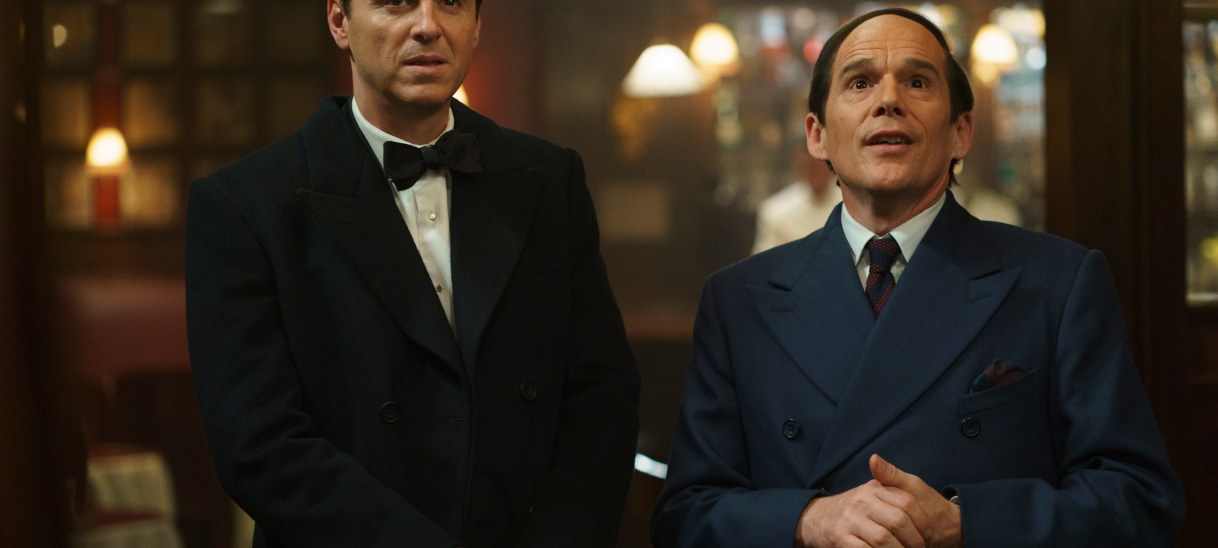
There’s a lot of talking in Richard Linklater’s Blue Moon, a film focused around a single evening in a single location that has been described as something akin to a theatre experience on screen. It’s fitting that in such a film there is a lot of talking since, if the film’s title hasn’t given it away, it revolves around Blue Moon creator Lorenz Hart (played enigmatically here by Ethan Hawke), a serial conversationalist (often to his own detriment) as he works to convince himself and those around him that he’s holding it together while his past collaborator, Richard Rogers (Andrew Scott) and his new lyricist Oscar Hammerstein (Simon Delaney), are heaped with praise following the successful opening of their Oklahoma! musical.
Setting a film entirely around the bar and lobby of a hotel while subjecting the audience to one man’s incessant talking is no easy feat, but audiences familiar with Linklater’s work (especially those that are diehard fans), will lap this approach up. For starters, Ethan Hawke does a fantastic job of carrying the weight of the film, no matter how small he is framed by Linklater (Hart was 5 feet tall; Hawke, by comparison, is 5″10). For such a small individual, Hart’s voice echoes the farthest here, with Hawke capturing his larger-than-life persona tremendously, and he’s deservedly received an Oscar nomination for it.
The film starts off rather shaky though, showing Hart on the evening of his death in a back alley, a major fall from grace for someone who was so revered, before jumping back some months to that opening night of Oklahoma! and the mingling that ensued post-show. Sure, this shows the stark difference between a man who had countless people adore him and the man who would die alone, but just as soon as this opening pops up, it’s just as quickly gone from the mind. The shakiness continues though as side characters are established like Eddie the bartender (Bobby Cannavale) and E.B. White (Patrick Kennedy), but like in any function you may have ever been to where small talk happens, they serve merely to keep you entertained until the real guests you want to speak to arrive.
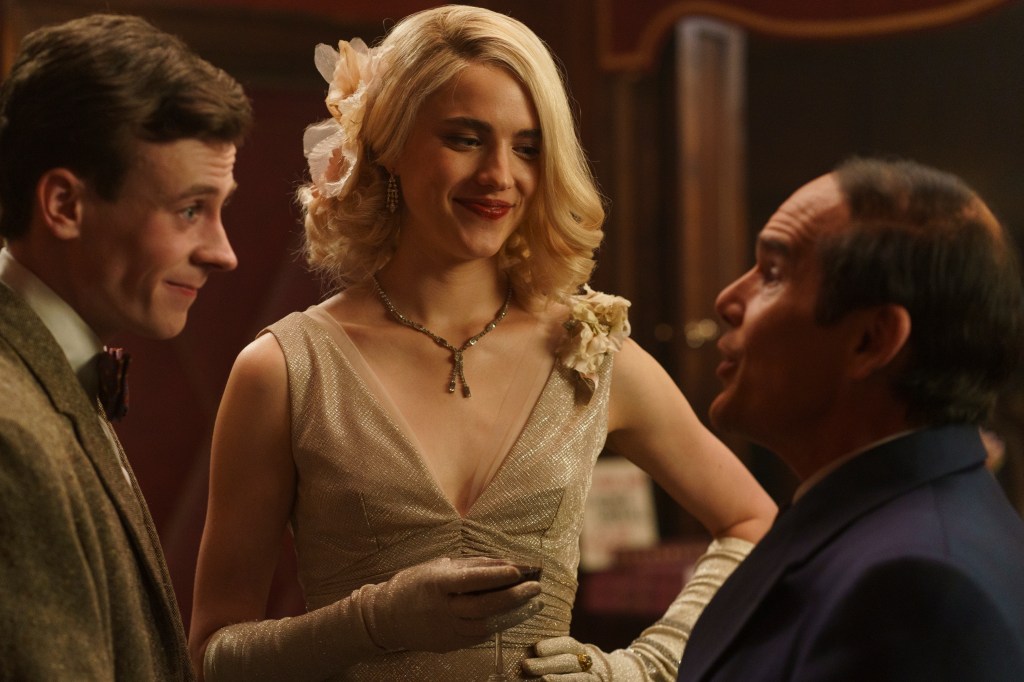
(L-R) David Rawle as George Roy Hill, Margaret Qualley as Elizabeth Weiland and Ethan Hawke as Lorenz Hart in Blue Moon.
One such guest is Elizabeth Weiland (Margaret Qualley), a young 20 year old college student who Hart has been selling those side characters the narrative that he has something deeper and more meaningful going on with her. In truth, she views him as just a really good friend, someone who she loves but “just not in that way,” a line that comes at a crucial moment in the film, contextualising Hart’s erratic, borderline needy behaviour. The other guest is the star of the show, Richard Rogers, someone we (or those, like myself, who are not familiar with theatre at all) learn Hart created some legendary plays with. Their relationship holds strong, and while we learn it’s had testing moments (alcoholism from Hart’s side playing into that), their dynamic is by far the most interesting given their history and the insights that it gives into why Linklater chose this night of all nights to focus on.
On the surface, Linklater frames Hart as a man who craves attention, both intentionally and unintentionally because his disposition permits he does so. As the film unfolds, his flaws creep up, including his insecurities and desire to not fade in the background given he has become so used to being the centre of attention. It takes a good 70 minutes to get to that part though as Hart becomes almost smaller by the frame, especially after paying to have some alone time with Elizabeth in a cloak room where he shows interest in her sexual escapades, like some voyeur who gets off on the idea of another person’s pleasure. You begin to pity him more than anything, with Hawke really showing the fragility of the man when he’s not in an open space around others — a place where he uses his talking as a shield to maintain this facade of composure that he’s built.
Blue Moon knows what audience it’s for, so if you’re unfamiliar with theatre like I am, the humour and references will more than likely fly over your head and make it difficult to engage with or care for these people and their line of work. That said, as a character study it offers a wonky but gradually clearer insight into Lorenz Hart, even if it takes a while to get to any deeper unraveling of this broken side of him.
Blue Moon opens nationally from Thursday 29 January.
With 2025 having drawn to a close, Rating Frames is looking back at the past twelve months of cinema and streaming releases that have come our way. In the first of our series of articles, Arnie is taking a look at his ten favourite films of the year that was.
In what I think is probably the strongest year in film for the current decade (surpassed only by 2021), I managed to squeeze in 36 new releases (equal to last year) and would probably have had more had I not gone overseas for a few months. That said, 2025 surprised me with just how strong the year was, with my top 10 (save for perhaps my no 1 and 2 spots) easily interchangeable depending on my mood. I did miss a few films that I really wanted to see and will hopefully see in the next month like Rental Family, Sentimental Value and Train Dreams, but overall I am delighted with what my top 10 is looking like. Here’s to a bigger and better 2026!
10. Black Bag
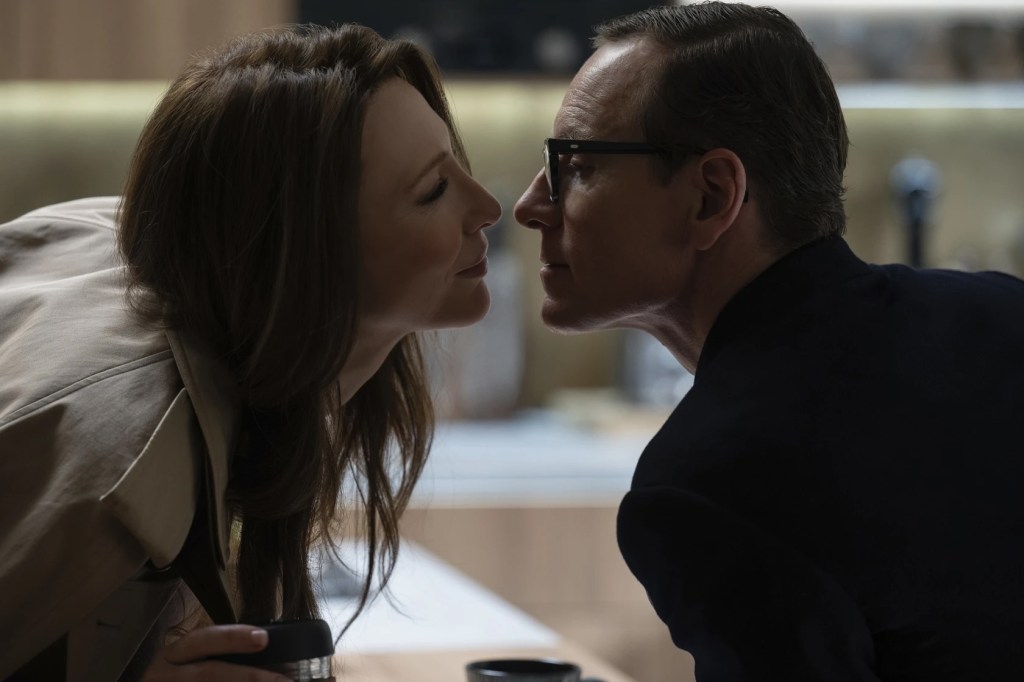
While it feels like forever since Steven Soderbergh’s Black Bag was released, the thriller has stuck with me for it’s a punchy, measured and meditative approach in telling its story as it focuses on the importance of trust in relationships, but amplifies that tenfold by throwing spies and high stakes into the mix. The film is an exercise in precision, in patience, in waiting for the right moment to make your move but takes a snappy, well paced approach in portraying those aspects. Michael Fassbender’s coolness and straight-talking robotic like persona is matched by Cate Blanchett, with the duo finding a dance like rhythm / choreography every time they’re on screen, making it intoxicating to watch them to the point where you feel like a third wheel between their sexual chemistry. To top it off, the film is around 90minutes and doesn’t waste a second, demonstrating Soderbergh’s knack for pacing and witty dialogue when it comes to thrillers.
9. Mission: Impossible – The Final Reckoning
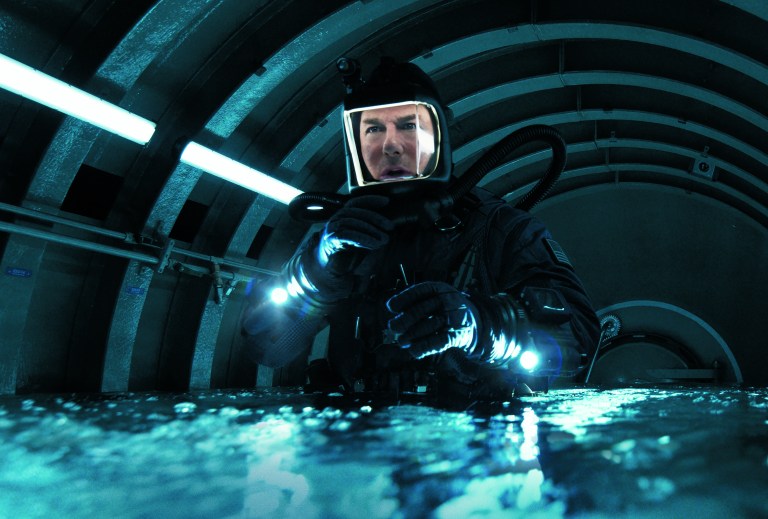
Speaking of thrillers, the final entry in Tom Cruise’s Mission: Impossible franchise, The Final Reckoning, is an exhilarating finale to this almost 30 year exercise in pushing the boundaries of what is possible on the big screen. While it doesn’t quite hit the highs of Fallout (2018) and Dead Reckoning Part One (2023) in terms of scale and plotting, Christopher McQuarrie and Tom Cruise sign off in style, with everything from deep sea submarine diving to flying and dangling off of aeroplanes because… well… why not. The film does take some time to really kick into gear, with a beefy first act having a weightiness to it that takes a moment to shake off as story threads are tied from past films, but once it gets to the fun and games of the second act, it has that free flowing, pacey energy that the franchise is known for.
8. If I Had Legs I’d Kick You
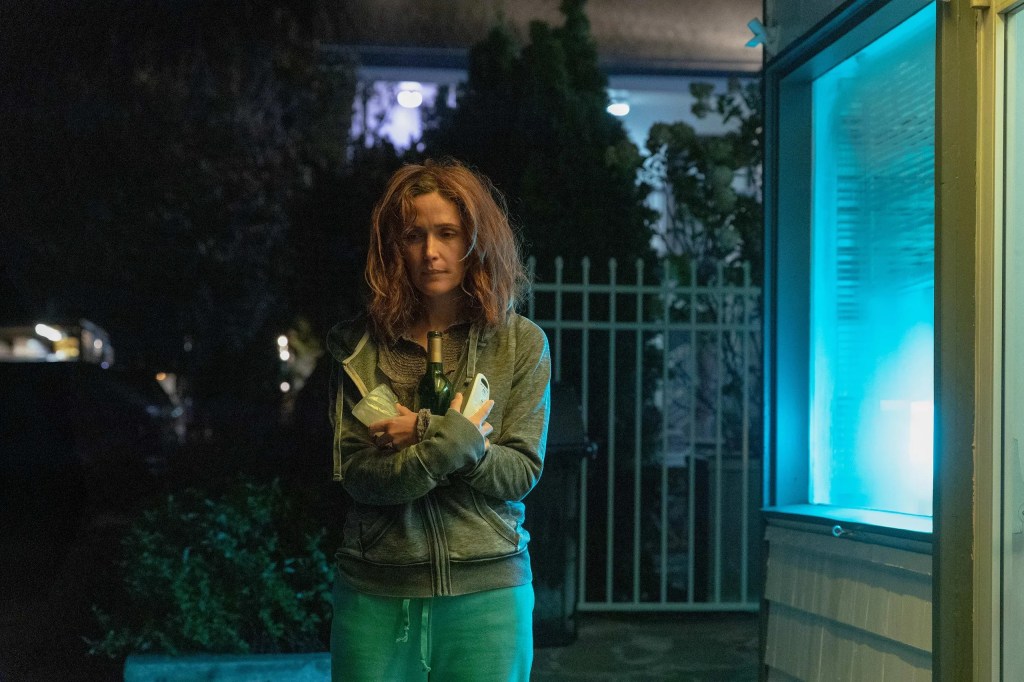
If I Had Legs I’d Kick You came as a late entry for me but quickly cemented itself in my top 10. For starters, Rose Byrne delivers one of the most electrifying performances of the past few years and easily a career best which is sure to earn her an Oscar nomination and perhaps the Oscar itself. Secondly, this is the most stressful film I’ve watched in a long time with Mary Bronstein creating a sense of tension and holding on to it throughout the film’s majority through Byrne’s performance and her ability to isolate her in and around the problems she has, giving the film an almost straitjacket feeling that can’t be shaken off.
The approach to focus on a woman who has this literal and figurative hole in her life that is a reflection of her struggles to raise a sick child while her husband compounds her struggles from a distance (as he isn’t present), creates a simmer that never seems to cool down. Coupled with a camera that maintains a relatively tight close up on her for the most part and works in tandem with a score that has a dread like quality, amplifies the sense of hopelessness that the character endures.
7. Avatar: Fire and Ash
James Cameron’s third entry in the Avatar franchise is the biggest and most visually striking film of the year, and it’s a testament to the director’s desire to push the medium forward by pulling out all stops. The CGI and performance capture are unmatched in Fire and Ash as is the lifelike quality of Pandora and its blue inhabitants, the flora and fauna, and the wider setting. While the script feels a little more drawn out and repetitive compared to the previous two films (there’s a lot of similar story beats and wonky subplots), the heart of the film and Cameron’s love for this universe shine through in its three and a bit hour runtime.
Listening to Cameron’s interviews after having seen the film have bought me into his vision even more and helped me appreciate the level of depth and thought that go into every performance and the way the world interacts with these performances (almost a video game-esque quality). Sometimes the transition from 48fps to 24fps can be quite jarring where I would have preferred for the whole film to be shot in the former, but no one is making films of this scale and with this much originality compared to Cameron and I would gladly take another two of these films in the coming years.
I was blown away watching this in 3D in Melbourne’s newest and second only IMAX screen.
6. Bugonia
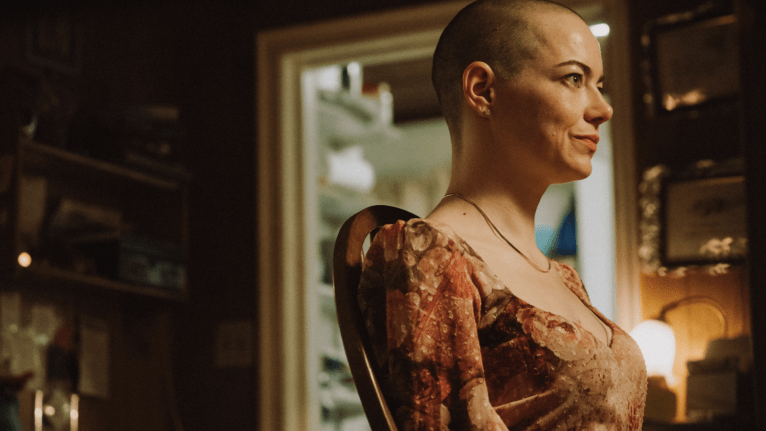
After leaving me rather underwhelmed with Poor Things (2023) and Kinds of Kindness (2024), Yorgos Lathimos’ Bugonia felt like a return to form as the director brought his regulars Jesse Plemons and Emma Stone into this conspiracy theory game of ‘who breaks first’. Lanthimos and The Menu (2022) screenwriter Will Tracy wrote a clever script that blends humour with desperation as one man becomes convinced that the CEO of his company is an Alien and decides to capture her so that he can learn where her mothership is and how to make contact with it. Beneath the often comedic, sometimes rattling plot is a film that shows the lengths people will go to when faced with a desperate situation, one that speaks to wider issues of failed healthcare systems and the people they leave in their wake. The final third of this film is a wild rollercoaster of “I know what’s going to happen” to “Oh, now I know what’s going to happen” to “I knew that first thing was going to happen”. Lanthimos paces this film incredibly, leaving you on the edge of your seat to ponder whether questions we ask ourselves about the world are worth asking, whether for better or worse.
5. Sinners
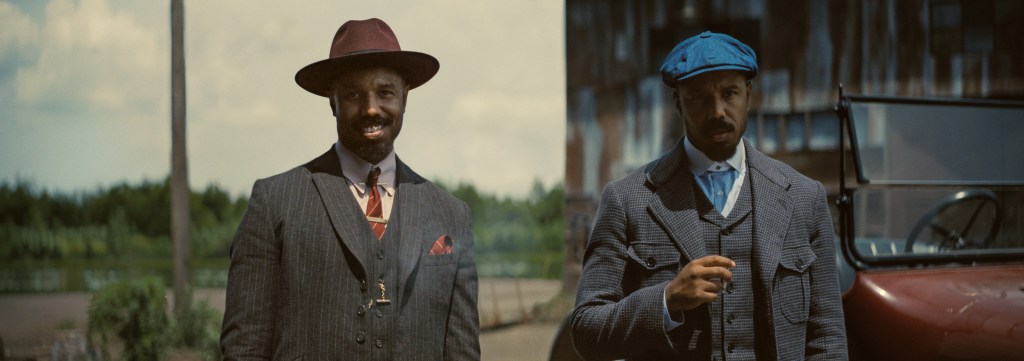
Ryan Coogler’s Sinners felt like a breath of fresh air as this almost neo-western, horror type gothic genre epic. Sinners feels both familiar and different, owed in large part to Coogler’s understanding of Black history mixed with his penchant for spectacle and creating moments that cut through and challenge you as a viewer like a musical sequence that mixes in blues, jazz, hip hop and a wide range of music genres in this pseudo-multiverse portrayal which is unlike anything I’ve seen in recent times. Clearly taking a leaf out of Robert Rodriguez’s From Dusk Till Dawn (1996), Sinners finds a harmonious balance between the horrific and the heartfelt, where Coogler patiently builds up to the unhinged killing fest and doesn’t slow down when it hits.
4. No Other Choice
It’s no secret that the job market has been absolutely fucked, something that the proliferation of AI has only amplified, with Australia feeling the strain of unemployment to a large degree as well. Park Chan Wook’s No Other Choice, like some of the legendary director’s films before, is a brutal, sometimes comical, portrayal of the lengths people will go to begin to make sense of the situation they are put in, whether through their own doing or not.
Man-su (a brilliant Lee Byung-hun) delivers one of the year’s best performances as a paper worker who loses his job due to downsizing and decides that the only way to stand any chance of regaining unemployment and keeping his idealistic lifestyle is to kill the true competition that is applying for the same jobs as him. Park is a technical genius who proves his worth once again through striking transitions and camerawork right through to interesting plotting choices that all build up a sense of desperation as Man-su spirals into a void.
3. Mickey 17
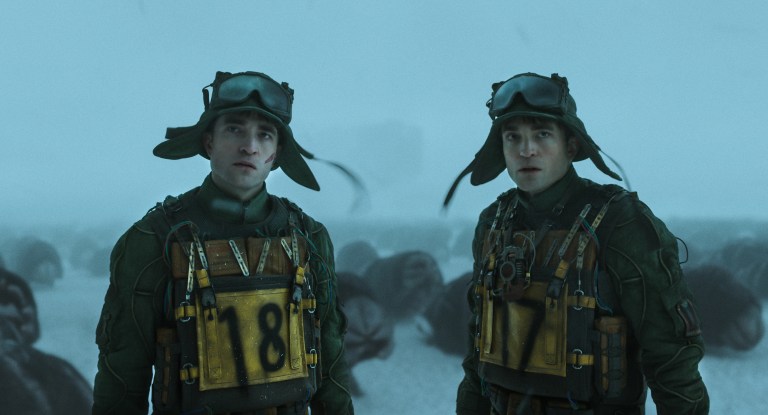
While not quite hitting the same highs as his Best Picture winning Parasite (2019), Bong Joon Ho’s Mickey 17 continues the director’s fascination with the caste system, capitalism and human dispensability. It’s a goofy film with strange characters and creatures and a closing sequence that is weird in its own right, but it speaks to wider issues of injustice and treating people with inhumanity for material gain, yet it’s Bong’s most optimistic film as well.
There’s a palpable pity in watching Robert Pattinson’s Mickey character be reprinted through a human printing machine time and time again, until through an error, two versions of him emerge, opposed in multiple ways yet finding a commonality in their disposable existence to unite against those that discard them like an old shoe. The scale of the film is evident in its Hollywood-ised grandeur of space travel and all that comes with it, but it stays close to the heart of its oddballs, never losing sight of the human condition even as it threatens to become relegated to a means to something more sinister.
2. It Was Just an Accident
Jafar Panahi’s It Was Just an Accident blew me away in more ways than one. The Iranian filmmaking juggernaut has never been coy when it comes to his criticism of Iranian oppression and abuses of power, and in this film he focuses on how that abuse and specifically, torture, imprisons people for their whole lives.
He frames this through a group of people whose lives have never been the same after a man with a squeaky leg tortured them some years ago at the request of, and for the good of, the “regime”. When Vahid, a survivor and humble mechanic, hears the squeaky leg of a man whose car has broken down outside his repairs shop, all of those horrific memories come flooding in and he decides to capture and bury him the day after. That is, of course, until the man vehemently asserts that he’s not this ‘Eghbal’ torturer that Vahid is looking for. From there, Vahid is set on confirming the man’s identity before deciding what to do with him, meeting others who were beaten and brutalised under his authority.
The film is sometimes comical, often gut-wrenching, especially towards the second half where a subtle shift in tone shows the length the oppressed will go when they’re desperate for vengeance. Panahi paints humanity as a fragile construct in a film that threatens to tip the scales between victim and oppressor, showing what a broken, unjust system can do to people as they become prisoners of their own mind because of the actions of others. The final shot might just be the most harrowing of the year.
1. One Battle After Another
Another year, another Paul Thomas Anderson masterclass; it’s been many years since a new release sold me on 5 stars, and who else’s film could do that other than PTA’s? One Battle After Another, his latest politically charged (which is more of a byproduct) yet grounded story of a father and daughter dynamic, is a culmination of all of the best parts of his oeuvre. Loosely based on Thomas Pynchon’s 1990 Vineland, a book with its own political leanings and criticisms of the Reagan administration, One Battle After Another is also PTA’s most contemporary film to date. Where previously he has tended to look back, his latest film is very much a forward-looking, foreshadowing of what’s to come if we let forces greater than us hunt us down in the little spaces we’ve carved out for ourselves in a world that feels like it’s already getting smaller around us.
One Battle After Another is the breeziest, almost 3 hour film experience I’ve had in years which is testament to PTA’s ability to pace his films and leave no dialogue wasted for filler. Each moment gives the film momentum and builds on the cause and effect chain of events, with an abundance of set pieces (easily the most in his career). This all culminates to a closing sequence that as a whole, is one of the most striking I’ve seen in years (a car chase shot through swerving, dusty roads will stick with you).
PTA has always managed to get the best out of his ensembles much like his inspiration, Robert Altman, and it shows here as Leonardo DiCaprio delivers a career best performance along with Sean Penn (who is no doubt a shoehorn for Best Supporting Actor), with Chase Infiniti, Benicio del Toro and others also at the top of their game.
I felt like I was watching a classic in the making and a film that will stand the test of time as an epic much like There Will Be Blood (2007) has all these years later, and I can’t wait to buy the 4k bluray later this month to experience it all over again.
Anaconda preview screening provided by Sony Pictures.
It’s been almost 30 years since Luis Llosa’s Anaconda (1997) hit cinemas, a film which I’ll remember for it having traumatised me as an unsupervised five year old who shouldn’t have had access to the remote after 10pm. Tom Gormican’s 2025 remake/reboot/spiritual successor pays homage to the Jennifer Lopez led cult classic while carving out its own little corner, one that is tonally all over the place, incredibly self-aware and yet had me giddy in moments.
In fact, Anaconda finds an odd equilibrium between comedy, action and horror as it uses its funny star duo of Jack Black and Paul Rudd to present itself as a comedy, while keeping you guessing at every turn through conventional jump scares that sometimes land while falling flat at other times. Gormican’s last film, The Unbearable Weight of Massive Talent (2022) took a similar approach but in the opposite sense by using an often serious actor in Nicolas Cage to play a fictional Nicolas Cage while building the comedy around him and his seriousness.
Incredibly self-aware in its presentation of events, Gormican chooses to focus on a group of childhood friends who used to make short films together, and while they still concern themselves with filmmaking in their adult lives, they aren’t exactly doing what they love. For starters, Doug (Jack Black) shoots weddings, Ronald (Paul Rudd) is a struggling actor, Kenny (Steve Zahn) is a cinematographer who gets rowdy and drunk, and Claire (Thandiwe Newton) more or less is doing better than the rest of them. It’s not until Ronald acquires the rights to the Anaconda intellectual property that he begins to make everyone believe they’re sitting on success.
After some convincing (namely of Doug), the group decide to go and shoot a reboot of the 1997 classic in the Amazon where they become embroiled in a game of cat and mouse with a real anaconda as well as a wider subplot of illegal gold miners. If this sounds like the sort of silly Hollywood blockbuster that tends to cap off the year, well it is. But this silliness (mostly) works, namely because the central cast are all so damn charming and likeable that it’s hard not to have a cheeky grin when something totally irrelevant to the plot happens, like Kenny getting over his peeing-in-public fear to piss on a supposed spider bite that Doug has sustained. There’s plenty of similar brain-dead humor that might leave you scratching your head, but what more can you expect with Jack Black leading the pack?
Anaconda isn’t groundbreaking by any stretch of the word, and it often calls attention to the lack of creativity in Hollywood, poking fun at its own studio in the process. That said, Anaconda becomes the very film it seeks to mock, with dialogue for dialogue’s sake and references to real world people and events. The film will probably be swallowed up by audiences in the moment with chase sequences and explosions all around, but when all is said and done, it’ll just as quickly be regurgitated.
The SpongeBob Movie: Search for SquarePants preview screening provided by Paramount Pictures
It’s hard to believe that The SpongeBob Movie: Search for SquarePants (2025) is the fourth feature in the iconic Spongebob Squarepants franchise (not counting the two spinoffs), one that is showing no signs of slowing down or being outgrown by modern audiences as it continues to be Nickelodeon and Paramount’s hottest property. As a polished extension of the animated series, Search for Squarepants effortlessly translates to the big screen and revels in all of the shows silliness and giddy pinballing from moment to moment, without respite.
That’s to say that Derek Drymon’s film is as innocent as its titular character whose biggest dilemma in this advenutre is how to build up the nerve to ride a roller coaster now that he’s a ‘big guy’ who has grown over the required height requirements to ride said rollercoaster. Minimal stakes are the backbone of anything Spongebob related, and they lead him to the depths of the Underworld where he finds himself undertaking a series of challenges alongside the Flying Dutchman (Mark Hamill) to become a certified swashbuckler. Of course, the extent of the danger with which Spongebob finds himself in, escapes him, as the Dutchman has ulterior motives: find a pure, giddy soul to help break his curse and set him free.
This sees him, along with his starfish buddy Patrick, ride through beautiful, visually mossy looking Underworld that is filled with everything from ship knot monsters, googly eyed beasts and skeleton fish creatures. Drymon, who worked with the show’s late creator Stephen Hillenburg in the early days, doesn’t try to reinvent the wheel like he did in Hotel Transylvania: Transformania (2022) which fell flat on its face, but leans into the silliness of butt jokes and one liners that are a hoot for children and adults alike.
Squidward (Rodger Bumpass), Mr. Krabs (Clancy Brown) and Gary (Tom Kenny) in The SpongeBob Movie: Search For SquarePants from Paramount Animation and Nickelodeon.
Some fans of the show might be disappointed to know that show favourites Plankton and Sandy take a back seat this time around (perhaps owing to them getting their own spinoff movies in the last year), but Mr Krabs, Squidward and Gary the snail make up for that as they venture into the Underworld to try and rescue Spongebob. Their own little adventure navigating deadly sirens and a three headed seagull brings its own joys and comedic relief.
While the narrative feels a bit loose and wishy-washy, Drymon’s film sticks to the soul of the series and leaves you with the basic but hearty reminder to see the strengths in yourself and not compromise who you are to try and prove yourself to the world around you. Spongebob ends up a bigger guy than the big guy he thought he had already become and it’s all through seeing just how big he already was, and I think that’s as big a life lesson as you should really have from Bikini Bottom’s finest.
The SpongeBob Movie: Search for SquarePants opens nationally from Boxing Day.
One Battle After Another preview screening provided by Universal Pictures
Even as I found myself slouched into the cinema seat, still having not adjusted to the timezone after a recent overseas vacation, Paul Thomas Anderson’s One Battle After Another (2025) woke me up, slapped me around and reminded me why I spent a year researching his work. There are few working directors who have stayed as true to form as PTA has, and even fewer who have dared to push quirky, unpredictable narratives and irreverent characters at such a scale out to audiences; One Battle After Another might just be the quirkiest, most unpredictable film he’s ever made, and easily one of the rare few that a studio has decided to back, with such a big budget.
While One Battle After Another, at least on paper, has all of the elements of a PTA film —themes of surrogacy, a focus on damaged male characters and dialogue that has you think twice and then twice more— it also feels like his most relevant film to date and not because of smart phones or modern mustangs, but because it isn’t a period piece, it isn’t looking back in ways that There Will be Blood (2007) or Inherent Vice (2014) were. This film plays like it’s very much a forward-looking, foreshadowing of what’s to come if we let forces greater than us hunt us down in the little spaces we’ve carved out for ourselves in a world that feels like it’s already getting smaller around us.
And it’s immediately apparent from the opening sequence that this isn’t going to be your stock standard PTA flick, with a harsher, almost street-like quality to the cinematography. We open with Perfidia (Teyana Taylor), a revolutionary who is scouting an immigration camp before we’re introduced to Bob Ferguson (Leonardo DiCaprio), and other grungy looking revolutionaries who are looking to cause calculated havoc in similar encampments and eventually, across banks and other establishments as well. The political undertones of the film are clear, but the whirlwind that’s to follow is unimaginable.
It doesn’t take long for things to shift to fifth gear as narcissistic leader of said camp/s, Steven J. Lockjaw (a career best Sean Penn and shoo-in for supporting actor), someone who detests African Americans but in being humiliated by Perfidia, falls head over heels for her (hey, everyone’s got a kink), is on a mission to hunt down every revolutionary involved in these acts of defiance. While he does hunt/kill most of them, Bob and his daughter Willa (played in youth age later by Chase Infiniti) are extracted to a safe haven while Perfidia, finding herself in witness protection, escapes to Mexico.
LEONARDO DI CAPRIO as Bob Ferguson in “One Battle After Another.” A Warner Bros. Pictures Release.
A time jump to 16 years later caps off a first act that is as balls-to-the-wall as any PTA has attempted (with 1997’s Boogie Nights coming in at a distant second). It’s telling that like Bob, who goes into hiding with his daughter while others hunt him down in this almost cat and mouse plot at the centre of this film, PTA has (in a way) almost been doing the same, or at the very least, trying to find a version of himself who’d warm up to the idea of being more in touch with the immediate world as it unfolds. While PTA can never be accused of playing things safe —in fact, his framing of thematic interests has only shifted as he’s aged and as he’s had his own children— he’s at his most abrasive, rampant self here.
For starters, PTA doesn’t attempt to play to the good vs evil, right vs wrong binary tendencies that so many weaker political thrillers tend to. Instead, he uses this strange love triangle (if it can be called that), between Bobb, Lockjaw and Perfidia, and a focus on character, to let any surrounding commentary seep in from. Ultimately this is a film about a father/daughter dynamic that’s complicated by an equally complicated lunatic whose motive (without spoiling) in hunting them is far more nuanced than simply getting rid of them.
What ensues is an electrifying, chaotically focused, yet hearty film that never slows down but keeps you on your toes until its classic finale that’s already entered legendary status. To get to that point, Johnny Greenwood’s edgy, almost chimey score keeps the tension flowing and builds on the unnerving aura of not knowing what’s around the corner. This is coupled with the equally unnerving performances of Penn, DiCaprio and Infiniti, with the former having a duality and complex that feels insane to have been pulled off, while Leo has a hipster edginess that’s underpinned by a desire to be didactic yet his paranoia is leaving him out of sorts (this pairing between PTA and Leo is a match made in heaven).
Like the characters in this film, PTA is a revolutionary but of a different cause: the preservation of cinema. In shooting One Battle After Another, he decided to bring back VistaVision (a dying breed of film format). It speaks to his desire to find meaning and breathe life into things often deemed unworthy or better left to fade with time, and this desire is almost felt on the screen with a character like Bob who’s brought back from the brink, from a place where he’s almost lost sight of himself and who he was, and risks fading away into someone that once meant something to so many people but doesn’t anymore. In this way, One Battle After Another inextricably ties PTA so closely to its characters and their plights (both of which always take precedence in his films ahead of commentary) which makes its daring finale and all that Bob finds he really stands for and that his daughter hopes to stand for in her own place in the world, feel so deeply personal.
One Battle After Another opens nationally from September 25
Superman preview screening provided by Universal Pictures
When Guardians of the Galaxy (2014) hit screens some eleven years ago, there was a shift in the superhero movie paradigm that up until then was often focused on darker stories and more mature themes, most of which went hard on action but stepped away from the jovial playfulness that animated shows often captured so well. That shift is owed in large part to James Gunn who managed to find a nice middle ground between getting you your dose of power ups and battle scenes with the humanity and flaws behind these heroes. He also (unintentionally) set off a chain of events for superhero films that would see them sway too much towards silliness and cheesy one-liners that they eventually became devoid of any uniqueness or balance.
In the time since his original Guardians film, Gunn has gone onto deliver two more for Marvel before being headed up as Co-chairman and Co-CEO of DC Studios in a bid to try and turn the tide DC’s way — after all, their catalogue of heroes is much stronger than that of Marvels. While The Suicide Squad (2021) represented his first real foray into the DC universe, it’s his long awaited reinvention of Superman (2025) that has felt like the true starting point that is supposed to set the tone for what is to come.
To do so, Gunn has opted to throw the whole ‘origin story’ approach out the window and instead, throw viewers right into the thick of things. Superman (a perfectly cast David Corenswet) is three years into his Superman reveal, with all of the crash landing and coming-to-terms-with-his-powers backstory, left implied. It’s a bold choice from Gunn but it makes sense as it gives him the room to cram more into the plot rather than tread old ground.
Whether the cramming tickles your fancy or not, is another question. There’s a lot going on in Gunn’s film, much to the detriment of building out a cohesive plot. Gunn is at once interested in diving into the humanity behind the God figure and hitting him with countless obstacles and side quests, with the result being glimmers of deeper interrogation —one occurring early on as Superman in his Clark Kent guise, chats with his fellow reporter girlfriend Lois Lane (an equally fitting Rachel Brosnahanin) in an impromptu interview— but an overall surface level exercise.
(L to r) NICHOLAS HOULT as Lex Luthor and DAVID CORENSWET as Superman in Warner Bros. Pictures’ “SUPERMAN”
And that’s before we start talking about the wider plot which includes Lex Luthor (Nicholas Hoult) trying to get dirt on Superman so he has justification to kill him, a trio of ‘Justice Gang’ sub-heroes who pop in every now and then to aid Superman and (really) fill-in during his absence, a weird middle-eastern conflict that threatens to boil over but that Superman is embroiled in, and a wonky love-story between Luthor’s side-piece and a a journo helping to get dirt on Luthor. In other words, it’s a stuffy room with little air left to breathe, which at best gets you a little laugh and at worst, an eye roll.
But while Gunn might not be focusing on Superman’s origin story, he’s definitely focusing on his own, taking his learning’s from his time at Marvel and Marvel-ising them here. No one can accuse Gunn of making something that’s boring, after all, the ethos of Superman has always been built around a level of silliness and charm that starts right from his vibrant, cartoonish costume. Gunn understands that in order to make this version of Superman any different from past iterations, he would have to cut the preamble and focus on the wonder that comes from seeing frost breathe, laser eyes and flying while keeping it as lighthearted as possible — keep the message simple and ensure the goofiness is there, even if the stakes never feel like they match up.
I have to admit, while I’m not a Zack Snyder shill, I appreciate the darker tones and comic-book wham’s and pow’s he brought to Man of Steel (2013), Batman v Superman: Dawn of Justice (2016) and his version of the Justice League (2021). Gunn’s version has gone a completely different direction and I can respect the decision to do so since the other approach wasn’t putting bums in cinema seats. Whether or not this film sets the tone for this new DC universe though, is hard to tell, especially with Matt Reeves’ The Batman (2022) feeling more akin to what would have existed in the old universe (I’m sure we’ll see Cornswet’s Superman and Robert Pattinson’s Batman cross paths in some way — though I smell tonal whiplash from a mile away). Regardless, Superman is imbued with the same level of goofiness as Gunn’s other films, and while it probably would have felt fresher had it been released eleven years ago, it still packs an entertaining punch.
F1 preview screening provided by Universal Pictures
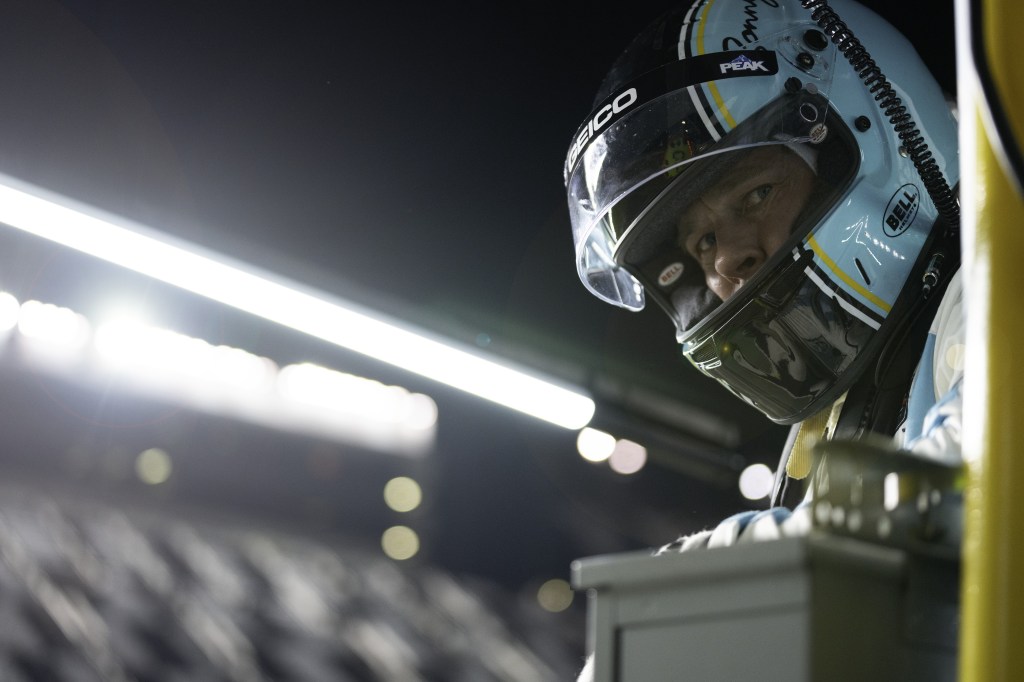
Swapping the skies for the circuit, Joseph Kosinski’s F1 (2025) is a speedy, four wheeled follow up to his box office smash, Top Gun: Maverick (2022). While I’m not an F1 fanatic, there’s no doubt that the exhilaration of a race with cars that push past 300km/h is an adrenaline rush for those that love that sport, and especially for the drivers behind the wheel. But what happens when you peel back the veneer that is the glitz and glamour of podium finishes, and begin to look at the gruelling process that pit crews and drivers alike go through in the lead up to a race? Well, Kosiniski understood the assignment and has created a punchy drama that both tackles that question, and is rife with everything from technical language about racing, to the fall and rise of a prodigy.
In many ways, F1 feels like a spiritual successor to Maverick in that it traces the life of someone who was young and reckless, but is now more of a “has been” who is giving it one last crack against the new stars. On paper, Kosiniski’s film feels like it was very much geared towards casting Tom Cruise and continuing to put him in the cockpit of these lightning fast death machines, but with the Mission Impossible films taking up the majority of his focus, another aging yet still youthful star had to step in.
Cue Brad Pitt. Once you’ve seen this film, it’s easy to say that it’s hard to imagine anyone else playing this role other than Pitt, but Pitt makes the character of Sonny Hayes wholly his own that it’s really, truly impossible to imagine even Cruise in his position. There’s a boyish cockiness that Pitt translates so well to the screen, and it’s no different here as he carries himself with the same reckless edge he’s delivered time and time again. And it serves the premise perfectly: a former racing prodigy who is living in his van and sporadically competing in races is given the keys to the kingdom that is F1 by his former racing competitor-friend-turned-F1-owner, as a hail mary to pull them out of the rut they’re in.
Brad Pitt as Sonny Hayes in F1 (2025)
You might be thinking: this sounds like every movie that has an ageing star who continues to try and compete at the highest level. While you might be right to a degree, on paper F1 isn’t remarkable as a fresh character study, but where it falters in storytelling it makes up for with fast paced action and a desire to authentically capture the F1 scene. Kosinski and frequent cinematographer Claudio Miranda’s work on getting the claustrophobic, tight spacing of fighter jets right in Maverick has helped them capture the same feeling of being in an F1 car; combine that with Hans Zimmer’s pulsating, punchy score, and the film has a video game simulator feel — keeping you at once on the edge of your seat and as though you’re there with Sonny.
Key to trying to give the film a little more egde beyond the generic script by Ehren Kruger is the addition of a young rookie, Josh Pearce (Damson Idris), who naturally takes the lead for the team, with Sonny serving more to amplify his movements on the track. Their dynamic helps shift the gears and keep the film from just being like every other racing film you may have seen. For one, Sonny doesn’t settle for second best and pushes Josh to be his competitor on the track so as to not have him be complacent and expecting everything will be handed to him. This push and pull between the two is like a passing of a baton but only if that baton was on a rope and it had to be caught first.
That’s all to say that F1, while a stellar showcase of zippy cinematography and snappy editing, derives its most heartfelt moments (even if the rest of the story is rather cookie-cutter) through Sonny’s redemption arc as he takes his track knowledge and turns it into a method for madness. What’s even more impressive is just how close to the real thing Kosinski has kept proceedings, with real-life racers like Max Verstappen and Lewis Hamilton cropping up (the latter being a producer as well who was involved with the project before Brad Pitt!). There’s a level of verisimilitude that the film is striving to capture, sometimes to the detriment of the wider drama that’s captured so well by films like Ferrari (2023) and Ford v Ferrari (2019), but often it nails this approach mainly because of how close each aspect of production is to the real thing, and with this approach Kosinski has clearly found himself a formula for success.
How to Train Your Dragon preview screening provided by Universal Pictures
Whenever news breaks out that a studio is developing a live-action version of a beloved animated feature, a collective sigh followed by a “but why?” tends to ring out. After all, we’ve seen Disney try and (often) fail to bring their iconic animations back, with bigger budgets and fancier visual effects, only to see them turn out feeling devoid of the heart and soul that made those animations so great (see Aladdin, The Lion King, The Little Mermaid,Snow White, Dumbo etc.) Occasionally though, there is an anomaly, and fortunately it’s How to Train Your Dragon (2025).
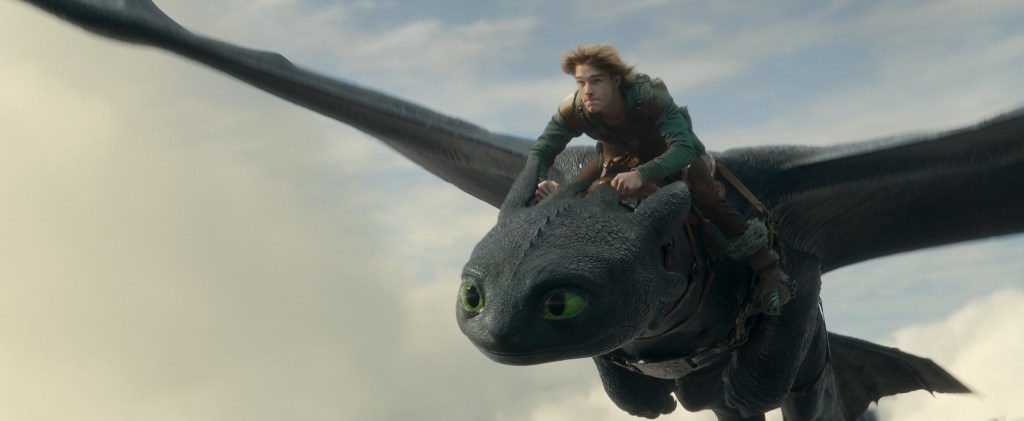
That Dean DeBlois has been trusted to continue directing the How to Train Your Dragon series with this live action, is a testament to the success (both critical and commercial) he has found with the series as a whole. After all, how hard is it to make animated dragons look like real dragons while keeping the warmth that an animation lends? Well, it’s definitely no easy feat (I’m looking at you, expressionless lions in 2019’s The Lion King). But that’s ultimately what this film boils down to: can DeBlois and his team retain the charm of the 2010 classic? The short answer is, definitely. Mason Thames, while not sounding like Jay Baruchel, looks like Hiccup, and Night Fury looks like Night Fury. It’s clear that a lot of care was taken to be faithful to the look and feel of the 2010 film while delivering a version that felt larger-than-life and a world that looks lived-in.
(from left) Night Fury dragon, Toothless, and Hiccup (Mason Thames) in Universal Pictures’ live-action How to Train Your Dragon, written and directed by Dean DeBlois.
If you haven’t seen the animated original (I mean, you’ve only had 15 years), then, first and foremost, go and see that film, but also, you may not be too fazed as to whether this version is faithfully done or not. For what it’s worth, it’s about as close to the first as you can come, right down to the dragon designs and casting choices like Gerard Butler reprising his role as Stoick the Vast and delivering just as profound a performance. It also helps that the humour has translated across as well, something that’s probably helped by there being no musical numbers that come across as cheesy and eye rolling.
Beyond simply comparing the animated film to the live action, it’s hard to note anything else given this feels incredibly one-to-one in script, tone and look. If the dragons had looked lifeless or devoid of expression, then it’d be easy to call that out, but I guess my only grievance can be that instead of a fourth animated film, we’re getting live action cash grabs. There’s nothing inherently wrong with that (if it attracts an audience, that’s a win), but there has long been a reluctance to experiment with big budget films and try something different for fear of having it bomb — so much so that a sequel was green-lit before this film was even released, which is both bold, but also speaks to the faith that the studio has in a return on investment for an already successful intellectual property.
Perhaps more than any other animation in recent years, I’ve loved the How to Train Your Dragon series the most so I still had a ball with this live action and there’s no doubt that others will too. In my particular screening in Melbourne, visual effects artists who worked on the dragons were in attendance (with most of the work done here in Melbourne), and it’s great to see local creative studios continue to represent Australia and lead the way in digital effects for some of the biggest blockbusters in the world.
How to Train Your Dragon opens nationally from June 12.
Mission: Impossible – The Final Reckoning preview screening provided by Paramount Pictures.
Whether it’s hanging suspended inside a secret vault, rock climbing on cliff faces, climbing the Burj Khalifa, HALO jumping, flying helicopters between cliffs, dangling off the side of airplanes or diving to deep depths, for the past 29 years the Mission: Impossible franchise has pushed the boundaries of what the cinematic experience can offer. The latest and last addition to this exercise, The Final Reckoning (2025), manages to impress one last time, leaving no stone unturned and no jaw undropped.
It feels as though Director Christopher McQuarrie and Tom Cruise’s bond since first collaborating on Jack Reacher (2012) has only strengthened the work they’ve done on this franchise, with The Final Reckoning representing the sixth time they’ve worked together. The duo are clearly in sync with one another, and their relationship has seen McQuarrie produce a number of other titles Cruise has starred in — their collab might just be the Robert de Niro/Martin Scorsese of modern action films.
While all of the Mission films are interlinked, they always tend to have a new threat for Ethan Hunt (Cruise) to take on. Of course, these final two are more connected than the others (title aside). Kicking off almost immediately after Dead Reckoning Part One (2023), The Final Reckoning finds Hunt once again in hiding as his narrow escape from the previous film’s derailed-train-finale has left him with the key to the vault of the lost Sevastopol submarine. The dangerous AI known as the ‘Entity’ continues to pose a risk to the survival of the world, and it’s up to Hunt to track down the sub, contain the entity, and prevent the world from becoming an ash wasteland. Just another day for cinema’s most rouge operative, right?
Tom Cruise plays Ethan Hunt in Mission: Impossible – The Final Reckoning from Paramount Pictures and Skydance.
The Final Reckoning takes Hunt to new heights as well as depths, with Cruise once again putting his body on the line for the sake of realism. It takes some time to get to the almost playful-like vibe that previous installments have been so good at capturing, though. You feel more of the dialogue this time around, with the first act in particular having a greater weightiness to it. When I think about my favourite film in the franchise, Fallout (2018), no line ever feels wasted and always drives the plot forward, but it’s as though the punchy, in-your-face-ness of dialogue this time around is a bit more… measured (I guess being the final film, there’s some understandable caution of trying to make every moment count).
Once the flood gates open, however, it’s a hold-onto-your-horses kind of ride. The elation of watching a Mission film is in the knowing that what you’re seeing isn’t a gimmick, and to add an extra layer to it, that the film’s star is the one doing it. A tank was purpose built (the largest ever for this kind of production) to have Cruise dive into, and the tension of seeing him clamber under water while the sound design holds him (and by extension, the audience) to ransom, is spine tingling, on-the-edge-of-your-seat stuff. At a later point, Cruise is literally dangling from the thin bars of a biplane in what is perhaps the most death defying stunt ever performed by the star of a movie for the big-screen. The high of seeing Cruise scramble as the plane barrel rolls and twists and turns, is just as exhilarating as you’d imagine, and it’s one of the clearest examples of the symbiotic relationship between Hunt and Cruise, a point where these two personas meet as they both battle to get into the cockpit — a feeling best exacerbated by the G-force struggle on Cruise’s face.
Tom Cruise plays Ethan Hunt, Pom Klementieff plays Paris, Greg Tarzan Davis plays Degas, Simon Pegg plays Benji Dunn and Hayley Atwell plays Grace in Mission: Impossible – The Final Reckoning from Paramount Pictures and Skydance.
Ethan’s moral compass has always been the core of what makes this franchise standout. He’s a character of conviction, one who chooses right over right and pays the consequences time and time again. Fallout really brought the fire that burns within him —for those he cares about— out to the max. These final two films have felt more mellow when it comes to character development (we know what makes him tick), but the idea that he’s not facing any one person this time around, but an AI, really brings the focus back on him and his ability to make decisions on the fly, something that really homes in on the idea that his biggest enemy is himself.
At this point, the “Tom Cruise is secretly trying to kill himself” memes are comical, but for every broken bone the actor has endured (and there have been a few), hundreds of thousands of jaws have dropped. If the Mission: Impossible films have taught us anything it’s that Cruise, like Ethan Hunt, has continued to choose the mission and risk his life for the benefit of those he will never truly meet, and cinema is all the better for it.
Mission: Impossible – The Final Reckoning opens nationally from today.
Drop preview screening provided by Universal Pictures.
Have you ever been on a date where you’re getting random AirDrops from someone in your vicinity, threatening your family unless you kill your date? Me neither, and that’s another reason I’m sticking with Android. But mobile ecosystems aside, that’s exactly what Christopher Landon’s (2017’s Happy Death Day and 2020’s Freaky) textbook thriller, Drop, anchors its focus around for its tight 90 minute runtime. As far as thrillers go, Drop is neither groundbreaking nor is it something you’ll be eager to revisit, but it’s kooky and self assured in an M Night Shyamalan-esque way with a neat twist at the end.
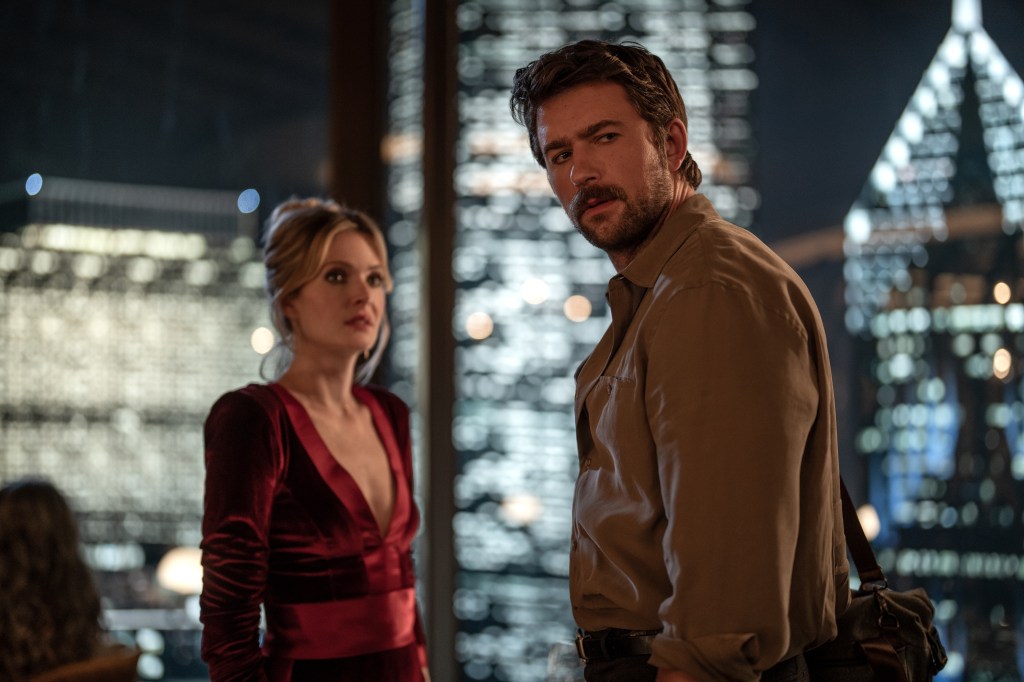
That approach will fly with audiences who like cheesy dialogue that regular people probably wouldn’t say, and movies that take a simple activity like a date and give it some sinister flavour. Landon’s film captures the angst of putting oneself back into the dating sphere by taking single mum Violet (Meghann Fahy) and having her meet up with Henry (Brandon Sklenar) in a highrise restaurant for the first time after 3 months of texting.
Similar to other Screenlife movies that focus on the dangers of screen culture like Searching (2018) or Missing (2023), Landon’s film builds its tension by capturing the modern dread of being watched, of having multiple eyes on you through surveillance or simply using your own surveillance against you. The latter is true for Violet who, after settling in with her date at the dinner table, is told to check her security cameras by her anonymous AirDropper where she sees a masked man in her house with a gun, with the choice being: do as I say or we kill your sister and son (if her first date jitters around what to wear weren’t scary enough, that really complicates things).
(from left) Violet (Meghann Fahy) and Henry (Brandon Sklenar) in Drop, directed by Christopher Landon.
This is where Landon’s film kicks into gear as it wastes no time in building out all of the directions that Violet will have to follow while focusing on keeping her date going as smoothly as possible. Fahy and Sklenar’s dynamic is what the film really banks on to sell the premise, with little actual room to cut to anything beyond the restaurant. There’s also the added element of shifty side-characters, all of whom could be the AirDropper making her life difficult; whether it’s the boisterous first-time waiter, the distant bartender or the Jamie Dornan-looking businessman who can’t seem to stop running into Violet (literally) — Drop is to Knives Out (2019) what mini-golf is to golf… a smaller playing field but just as satisfying.
The title, a play on words, might also describe the shift in pace in the final third, where there is almost a literal drop as the heat intensifies and as plot threads start to come together. For one, Violet literally hangs out of the highrise by a tablecloth. While this final third does feel like it’s been crammed into an otherwise tight screenplay, it gives the film some added momentum, even if the result feels like it gets away from the better part of the build up to it. That said, Drop is clean and will get a chin scratch or two as you try to piece together its puzzle, and proves that you may never know where your next date might take (or drop) you.








 Rating Frames