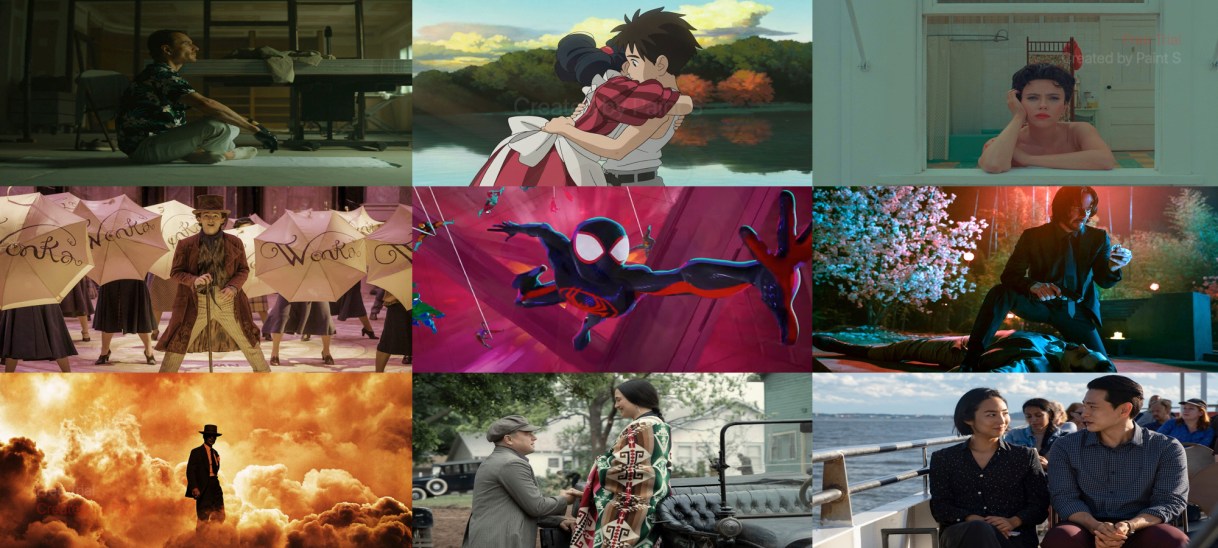
96th Academy Awards: Predictions

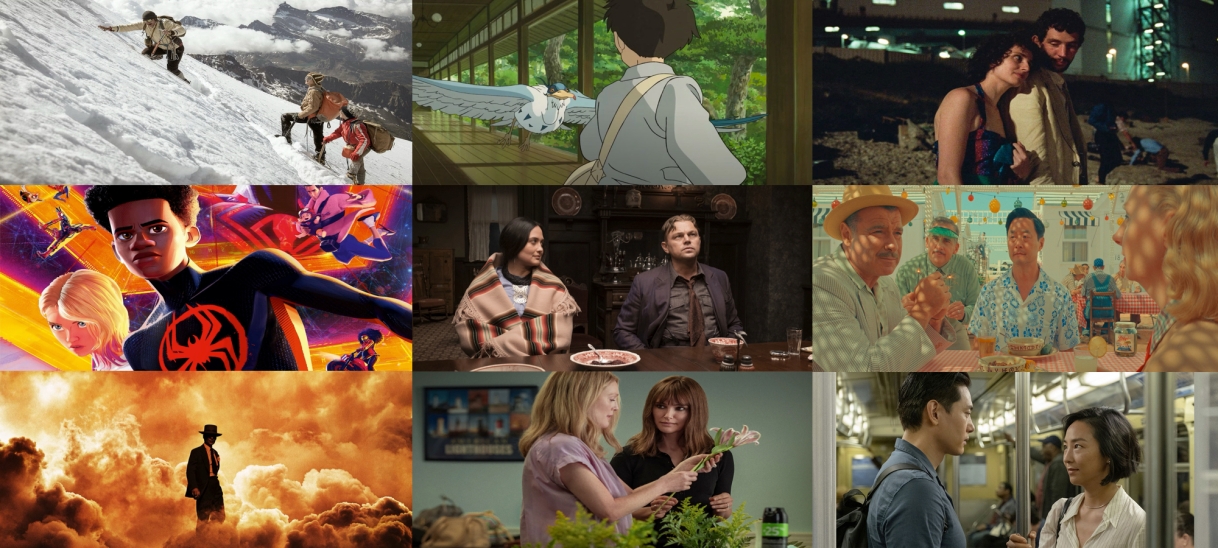
We’re just mere hours away now from this year’s Oscars telecast, and with it, the reveal as to what America’s Academy of Motion Picture Arts and Sciences deems the most outstanding films of 2023.

Continuing a tradition that began two years prior and continued last year, our writers are once again hedging their bets as to which movies and artists will walk home with a coveted statuette.

Read on to reveal the predictions of Arnel, Darcy and Tom for the upcoming ceremony, plus who they’d most like to see emerge victorious.

Best Picture

What will win // What deserves to win

Arnel: Oppenheimer // Oppenheimer

Darcy: Oppenheimer // Killers of the Flower Moon

Tom: Oppenheimer // Oppenheimer

Best Director

Arnel: Christopher Nolan (Oppenheimer) // Christopher Nolan

Darcy: Christopher Nolan (Oppenheimer) // Jonathan Glazer (The Zone of Interest)

Tom: Christopher Nolan (Oppenheimer) // Christopher Nolan

Best Actor

Arnel: Cillian Murphy (Oppenheimer) // Cillian Murphy

Darcy: Cillian Murphy (Oppenheimer) // Cillian Murphy

Tom: Cillian Murphy (Oppenheimer) // Paul Giamatti (The Holdovers)

Best Actress

Arnel: Lily Gladstone (Killers of the Flower Moon) // Lily Gladstone

Darcy: Lily Gladstone (Killers of the Flower Moon) // Lily Gladstone

Tom: Lily Gladstone (Killers of the Flower Moon) // Lily Gladstone

Best Supporting Actor

Arnel: Robert Downey Jr. (Oppenheimer) // Robert Downey Jr.

Darcy: Robert Downey Jr. (Oppenheimer) // Robert Downey Jr.

Tom: Robert Downey Jr. (Oppenheimer) // Mark Ruffalo (Poor Things)

Best Supporting Actress

Arnel: Da’Vine Joy Randolph (The Holdovers) // Da’Vine Joy Randolph

Darcy: Da’Vine Joy Randolph (The Holdovers) // Da’Vine Joy Randolph

Tom: Da’Vine Joy Randolph (The Holdovers) // Danielle Brooks (The Color Purple)

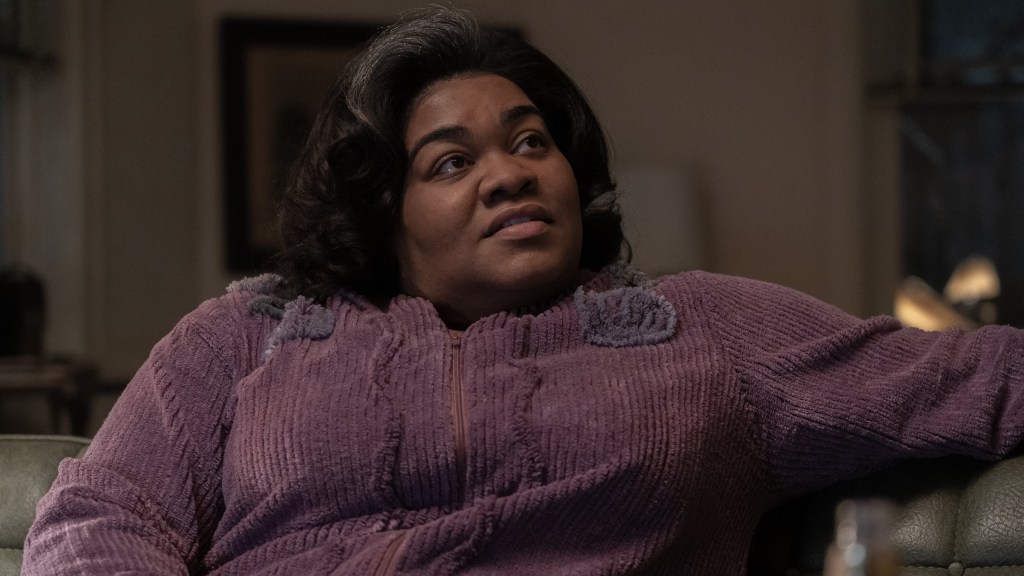
Da’Vine Joy Randolph, nominated for her performance as Mary Lamb in The Holdovers
Best Original Screenplay

Arnel: Justine Triet & Arthur Harari (Anatomy of a Fall) // Celine Song (Past Lives)

Darcy: Justine Triet & Arthur Harari (Anatomy of a Fall) // Celine Song (Past Lives)

Tom: Justine Triet & Arthur Harari (Anatomy of a Fall) // Celine Song (Past Lives)

Best Adapted Screenplay

Arnel: Christopher Nolan (Oppenheimer) // Christopher Nolan

Darcy: Cord Jefferson (American Fiction) // Christopher Nolan

Tom: Christopher Nolan (Oppenheimer) // Christopher Nolan

Best Animated Feature

Arnel: The Boy and the Heron // The Boy and the Heron

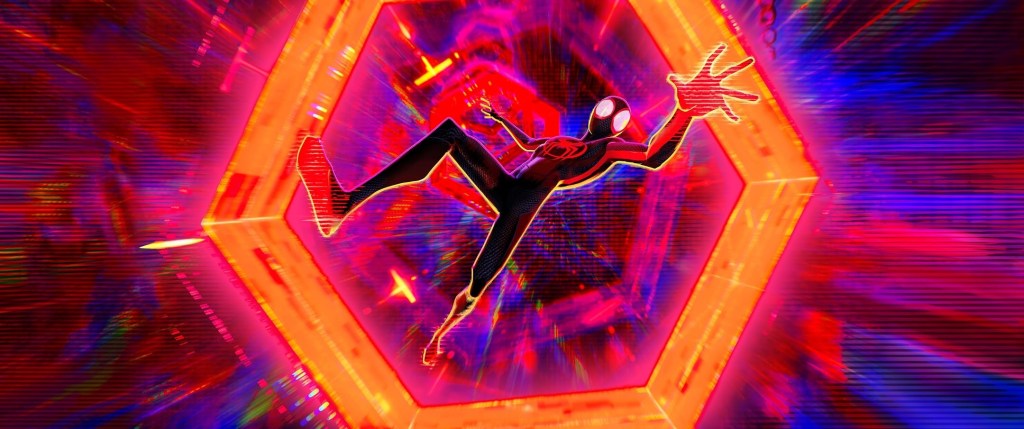
Darcy: Spider-Man: Across the Spider-Verse // The Boy and the Heron

Tom: Spider-Man: Across the Spider-Verse // Across the Spider-Verse

Best International Feature

Arnel: The Zone of Interest // The Zone of Interest

Darcy: The Zone of Interest // The Zone of Interest

Tom: The Zone of Interest

Best Documentary Feature

Arnel: 20 Days in Mariupol // 20 Days in Mariupol

Darcy: 20 Days in Mariupol // 20 Days in Mariupol

Tom: 20 Days in Mariupol

Best Documentary Short Subject

Arnel: The ABCs of Book Banning // The ABCs of Book Banning

Darcy: The ABCs of Book Banning // The ABCs of Book Banning

Tom: The ABCs of Book Banning

Benedict Cumberbatch in The Wonderful Story of Henry Sugar, nominated for Best Live-Action Short
Best Live-Action Short

Arnel: The Wonderful Story of Henry Sugar // The Wonderful Story of Henry Sugar

Darcy: The Wonderful Story of Henry Sugar // The Wonderful Story of Henry Sugar

Tom: The Wonderful Story of Henry Sugar

Best Animated Short

Arnel: War is Over! Inspired by the Music of John and Yoko // War is Over! Inspired by the Music of John and Yoko

Darcy: Letter to a Pig // War is Over! Inspired by the Music of John and Yoko

Tom: War is Over! Inspired by the Music of John and Yoko

Best Original Score

Arnel: Ludwig Göransson (Oppenheimer) // Ludwig Göransson

Darcy: Ludwig Göransson (Oppenheimer) // Ludwig Göransson

Tom: Ludwig Göransson (Oppenheimer) // Ludwig Göransson

Best Original Song

Arnel: “What Was I Made For?” (Barbie) // “What Was I Made For?” (Barbie)

Darcy: “What Was I Made For?” (Barbie) // “I’m Just Ken” (Barbie)

Tom: “What Was I Made For?” (Barbie) // “Wahzhazhe (A Song for My People)” (Killers of the Flower Moon)

Best Sound

Arnel: Oppenheimer // Oppenheimer

Darcy: Oppenheimer // The Zone of Interest

Tom: The Zone of Interest // Oppenheimer

Best Production Design

Arnel: Barbie // Poor Things

Darcy: Barbie // Poor Things

Tom: Barbie // Poor Things

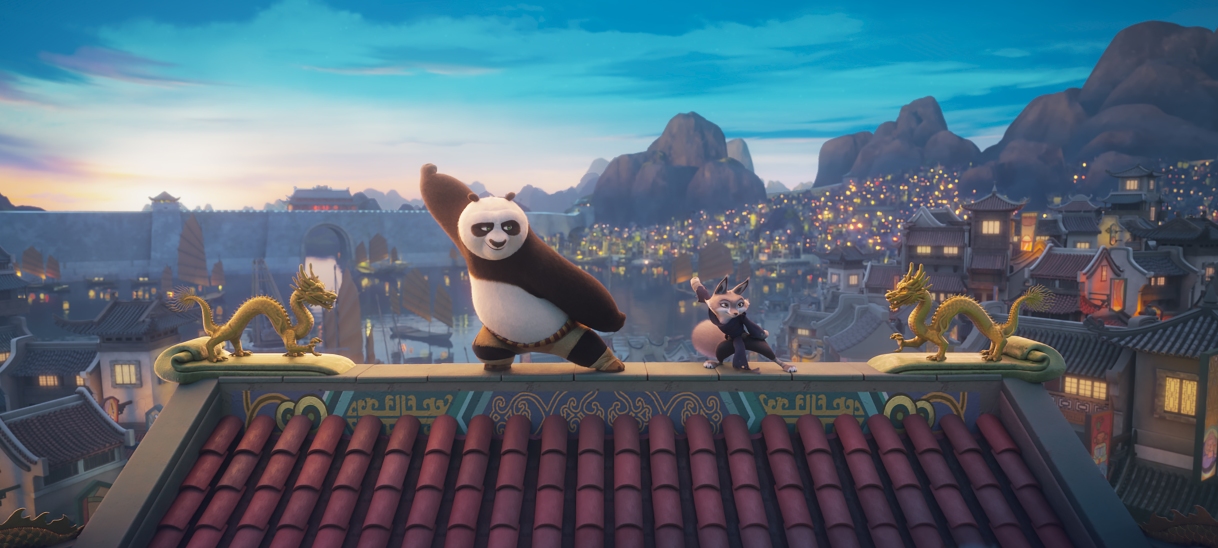
Greta Gerwig’s Barbie, nominated for Best Production Design
Best Cinematography

Arnel: Hoyte van Hoytema (Oppenheimer) // Hoyte van Hoytema

Darcy: Hoyte van Hoytema (Oppenheimer) // Rodrigo Prieto (Killers of the Flower Moon)

Tom: Hoyte van Hoytema (Oppenheimer) // Hoyte van Hoytema

Best Makeup and Hairstyling

Arnel: Poor Things // Poor Things

Darcy: Maestro // Poor Things

Tom: Maestro // Poor Things

Best Costume Design

Arnel: Jacqueline Durran (Barbie) // Jacqueline Durran (Barbie)

Darcy: Jacqueline Durran (Barbie) // Jacqueline Durran (Barbie)

Tom: Jacqueline Durran (Barbie) // Holly Waddington (Poor Things)

Best Film Editing

Arnel: Jennifer Lame (Oppenheimer) // Jennifer Lame

Darcy: Jennifer Lame (Oppenheimer) // Jennifer Lame

Tom: Jennifer Lame (Oppenheimer) // Jennifer Lame

Best Visual Effects

Arnel: Godzilla Minus One // Godzilla Minus One

Darcy: Godzilla Minus One // Godzilla Minus One

Tom: The Creator // Guardians of the Galaxy: Vol. 3

Dune: Part Two: A Sequel Worthy of Joining the Mount Rushmore of Sci-Fi Blockbusters

Rating: 4.5 out of 5.

Dune: Part Two preview screening provided by Universal Pictures

Few working directors have the capacity to deliver such audacious tentpole features like George Lucas and Sir Peter Jackson, and even fewer are able to do so authentically while ensuring that the end result is nothing short of spectacular. But that’s exactly what Denis Villeneuve has done with Dune: Part Two, his sequel to 2021’s Oscar winning Dune: Part One.

To call Dune: Part Two anything other than a generation defining Sci-Fi would be to undersell just how monumental an achievement the director has on his hands. Where Part One focused more on methodical world-building and planting the narrative seeds of Frank Herbert’s iconic novel (some might say in a much more trimmed down, thin fashion than expected), Part Two is all about scale and upping the ante.

And it picks up almost immediately after the first film, where Paul Atreides (Timothee Chalamet) has found his way to the Fremen and is working towards building their trust, learning to assimilate in their ways, and realising his potential as a Messiah. There is seemingly more pandering this time around, with the first film having the skeleton of what is sure to become a trilogy, established, but lacking that extra flesh for why we should care about these characters, the Kwisatz Haderach or any of the novel’s deeper lore.

The care for those aspects all starts with Paul though, with his plight becoming increasingly refined by screenwriters Villeneuve and Jon Spaihts, who inject more oomph into the script. Paul is much more nuanced here, having had to grow up faster than he would have liked, especially now that the Harkonnens have reoccupied Arrakis (or Dune) and are actively pursuing spice. In turn, time is of the essence for Paul and the Fremen, especially as the Harkonnens edge closer to their hidden locations.

(L-R JOSH BROLIN as Gurney Halleck and JAVIER BARDEM as Stilgar in Warner Bros. Pictures and Legendary Pictures’ action adventure “DUNE: PART TWO,” a Warner Bros. Pictures release. (PRESS KIT)

As a result the film places greater attention on the interplay between Paul and the Fremen. Fremen leader Stilgar (Javier Bardem) has become the guiding voice of reason who echoes the idea that the chosen one has arrived. He puts Paul through his paces via a series of trials that test out whether he truly lives up to all that was foretold. Whether that’s venturing out into the desert to overcome its harshness, battling the Harkonnens as they attempt to harvest spice, or riding a Shai-Hulud without guidance —there’s not shortage of incredible individual moments that both propel the narrative forward but also leave one in awe every time.

It’s in these moments that Part Two really shines and speaks to Villeneuve’s eye for detail and scale. It helps that the returning Greig Fraser (who won an Oscar for his cinematography for the first film) once again captures Dune’s deceptively beautiful vistas on a macro level, which allows that scale to shine through. Everything on Dune looks blown up in size which works to its advantage in creating this look of endlessness and enormity, a creative decision that speaks to the gravitas of the journey awaiting Paul. It’s all the more crystallised in the vibrancy of the desert colours, which further evoke that deceptive beauty of a world that will show you no mercy and swallow you whole.

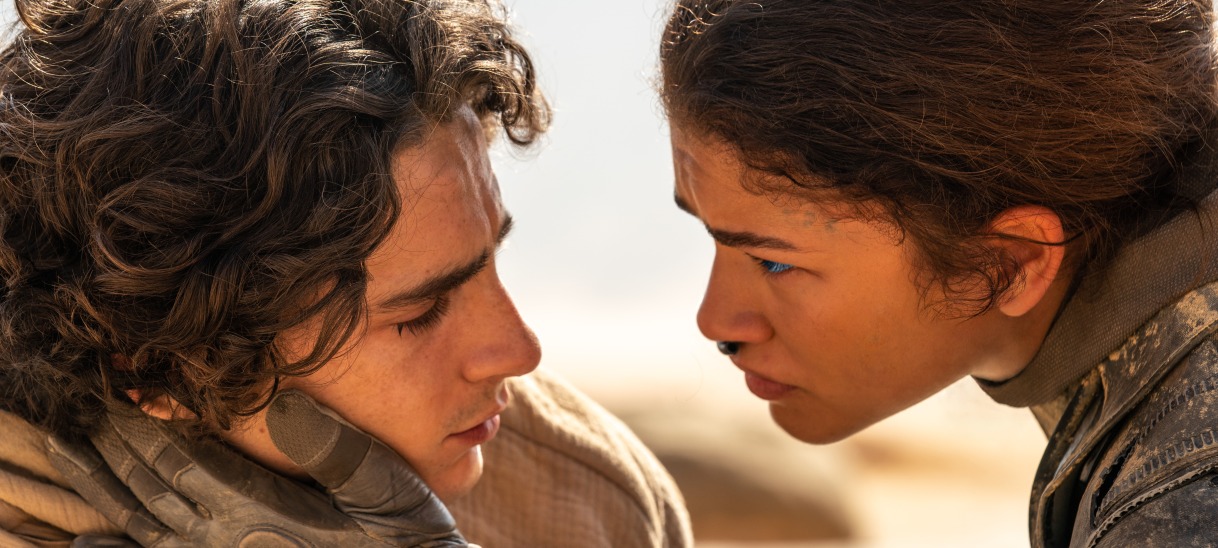
For Paul, the only beauty that isn’t deceptive is that of young Fremen warrior, Chani (Zendaya). She helps him through his series of trials while continuing to hold her own as a character of interest that isn’t just sidelined to play second fiddle as a muse. Often she claps back against the popular opinion of Stilgar, and refuses to fall privy to what she sees as a cause that doesn’t exactly serve the interests of her people.

In fact, most of the female characters in Part Two play crucial roles in the film’s events, with Paul’s mother Jessica (Rebecca Ferguson) embracing her destiny as the Fremen’s Reverend Mother. Princess Irulan (Florence Pugh) has a much smaller part in proceedings as the Emperor’s (Christopher Walken) daughter, serving more as a springboard for the plot and entry point to its politics rather than anything else, which isn’t a problem per se.

A scene from Warner Bros. Pictures and Legendary Pictures’ action adventure “DUNE: PART TWO,” a Warner Bros. Pictures release.

On the flip side are the Harkonnens, with the Baron (Stellan Skarsgård) returning in his hauntingly enlarged state alongside his incompetent nephew Rabban (Dave Bautista) who is continually being outsmarted by the Fremen as he tries to gather spice on Arrakis. But it’s Austin Butler’s portrayal as the Baron’s nephew, Feyd-Rautha, that is a particular standout; he comes across across as both raw and subtle, at once menacingly distant yet eerily close.

When the Fremen do lock horns with the Harkonnens, the result is always jaw-dropping set pieces with well choreographed fights that are supported rather than supplanted by those unique visual effects. The battles are also much easier on the eye compared to a majority of recent blockbusters, in that the action is discernible rather than messy. To top it off, Hans Zimmer’s score is also complimentary rather than excessive, with his use of drums and sharp crescendos aptly suiting the various cultures and moments (I had literal goosebumps at moments as the soundscape reverberated through my seat and being).

If there was to be a shortcoming it would be that the closing sequence rounds off rather abruptly. At various points throughout the film I couldn’t help but wonder how Villeneuve would bring everything together as the finish line was becoming clearer and closer to the end. However, he had always said that this was a continuation rather than a direct sequel, and that aspect is felt, even though audiences might be left wondering by the end —with some threads left hanging.

That said, there are few directors who can create a spectacle at such a scale while leaving their own mark and remaining faithful to the source material. Dune: Part Two takes the best parts of the second half of Herbert’s novel —allegory and all— and serves them up in a digestible, refined and spectacular result that is reminiscent of some of the best sequels (or continuations) in cinema history.

Dune: Part Two opens nationally from the 29th of February.

The Sound of Christopher Nolan Movies Have Changed

With Christopher Nolan’s Oppenheimer (2023) accumulating a swathe of awards wins and nominations, including its recent 13 Oscar nominations which are all most likely to result in wins now is the opportune moment to look through the last three features of one of Hollywood’s most influential 21st-century auteurs, in particular, the use of sound in these films.

Sound has always been a primary focus in the work of Christopher Nolan, a stylistic and philosophical choice in filmmaking that has been placed at the forefront of storytelling choices since 2017’s Dunkirk, the filmmaker’s towering achievement. This forward approach to storytelling through sound carried through to the controversial Covid defining feature Tenet (2020), a bombastic and jittery experiment in how much a celebrated auteur can push an audience to their breaking point. Questions of poor mixing and dialogue decisions became the opening remarks to the film’s obituary, offhand jokes that displayed a level of creative freedom that felt a necessary evolution for modern Hollywood’s straightest shooter. Gone were the days of lifeless exposition scenes, music, and sound design cues that drew comparisons to photocopies of Michael Mann and Stanley Kubrick, with Nolan finally settling into a dynamic cinematic experience that no one in the industry can be compared to.

In the language of cinema, sound is the primary form of subjectivity. Diving into the mind of a character is profoundly more effective going between their ears than their eyes, with the right mixture of score and sound design achieving a level of symbiosis with an audience that can last a lifetime. These are ideas Christopher Nolan has been building towards in recent features, with his latest, Oppenheimer, his landmark achievement in cinematic sonic storytelling, more than likely take home multiple Oscars including best score and sound. It is his greatest film to date through its culmination of skills the revered director has accumulated over the years.

Sonically, these three films are abundantly similar even though Nolan changed several collaborators between Dunkirk and Tenet, mostly a result of scheduling issues with Denis Villeneuve’s Dune (2020), but perhaps also an indicator of a filmmaker’s style shifting as his sensibilities develop. Even though revered sound designer Richard King has worked with Nolan since The Prestige (2006) — netting himself three of his four Oscars in the process — his approach has clearly adapted alongside the filmmakers shifting ideas on how a blockbuster film can sound and how it can challenge and overwhelm an audience’s senses. 

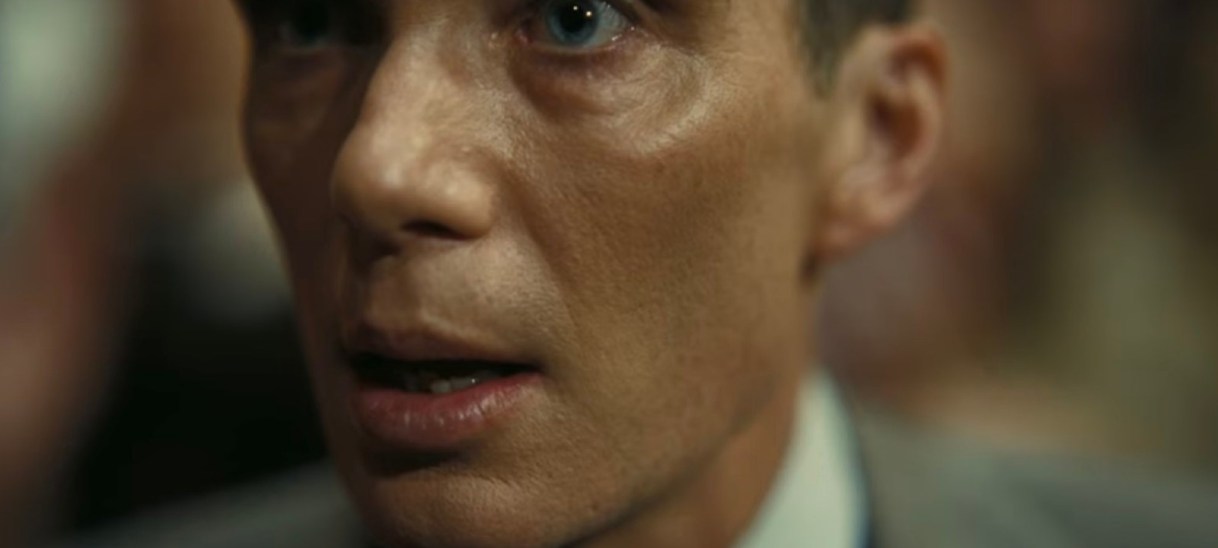
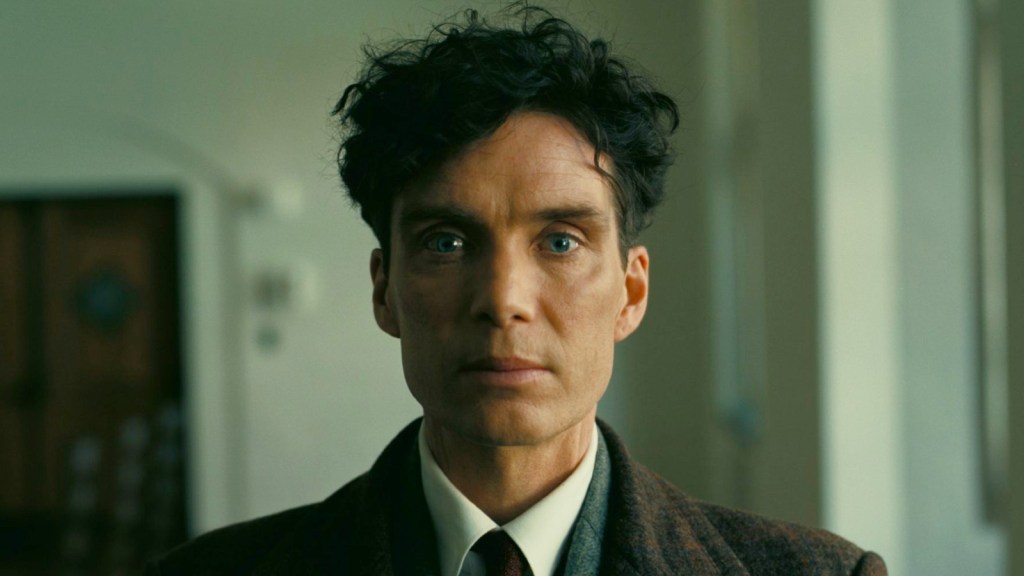
Cillian Murphy in Oppenheimer.

Before this shift in sonic philosophy there was Interstellar (2014), Nolan’s scientifically precise sci-fi sentimentalist epic. The film has a large fanbase, with many viewing it as the auteur’s best, but its flaws of flat character archetypes floating along overly contorted plots that have plagued many a Nolan script felt like a true nadir, ushering in this new era which has opened up his style and filmmaking in exciting ways. Sound in Interstellar is used more as an absence, to create moments of awe while still maintaining the authenticity of muted space travel. There are still wonderful moments of sound however, with Hans Zimmer’s iconic score and Cooper’s (Matthew McConaughey) act of grounding himself on Earth when in orbit through a simple act of listening to the sounds of nature through headphones. What lets the film down ultimately is Nolan’s over reliance on dialogue to explain concepts he was executing wonderfully already, muting the emotional swells at every turn, particularly in its lopsided final act. 

In cinema, dialogue usually gets placed on a separate physical (in a mono track in a separate speaker in the middle of the screen) and ideological track to music and sound design for increased clarity, but this mode of thinking has shifted for Nolan since Dunkirk. In the film, King and Nolan decide to democratise dialogue in the cinematic hierarchy, allowing the full breadth of audio to translate the stories being told. This approach challenged audiences’ ears, a rarity in American cinema, especially large-scale studio films, that should be commended even if you don’t agree with the result.

This is also where Nolan’s evolution as a screenwriter starts to deviate in strange and compelling ways after Inception (2010) and Interstellar. With Dunkirk, there is little characterisation or dialogue in general, with actors like Mark Rylance and Tom Hardy playing archetypes that give way to the overwhelming war narrative they find themselves trapped within. The film, now alongside Oppenheimer, is Nolan’s greatest cinematic achievement as it highlights all of his talents as a visceral filmmaker while avoiding all of his classic pitfalls: female character punishments as motivation for male characters, over-explaining concepts, and basic protagonist arcs based on core American archetypes. Nolan’s films have now become more akin to cinematic symphonies, where the artistic goal is a full sensory experience, guided through sound, to tell a simple yet engaging story.

Robert Pattinson and John David Washington in Tenet.

In Tenet, John David Washington’s character is literally called Protagonist, a nod of self awareness that allows the kinetic energy to overwhelm the audience instead of attaching ourselves to any characters, a wild filmmaking decision that works as a creative exploration in audience engagement, one that ultimately creates a hard ceiling for the film’s quality overall. Make no mistake however, there is not an absence of expository dialogue in the film. In fact, the film is mostly expository scenes with very little room given to characterisation or emotionality, but it is in the delivery method of these dialogue dumps that expresses to an audience that the words being said are only part of what is being portrayed in the moment. In understanding Nolan’s creative decision making with Tenet, there is no better scene than Neil’s (Robert Pattinson) walkthrough of the freeport before the heist. 

With the dial cranked to eleven with Tenet, Nolan rolled back these experimental concepts of cinematic sound and narrative to a surprising sweet spot that will see him recognised by his peers at the Academy Awards. Oppenheimer‘s dialogue is stickier than his previous two films, brandishing the weight of historical record to great effect. The film is clearly detailed in its research from this time, taken often from the book American Prometheus by Kai Bird and Martin J. Sherwin that the film is adapted from, which has allowed Nolan to ground the reality of the story, opening up space to create this vivid exploration in subjectivity and purpose, led through sound. Oppenheimer’s dialogue is not positioned on the sonic field as liberally as it is in Dunkirk or Tenet, valuing the historical accuracy of the people and events involved. It is, however, greatly influenced by the exploration Nolan and King took across those films, landing in a Goldilocks zone of sonic potency that is sure to define his future filmography.

Outside of Memento (2000) with its deliberately unreliable protagonist, all of Nolan’s lead characters have clear, defined minds that an audience can attach themselves to and connect with, until J. Robert Oppenheimer, a notably obtuse and withholding historical figure that even his closest friends and allies struggled to get inside the mind of. In Oppenheimer, the brilliant music and sound design allow us an entry point into an artist’s interpretation of this challenging mind through deep subjectivity, ideas that Nolan has never felt comfortable exploring until now.

Tom Hardy in Dunkirk.

It is impossible to talk about the relationship Nolan has with sound without delving into how music is used in his films, something that has also expanded in recent years. With a clear allergy to song cues, Nolan views the use of music and score like an opera, crashing waves that hurdles an audience towards the rocks of the drama.

In Dunkirk, much was made of Nolan and Zimmer’s collaborative writing through their mutual interest in the sonic phenomena of Shepard tones as both a film score and script writing exercise. In brief, Shepard tones are a phenomenon where a bass frequency either ascends or descends alongside another tone an octave high which creates an audible illusion of a perpetually ascending or descending sound. Zimmer used this as a jumping-off point for his tension-filled score, with Nolan using the Shepard Tone concept in line with the three intercut narratives to give the audience a similar sensation of perpetual movement and tension. At the time this was a radical approach to blockbuster filmmaking to offer little respite to an audience’s eardrums, but has now developed into Nolan’s post-Interstellar style.

Like Nolan, we will work nonlinearly here in regards to Ludwig Göransson’s work with the filmmaker, as his film score for Oppenheimer is in much closer discussion with Dunkirk than Tenet, his first collaboration with the director. Perhaps bluntly but no less affecting, Göransson’s score focuses on descending pieces in a work of musical allusion to the dropping of the bomb. Göransson’s piece “Can You Hear The Music” defines the film, with its swirls of strings, horns, and synths, beginning in a swell of glorious ascension, before plummeting down through descending scale progressions that are an inversion of the ascending progression. The piece also changes tempo up to 21 different times (from 180bpm to 350bpm!) in a deceptively short piece of music, placing us within the manic Neuron sparks of Oppenheimer’s brain that everyone in the film and in the audience is trying to match the wavelength with. Of all the incredible technical achievements that define the success of Oppenheimer from the editing, cinematography, performances, and production design, perhaps the most impressive artists involved in the production are the violinists that beautifully performed this piece in one take. The stuff of legends.

The film’s near-constant score which focuses on descending scales, accentuates the creeping dread that permeates the fringes of the film leading up to the Trinity test. Most of this frenetic opening two hours operate as a whirlwind of character establishments in tight office spaces and classrooms that can at times feel like Nolan directing an episode of Genius (2017) through the lens of his and Tenet editor Jennifer Lame’s emerging house-style. Where Nolan matches Göransson’s ominous tone is fascinating. With an early scene of Oppenheimer injecting cyanide into his Cambridge professor Patrick Blackett’s (James D’Arcy) apple (a disputed event in the man’s complicated life), Nolan is highlighting the undercurrent of malice and potential valuation of those that hinder his progress in his being that matches the tone set from the outset by Göransson’s score.

Cillian Murphy in Oppenheimer.

In Göransson’s first project with Nolan, Tenet, the composer centred his score on a layering of guitars, altering its structure through time shifting and inversion, mirroring the film’s text that has become more and more crucial to Nolan’s filmmaking process. This shift in ideology can be felt more prominently in the differences between Göransson’s work on Tenet and Hans Zimmer’s work on Interstellar. While Zimmer’s work on Interstellar is perhaps some of his best compositionally (Cornfield Chase is a masterpiece), it often soars above the film instead of permeating its core. Nolan asked the famed composer to write pieces with clear restrictions on information about the narrative which certainly allowed Zimmer to write freely, but in contrast to the following features, lacks that cohesion that allows those films to thrive.

In Oppenheimer, what allows the sound design to weave seamlessly throughout the continuous score is Göransson’s removal of any percussion. By removing this floor, King and the sound design team were able to oscillate between stabilising and destabilising the audience, matching the mind of Oppenheimer scene to scene as it is splayed out on the brilliant Cillian Murphy’s anguished face, at will. King and Göransson have a tremendous cinematic chemistry, striving for the mountainous peak of Walter Murch and David Shire in the masterpiece The Conversation (1974).

Blending sound design with score, there are sounds and music compositions that emit a mechanically demonic presence, with its metallic jittering edges and sub-bass heartbeat, which are used in the scenes leading up to the Trinity test sure to be a defining moment in Nolan’s storied career that becomes an overwhelming experience, titled “Ground Zero” in the soundtrack.

The explosion itself, the culmination of the previous two hours of manic motion of montage editing, near constant score (the first non scored scene doesn’t arrive till around the one hour mark), and propulsive soundscaping, is shown in near silence, opting instead for the introspection achieved through Oppenheimer’s anxious breaths. What else could be said in a seismic moment like this? Across three films, Nolan pulverises you with an almost constant barrage of overwhelming sound, but in this critical moment, he asks for your own moment of introspection. It’s impossible not to get swept up in the awe felt by the scientists at Los Alamos as a years-long theoretical exploration illuminates the desert sky in crystal clarity, but that feeling morphs into a solemn understanding of what this moment will mean for the rest of the world. In a film of chain reactions, this central colliding moment needed near silence, until the reality of its impact came rushing forwards in a world defining blast. No moment better captures the evolution Nolan has made as a filmmaker and storyteller in these past 10 years, and is why he will be rewarded come the Academy Awards.

Bob Marley: One Love: A Basic Biopic that Never Really Hits its Notes

Rating: 2.5 out of 5.

Bob Marley: One Love preview screening provided by Paramount Pictures

It’s telling that a film showcasing one of music’s most audacious artists who refused to ‘play it safe’ is the exact opposite in its approach to capturing his significance to history. Reggae icon Bob Marley is just that, an icon, which is why Reinaldo Marcus Green’s Bob Marley: One Love (2024) should feel like more than just a surface level recount of a trailblazing artist.

Unfortunately this exact problem has plagued a majority of recent films that have focused on iconic musicians. Film’s like Bohemian Rhapsody (2018), Elvis (2022) and Rocketman (2019) are all guilty of playing it too safely when it comes to taking a historical figure and adapting their story from a fictional lens. These film’s all ultimately lean too far into accuracy (or their version of it) at the expense of deeper character drama, a nurtured plot and an understanding that every nook and cranny of the musician’s life doesn’t need to be shown (we’ve got Wikipedia for that).

One Love falls into that category where it never really tells you more about the subject beyond what a simple google search might. If we consider A Star is Born (2018), Walk the Line (2005) and even The United States vs. Billie Holiday (2021), all of these films said more about the characters at their core through the very fact that they understood how to tow the line between fiction (of which A Star is Born is completely) and utilising drama to create tension ––– and that’s all while never losing sight of the protagonist at their core.

Marcus Green’s film picks up at a point in Marley’s (Kingsley Ben-Adir) life when he’s already reached a level of fame that has him ruffling a few political feathers. It’s a commendable point in his life to start at (in the mid-70s) rather than tracing the complete rags-to-riches story like some of the aforementioned titles.

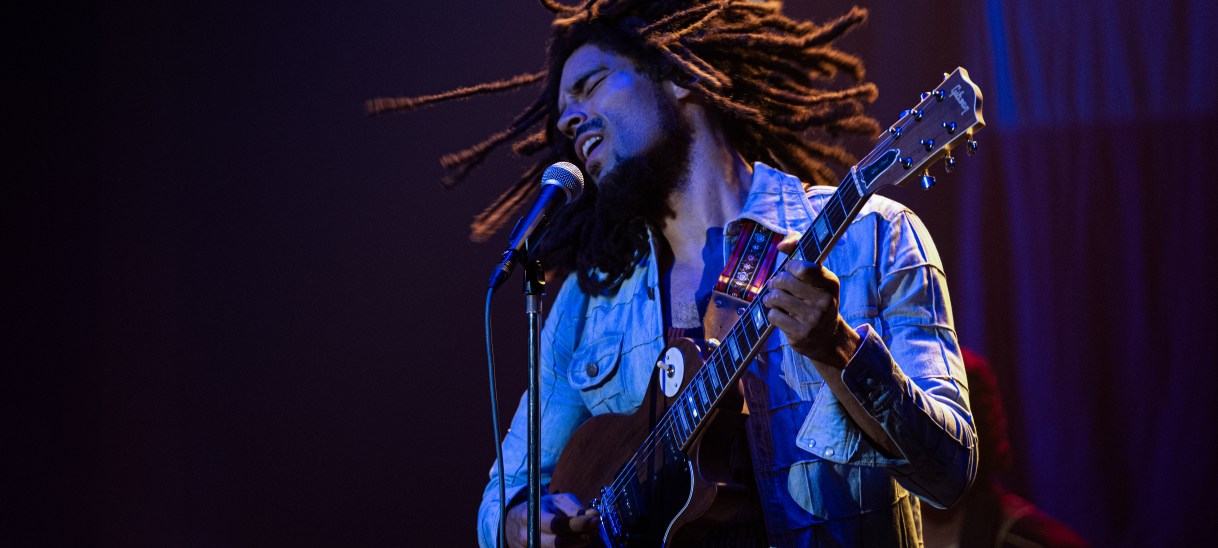
Kingsley Ben-Adir as Bob Marley and Lashana Lynch as Rita Marley in Bob Marley: One Love from Paramount Pictures.

After being shot in an attempted murder, Marley is advised to leave Jamaica for a period of time while tensions ease at the top. This is much to his dismay since his wife Rita (Lashana Lynch) was also shot and narrowly avoided death. It proves to be a worthwhile move, with Marley finding inspiration in the UK music scene after arriving in London, and eventually releasing albums like Exodus which were undercut with political commentary and offered a twist on the sort of reggae beat he had become accustomed to in prior years.

If there’s one saving grace in a film about an iconic musician, it’s the music itself. There’s no shortage of hits that are played throughout like War, Exodus, I Shot the Sheriff, Three Little Birds and more. Fortunately they’re not showcased in the same way as the hits of Queen in Bohemian Rhapsody where they were seemingly devised on a whim and almost purely exist in that film for nostalgic purposes rather than to propel the narrative forward.

The film rounds off to a close after some 95 minutes which is a silver lining at a time where most overstay their welcome. This film doesn’t overstay its welcome and will no doubt be lopped up by an audience familiar with and intrigued by, Marley’s story. Should there have been a greater focus on accentuating that internal dialogue and sentiment Marley had towards the political situation in his country that ultimately led to his performance of unity at the One Love peace concert? Definitely. Ultimately the film gets you to that point, but the result is more of a split, cobbled-together look at key milestones rather than a deeper dive into a man who united a nation.

Bob Marley: One Love opens nationally from the 14th of February.

Ferrari: Michael Mann’s Measured Portrait of Enzo Ferrari is one to Savour

Rating: 4.5 out of 5.

Driven, work-oriented men who struggle to balance the personal with the professional and are often trapped by their own desires has always been Michael Mann’s bread and butter. In Ferrari (2023), his latest foray into biopics after Ali (2001), Public Enemies (2009) and to a lesser extent, The Insider (1999), he tackles automotive titan Enzo Ferrari. A figure notorious for his desire to win at all costs, Ferrari fits perfectly into the book of self-destructive but purposeful protagonists that Mann has been exploring.

A perfectionist professionally but a loose cannon personally, Enzo Ferrari (Adam Driver) was a multi-faceted man, with his mind ever so focused on innovating and winning races but also ever so muddled when it came to his marriage and family life. Mann wastes no time in connecting those two worlds, introducing Ferrari (after a short montage of recreated black-and-white footage of a young Enzo behind the wheel) slipping out of the home of his mistress Lina (Shailene Woodley), slowly pushing a car downhill before jumping into it and speeding off. It’s a subtle introduction but helps establish what follows as a deeper look beneath the bonnet.

Where he’s speeding off to is his blindsided, somewhat estranged wife Laura (Penelope Cruz) whom he shares his struggling business with as well as a deceased son, Alfredo, whose death is a trigger point Mann continually comes back to over the course of the film to access that hidden internal layer that Enzo tries to hide.

It makes sense to ground the film to a particular moment in time rather than simply treating this as a by-the-books, cookie cutter biopic. The moment he chooses here is in 1957, with Enzo continuing to grapple with the loss of his son while living a double life with another woman and a second child, Piero. It’s a period in time where the Ferrari brand was at risk of collapse and the Mille Miglia race was a way for Enzo to clap back at doubters and hopefully, debt.

Mann is an expert at extrapolating key info from his subject matter, something Driver attests to in a Collider interview by stating that Mann’s characters “internal lives are so rich and so specific” and that “all of his notes are about character and internal life”. And Troy Kennedy Martin’s screenplay, based on Brock Yates’ Enzo Ferrari: The Man, the Cars, the Races, the Machine, offers enough legroom for Mann to build out the sort of bubbling tension that Enzo is harbouring over the course of the film where you feel that at any given moment, something will burst as it often does in his films.

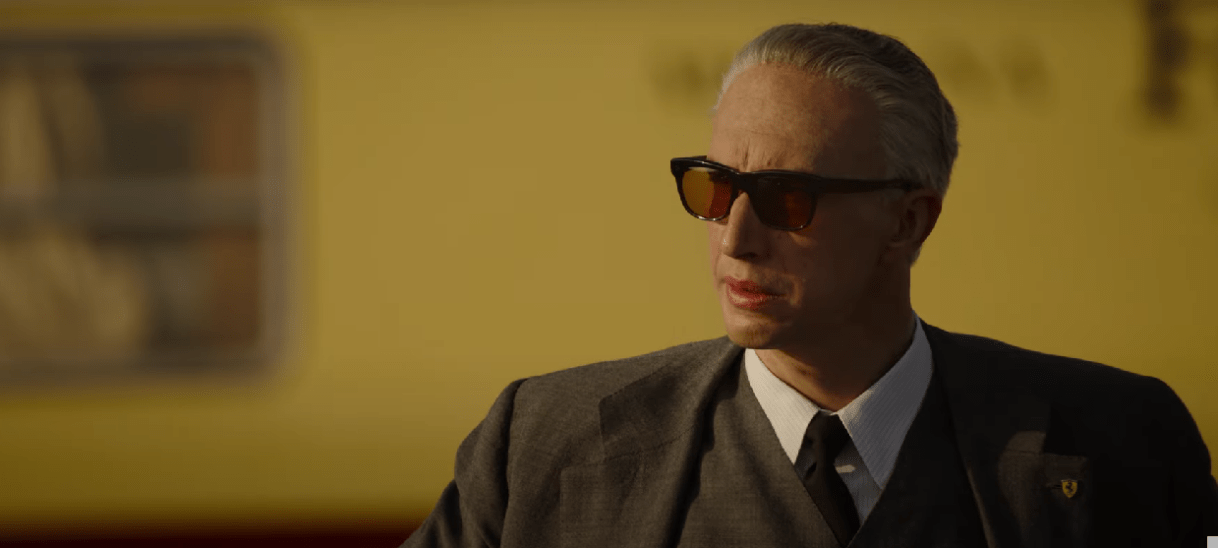
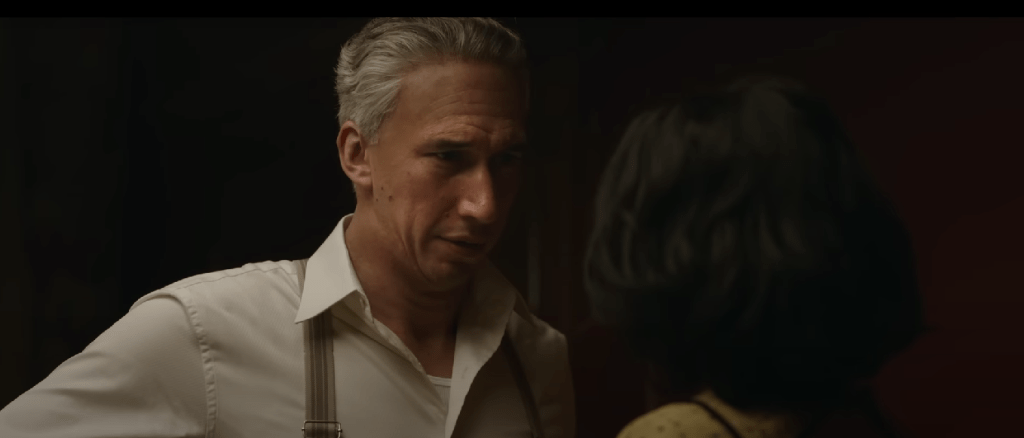
Adam Driver is Enzo Ferrari in FERRARI, directed and produced by Michael Mann

As mentioned, the Mille Miglia feels like the Hail Mary for Enzo to redeem his brand, and across the film he tests cars around a track with professional drivers while reminding them that it’s a privilege to race in one of his cars. It’s in these very transaction-like conversations that his ruthlessness and hunger to win comes through, with Driver playing the Commendatore (as he was known) with a composed edge but towering presence as though he was truly a force of nature in this world. Not to take away from Driver, but at times his performance feels a little less accessible than some of Mann’s other characters who share similar traits but often have a more engaging charisma.

It’s in the more personal exchanges he has with those he cares about that the true duality of his life comes through. Laura matches him in bluntness, with the loss of their son evidently creating a rift between the two that’s left them stagnant in their marriage. Cruz’s performance here is up there with the best of the year as she plays Laura as a woman on the cusp of losing it, with her dark, hollow eyes and blank expressions evoking the rawness she stills feels for her son’s death and distance from her husband.

While the film is more of a melodrama in its muted moments, it wouldn’t be a Mann film without some thrills and spills. The racing sequences, including that of the track tests and the Miglia itself, are shot expertly by cinematographer Erik Messerschmidt with cameras situated in seemingly every part of the car except the drivers laps. The sound-design adds to the flair of the races and the sense of foreboding doom as the cars rocket around turns and narrowly avoid knocking into each other.

The closing sequence is one of the most confronting of Mann’s career and definitely of the last year, with a crash that kills nine onlookers at the Miglia. Sure the CGI feels a bit jarring in a film that focuses on practical effects for its majority, but the moment itself and Enzo’s reaction afterwards speaks to the coolness that he projects where things happen in this line of work and you move on, because that’s what winners do, no matter the cost.

Ferrari is in theatres now.

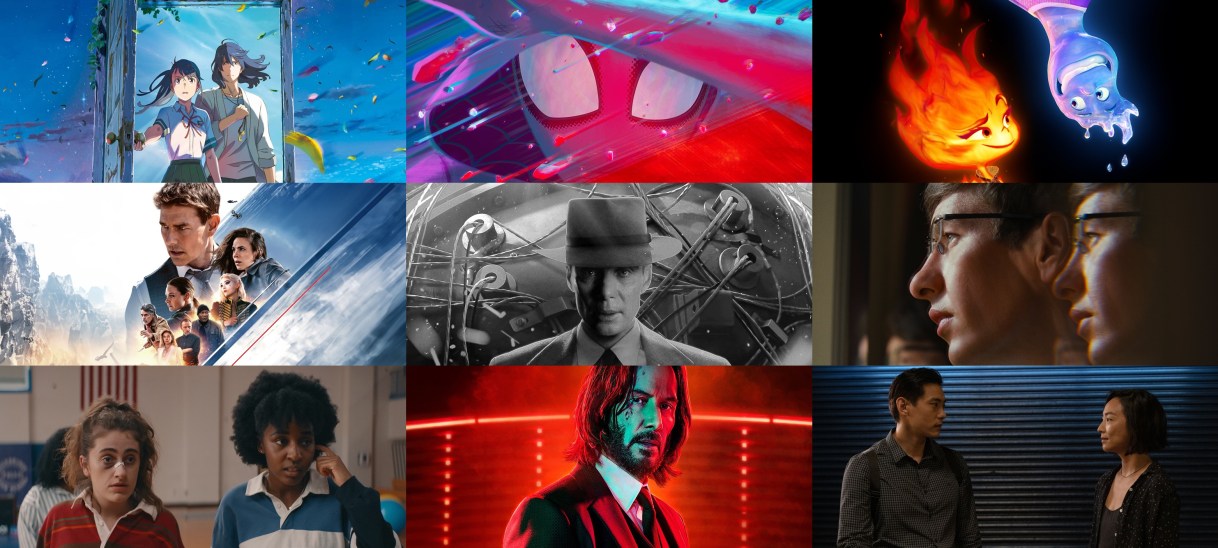
Best of 2023: Arnie’s Picks

With 2023 drawing to a close, Rating Frames is looking back at the past twelve months of cinema and streaming releases that have come our way. In the third of our series of articles, Arnel Duracak is taking a look at his ten favourite films of the year that was.

In what was a year jam-packed with incredible film titles, a myriad of legendary directors continuing to deliver the goods, newcomers making their mark, and strikes that led to several delays for other anticipated releases, I only wish that I had spent more time in front of a silver screen.

Alas, I ventured to Europe for a good few months which limited my access to key titles early on in the year (though I did see Michael Mann’s 1995 classic Heat at London’s Prince Charles Cinema), but I was lucky to be able to witness some of the year’s best films at the cinema in the second half of 2023. There have been multiple other titles that I wish I had seen before the end of 2023 –––The Holdovers, Poor Things, Ferrari (which I will be reviewing for the site soon), to name a few––– but nonetheless I am satisfied with what I was able to see. Here’s to a 2024 with more of the same, happy watching!

10. Wonka

As I was looking at my ongoing 2023 ranking list, it turns out Wonka made the cut.

While I am a bit surprised, this film felt like the most deserving 3.5 star film from 2023 for me. It neither rocked my socks nor did it live up to the brilliance of Paul King’s modern classic Paddington 2 (2017), but my bar was set rather low for this title if not for the fact that it felt like an unnecessary foray into the background of one of cinema’s strangest characters, then definitely because I just wasn’t all that interested (Darcy will attest to that).

But being a King and Simon Farnaby screenplay, Wonka felt both fresh and unique, owing to the fact that it was imbued with the zany British humour that Paddington 2 excelled at, had an all-star cast who thrive as misfits and are just a joy to be around, contained some catchy musical set pieces (‘Scrub Scrub’ being a particular highlight), and never felt like it was trying to follow in the footsteps of the other two Willy Wonka films.

My only gripe would be that Wonka himself was less interesting as a character than any of the side characters. Whether or not that was because Chalamet’s performance was a bit overly boisterous or because 90% of the core cast meshed well with the British comedy by comparison, but Chalamet’s no Gene Wilder here (maybe for the best).

9. Oppenheimer

In what is perhaps Christopher Nolan’s most accomplished film for many (2008’s The Dark Knight still takes the cake for me), Oppenheimer is a magnetic feat in filmmaking that only Nolan could deliver at such a scale.

I’ve never been a big fan of the way that he writes dialogue, and Oppenheimer isn’t different in that regard for me as it tries to balance more heartfelt, interpersonal connections with more heavy handed themes and technical language (ultimately tailspinning into some less than convincing, at times eye-rolly back-and-forths). However, for a three hour film that is about one of history’s darkest periods, it flows rather well with crisp editing, excellent performances all around, a moody but effective score, and direction from Nolan at the peak of his powers. The film’s climax is one of the most cinematic this year and once cements Nolan’s status as the king of IMAX.

At the time of writing, it’s been about an hour since Oppenheimer swept up the Golden Globes, and if that isn’t a testament to just how deserving this film is to be on anyone’s top 10 list, then I’m sure the Oscars will have something to say about that.

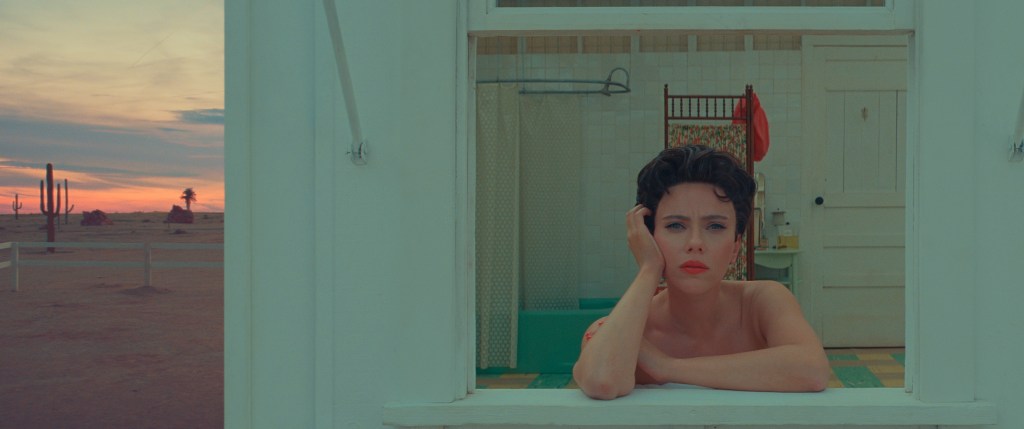
8. Asteroid City

In what is a film of layer upon layer upon layer, Wes Anderson’s Asteroid City is a film I’ve accepted I just have a love-hate relationship with.

Anderson, of course, probably has the most identifiable visual style of any working director at the moment, and he once again delivers incredible vistas in this desert doll-house diorama showcase. Asteroid City is also his most self-reflexive film, both on the art of being a storyteller and on the process leading up to the camera rolling.

Artifice and reality intersect on multiple occasions, with the film playing out through a series of chapters that pull you into the world itself, and then pull you back out to take a glance at how everything is coming together. At times the film can be beguiling, especially if you aren’t familiar with his previous stuff, but it’s also a rewarding insight into art of being a storyteller.

7. The Killer

Many (and by many, I mean Letterboxd users) have called David Fincher’s The Killer his most introspective, meditative film on the craft of doing your job, taking pride in your work and thinking you’re doing it so well to the point of perfection. I just think it’s his most comedic.

Michael Fassbender stars as the straight-faced, emotionless hitman who screws up a hit and now has to clean up his tracks and those that might wish to take him out for his shortcoming.

The Killer is a great study on the dissolution of identity, of a man coping with his inner thoughts and dismissing all empathy for those that don’t deserve it because he knows the game he’s playing and the players involved. As mentioned, I also think it’s a comedy or at the very least, unintentionally funny especially with various internal monologues by the character, describing what he sees and feels, that are followed by sharp interruptions.

While this isn’t Fincher’s best film or even in his top three, it’s a safe but well executed crime thriller that will satiate the desire of hardcore Finchonians who would wish to see him return to similar stories.

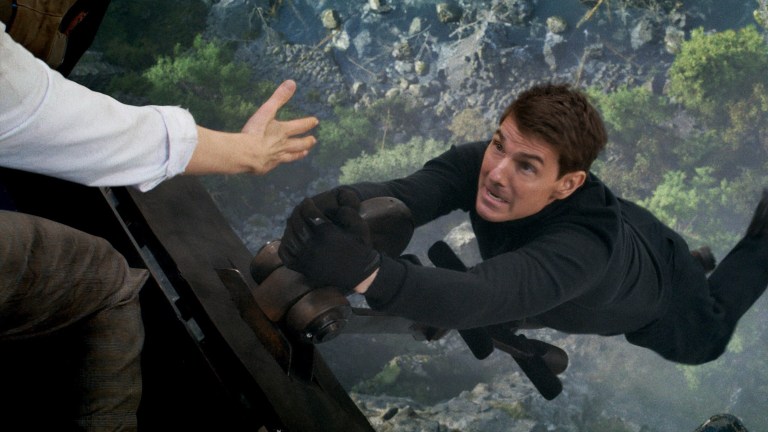
6. Mission: Impossible – Dead Reckoning Part One

I’ve continually been surprised by just how good each Mission Impossible film has gotten.

Christopher McQuarrie and Tom Cruise are like each other’s yin and yang as they seem to have found common ground since their first collaboration on Jack Reacher (2012) to the point where they’re willing to push the boundaries of what’s achievable on film at such a scale. Cruise especially is no stranger to putting his body and life on the line for an awesome shot, and in Dead Reckoning Part One there is everything from that iconic plummeting bike sequence off the top of a cliff to the creation and destruction of a whole train.

While Dead Reckoning Part One is pipped only by Mission: Impossible – Fallout (2018) in the franchise in terms of scale and death defying moments, it is pure action cinema that knows no bounds. I’m keen to see what Part Two will have to offer.

5. Past Lives

Celine Song’s debut feature is the sort of film that sneaks up and catches you off guard if you’re not prepared for its candid depictions of everyday people doing this thing we call life, and it leaves you feeling either optimistic or a tad wrecked by the time it’s over. 

I generally gravitate towards fantasy, action and romance films, and I was pleasantly surprised that while this is a film about young love and looking back to move forward, it’s ultimately a film about reconciliation and friendship.

Song’s film cleverly captures how time passes in an instant; we try to hold on to the high points as much as we can, we’d put them in a bottle if we could, but that’s not how life works. In other words, things happen for a reason, but that doesn’t mean we have to forget the past, but rather learn to live with the present reality that we’ve been given.

The film is ultimately anchored by Greta Lee, Teo Yoo and John Magaro who form the emotional centre that allows Song to deliver this story as effectively as she does.

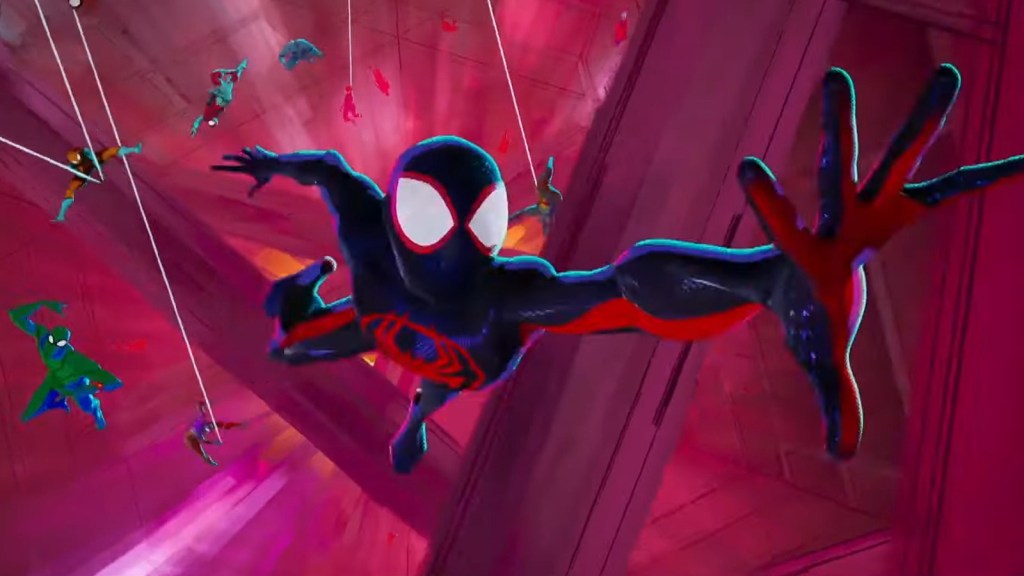
4. Spider-Man: Across the Spider-Verse

Across the Spider-Verse was one of the releases that I missed on the big-screen after going to Europe and only saw towards the close of the year on Prime Video.

I say that with a degree of sadness as this sequel to the Oscar winning hook-out-of-nowhere, Into the Spider-Verse (2018), absolutely floored me in just how creative it was in utilising the key moments of past Spider-man films and flipping them on their head to deliver an original, engaging, emotional and downright fun two and a half hours. The trio of writers, Phil Lord, Christopher Miller and Dave Callaham clearly understand this world and its characters, and it shows in all of its vibrancy.

Much has been said on the animation style of these films, and it once agains results in a colourful and unique display. Another Part Two I am ever so keen to see.

3. Killers of the Flower Moon

Martin Scorsese has been there, done that and gone back again, but even I couldn’t believe the brilliance I was seeing with Killers of the Flower Moon ––– even though brilliance is what we’ve always known with this cinematic titan.

Killers of the Flower Moon is another film that passes the three hour mark this year, but if it went for another three, I don’t think there would be many complaints. And that’s owed largely to just how precise Thelma Schoonmaker’s editing is, which paces the film very tidily with no loose moments that don’t add up to a wider whole.

It’s also a testament to Scorsese’s brilliant direction and he and Eric Roth’s approach to the screenplay which they flipped on its head and decided to tackle from an inside point around the film’s perpetrators. The result is one where we still see all of Scorsese’s signature mobster embellishments and themes of betrayal, ambition and greed, but they’re repurposed in a more Western setting and allowed to simmer for the film’s lengthy runtime.

I’ve said it elsewhere, but Killers of the Flower Moon feels like the sum of all the best parts of Scorsese’s oeuvre. By that I mean not just in the little tell-tales and visual cues that scream Scorsese, but more in terms of how this film balances tension, develops character, incorporates louder moments with more muted ones, communicates more heavy handed themes like greed and corruption in a digestible way, and all while feeling fresh in the process. 

The fact that this isn’t his magnum opus tells you everything you need to know about him, so let’s enjoy this legend while he’s still around.

2. (How Do You Live?) The Boy and the Heron

From one legend to another, Hayao Miyazaki’s decision to un-retire and make The Boy and the Heron was met with wide gasps, especially since The Wind Rises (2013) felt like the perfect capstone to his illustrious career.

Yet there was clearly some unfinished business in the director’s life that he no doubt felt compelled to express, and in his latest he once again takes a deep dive into the phantasmagorical through various creatures, concoctions and imagery, but with existentialism at the forefront.

The Boy and the Heron might well be seen as Miyazaki coming to terms with the limitations of the physical form and seeking out answers, or at least seeking to provide certain tools that might lead to the answers around what this thing called life is all about. Darcy has described the film as a “deep meditation on life and grief” and I think that’s the basis for what Miyazaki is going for here, along with the idea of carving something from nothing and doing your best to hold it together for as long as you can.

For the young character Mahito at the centre of it all, he is there to try and help take this bleakness and turn it into something redeemable now that his uncle (a very obvious injection of self from Miyazaki), cannot. It’s almost a futile request as everything around him crumbles, but it’s enough to believe he will take this with him in his own life and attempt to bring some order to it that way.

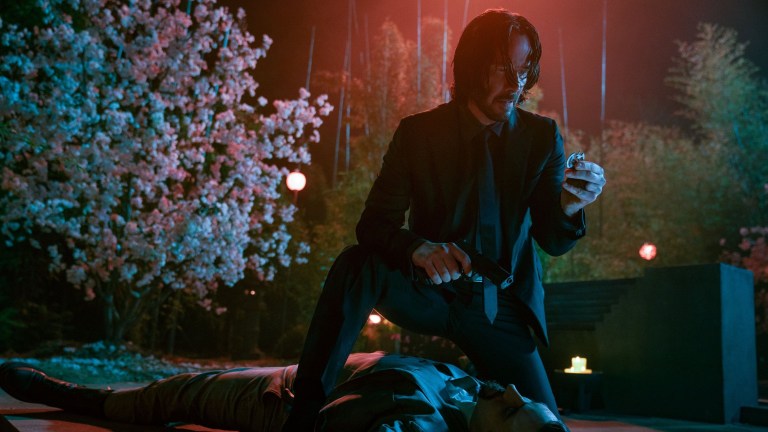
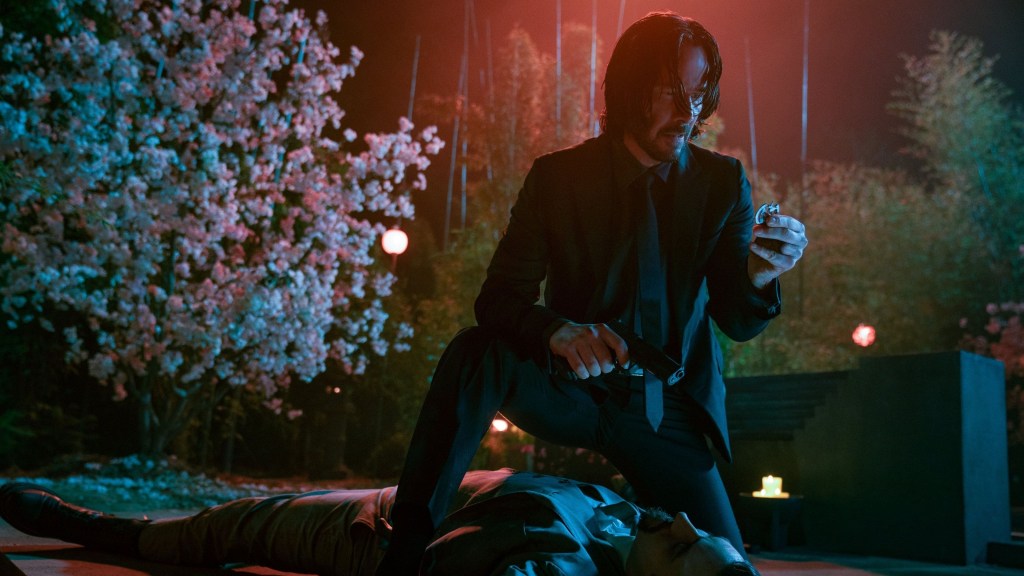
1. John Wick: Chapter 4

It feels like a millennium ago that I saw the fourth instalment in Chad Stahleski’s thriving John Wick franchise, and yet nothing this year has toppled it from the peak of my list.

Don’t get me wrong, any of my top three could just as easily be sitting in pole position, but Stahelski’s final John Wick film is a sensory overload that I feel like was made for me. Shay Hatten and Michael Finch’s ability to up the ante and deliver a screenplay that not only ties everything from the first three films together, but adds some more and then blows everything out of the water in the third act is truly mind-boggling (it’s a crime they weren’t nominated at the Golden Globes for Best Screenplay).

But that’s just the tip of the iceberg. I’ve long praised Stahelski for his understanding of actors and his ability to stage fight scenes, but in John Wick Chapter 4 he has once again managed to blend hand-to-hand combat and bullets galore with an appreciation for more grounded storytelling and the recognition that John Wick is the emotional anchor of this film even when he’s engaged in tense situations.

He’s not just a two-dimensional assassin or someone simply out for revenge, and Chapter 4 makes it clear that moving forward requires sacrifice. And this franchise has always been able to introduce anti-heroes and antagonists that are just as layered as Wick because they occupy the same space, under the same oversight, guided by the same principles ––– Wick just has the courage to stand against the system that has nurtured him and recognise the virus its rotten roots are spreading.

It feels like a fairytale ending that echoes the practicality and originality of Mad Max: Fury Road (2015) while standing out from anything else that has been released since Fury Road in the action genre. I can safely say I am eagerly anticipating Stahelski’s adaptation of Ghost of Tsushima.

Honourable mentions: Guardians of the Galaxy Vol. 3, Indiana Jones and the Dial of Destiny, Babylon (a 2023 release in Australia)
Best of 2023: Tom’s Picks

With 2023 having drawn to a close, Rating Frames is continuing to look back at the past twelve months of cinema and streaming releases which have come our way. In the second of our series of articles, Tom Parry takes a look at his ten favourite films of the year that was.

It’s been a most productive film-viewing period for yours truly. He began 2023 settled in Gippsland, with opportunities for cinema visits proving few and far between; but as the year passed its midway point, he found himself landing a new job and returning to his hometown of Bendigo, thereby allowing him additional time to see the newest releases and, better still, make more frequent journeys to Melbourne to see what he otherwise would not be able to in regional Victoria.

While this writer hasn’t viewed as many new releases as his contemporaries — and he’s still eagerly awaiting a chance to see Yorgos Lanthimos’ Poor Things (2023) — he did visit the theatre more often than he did in 2022, meaning he can once more utilise the Top Ten format to which everybody is most accustomed.
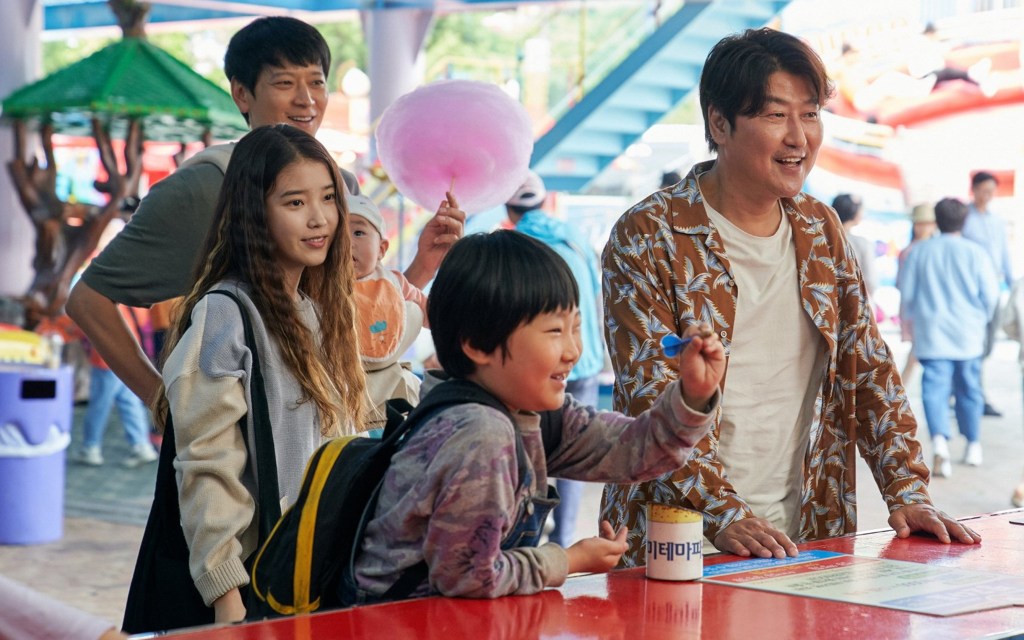
10. Bottoms

Its synopsis reads like the plot of a seedy adult film: A group of lesbian high-schoolers start a Fight Club as a means to lose their virginities to cheerleaders. Yet look beyond this raunchy premise, and there’s a picture that subverts the “traditional” Hollywood teen sex comedy through its queer representation, message of female empowerment and left-field gags.

Neat gags they are too, with Bottoms (2023) being one of the funnier comedies to emerge in recent times; it also boasts a great soundtrack and fantastic cast, with Ayo Edebiri being the standout as co-lead Josie. While the screenplay could use more originality — its use of the juvenile, overdone “Liar Revealed” trope particularly frustrates — the film nevertheless remains one of the most energetic and refreshing comedies to emerge in recent times.

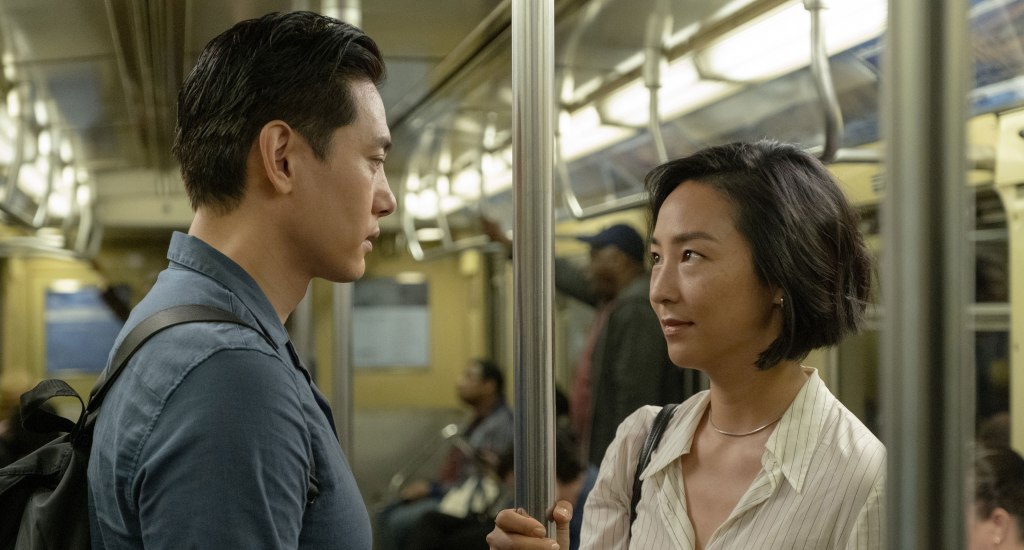
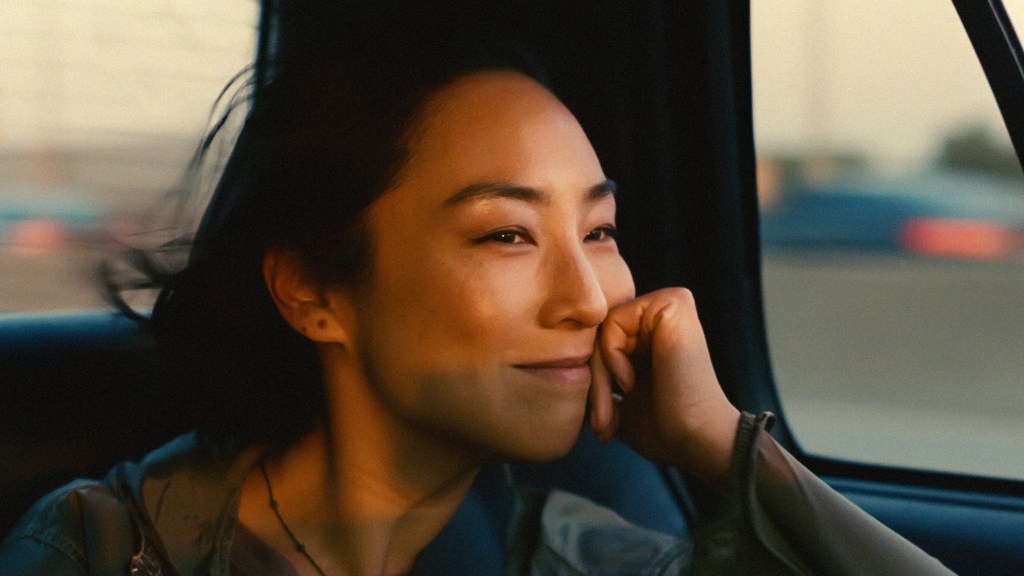
9. Past Lives

The romance genre relishes in the cliché of the Star-Crossed Lovers — a pair of individuals who are ideally suited for one another, yet destined never to be together. Such is the premise of writer-director Celine Song’s debut feature, which draws upon her own life experiences to craft a tender, stirring and beautifully-told narrative.

Song admirably refuses to adhere to the genre’s conventions, telling the story at her own pace and largely without conflict, all while eliciting a stellar performance from lead actor Greta Lee and brilliantly utilising natural light to bathe her scenes (as evidenced above). Though it is a gorgeous product, viewers must note that Past Lives (2023) is also a slow-moving film that takes some length to reach the crux of its story.

8. Elemental

At one stage, this feature-length animation looked destined to become Pixar’s first box-office bomb, owing to muted returns from the opening weekend of its theatrical run. But as the weeks passed, interest in the film remained steady as audiences found resonance with its tale of a migrant daughter struggling to meet the expectations of her parents, and the bond she forges with a young man whose personality could not be any more different.

Elemental (2023) is enjoyed best when viewed as a romantic-comedy — its tale of a mismatched duo who develop feelings for each other proves the most gripping aspect of what is, ostensibly, an allegorical examination of racism through a fantasy lens. Adding to the enjoyment is the beautiful score of Thomas Newman, and creative imagery rendered to the high standards of Emeryville.

7. Suzume

‘Twas a long wait for Makoto Shinkai’s latest feature to reach our shores, coming five months after its Japanese release and nearly 14 months after its world premiere. It sees the famed Japanese animator return to the fantasy genre once more, telling of a teenage girl who is tasked with preventing a series of supernatural calamities and delivering yet another compelling, wonderfully-told story in the process.

All the Shinkai hallmarks are present in Suzume (2022), including references to Japanese fables, natural disasters, adolescents pining for the affections of another, and trains. (He really does love his trains.) Yet there are also plenty of improvements over his previous works, including a rousing orchestral soundtrack, a screenplay filled with tension and humour, and Shinkai’s most detailed and cleanly-animated illustrations to date.

6. Saltburn

Having won Best Screenplay at the 93rd Academy Awards for Promising Young Woman (2020), anticipation was justifiably high for Emerald Fennell’s second directorial effort. Her follow-up takes place in England, where a scholarship student at a prestigious university (Barry Keoghan) befriends a classmate from an aristocratic family (Jacob Elordi) and is subsequently invited to spend the summer at their sprawling estate.

A beautifully twisted thriller, Saltburn (2023) possesses a sharper edge and level of savagery that Fennell’s debut feature sorely lacked. Her direction once again is confident and assured, her characters nuanced and complex, the performances great and the soundtrack fantastic. This author’s only issue with the film is that it doesn’t adequately explain or justify the actions of its main character.

5. Broker

First premiering at the Cannes Film Festival last year, it would be another nine months before this feature-length Asian drama gained a limited theatrical release in the Antipodes — a very apt length of time to wait, when one considers the subject matter. Broker (2022) follows a ragtag group of criminals who form an emotional bond while trading orphaned babies to infertile couples for money. Though the premise is somewhat cheesy, the final product is anything but, with director Hirokazu Kore-eda delivering a story which is equal parts charming and poignant.

Fellow Rating Frames scribe Darcy Read has long been a champion of this feature, having listed it in his Best of 2022 list and reviewed it glowingly and at-length back in March. There’s not much that can be added to his remarks; all that this writer can offer is a reiteration of Darcy’s praise.

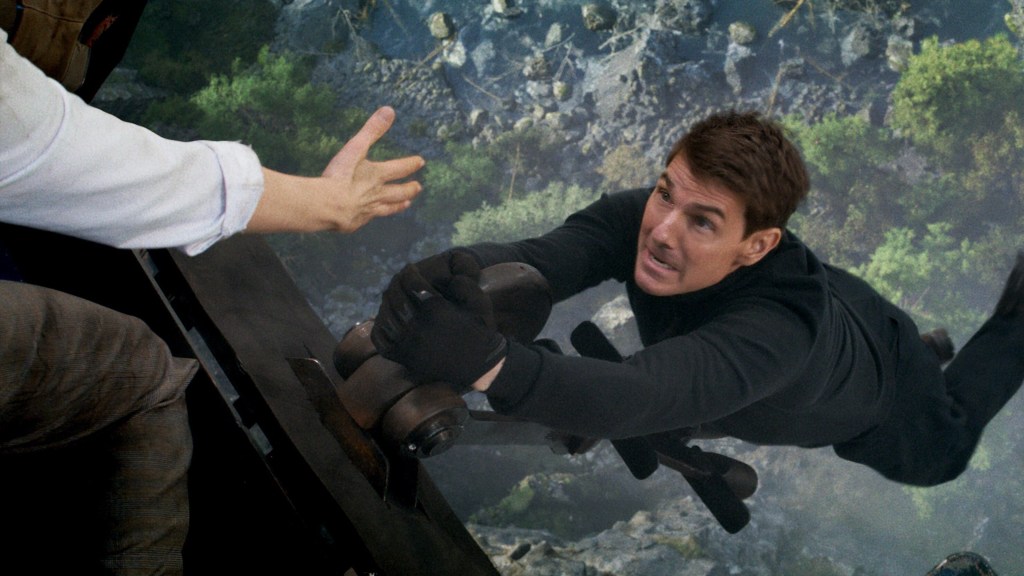
4. Mission: Impossible – Dead Reckoning Part One

Seldom can a film series lay claim to having improved with each and every instalment; Mission: Impossible is one of the few. For the franchise’s seventh feature-length outing, the ante and excitement is upped once more as secret agent Ethan Hunt (Tom Cruise) faces his most threatening antagonist yet: a faceless, internet-borne Artificial Intelligence program that can not only predict his every move, but distort the truth as it sees fit.

Dead Reckoning Part One (2023) is filled with exhilarating action sequences, including a car chase through the streets of Rome, a duel of close-quarters combat in a narrow alleyway, fisticuffs on a runaway train, and plenty of throwbacks to the series’ past. In doing so, M:I7 eclipses the thrills of Mission: Impossible – Fallout (2018) to position itself as one of the greatest action movies of all time.

3. Spider-Man: Across the Spider-Verse

Not for the first time, Sony Pictures Animation floored all expectations with their latest feature-length release, surpassing the very high bar the studio itself had set four-and-a-half years earlier. The studio’s successor to the much-adored Into the Spider-Verse (2018) is an improvement in many regards, placing a greater focus on the struggles of Gwen Stacy (voice of Hailee Steinfeld) while also continuing with the narrative of Miles Morales (Shameik Moore).

There are many aspects in which Across the Spider-Verse (2023) proves a better film than its predecessor, particularly in the screenplay department — the story here is less clichéd and more original — and visually, with no shortage of lush images to gaze at. Impressively, the film does this while also sharing its precursor’s qualities, such as a talented voice-cast and awesome soundtrack.

2. John Wick: Chapter 4

Turns out that 2023 delivered not one, but TWO of the greatest action movies ever made. The more impressive example proved to be the fourth entry in the Keanu Reeves-starring John Wick franchise, which once again has the professional hitman seeking revenge against the figures who have wronged him, and simultaneously trying to avoid the network of bounty hunters who wish him dead.

Plenty of the franchise’s trademarks are present here, including the exceptional stunt-work, astonishing set-pieces, brilliant choreography, immaculate sound design and gorgeous lighting, all richer than ever. It’s best appreciated by those who have seen and enjoyed the three previous instalments — anybody walking into John Wick: Chapter 4 (2023) without doing so is bound to be confused.

1. Oppenheimer

Since helming The Dark Knight (2008), Christopher Nolan has been revered by cinephiles as one of the artform’s best directors, his every film greeted with fervent enthusiasm. Subsequent releases have been met with overblown mania, such as Interstellar (2014), while others earned muted praise, like Dunkirk (2017). But for his portrait of scientist J. Robert Oppenheimer (Cillian Murphy), the hype and audience response is truly deserved.

Despite its three-hour length and multitude of secondary characters, Oppenheimer (2023) is never boring nor baffling — it’s enthralling from beginning to end. Within the picture is a fantastic screenplay dealing with complex themes, strong performances from the entire cast, a remarkable score from Ludwig Göransson, dexterous film editing, great sound design, incredible practical effects, and a surprisingly tense bomb-testing sequence.

What’s here is Nolan’s magnum opus; his crowning achievement, the picture which shall come to define him years from now. At the risk of being rash, it could well become this writer’s favourite film of the decade.

Honourable Mentions: Babylon (released January 2023), Creed III, Guardians of the Galaxy Vol. 3, Dumb Money, The Killer.

Best of 2023: Darcy’s Picks

With 2023 drawing to a close, Rating Frames is looking back at the past twelve months of cinema and streaming releases that have come our way. In the first of our series of articles, Darcy Read is taking a look at his ten favourite films of the year that was.

2023 has been a bizarre but ultimately wonderful year in cinema. A film year that felt like a genuine rebound after multiple years of roadblocks — and that’s with long-running SAG and WGA strikes with impacts felt in the latter stages of the year but will impact next year more on the ledger — through the success of ‘Barbenheimer’ and the return of some of the best veteran filmmakers we have working. While none of these storied filmmakers like Martin Scorsese, Hayao Miyazaki, or Wes Anderson delivered a film that will be the first project referenced in their obituary, all have produced work that will contend for the best cinema has to offer this decade.

As 2023 draws to a close, it is clear this year has the potential to enter legend status alongside calendar years like 1999 or 2019, with its combination of peaks and depth by creators both established and emerging, gifting us deeply personal works that have clearly resonated with audiences around the world. 2023 has been a wonderful year to write about for the site, and 2024 looks to be a fascinating year with the return of incredible artists like Bong Joon-ho, Steve McQueen, and Barry Jenkins to name a few. But before we get ahead of ourselves, here is my list of the best of cinema this year.

10. Oppenheimer

A vicious knife fight to land on the 10th spot on this list with a collection of wonderful films by veteran auteurs like Hirokazu Kore-eda and David Fincher, but the scale and power of the fleeting moments in Christopher Nolan’s Oppenheimer (2023) proved too difficult to ignore. Nolan has been on a manic kick in recent years, adopting a sound-focused filmmaking pursuit that is just catnip for me. Combining an all-time score by Ludwig Göransson with an elastic soundscape that never lacks emotional or narrative potency by the legendary Richard King, Nolan and emerging editor Jennifer Lame throw you into the subjective war zone that is J. Robert Oppenheimer.

The film is littered with flaws and strange moments that threaten to derail the three-hour tirade through the scientific pursuit of unprecedented destruction, but the rigorous nature of the film allows for some transcendent sequences that stack up amongst Nolan’s very best work.

9. The Eight Mountains

A serene indie film shot across stunning vistas of the Italian Alps centred on two men building a house in a plot of land owned by one of their recently deceased fathers, Felix van Groeningen and Charlotte Vandermeersch’s The Eight Mountains (2022) plays out like a contemplative short story across two and a half hours, a personal favourite flavour that is not a universal palette.

The earnestness of the storytelling about two complicated men seeking purpose through their past and into their present transcends into a reflective pool of emotion and intimacy with a mesmerisingly natural performance by Alessandro Borghi as Bruno. Grab some tea and warm up by the fire of this enchanting Italian epic that would work as a perfect double feature with Past Lives (2023), a film we will get to.

8. May December

A sticky, chewy meal of a film, May December (2023) is less interested in the central scandal of the story (echoing the story of Mary Kay Letourneau and Vili Fualaau) than in the modern societal structures around a tabloid scandal, with the insidious media ecosystem that invades lives for an increasingly uncertain gain and the human impact that ripples out decades later, as the scandal itself.

Casting director turned screenwriter Samy Burch is perfectly matched on the screen by the brilliant Todd Haynes, a filmmaker most comfortable getting into the weeds of a dark, complicated story and emerging with something equally compelling and repugnant. The trio of performances from Julianne Moore, Natalie Portman, and the emergence of Charles Melton present this knotty and potently transgressive story with a heightened tension of melodrama whilst never losing the humanity at its core that allows the film to shine.

7. Spider-Man: Across the Spider-Verse

It took months for me to embrace the ‘to be continued’ nature of Spider-Man: Across the Spider-Verse (2023), but once that hurdle is vaulted, the Jackson Pollock-styled explosion of creativity and narrative inventiveness on display in this sequel to the hit animated superhero film Spider-Man: Into the Spider-Verse (2018) took hold.

Across the Spider-Verse’s first 20 minutes is the greatest example of riotous, shotgun blast openings to come across in years, miraculously blending art styles with raw emotion and vulnerability that created an avalanche of ideas to cascade from beginning to end.

6. Asteroid City

“Am I doing it right?” Anderson has long been known for his extensive production designs and air-tight dialogue, but what stands out in Asteroid City (2023) is the attention placed on the act of looking. These looks of longing and understanding permeate every moment and every character of the film. From June (Maya Hawke) and Montana’s (Rupert Friend) longing looks of romance tinged with the desire for understanding in an increasingly incomprehensible world, to the gazing scenes of Jason Schwartzman as both Augie in the play with Midge (Scarlett Johansson), and as the actor Jones Hall with the actress of his wife that was ultimately cut played by Margot Robbie – in one of the scenes of the year – Anderson reflects the modern world’s unease and uncertainty by displaying these feelings across the extended ensemble.

Schwartzman — who has never been better — wears layers upon layers of uncertainty about the future and how to feel in the present across his face, opening up like a flower in the final act. By penetrating the hermetically sealed world that Anderson and his crew craft here in Asteroid City with touchingly modern feelings of uncertainty and fear, the potency of the message burrows its way into the soul, where it has remained all year. “Am I doing it right?”

5. The Zone of Interest

The normalisation of genocide as a collection of active, domestic choices, Jonathan Glazer’s attentive formalism is a perfect match for this profound piece of art on the naturalism that real evil lives within. Based on a slither of Martin Ames’ book of the same name, The Zone of Interest centres on the young family of Höss, mass murderer and commandant of Auschwitz, as they live day to day alongside unimaginable horror. Glazer avoids almost all iconography of the camp and world inside of the walls, tightly focusing on the family mundanity through scenes of pool parties, teatime chats, and grandmothers coming over for a weekend as the black smoke billows constantly above them.

Glazer, alongside sonic collaborators Johnnie Burn and Mica Levi as sound designer and composer has crafted a piece of cinema that transcends the formal exercise it easily could’ve become, instead striving for an art film that lands close to a Nazi-based Jeanne Dielman (1975). There is no, and may never be, another experience like it.

4. La chimera

One of the great pleasures of following the career of an emerging artist is seeing them put it all together. In La chimera (2023), Italian filmmaker Alice Rohrwacher perfectly blends the rich, textured grounds of Tuscan farm life of The Wonders (2014) with the magical realism and whimsy from her revered film Happy as Lazzaro (2018) to create one of the year’s best and most creatively rich films.

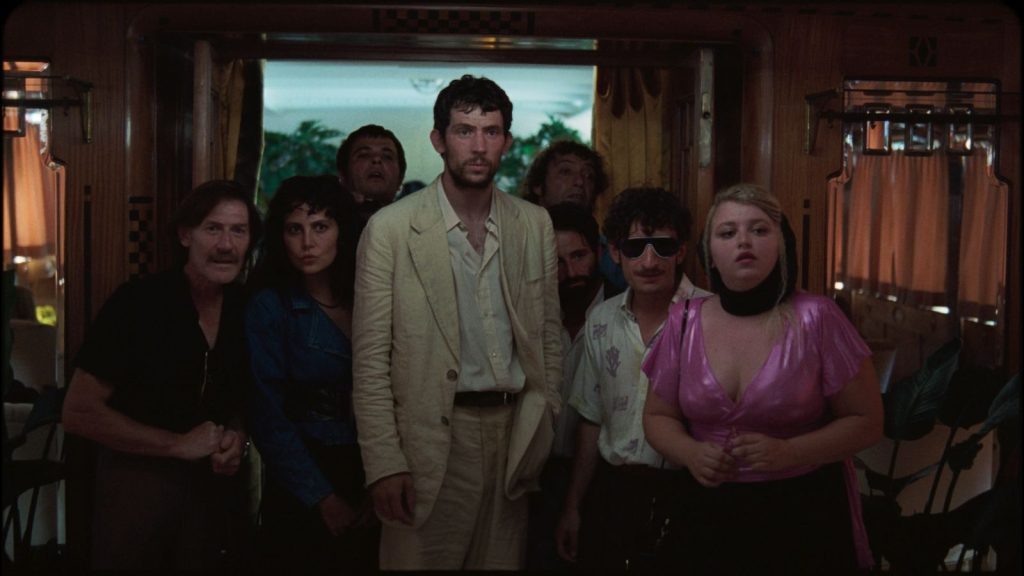
Set in 1980s Tuscany, we follow Arthur (an extraordinary Josh O’Connor) and his band of tombaroli Italian looters archaeological heritage — as he returns to his long lost love Beniamina’s local town after a stint in jail. Rohrwacher’s seemingly limitless filmmaking inventiveness wraps around a knotty and evocative story of local heritage and ownership of the past shot gloriously on 16 and 35mm.

3. (How Do You Live?) The Boy and the Heron

Went with the original title for this entrancing and engaging gift of cinema, as it so perfectly captures the film in many ways compared to a seemingly rushed decision to rename this endlessly compelling feature from another old master Hayao Miyazaki. Not only is the title How Do You Live? (2023) taken from a beloved Japanese novel that Miyazaki has called an ur-text for him creatively — heightened by having the book play a crucial story beat with it being gifted to our protagonist Mahito by his recently deceased mother — but it works as the central thesis question for the film Miyazaki came out of retirement to ask. A question he gives no answer to, understanding that a life’s purpose is in the pursuit. The film operates as a deep meditation on life and grief from a world-weary filmmaker and as a goofy, playful Ghibli movie with its eccentric parakeets and Warawara’s that are sure to make their way into the heart of the recently opened Ghibli park.

What allows these larger ideas and themes to flow freely across this entrancing film is the work of longtime collaborator Joe Hisaishi’s score, somehow in career-best form after all these years, echoing these thematic questions through his delicate strings, tense orchestrations, and loving piano melodies that wash over a crowded audience like an emotional wave. No film on this list has better potential to leapfrog up to number one than this film, probing for questions on day-to-day existence than any piece of art released in 2023, like only a true master storyteller can.

2. Past Lives

Saw this treasure of a film back in June at the Sydney Film Festival and remained top of this list for months, Past Lives (2023), the best debut feature of the year by Celine Song, has stayed top of mind for 6 months through its unique mixture of personal and romantic longing with a powerful trio of performances by Greta Lee, Teo Yoo, and John Magaro.

In Past Lives, the present is framed in a unique liminal space, an uncertain future result of past decisions and indecisions, more so than a real time experience, like watching Richard Linklater’s miraculous Before trilogy simultaneously across three screens. How Song is able to merge these ideas inside a tight 105-minute narrative feature is not to be understated, crafting the best screenplay of 2023 and one that will only expand and mature moving forward.

1. Killers of the Flower Moon

From my review for the film: “Killers of the Flower Moon (2023), a sprawling period crime epic based on the incredible best-selling nonfiction book of the same name by David Grann tracking the 1921 Osage Nation murders (potentially hundreds even though the reported count reached only 20), is the best film to arrive in theatres in years. An astonishing work, capturing the clashing worlds of empathy and cruelty, the legendary director Martin Scorsese alongside veteran screenwriter Eric Roth, set out to explore and probe the original sins of white exploitation and destruction that dismantled a once thriving community in the Osage Nation.

With a task as grave and serious about a community unfamiliar to their own, Scorsese and Roth’s script remarkably lands at a point of empathy and understanding they can reach as outsiders to this world. Scorsese’s self-reflective limitations as the person to tell this story are palpable throughout the film. This crime film’s capacity to tell a story of a community not his own arrives at a peak in a final sequence that may not evoke the same emotions in audience members as personal opinions of this vary. However, it is disingenuous to wholly dismiss this remarkable film on those grounds, just as it is disingenuous to wholly dismiss the air of white guilt and limitations as storytellers that frame Killers.”

My only five-star film of the year, Killers of the Flower Moon may not reach the Mount Rushmore of Scorsese’s career but is more than worthy of entering the discussion once the greatest living American director decides to hang it up.

Honourable Mentions: The Killer, Monster, How to Blow Up a Pipeline, Barbie, Showing Up.

Killers of the Flower Moon is a Profound Achievement 

Rating: 5 out of 5.

“Can you find the wolves in this picture?” As the simple Earnest (Leonardo DiCaprio) reads from a history book given to him by his uncle William “King” Hale (Robert De Niro) about the Osage Nation, to acclimatise himself to the new land in Oklahoma he has found himself in after returning from the war, we are not so subtly asked to investigate the frame of each scene. The land is almost entirely owned by the First Nations Osage community that, after being slaughtered and chased out of other states before finding themselves here, struck a reserve of oil on the land they had legal rights to, making them the richest per capita community in the world. And now their people are being brutally killed in careless succession, with the government nowhere in sight to investigate. 

Killers of the Flower Moon (2023), a sprawling period crime epic based on the incredible best-selling nonfiction book of the same name by David Grann tracking the 1921 Osage Nation murders (potentially hundreds even though the reported count reached only 20), is the best film to arrive in theatres in years. An astonishing work of the clashing worlds of empathy and cruelty, the legendary director Martin Scorsese, alongside veteran screenwriter Eric Roth set out to explore and probe the original sins of white exploitation and destruction that dismantled a once thriving community in the Osage Nation. 

Central to the story is Mollie Kyle (Lily Gladstone in the must-see performance of the year), and her family who were amongst the wealthiest in the community through their Osage headrights. From the opening moments of the film, the plan is established by the wolf Hale: set up his family to marry into and then assassinate Mollie’s family to gain their land through these headrights, with the newest entrant Earnest, Hale’s young (in reality Earnest was 19) nephew with nowhere else to go, to be placed alongside Mollie. 

Lily Gladstone, Robert De Niro, and Leonardo DiCaprio in Killers of the Flower Moon

With a task as grave and serious about a community unfamiliar to their own, Scorsese and Roth’s script remarkably lands at a point of empathy and understanding they can reach as outsiders to this world. Scorsese’s self-reflective limitations as the person to tell this story are palpable throughout the film. This crime film’s capacity to tell a story of a community not his own arrives at a peak in a final sequence that may not evoke the same emotions in audience members as personal opinions of this vary (more on this later). However, it is disingenuous to wholly dismiss this remarkable film on those grounds, just as it is disingenuous to wholly dismiss the air of white guilt and limitations as storytellers that frame Killers.

The film is a surprisingly straightforward narrative story, using its 206-minute runtime to form as tight a compulsive story as is possible with Grann’s sprawling book, with the marriage of Earnest and Mollie at its core. There are many changes in structure and perspective to the book, with the most crucial being the shift in storytelling philosophy with the character of William Hale. In Grann’s book, the revelation of Hale’s orchestration of the gaining of head rights through systemic murders of the Osage Nation plays out closer to a whodunit true crime thrill ride that concludes with the formation of the FBI and the men that uncovered the truth — a sharp contrast to how the story is presented in the film. By changing the storytelling style from a whodunit into a bottomless well of foreboding dread through our connection to his character, Scorsese is tying us to the poison in his veins, feeling the bounds of the American condition and original sin within this vile man more directly. 

Roth’s original screenplay focused on a more procedural whodunit that would’ve subbed as a perfectly adequate recreation of Grann’s book, centring early on Mollie and following onto Tom White’s (Jesse Plemons) role in the FBI investigation. Scorsese, in his first co-screenwriting credit since Silence (2016), alongside Roth, altered the perspective of the script, maintaining focus on Mollie and Ernest. In Grann’s book, the primary question being posed is: who is the culprit of these hideous acts? In Killers, the power of the storytelling comes from pursuing the more unanswerable questions at the core of their relationship and marriage: How can you do this to someone you believe to love? And how can you not see the root from which all these horrible events are stemming from? The boiling frustrations that stem from these probing, emotional questions are allowed to simmer across the entire extended runtime of the film, evolving into a profound sadness that will last with you a lifetime. Very few films attempt this level of emotional connection with the viewer, and even fewer films achieve it.

Lily Gladstone and Leonardo DiCaprio in Killers of the Flower Moon

What allows Killers to capture an audience’s hearts and minds across its extended runtime is the trio of performances by DiCaprio, Gladstone, and De Niro in one of the finest ensembles in Scorsese’s storied career. De Niro, in his best performance in many years, is nightmarish as the wolf Hale, able to talk and smile through both sides of his mouth, taking up residence as a haunting figure of colonial greed and arrogance in the early 20th century. Alongside him is DiCaprio in his Calvin Candie mode from Django Unchained (2012), a performance style he has grown more comfortable with in recent years. The choice of DiCaprio to play an individual some 30 years his junior is a fascinating one. It can be read as a director pulling his muse into another film for the central role, or as a compelling provocation to the audience of seeing the star portray a despicable and complicated person. The weight of Earnest’s wilful ignorance is also deepened when placed across DiCaprio’s face than a more age accurate performer. What allows the film to transcend however, is Gladstone, perhaps the most compelling screen presence to emerge in a decade, whether in a single scene in the great TV series Reservation Dogs (2022) or Certain Women (2016), she is simply astonishing. Gladstone’s chemistry with DiCaprio is established early and becomes the crux of the film, with each scene together tethered to an anchor of tension that remains all the way into their incredible final meeting.

There are arguments to be made that Gladstone is sidelined for too much of the back end of the film due to her illness, which is as much a compliment to her performance as a narrative choice. This element of the film is also forced due to the reality of Mollie’s poisoning and illness, a storytelling hurdle that would’ve been disrespectful to sidestep. Her powerful presence is felt on and off screen equally, her piercing eyes hold a deep well of humanity which buries into your psyche for the elongated runtime. To avoid this aspect of the real story is to avoid the real pain that was subjugated on each member of this community, something that was clear throughout the production as being integral to telling this story. This family of women, with Mollie at the centre, want for a normal, wealthy American life that should have been afforded to them, but the ingrained systems of racial vilification and capitalism — the two are intrinsically linked — force them into a victimhood they should have been able to avoid through their wealth. 

The longer Roth and Scorsese worked with the community, listening to their stories and hearing their truth, the deeper the well of understanding was established which is felt in powerful sequences throughout the film. A key moment displaying this respect to the Osage Nation is in the profoundly moving sequence as Lizzie (Tantoo Cardinal), Mollie’s mother, passes on, holding hands with her ancestors as she walks, smiling and without regret, into the next life. The sequence is quiet, simply staged, and made with great respect, with the air of an Apichatpong Weerasethakul film. The sequence echoes Silence (2016), Scorsese exploration into his own faith late in life, through its stripped-down and respectful style, displaying the utmost care when dealing with the faith of the people portrayed on screen. 

Robert De Niro and Leonardo DiCaprio in Killers of the Flower Moon

By saddling the audience with Earnest for much of the film, a man with absolutely no moral core in the centre of the frame, Scorsese seeks to probe and destabilise us in equal measure. We don’t have the comforts of a future-set flashback to reassure us of his remorse, nor do we have saccharine familial moments that give us an easy out of the atrocities portrayed in the film. The further and further we are stretched, the more determined we are to uncover some hidden truth in DiCaprio’s performance, but he is equally as withholding with us as he is with his own wife. Over 200 minutes, the greatest living filmmaker is asking us not to find the wolves in sheep’s clothing, but to ask how these wolves can live amongst sheep after consuming their families.

As an Australian, it’s impossible to ignore the echoes of our own history in this story, of The Stolen Generations and the arrogant dark seed of colonialism at its core. The pain in seeing the universality of these vicious and callous crimes is overwhelming, especially as it overlaps with this year’s referendum vote. It has never been easier to be wilfully ignorant of our past, dooming ourselves to continue them. 

This dark cloud hangs over many aspects of the story of Killers. There is a deliberate air of inevitability to the murders and distressing moments of the story, shown through the edit and deliberately bleak sound cues that saddens whilst never veering into an unbearably solemn experience. Too often a film, especially an epic of this scale and runtime, will lose all propulsion as a compelling narrative in order to express the grave nature of the experience. This is a balancing act that is beautifully achieved, where the wealth of film knowledge of Scorsese and his long-time crew shines through to create this tremendous work of art. 

Legendary musician and collaborator Robbie Robertson in his final work feels an inch off screen at all times, holding court on proceedings through his Stratocaster with a beautifully anachronistic score that brings to mind the famous Neil Young improvised score for Dead Man (1996). The real highlight piece for Robertson is the mournful guitar and vocal duet “They Don’t Live Long”, which seeps into your bone marrow through its mixture of seething rage and sorrow at the feeling of utter helplessness to these vile acts we are bearing witness to. 

Leonardo DiCaprio, Lily Gladstone, Martin Scorsese, and Robert De Niro on the set of Killers of the Flower Moon

There is a care taken to each death that is heart wrenching and overwhelming that builds across the film. These moments aren’t calloused, or moments of entertainment that Scorsese has been accused of leaning too heavily on in the past. They are stark and honest, allowing the pulverising emotion of an audience experiencing these brutishly evil acts without a guide rope.

There is a special kind of pain Scorsese is carving out of you through the ham-fisted manner in which these horrific crimes are taking place. Not only is no one properly investigating these crimes due to the collective apathy those in real power hold for the Osage, but that is understood by those involved. This is not some elaborate web of seemingly innocuous murders, but a collection of obvious crimes committed by a group that never thought they’d get caught due to the privilege they wield over this community. For the master of the organised crime genre in cinema to focus on this collection of brutish, disorganised crime figures is pointed and considered, a continuation of his previous film The Irishman (2019), which is present throughout.

The film concludes with a charming Lucky Strike-helmed 50s radio play — sponsored by the FBI, valorising and sensationalising their involvement in the events — performing the events that transpire post the film in place of the usual text over photographs that close many a nonfiction adaptation. In these final moments, Scorsese enters the frame in an emotionally charged note to Molly’s ending, emanating both a solemn goodbye and apology for the nightmarish life she had to endure. He is overtly surrendering to the material and the Osage Nation. Not in some Variety interview or for your consideration campaign spot, but in the very text itself. The greatest living American filmmaker – and perhaps the country’s greatest ever auteur – closing potentially his final film in this manner will resonate till the end of time.

Killers of the Flower Moon is in select theatres now and streaming soon on Apple TV+.

Hold up, The Bob’s Burgers Movie is a Tasty Adaptation

Rating: 4 out of 5.

Several animated series have made the leap from broadcasting to celluloid in years gone by — The Simpsons, South Park and Beavis and Butt-Head to name but a few. Although most examples have proven enjoyable, to date none of these feature-length adaptations have been of a greater calibre than the shows which inspired them, nor outshone them in the public zeitgeist. Such a problem afflicts the newest addition to this cohort of adaptations, despite the movie being quite enjoyable in its own right.

Father-of-three and small business owner Bob Belcher (voice of H. Jon “Archer” Benjamin) has been issued an ultimatum by his bank: pay his latest instalment within seven days, or see his beloved, self-named burger eatery repossessed. Making that repayment won’t be easy for the perpetually cash-strapped Bob, not least because his busiest period — the summer holidays — are still a week away; worse still, a giant sinkhole has emerged right outside the entrance of his store, robbing him of what little income he already receives.

Before The Bob’s Burgers Movie (2022), there was the animated television programme Bob’s Burgers, which premiered on the Fox Network in 2011 to meteoric ratings. While those sky-high viewing figures didn’t last — as has been the case for most shows the world over — interest remained strong in the seasons that followed, in part due to its many and varied qualities. Such attributes include a wholesome tone, quirky sense of humour, fantastic use of colour, catchy soundtrack, great cast of voice-actors, and bevy of eccentric supporting characters — among them handyman and loyal customer Teddy (Larry Murphy), who is practically a lead protagonist.

Most of those elements have carried over to the Movie including, most pleasingly, the principal voice-cast. Jon Benjamin reprises his role as the series’ patriarchal namesake, so too John Roberts as Bob’s ultra-supportive, high-energy wife Linda; Dan Mintz as their lovesick thirteen-year-old daughter Tina; Eugene Mirman as middle-child and musical prodigy Gene; Kristen Schaal as youngest daughter, the pink bunny-ears-wearing Louise; Murphy as fan-favourite Teddy, plus several other supporting players. All voices involved have nailed the persona and emotions of their characters, giving their all whether they be uttering dialogue, or singing one of the film’s tunes.

Talking of the latter, jaunty music is another quality this picture shares with its televisual source. A trio of numbers is contained within, first of which being the upbeat opener “Sunny Side-Up Summer”, then the Louise-led “Lucky Ducks” and, as the plot enters its third act, “Not That Evil” – sung by the Movie’s hidden antagonist. Though there isn’t much to distinguish the three songs from each other — all have a similar sound and tempo, differentiated only by the lyrics and key they are sung in – it’s the opening track which proves the most enjoyable, being memorable, hummable, infectiously happy, and setting the mood for all that follows.

Bob and Linda Belcher, trying to stay positive in the face their restaurant’s impending closure in The Bob’s Burgers Movie.

One of the significant improvements the film holds over its originator is the strength of its hand-drawn animation. Where in the show, a limited budget sees humans move stiffly or remain static for many a scene, here the characters bounce, weave, flex and shimmy with near-fluid motion; likewise, their faces are as rubbery and expressive as they’ve ever been. All this energetic bodily and facial movement only adds to the joyous atmosphere, as does the vibrant palette — note how the buildings and backgrounds are multi-hued, rather than painted in a single shade.

Yet another strength is the screenplay, which contains multiple, interweaving conflicts. The most investing of these threads is one centring a skeleton found in the abovementioned sinkhole; it sees Louise coerce her older siblings into solving the mystery of who placed it there, both in hopes of saving her family’s restaurant and proving to her schoolmates that she’s braver than her pink ears suggest. It’s an intriguing subplot with some great turns, and a strong one too — so much so, it becomes the central narrative by the third act. That in turn, and unfortunately, means the pre-established struggles of the other characters are relegated to tertiary importance.

Such is the case with Tina, who is hoping to ask long-time crush Jimmy Pesto Jr. (voiced by Benjamin, like Bob) to be her summer boyfriend, yet is reluctant to commit to a relationship; and Gene, who wants to reunite his band but fears their avantgarde sound won’t be accepted — effort is made to integrate both subplots into the main narrative, but with limited success. More frustrating, though, is the lack of story afforded to Linda, who’s given no conflict of her own to explore nor the opportunity to grow as a character, instead tasked with being’s Bob’s better conscience.

Another grievance to be had with the film is how it fails to utilise the large roster of characters who frequent the TV show. This was a deliberate choice made on the part of director (and show creator) Loren Bouchard and his co-producer Nora Smith, who say they didn’t wish to see their adaptation become an endless parade of cameos and risk alienating newcomers. That’s a fair call, but when one considers how effectively and cleverly The Simpsons Movie (2007) incorporated an even-bigger list of deuteragonists into its tale, it more or less makes Bouchard and Smith’s argument invalid. Yet that’s not the biggest gripe to be had.

The Belcher siblings (from left) Tina, Louise and Gene in The Bob’s Burgers Movie.

Of foremost disappointment is the low-key manner in which The Bob’s Burgers Movie presents itself. Making an appearance in theatres should be a cause for celebration, an opportunity to take the characters in a new direction, or make some bold decisions that wouldn’t be possible to enact in the medium of TV. Or ideally, all of the above, as was the case with The Simpsons Movie. Instead, what’s being presented seems more akin to an extended episode of the series, one which could just as happily be watched on a smaller screen. And for fans of the show, that’s a real shame.

Having said that, this remains an enjoyable piece of Bob’s Burgers media and, importantly, a great film when judged solely on its own merits, fulfilling Bouchard’s wish of being accessible to “all the good people who’ve never seen the show.” Rating Frames is not alone in this view — upon its initial release, critics seasoned and unfamiliar with the Belcher clan alike found a shared appreciation for the Movie and its merits, as evidenced by a Certified Fresh designation from Rotten Tomatoes and average rating of 75 percent from Metacritic. Which begs the question as to why that praise — and the programme’s avid following to boot — did not translate into box-office success.

There are, as it happens, multiple factors that point to The Bob’s Burgers Movie’s lacklustre theatrical run, such as the constant production delays, limited marketing, wariness around the pandemic, and the negative sentiment toward the programme which has lingered since its first season. Yet ultimately, fault lies with the decision to release it on the very same date as Top Gun: Maverick (2022) in a misguided attempt at counterprogramming. Had it not been released at that time, there’s every chance the film would have found the audience, and the returns, it so rightly deserves.

Even though it falls short of being the stirring adventure that fans desired and were promised, The Bob’s Burgers Movie is nevertheless a bright, joyous feature for viewers of all ages, whether they’re devotees of the original series or not. All the virtues of its source material are there, while the slick animation and mystery element of the screenplay only adds to the delight. Not the Belchers’ crowning achievement, but a letdown it most certainly is not.

The Bob’s Burgers Movie and its associated series are both available to stream on Disney+.