Due to the frenetic nature of modern streaming churn based on shareholder growth over humane work practices or audience desire, the Star Wars industrial complex has pivoted to television in recent years. These shows have the blown-out budgets for blockbuster sci-fi epics, but are piped into our TVs and laptops. Some of these shows are great (Tony Gilroy’s Andor), and some aren’t (Obi-Wan Kenobi), but as a whole, this pivot has created a dearth of real blockbuster sci-fi with a sense of originality and modernity.
Enter The Creator (2023), the latest from visual stylist Gareth Edwards of Rogue One (2016) and Godzilla (2014) fame. In an alt-history world where robotic development arrived much earlier and Asia is seemingly conquered by Japan (the film is not equipped to deal with the meaning of his choice) and renamed New Asia, the US, seemingly under martial law, has declared war on AI who have allegedly detonated a nuclear weapon on LA (another choice we are not left given time to process). Joshua (John David Washington), an ex-special forces soldier, still mourning the death of his pregnant wife Maya (Gemma Chan in the most thankless role of the year), is brought onto a mission in New Asia to extract what they believe to be a new AI weapon.
Quickly we discover the weapon is actually an adorable child whom Joshua names Alphie (the standout newcomer Madeleine Yuna Voyles), turning The Creator into a showreel of Star Wars (1977) tropes that begin with a lone wolf and cub story, and concluding with the inevitable explode-death-ship-equals-victory mission. From the outset, the film is at war with itself, with its cheesy 90s sci-fi plot machinations and tropes on AI, robots, and human connection in a sci-fi world, styled as a contemplative Denis Villeneuve sci-fi. Edwards compels you into this visually entrancing film with real locations, considered visual effects, and evocative lighting that is truly stunning.
John David Washington and Madeleine Yuna Voyles in The Creator
The extraordinary production and visual design keep you invested in a film that’s narrative constantly draws groans from the audience. With a fifth of the budget of Star Wars Episode 9: Rise of Skywalker (2019) ($80m vs $416m), it is incredible what Edwards and his all star team have created visually. To contend with the wash of franchise blockbusters, Edwards has returned to the big screen with real weight behind him, including Hans Zimmer, cinematographer Greig Fraser, and editors Hank Corwin and Joe Walker, to elevate this familiar story to greater heights than this script deserves.
With Zimmer behind the wheel of a modern sci-fi, one would expect to be awestruck at the master composer’s work, but in The Creator, the great German is on autopilot. With some truly bizarre needle drops including Radiohead’s Everything in its Right Place, the audience is constantly pulled between the furiously disjointed world that is created in the theatre. Edwards has an enormous mountain to climb with this hacky script, with each decision taking away instead of building upon the last.
The film is loaded with arresting images and beautifully unique production designs, like the Nomad ship and South East Asia setting, but it’s all in service to a script that is a collection of sloppy plot machinations and simple tropes rather than genuine insight or human emotion. There is a pregnant wife to be sacrificed as character motivation. There is a surrogate child given to a character that lost a child to learn fatherhood. There are moustache-twirling, blonde military villains that were seemingly given a tape of Stephen Lang in Avatar (2009) to emulate. None of these moments are knowingly familiar or aware that fall into place by a steady hand, instead arriving to us as a manic bingo card of staid sci-fi plots that consistently underwhelm and frustrate.
Madeleine Yuna Voyles in The Creator
Events, even the visually stunning ones, occur as cheap building blocks designed to arrive in its most obvious destination. There is no room for exploration and character moments in this beautifully realised sci-fi world, like a child given every toy in a store only to spend an afternoon throwing a rock at a wall. These critiques on story and film structure pale in comparison to the wild othering and orientalism that occurs throughout this story that can seemingly be put down to a team of white writers not considering their choices and subject matter, a trend that becomes clear the further down the rabbit hole of the film you go. It is lovely to see the real world locations of Cambodia and Vietnam used in a large-scale studio sci-fi, but at what cost?
Concluding with a mandatory ‘defeat the enemy by blowing up their Death Star’ plot removes any hope for a satisfying and unique story that earns its dazzling imagery and sound design. The Creator flashes of brilliance are crashing waves, thrashing you against the sea, but once those waves subside, you realise you can easily stand in the shallow depths of the water.
While J. Robert Oppenheimer’s name might be synonymous with the deadliest device ever created, Christopher Nolan’s latest three hour biopic, Oppenheimer, looks at the man behind the atomic bomb through a much more introspective lens without ever insinuating that audiences should feel a sense of sympathy for his brilliant mistake/s. Of course, introspection is a key building block to any biopic, but given Nolan’s ouevre hasn’t ever focused on a historical figure of this magnitude —or any historical figure in this sense which still isn’t as big a shock as not casting Michael Caine—, there’s understandably a greater interest surrounding this biopic if not for the simple fact that it’s a Nolan film, then definitely because its subject is one of the most infamous, and misunderstood, scientific minds ever.
That Oppenheimer was a brilliant theoretical physicist who was the victim of his own belief that man could be trusted with forces larger than them, is undeniable. But Nolan’s film isn’t just concerned with the cookie-cutter facts that you can pull from a Wikipedia page. While the film is based on 2005’s Pulitzer winning novel, ‘American Prometheus’, Nolan’s interest jumps from the key, often glossed over moments in Oppenheimer’s life, and interrogates them more carefully.
Nolan’s Oppenheimer (a perfectly cast Cillian Murphy) is a man struggling to be faithful, who is always in his mind, viewing every next move like an equation on a chalkboard. His relationship to theory stretches into his everyday life as he struggles to maintain meaningful relationships, always approaching life by the numbers and relegating himself to a disconnected observer as opposed to a practical artisan. At one point he is in disbelief that scientists overseas have figured out how to split atoms from each other (or something to that effect), stating that it’s not possible from a theoretical point of view (POV), and it’s through this sort of mould that he carves his Oppenheimer from — a man unlike those around him, an outlier.
L to R: Florence Pugh is Jean Tatlock and Cillian Murphy is J. Robert Oppenheimer in OPPENHEIMER, written, produced, and directed by Christopher Nolan.
In this way, he isn’t too different from other Nolan characters like Bruce Wayne or Joseph Cooper in that he’s committed to what he knows, and does what he must for the greater good. His distant persona also affects his ability to build sustainable relationships, often pin-balling across various lovers and failing to forge a life beyond his commitment to his craft as exacerbated by a scene where he offers his crying baby to his friends as he doesn’t have the time to look after it (a selfish move he recognises).
Early in the film he’s encouraged to pursue his interest in theory and master it, and this is the point in his life that Nolan opts to introduce us to. And it’s in the early stages of the film that Nolan really portrays the internal struggle that will go on to plague Oppenheimer in the film’s later stages. He cleverly uses hazy, almost dreamlike visual motifs that equally look like beautiful stars and bomb fragments. These moments are some of the most thought-provoking as they provide a real deviation from the coolness and level head of Cillian Murphy’s performance that makes the character difficult to read — as though he’s got everything under his hat and under control.
It helps that multiple POV’s are being deployed by Nolan here in what is probably the most un-Nolan-esque part of this movie. Not only is Oppenheimer’s view of the world on display, but that of his early ‘affiliate’, Lewis Strauss (Robert Downey Jr. at his brilliant best). This duality helps build tension and allows the events of the third act to come together more tightly than might otherwise have been possible. Frequent Nolan cinematographer, Hoyte van Hoytema, shoots in colour for Oppenheimer and black and white for Strauss, further helping create this sense of separation through subjectivity and objectivity, ultimately adding to Oppenheimer’s unknowability and the difference in views that the two characters have. Whether or not this approach works in its entirety is difficult to tell from a first viewing, especially since it does tie events together, but equally throws one out of rhythm from time to time with the various timelines intersecting.
Robert Downey Jr is Lewis Strauss in OPPENHEIMER, written, produced, and directed by Christopher Nolan.
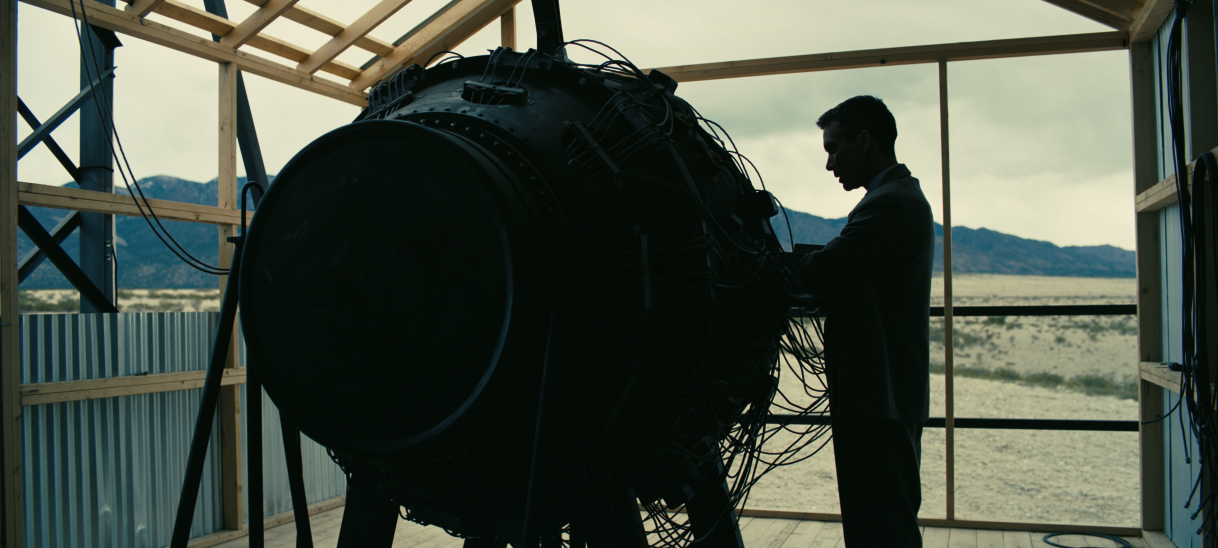
The most jarring instance of rhythmic intrusion is also the film’s best for the very fact that it’s the most speechless moment in the film. If you’ve followed the marketing, the controlled atomic set-piece (atomic in its own right) is where the full force of seeing this 70mm beast in IMAX really sells itself. By this point a lot of the establishing from the first half —namely around the politics of the Manhattan Project and the scientific lingo that will fly over most people’s heads— has been rounded off and Nolan finally gets to play with his own toys by unleashing the mother of all bombs, creating a spectacle that almost transports you to the New Mexico desert with the characters. It is really the punchline of the film, rewarding your patience by drowning out all of the noise in its countdown and the ensuing blast.
Whether or not Oppenheimer is the sort of Nolan film audiences are eager for is tough to say; there’s no tricky logic that fans of Interstellar (2014) or Inception (2010) wouldn’t wrap their heads around, but the film also sees Nolan at his rawest and most cynical, choosing to show a world destined to implode on itself just as it’s beginning to take shape. While The Dark Knight (2008) followed a similar path, there was at least the knowledge that its commentary was so distant from reality rather than a part of it. Yet in a film full of so many competing elements whether it’s the performances, the dialogue (which has has never really been the sweet-spot in a Nolan film as much as the moments around it are), the rapturous score from Ludwig Göransson, the staging of the key set piece or even the candidness of the story, there’s no doubt that like Oppenheimer, Nolan was all in on going big, and the final result is one that will stick with many long after the end credits roll by.
There has never been a more impossible task for the powerhouse creative team of Tom Cruise and Christopher McQuarrie than following up their genre-defining film Mission: Impossible – Fallout (2018), but they chose to accept it. With a more global reaching threat that feels more anchored to the moment in its AI focus, Dead Reckoning Part One (2023) has treated us to a weightier but immensely enjoyable film in the enduring franchise that is striving to operate as a final capstone like never before.
By tying the film onto Ethan’s past from the very beginning, Dead Reckoning Part One gives itself capital ‘I’ importance, a sensation unique to the McQuarrie era of mostly lightweight but masterfully crafted action romps. While the stunts are close in quality to Fallout – getting even close is an achievement itself – the focus on thematic and franchise storytelling far exceeds where the previous McQuarrie entries have gone before. The centring on AI technology that challenges the IMF in ways we haven’t seen before heightens the stakes into genuinely stressful sequences that have usually been left for the extreme stunt moments.
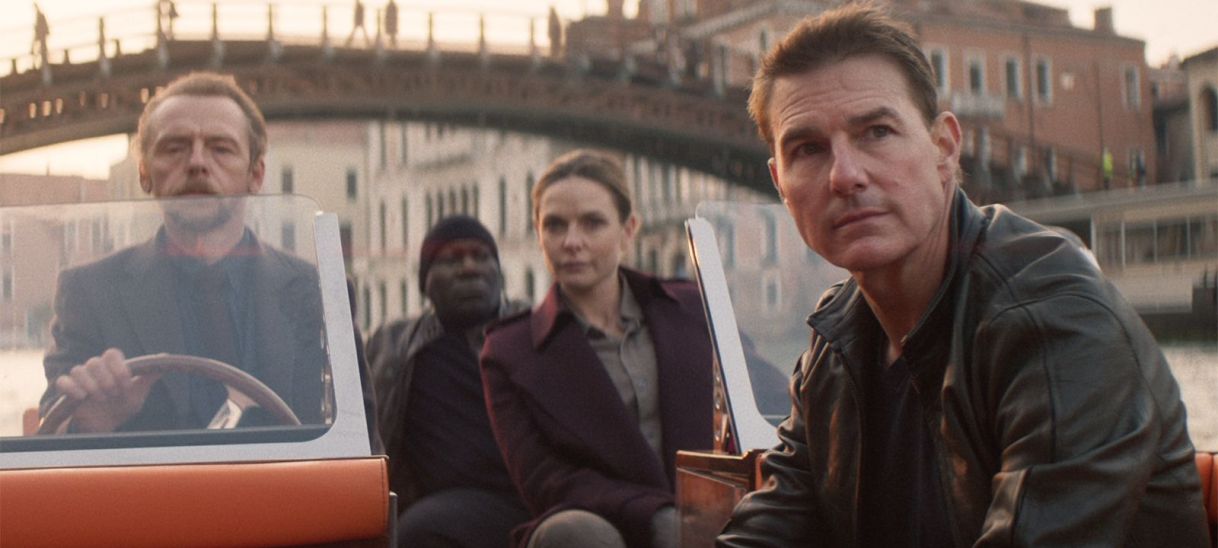
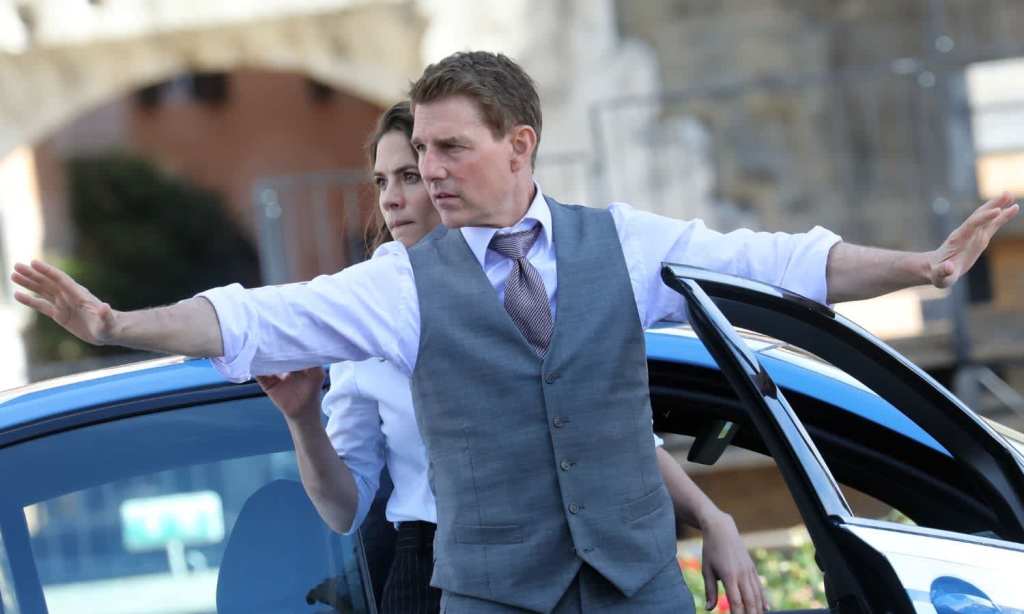
Now more about those stunts. Whether it’s dabbling in an extended car chase in Rome, an astonishing train sequence on the Orient Express (when you can, why pick any other train?), or a Venetian rave that feels equally John Wick 2 (2017) and Don’t Look Now (1973)inspired, Dead Reckoning’s staggering set-pieces leave few stones unturned. There are few cinematic experiences as overwhelming as a Mission: Impossible stunt sequence, with McQuarrie and Cruise becoming veterans in pacing out these moments to keep audiences on the hook for the runtime.
Hayley Atwell and Tom Cruise in Mission: Impossible – Dead Reckoning Part One
The introduction of Hayley Atwell as Grace, a pickpocket out of their depth is wonderful, countering the veteran spies that orbit around her throughout the film. While there is certainly a female character fridging issue that has plagued the MI series and is even more present in Dead Reckoning, it should be commended how each new woman that enters Hunt’s life operates on an entirely different wavelength. Other notable inclusions are Pom Klementieff as the flamboyant assassin Paris that works brilliantly as a silent action star, Esai Morales as the mysterious Gabriel, and the great Shea Whigham (with some tremendous hair) as G-man Jaspar Briggs sent to capture Hunt. They all add a unique flavour to the nearly three-hour runtime that knows when to add something new to the mixture.
Mission: Impossible films centre around their locations, an idea that was once a staple in the jet-setting action genre, but now feels fresh and invigorating in a climate of Atlanta studio lot set-pieces that leave an audience tired and unengaged, criticisms that can never be lobbed at this franchise. With wonderful sequences in Rome and Venice, Dead Reckoning never stays in one place for long but always uses its locations to its extremes, making it feel like the largest budgeted film in existence.
Adding onto the John Wick comparisons are the style and storytelling choices of Dead Reckoning that feel closer to the Keanu-helmed action epic, or even the most recent Bond film No Time to Die (2021), than the espionage trickery that defines this franchise. By opening Dead Reckoning with an extended prologue that sets up the stakes, we are given a rare glimpse into information that the IMF isn’t aware of. While this isn’t uncommon in action movies to establish the story this way, this alters how we as an audience view Hunt and his team throughout Part One, who are almost always a step ahead of us. Mask reveals and double crosses are part of the trade in the spy franchise, but in Dead Reckoning, McQuarrie and Cruise have doubled down on the world-spanning action epic elements that have defined their collaboration since Rogue Nation (2015).
With the strange re-emergence of bifurcated films in recent years (Dune, Spider-Verse, MI), larger stories are being told on the big screen, interesting creative decisions are being made in terms of where to split the narrative, a difficult decision that Dead Reckoning Part One has succeeded well above its peers in giving its eager audience the best of both. The magic trick McQuarrie and Cruise pull off here is in creating the sense that no cinematic idea is being held back, while still concluding satisfyingly with the knowledge that a part two will raise the stakes even higher.
Mission: Impossible – Dead Reckoning Part One is in theatres now.
The grief monster lives inside the house. Based on a 12-page short story by Stephen King from the 1970s that obscures the nightmare between supernatural and psychological, The Boogeyman (2023) is a lean and enjoyable 90-minute horror that is as good a theatre experience as you’ll find right now. There is no obscurity here, as screenwriters Scott Beck, Bryan Woods, and Mark Heyman begin with a horrific cold open that leaves little doubt about the threat at the centre of the film.
The Boogeyman follows a similar trajectory to most Stephen King stories – familial grief made manifest, a central car crash, overlooked teens, etc – but it’s in execution where the film thrives. After the sudden passing of their mother in a car crash, the Harper family of teenager Sadie (Sophie Thatcher), much younger Sawyer (Vivien Lyra Blair), and father Will (Chris Messina) are struggling to cope in the aftermath, leaving them vulnerable to the presence of a looming spectre in the dark. The film is light on narrative invention, but has some of the most impressively creative horror set pieces that engages an audience far more than the story.
(From left) Sophie Thatcher, Chris Messina, and Vivien Lyra Blair in The Boogeyman.
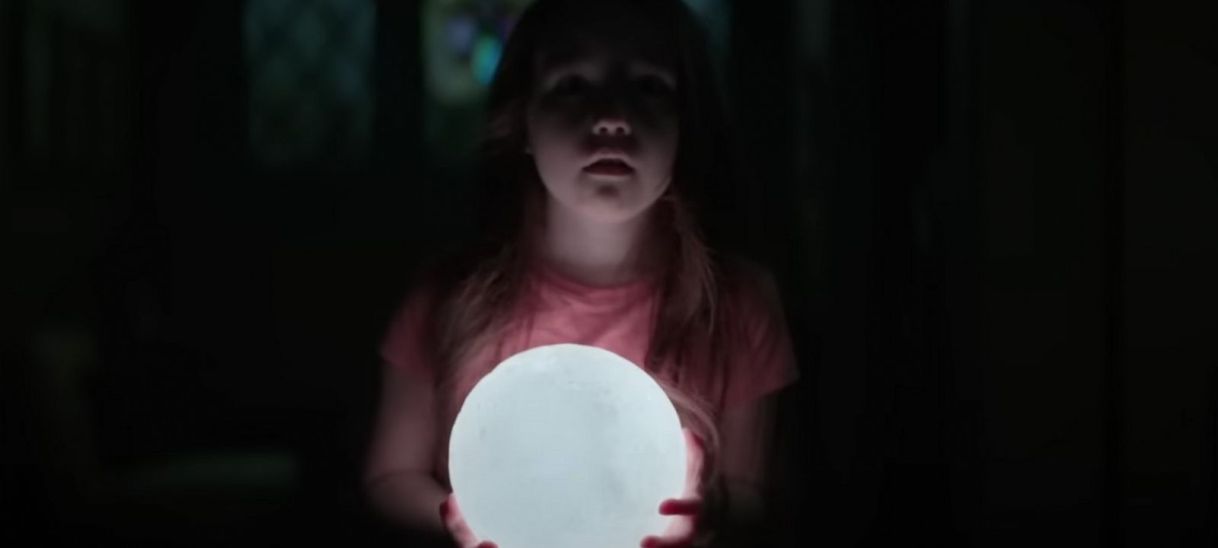
Emerging onto the scene with the impressively minimalist Covid horror film Host (2020), Rob Savage weaponised the familiar with Zoom calls and our collective sense of isolation during the pandemic that made it so effective. Given a studio budget and higher-level actors to work with, the filmmaker created an effective horror film that should stand as one of the year’s best. Savage’s impressive use of light and negative space that he flexed in Host (especially in its constraints), is heightened in The Boogeyman, especially through the use of unique light sources in the set pieces like Sawyer’s light ball, a PlayStation game, or the therapist’s red pulsating light pillar that ratchets up the tension greatly.
Looking for narrative invention and complexity in a film titled The Boogeyman is like searching for water in the Sahara, and Savage is acutely aware of this. The film’s narrative simplicity strips it down to its base elements of a grief-addled family and a monster feeding off their pain, allowing the set pieces and creative execution to thrive. Feeling much like a short story that hastily needs connective tissue to leap to its heightened moments, the film takes narrative shortcuts to arrive at its impressive set pieces. This is not uncommon in the horror genre, but in a post-Get Out (2017) world, its lack of self-awareness is surprising, especially in its very post-2020s setup of therapy and grief.
Supported by a solid all-around cast, Thatcher and Blair are terrific as the mourning sisters. Sophie Thatcher in particular, in her first lead film role since breaking out in the TV series Yellowjackets (2021), holds the movie together with a combination of teenage resolve and raw open nerve that is always engaging. Horror has long been a genre that’s allowed young actors to break out, and Thatcher’s performance here is one of the more impressive in recent years.
The Boogeyman is another in a long run of recent film and television centred on therapy, which while an important addition to culture to lessen the stigma, it makes for a collection of tired tropes with little insight. Will is a therapist, which certainly heightens his fear of opening up to his daughters about the sudden passing of his wife and their mother, but is hollow as a character (something not uncommon with adults in King stories). The depictions of therapists in the film, Will and Dr Weller (LisaGay Hamilton), are harsh and broad, ultimately hurting the characterisation of the profession instead of illuminating it.
Despite its narrative flaws and simplicities, it’s hard not to get swept up in the enjoyment and genre craft on display in The Boogeyman, from a recent emerging talent in Rob Savage. Comfortably levelling up to studio horror scale, Savage heightens every moment with creative set pieces that will thrill any horror fan seeking a new cinema experience.
Guardians of the Galaxy have long been the under-appreciated Marvel gang of underdogs (now including an actual dog in Cosmo, played by Oscar nominee Maria Bakalova), that, against all odds, have formed a surprising trilogy of films that can all be put amongst the enduring enterprises very best. The three films are simple, emotional, and dynamic in ways that are becoming increasingly rare in the MCU – largely off the back of filmmaker James Gunn’s writing and directing style – but a great portion of credit should be given to their strong ensembles and creative art and production designs.
It’s been 6 years since the last stand-alone Guardians adventure, with Gunn being immensely busy in the interim. He has switched allegiances from Marvel to DC, first with his own The Suicide Squad (2021) film alongside a John Cena TV show, and now operating as the franchise’s own Kevin Feige overlord, beginning with his own Superhero rebirth story set for 2025.
What allows this new instalment, Guardians of the Galaxy Volume 3 (2023), to thrive is its basic retrieval mission with crystal clear stakes, a divergence not just from recent Marvel plots, but from most third entries in franchises. When Adam Warlock (Will Poulter) crashes through Knowhere in a failed attempt to kidnap Rocket (Bradley Cooper) for mysterious reasons, resulting in significant injuries, the remaining Guardians must go back through his past in order to save their friend’s life. Where Volume 2 (2017) narrowed its focus to Peter Quill’s (Chris Pratt, who is at his best here) backstory with his family, Volume 3 smartly focuses on the origins of Rocket Racoon. Cooper’s Rocket has always been the hipster pick for best performance in the MCU, and he is given an interesting role here as the tech genius Racoon is shown mostly in flashback for the film’s runtime, slowly becoming the grizzled vet we know today. Volume 2 excelled in the tertiary moments between Rocket and Michael Rooker’s Yondu, a formula Volume 3 follows similarly in this flashback origin structure.
(From Left) Dave Bautista, Pom Klementieff, Chris Pratt, and Karen Gillan Guardians of the Galaxy Vol. 3
Music has always been a heavy focus of the Guardians story from the 80s Yacht Rock focus of the first two films (with Peter’s beloved cassette player), to the introduction of the Zune player in Volume 3, allowing the film to have a distinct 90s flavour. Opening with a wonderful sequence on Knowhere with an acoustic version of Radiohead’s Creep, we see Rocket (Bradley Cooper) singing and moving amongst the ragtag community they have cultivated. It is clear that Rocket is now as closely attached to this Earth music as Peter, a connection that has slowly been growing across the three films. Volume 3 is scattered with outstanding music cues from The Flaming Lips, Beastie Boys, and Florence + the Machine, which surprisingly feels more cohesive to the film’s style than the built-in nostalgia of the 80s music that is so integral to the Guardian’s story.
The ensemble has grown to accommodate a few welcome faces, including Will Poulter and Chukwudi Iwuji as Adam Warlock and The High Evolutionary respectively. Poulter’s charming wide eyed emergence into the world as a young celestial is a wonderful inclusion, especially the two hander scenes between Adam and Ayesha (Elizebeth Debiki), which are the comedic highpoint of the film. Debiki’s devolution from a pompous ruler at the beginning of Volume 2 to a desperate lackey to a maniacal boss here showcases the actress’s comedic chops, breathing new life into a character that was previously given little time.
Iwuji does his best 90s action villain impression as twisted experimental scientist The High Evolutionary – the whole movie has a great ongoing Face/Off (1997) bit – that heightens his scenes, making him more enjoyable than recent Marvel villains. The film’s villain storyline closely resembles the arc of X-Men 2 (2003), with Rocket in the Wolverine role and The High Evolutionary in the role of Brian Cox’s William Stryker, the man responsible for his claws through unethical experimentations. With this close resemblance, an audience is able to settle into a familiar story, allowing the emotional stakes to become the focus instead of a convoluted plot that derails too many comic stories.
(From Left) Karen Gillan, Chris Pratt, and Zoe Saldana in Guardians of the Galaxy Vol.3
Where Volume 3 exceeds well above the previous two films is the wildly inventive world-building and production designs. The warm interiors of Knowhere feel like a home to these characters, which garners emotional weight when it gets put in jeopardy. Guardians has always been about its misfit community with Knowhere at its heart, so it is never a chore the film cuts back to the misadventures of the crew on board while the Guardians are away on a mission. But the inclusion of new locations in Volume 3, like the 80s Star Trek-styled organic security hub Orgosphere or Stepford Wives (1972) tinged Counter-Earth, feels wholly unique in the MCU. Gunn’s Guardians trilogy consistently breathes new life into the wider MCU establishment, with Volume 3 coming at a time they need a major kickstart.
Although the Guardians were integral to the plot of the later Avengers films, it is remarkable how cohesive this trilogy of films is when viewed together. Comparatively, the Jon Watts Spider-Man trilogy and Peyton Reed Ant-Man trilogy are tonally jarring when viewed as a collective story, instead being pulled and twisted into the larger MCU puzzle set.
The very best filmmakers to operate within this larger Superhero space have been those that have been able to wrestle with the large enterprise while maintaining their own sensibilities. Ryan Coogler was able to bring his political and empathic filmmaking chops from Fruitvale Station (2013)into his Black Panther films, while Gunn has been able to weave a satisfying and hilarious adventure romp that never lacks bite, qualities that made him such a compelling emerging filmmaker.
Gunn has a penchant for having his characters plainly express their feelings about any situation, which is a creative quirk that takes a while to settle into but can often lead to moments of immense emotionality. Much like Aaron Sorkin’s or Quentin Tarantino’s distinct writing style, Gunn trusts his audience to move to the rhythms of his character’s dialogue to an emotionally satisfying conclusion, accepting the occasional off-notes on the journey.
In spite of its long runtime and simple retrieval plotting, Volume 3 excels through the strong emotional connection that has been made with this world and its characters. Gunn has perfected his emotionally candid dialogue style, with an ensemble of quality performances, highlighted by Cooper, to create the most satisfying Marvel film in years.
Guardians of the Galaxy Volume 3 is in theatres now.
“Welcome back Mr Wick” (RIP the iconic Lance Reddick). The bravura American action franchise of the past 10 years, John Wick returns bolder, brasher, and more inventive than ever in John Wick:Chapter 4 (2023). The film, clocking in at 169 minutes with an immense 14 action set pieces, figures which on the surface would cripple most films, but in reality are remarkably well paced. Renown stuntman turned in-demand filmmaker (his IMDb page reads like a to-do list) Chad Stahelski has always focused more on individual moments than a wholly engaging narrative, which is still the case with the fourth entry in the franchise, but the attention to detail in these moments, along with an extraordinary ensemble that are all giving their best, makes the film as a whole immensely enjoyable.
The franchise has always focused on three central tenets: gloriously realistic fight choreography with one of the best to ever do it in Keanu Reeves, stunningly inventive visuals in all real locations, and minimal dialogue with an eye for larger world-building on the margins. These are all ratcheted up to extremes in Chapter 4, bringing the film closer in comparison to a David Lean film than whatever the Russo’s are producing on Netflix.
Following on from the events of Chapter 3: Parabellum (2019), John Wick (Reeves), down a finger and assumed dead by the High Table, must traverse even further reaches of the globe to take down the senior figures of the organisation. The major inclusion to the franchise here is the legendary Donnie Yen, and his presence is felt immediately as the blind retired assassin Caine, tasked with eliminating his old friend John. Caine’s story parallels John’s from the first film, a connection that is simple but effective in a film that knows when to expand the story and when to be quiet and let audiences bathe in the stylised action set pieces.
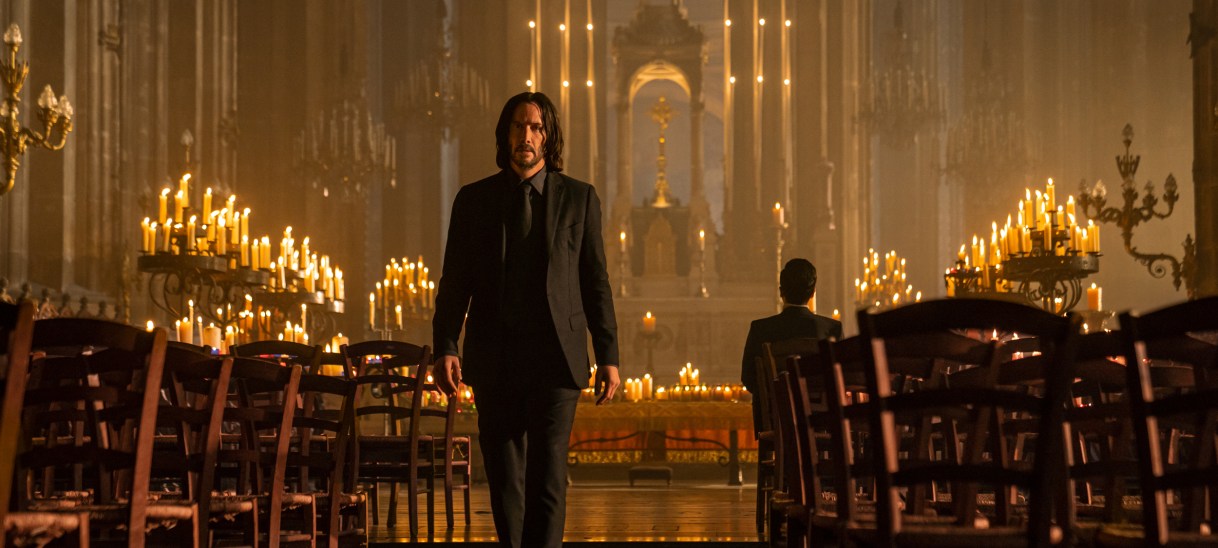
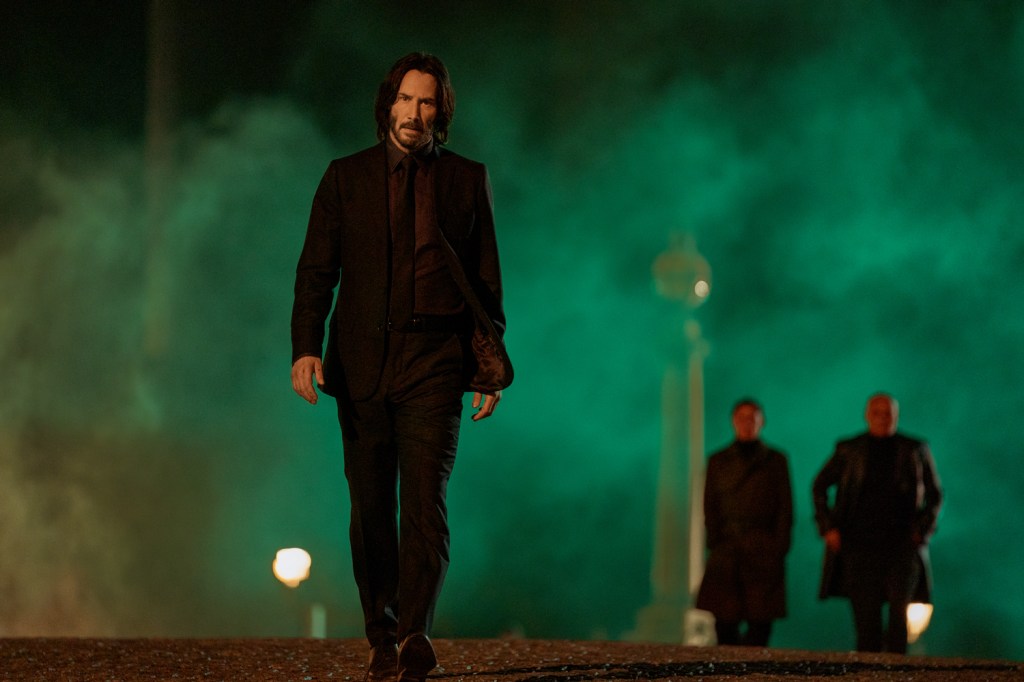
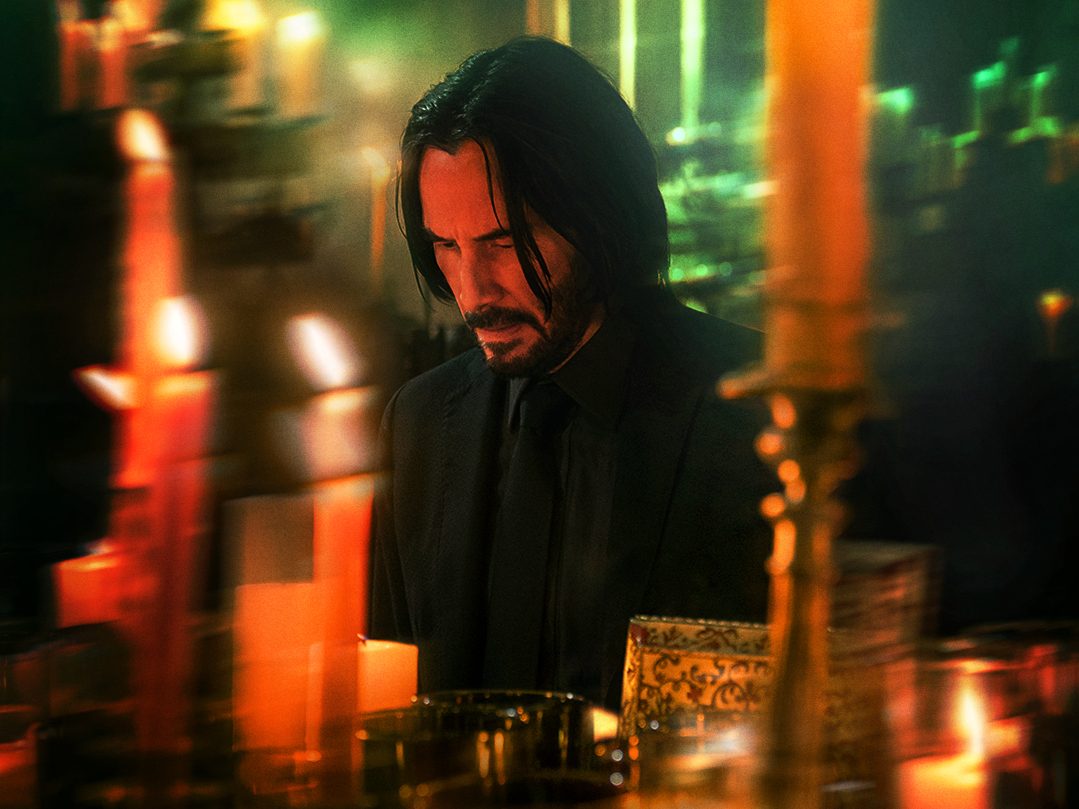
Keanu Reeves in John Wick: Chapter 4
The franchise has been able to boast an incredibly varied list of cameos from Angelica Houston to Boban Marjanović, adding a sense of scale and interest to each sequence. Added here are Yen, Bill Skarsgard, Rina Sawayama, and Hiroyuki Sanada, all improving on an already impressive ensemble that is unparalleled in an action franchise. Yen in particular is incredible, adding a coy and aloof nature to one of the best fighters in cinema history makes for a constantly compelling screen presence. To be able to add a figure like Yen to the franchise after four films shows the filmmakers are never satisfied with what was previously achieved, always seeking a greater experience for audiences, which they have accomplished in spades.
John Wick has long been a quintessential YouTube clips movie, focusing on individual moments over a cohesive narrative. Chapter 4 is easily the most ambitious entry. Whether that is in its outrageous Berlin rave sequence, incredible Donnie Yen fight sequences, or a seen-to-be-believed false roof bird’s eye oner with explosive shotgun rounds that will have audiences with their jaws on the floor and an overwhelming desire to cheer in appreciation.
The best inclusion to the franchise introduced in Chapter 3: Parabellum (besides Halle Berry and her dogs) are the locations outside of New York, something that is being further expanded here in Chapter 4. Taking place in Berlin, Paris, and Osaka, this film is able to flex its muscles visually and tonally which adds important freshness to a world that could have relied on what previously worked instead of giving audiences a three-hour endorphin rush.
Keanu Reeves in John Wick: Chapter 4
Connection to the entire franchise can be felt throughout Chapter 4, from its extraordinary Berlin rave sequence to Mr Nobody’s attack dog. These moments never feel like a tired repetition, but an evolution of form that makes this film the quintessential John Wick film. With the additions of location jumping and more convoluted plots, the John Wick franchise has morphed into a sort of John Woo-inspired, American Wuxia James Bond or Mission Impossible, with Keanu Reeves at its centre. The only thing it’s missing is the iconic score (although the music is always top-notch).
Among the best blockbuster theatre experiences this decade, Stahelski and crew have pushed every moment to its limits to put John Wick: Chapter 4 in the pantheon of action filmmaking achievements. Comfortably the best film in the series, Chapter 4 is a perfect culmination of everything that makes the previous films great, heightened and stylised to the highest degree imaginable.
It’s the most wonderful time of the year if you’re a cinephile, and it’s just around the corner.
Yes, the Academy of Motion Picture Arts and Sciences’ Night of Nights —otherwise known as “The Oscars”— will be taking place this Monday morning, March 13th (Naarm time) and the team at Rating Frames is as excited as ever.
As they did last year, our three resident critics have made their predictions as to what, or who, will be victorious in all 23 categories.
Below are the films that Arnel, Darcy and Tom are predicting will walk away with a coveted statuette at the 95th Academy Awards, and their personal vote, in each category.
No one manages to blend crime and action on the big screen quite like Michael Mann. From the sprawling cityscapes that act as their own character, to the attention-to-detail with each and every aspect of production, Mann’s films are distinctively his own. It seems fitting then to look back on his stellar oeuvre and try and rank his titles based on my sentiment towards them at this moment in time. This is especially the case following his recent novel and sequel to the iconic Heat (1995), which he co-wrote with Meg Gardiner, and leading up to his Adam Driver-led, Enzo Ferrari biopic, Ferrari (2023).
Of course, like with any list, opinions are different and feelings towards films change as time goes by and depending on where in your life you find yourself. But for now, these are his films ranked from worst (if you can call them that) to best:
11. The Keep (1983)
The Keep
Whether it’s due to the fact that large chunks of this film were cut out, or because it’s the least Mann-esque title on the list, The Keep is what I like to call Mann’s brain fart.
His second feature following the brilliant Thief (1981) represents his first and clearest (as there are elements of this in his true crime thrillers) foray into the horror genre. It’s a film plagued by bland and uninspired performances; a nonsensical narrative involving Nazis, a devilish entity, a supernatural Scott Glenn and one of the strangest but best sex-scenes you’re likely to see in a Mann film or otherwise; an interesting production design; and a pretty neat synthy score by Tangerine Dream.
Given Mann has disowned the film because of Paramount’s treatment of it, one can only imagine what the unreleased director’s cut had in store — we can only hope it graces out screens someday.
10. Manhunter (1986)
Manhunter
Many might find my ranking of Manhunter to be completely against the grain, but this thriller revolving around capturing a psychotic serial killer just never resonated with me on a narrative level like some of the other titles on this list (and I still gave it 3.5/5).
Manhunter focuses on FBI agent Will Graham (William Peterson), a detective who’s come out of retirement to help locate an elusive serial-killer with strange motives. His past experiences hunting figures like Hannibal Lecter (a subtle performance by Brian Cox) means he’s the perfect guy for the job.
Manhunter uses Will and the serial killer he’s hunting to create an interesting parallel between the mind of a psychotic man and the man capable of catching him. Its use of home video and the focus on truly seeing almost posits that these two men aren’t so different in how they see the world, but to different ends and outcomes.
Whether or not I was expecting a more conventional voyeuristic mystery-thriller in the way that Se7en (1995) or Rear Window (1954) are —where the killer feels like they’re an arm’s length away, only for the satisfaction of catching them to be snatched from you— is difficult to say (perhaps that’s what people love about this?), but I found myself at a crossroads by the third act. I hope my opinion changes on a second viewing.
9. Ali (2001)
Ali
On the surface, a film about Muhammad Ali seems like the farthest thing from a Michael Mann joint. There’s no mesmerising cityscape, no sirens or gunfire, no real suspense in the way that his crime films create suspense, and the subject matter doesn’t exactly scream ‘Michael Mann’.
But this film about the greatest boxer of all time works because of Mann’s interest in figures that don’t play by the rules. Specifically, Ali focuses on the period of time between Ali’s (Will Smith) first major heavyweight bout, the court case filed against him for refusing conscription for the Vietnam War, and his famous win against George Foreman to reclaim the heavyweight title.
Ali’s unilateral decision to not be conscripted was momentous for the fact that he was the heavyweight champion of the world, and making such a decision could affect his ability to box in his prime (which it did). He also reinvented who he was by changing his name and living on his own terms — a staple of Mann characters, but for different reasons. Often his characters are trying to protect others from who they truly are whereas Ali was trying to break away from the branding that others (white slavers) had given him and his people centuries ago.
The opening 15 or so minutes are also arguably Mann’s most compelling in the way that he establishes character, creates purpose and builds tension. At times there’s a suddenness to proceedings where the film makes abrupt leaps in time between the court case announcement, the Joe Frazier fight, and the George Foreman fight, but overall Ali is a portrait of one man’s journey to becoming in the face of adversary.
8. The Last of the Mohicans (1992)
The Last of the Mohicans
Along with The Keep, The Last of the Mohicans represents a different sort of Mann.
Like with Peter Jackson’s first film experience with the classic King Kong (1933) and his eventual reimagining of that classic on his own terms in King Kong (2005), Mann’s first vivid film memory was of 1936’s The Last of the Mohicans.
Helmed by Daniel Day-Lewis as the adopted Mohican, Hawkeye, this period piece about everything from the damning effects of bureaucracy to the Tarzan-esque romanticism of the love affair between Hawkeye and Cora Munro (Madeleine Stowe), is the first Mann film to create a sense of scale that would have greatly shaped the way he approached his later films.
By that I mean Mann finds a balance between showcasing the wide and beautiful terrain of a primeval America against the harshness of the looming modernisation that threatens its existence. This translates onto how the characters react to each other, whether it be through Magua (a mesmerising Wes Studi) and his desire for revenge against the British (for what they took from him) as well as his forward thinking to help his tribe, or through the loud and rampant battle at Fort William Henry that threatens the peace of the land.
Guided by one of the greatest scores of any film ever by Trevor Jones and Randy Edelman which at once evokes hope and sadness, picturesque vistas, and gripping direction that never falters, this Mann-epic is Mann at his most untethered.
7. Public Enemies (2009)
Public Enemies
When it comes to famous outlaws, there are few that are as iconic as John Dillinger, especially given he was a man who wasn’t interested in stealing from regular people, but the state itself.
That’s partly why he’s the perfect historical figure for a Michael Mann film given his self-defined approach to life.
Public Enemies follows Dillinger (Johnny Depp) as he makes prison escape after prison escape, continuously evading capture and robbing banks before finding an added purpose in life in the form of one French-American, Billie Frechette (Marion Cotillard).
Like all of Mann’s anti-heroes, Depp’s Dillinger is charming and elusive all at once. He’s a character infused with an aura of mystique that Depp delivers with the casual suave that his own image beyond the screen has maintained.
But it’s in the reimagining of the period through a digital lens where Public Enemies really excels. The moody greys, dark passages and almost colourless world are so striking here that it creates a more profound hyper-realism — almost bringing the 1930s to life in a way that shooting on film wouldn’t.
6. The Insider (1999)
The Insider
A film about a man’s grapple with doing what’s morally right or being forced into silence by forces greater than him; The Insider, in true Mann-style, is an exercise in patience — in waiting for the right moment to make a move before it’s too late.
Unlike Mann’s other thrillers though, The Insider doesn’t have vans of heavily armed forces hiding around the corner, but it instead puts its faith in the truth overcoming the odds. That truth is in the form of former tobacco chemical scientist, Jeffrey Wigand (Russell Crowe) and the 60 Minutes producer looking to help bring his story to light, Lowell Bergman (Al Pacino). The odds are the Brown and Williamson Tobacco Company who are trying to keep Jeffrey, and this story around what really happens to tobacco, silent.
Guided by Mann’s brilliant direction, a well-crafted script by Mann and Eric Roth, and a standout performance from Al Pacino in an unfamiliar but equally familiar performance, The Insider paints a perplexing portrait of the lengths to which vindictive multi-billion dollar organisations will go to in order to supress information. It brings various parties with differing interests together, and creates a wide web of uncertainty for all involved — with no clear contingencies, but everything to lose for everyone involved.
5. Blackhat (2015)
Blackhat
Michael Mann’s most recent film feels like a sum of all of his best parts (it’s also been eight years since it was released!).
The film follows hacker Nicholas Hathaway (a career-best performance from Chris Hemsworth) who, after a series of awry events happen by an unknown source, is released from prison for the purpose of helping discover the person behind these events.
Blackhat is where ideas meet, characters converge, and where the tangible coalesces with the intangible.
In a similar way to Manhunter (but without the straining of classic thriller conventions) and Heat, this film once again depicts two sides of the same coin — Hathaway as the hacker-turned-FBI collaborator, and the unknown hacker blowing up coolant pipes and infiltrating wall-street. One is front and centre for the audience, while the other is kept faceless. While their intentions are different, they occupy a similar space like almost all of Mann’s characters do, but Blackhat is different to his past films because of how it bridges the characters worlds together and carries and communicates messages.
Mann uses modern technology to create a divide (the intangible), and forces his characters to embrace human interaction and connection (the tangible) if they are to overcome this threat.
His portrayal of the L.A. and Hong Kong maze of buildings and their bright lights speaks to the lack of personality or distinguished features in these settings, which fizzles down to the people who fade into each other like ones and zeros. It’s a wider critique on getting lost in the masses at a macro level, and getting lost in the code on a micro level.
Hathaway is the vessel Mann uses here to try and break through the code and by extension, this front that a world lacking real connections, has maintained — with Hemsworth using his size and stature to brilliant avail.
The closing sequence sees Hathaway concoct weapons and armour out of everyday tools, as though Mann is returning man to a primitive state before the world of data and technology became the guiding force. Hathaway gets the upper hand, and walks away in perhaps Mann’s most optimistic ending.
4. Thief (1981)
Thief
The OG Mann, Thief introduced audiences to this true-crime loving director who focuses on characters that take pride in the work they do, sometimes fall in love in the process, and live life on their own terms.
For expert safe-cracker and straight-talker, Frank (James Caan), he embodies the above perhaps more than any other character in Mann’s oeuvre. It might be because this is Mann’s most contained film in that it isn’t made up of major set pieces and crowded settings, but instead allows Caan to revel in the dialogue and the weight behind his words.
Thief is about a man on a mission to tick off his checklist of wants before cashing out. It’s also about a man refusing to bow down to the interests of others, instead taking it upon himself to shape his own destiny at any cost.
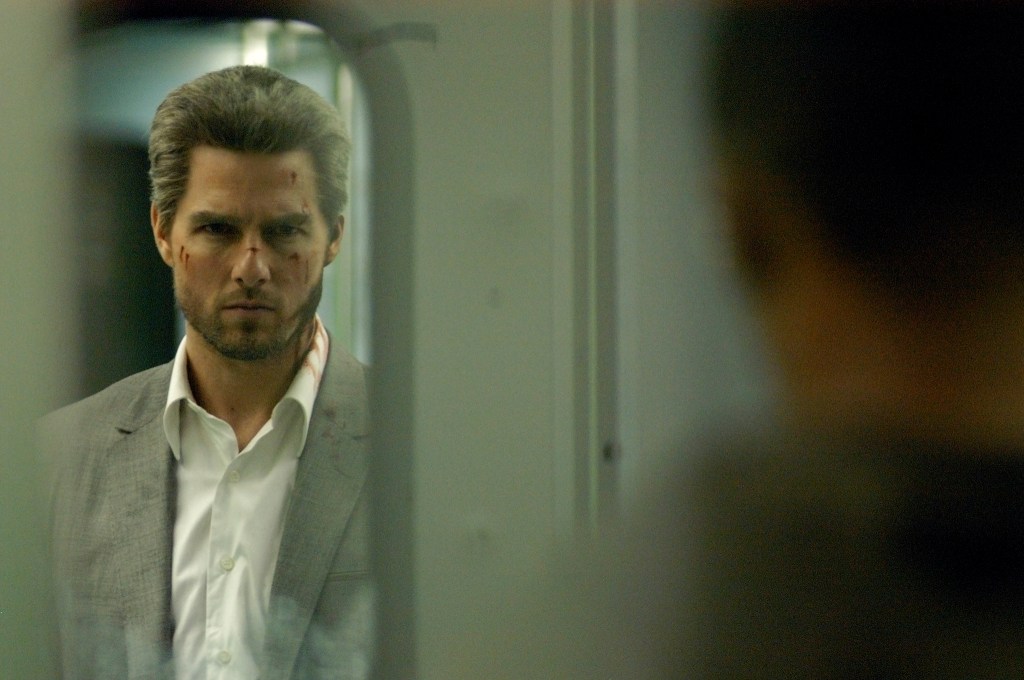
3. Collateral (2004)
Collateral
Two guys in a car, strangers to each other, both operating on a routine, a structure that they rarely break from, moving as one through the luminous L.A. night but to different ends.
Collateral is a wonderous neo-noir that pivots two men with differing moral compasses against each other: Max (Jamie Foxx), a slave to his inhibition, to his failure to act and make a difference to his life; and Vincent (Tom Cruise), a man untethered, a multi-faceted nihilistic hitman who gets in, gets out, and keeps moving forward.
Much has already been written on Collateral, from its vivid imagery to the rawness of its digitised look — at once enticing and haunting. Vincent poses a threat to Max’s idealised vision of tomorrow, but also an opportunity to start making things happen and not idle by.
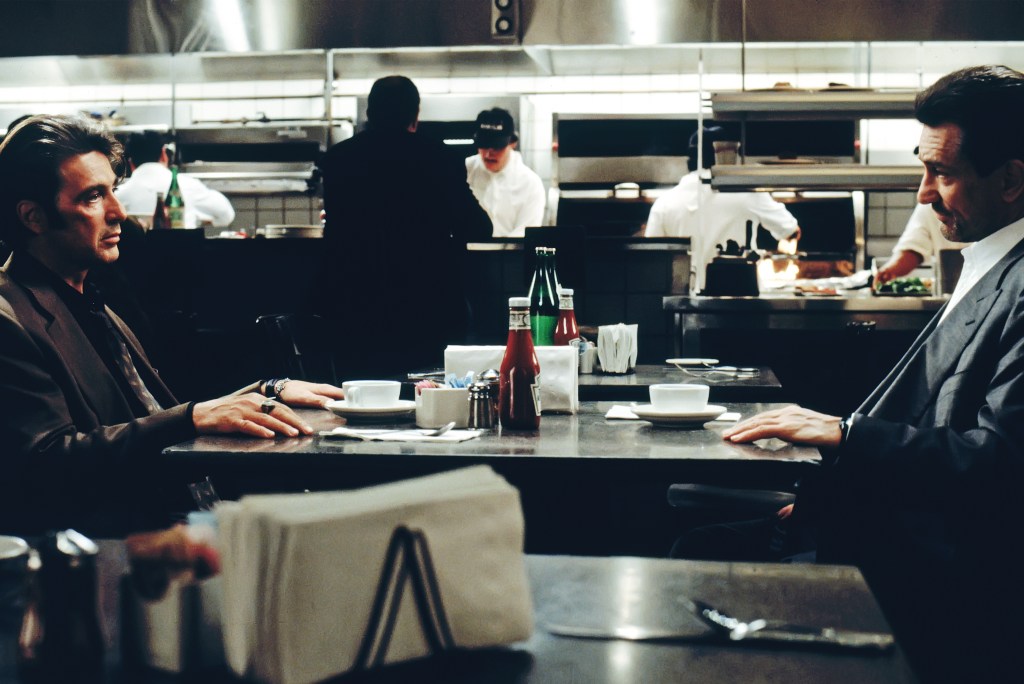
2. Heat (1995)
Heat
What does one even say about what, in the eyes of many, is Mann’s magnum-opus?
Heat is the sum of many parts, but it doesn’t work without its two key pieces: Al Pacino and Robert de Niro. The duo, reunited together on a feature for the first time (and for the first time ever in the same scene/s) since The Godfather Part II (1974), Pacino and de Niro are two sides of the same coin.
Vincent Hanna and Neil McCauley are like yin and yang — they don’t mix but they can’t function without one another. This speaks to Mann’s wider commentary on good vs evil, crime vs order which has been the focal point for 90% of his oeuvre. In Heat, Pacino and de Niro accentuate Mann’s fascination with these binary opposites to their full extent.
It’s as though these characters revel in the chase, of being the hunter and the prey, and they treat it like a drug that supersedes everything else in life. Mann brilliantly captures this through bright neon lights and the wider city which acts as its own sanctum that gives weight to the chase. Nothing is as beautiful as the city lights in a Mann film where cop cars race down the freeway in a storm of intensity.
But Heat is also made up of moments: the diner scene between Neil and Vincent is one of the greatest moments of character interaction in cinema history as these two men come face to face, pause the chase, and acknowledge each other; the downtown LA shootout where Mann shut down multiple blocks to shoot one of the most jaw-dropping scenes in any film ever; and the poignant finale where the two leads lock horns for the last time.
Without Heat, we may never have had The Dark Knight (2008), and that’s just one extra reason to watch this if you haven’t.
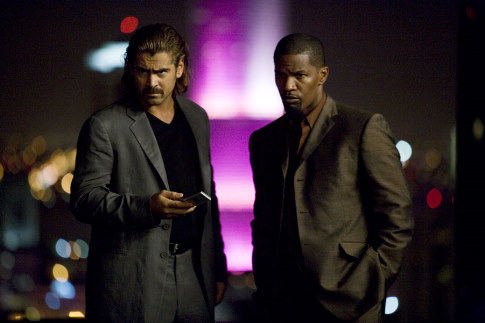
1. Miami Vice (2006)
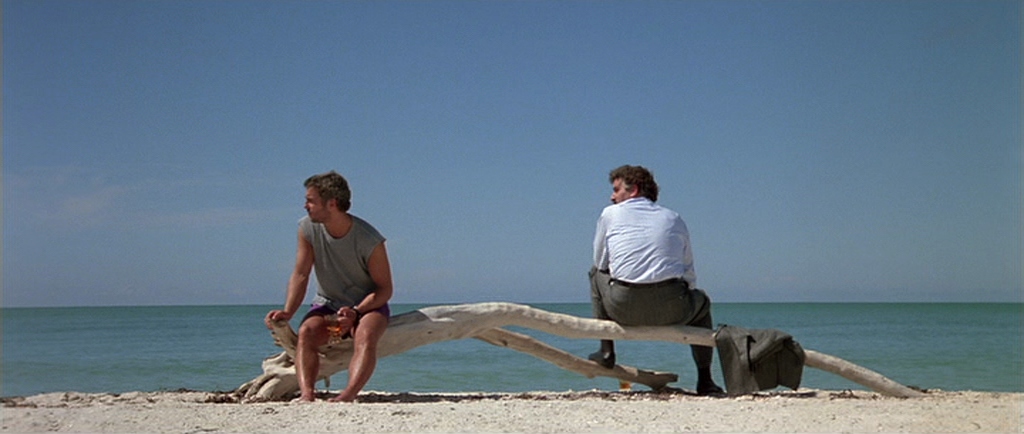
Miami Vice
I’m sure Miami Vice is a top-three Mann on anyone’s ranking of his work, but this bustling neo-noir about two under-cover detectives goes beyond the 80s show of the same name to become a gripping tale of people accepting that they’re living on borrowed time and learning how to manage the time they have left.
On the surface, Miami Vice is a buddy-cop thriller about two detectives infiltrating an offshore drug operation where they act as the middle-man between the international supplier and the local Miami buyer. Their mission is to find out who the buyer is, but the deeper they find themselves in the operation, the more they realise they’ll never have an opportunity like this again.
Jamie Foxx and Colin Farrell are the two leads here and (while already the case with Foxx) they instantly fit the Mann-model of characters who don’t always play by the books, are good at what they do, and sometimes make rash, emotionally led decisions.
But it’s through Mann’s ability to capture the fleeting nature of life, the suddenness of a bust and the shootouts that ensue, where Miami Vice makes a case for his best film. There’s a dream-like tranquillity to the use of digital footage here that might just be the best example of creating evocative images in the digital format. From the bright hues of the nightlife and its clubs to the more intimate sensual moments, there’s a sense of liveliness and temporality mixed together in the film’s visual language.
Mann’s growing fascination with the commodification and expendability of the human body really started gaining momentum here as well. Whether it be in the film’s final shootout where bodies drop at a whim or the use of people as shields for getting what you want (drugs, cash, obedience), it’s an aspect of his films that really does speak to how precious those moments of human interaction are for his characters when they do have them.
Marvel (by way of Star Wars and Rick and Morty), the surprising third instalment in the Ant-Man franchise, Ant-Man and the Wasp: Quantumania (2023), is one of the most enjoyable and cohesive Marvel films in years, and a great entry point into the new Phase of the universe. With a wildly inventive world that enchants and inspires awe, Quantumania manages to create something that’s been lacking from Marvel of late: pure imagination and efficient storytelling.
Quantumania kicks off with a return to the Lang family. Scott (Paul Rudd) is touring his ant-pun-filled memoir; Hope (Evangeline Lily) is running the company to improve many noble causes from affordable housing to environmental rehabilitation; Hank (Michael Douglas) and Janet (Michelle Pfieffer) are reunited and retired; and Cassie (Kathryn Newton), now 18, is getting arrested protesting the police for tearing down displacement camps. The surprising heart of the film, Cassie both sparks the plot by creating a beacon to the Quantum Realm, as well as the thematic (socialist uprising via ants combats tyranny in a blockbuster? A+) and emotional story that is never beholden to other properties. The speed in which we are thrown into the world is appreciated and economical, especially in comparison to recent superhero films that have felt bloated and undercooked.
The Rick and Morty-fication of Marvel is complete in Ant-Man and the Wasp: Quantumania, with longtime comedy writer Jeff Loveness (Jimmy Kimmel Live, Rick and Morty) given sole screenwriting credit here. Previous Rick and Morty writers landing at Marvel include Jessica Gao (She-Hulk: Attorney at Law), Michael Waldron (Loki, Doctor Strange in the Multiverse of Madness, Avengers: Secret Wars), and Loveness. This connection to the cult TV show is felt particularly through its world-building and humour, as Loveness and Reed are clearly having a blast creating these unique quantum aliens, from snail horses to amoeba buildings and freedom fighters, all with a visual and comedic flair that feels considered. The parallel is also felt in its storytelling, as Loveness is able to craft an efficient and entertaining film that works independently of its outside world, maintaining a coherent thematic pull with compelling characters that feel genuinely changed through the experience.
(From left) Paul Rudd, Kathryn Newton, and Evangeline Lily in Ant-Man and the Wasp: Quantumania
Fears were rising that, with the emergence of the multiverse and glut of recent Marvel products, regular movie fans would be left in the dust. Thankfully, Quantumania is a refreshingly standalone film and a great entry point for this new phase of Marvel. The briskness of the storytelling allows you to get swept up in the world-building and creature design, sharing the sense of wonder Scott and Cassie have for the Quantum Realm. We are shown many sides to this new realm, from its refugee camps to its high society bars inspired by the Star Wars cantina (I was shocked not to have an original tune playing when they entered the room), all fully realised. The craft and consideration here are leagues ahead of recent entry Doctor Strange in the Multiverse of Madness (2022), where the biggest leap in the boundless opportunity of multiversal storytelling was an Earth where green means stop.
Director Peyton Reed, hot off helming a couple of great episodes of The Mandalorian, returns to complete his highly improbable but all-enjoyable Ant-Man trilogy. The list of directors crafting a full trilogy is short, with Reed joining Spider-Man directors Sam Raimi and Jon Watts on the superhero trilogy front. Through a consistently robust supporting cast, the Rudd-helmed franchise has always felt light on its feet and affable, mirroring its star.
Reed’s Ant-Man films thrive more in the conversational moments, both in comedy and tension than when action is required. Early entries allowed the action set pieces to play out like big-budget Honey I Shrunk the Kids (1989)homages, but in Quantumania, the action feels taken straight from the Marvel assembly line, with its rapid cuts, poor blocking, and hand lasers. Fortunately, Reed seems aware of these shortcomings, as the film does not rely on these moments for its crescendos, opting instead for more personal battles against Kang the Conqueror.
Paul Rudd and Jonathan Majors in Ant-Man and the Wasp: Quantumania
Jonathan Majors, the greatest recruit into the Marvel acting army thrives as the ominous but deeply felt villain Kang the Conqueror. Acting alongside Michelle Pfieffer for many scenes, Majors uses his physicality and always surprising depth of feeling to keep Kang more interesting and compelling to the audience, allowing him to balance out the film in ways we rarely see in Marvel villains. There is a tension and friction to his scenes that allows other actors to occupy space to play off of Majors, instead of merely dominating every moment of screen time, a rare gift to be used in a blockbuster film. The next Avengers film, Kang Dynasty (2025), is more likely to match the quality of Endgame with the emerging A-lister at its core.
No one would’ve imagined back in 2015 that Reed and Rudd would be completing a trilogy of Ant-Man films in 2023, with the third entry becoming crucial to the wider Marvel project with the emergence of Johnathan Majors’ Kang as the next Avengers villain (Loki appearance notwithstanding), let alone creating one of this quality. While still overfilled with messy CGI action set pieces, Quantumania thrives in its inventive world-building, with an economic and satisfying script by Loveness that allows its impressive ensemble to shine.
Ant-Man and the Wasp: Quantumaniais in theatres now.
The only story more common in Hollywood than a film about filmmaking is an award-winning director cashing in a blank check to make a dream project they may never get the chance to do again. Babylon (2022), the new film by Oscar-winning director Damien Chazelle, is an all-in movie for a filmmaker who knows the opportunity to make a big-budget, silent-era Hollywood romp with A-list stars will not come around again. We should be grateful the prodigious filmmaker chose to use seemingly every ounce of industry capital he had to get this oddball movie made, as even if the film isn’t great, there are enough transcendent moments, particularly early on, that makes it a ride worth taking.
Inside this whirlwind of frenetic Hollywood excess is a group of artists striving for their place in the moviemaking circus as it begins to transition from the silent era into the talkies. These include the star-to-be Nellie LaRoy (pitched to eleven Margot Robbie); a hustling upstart looking for his place in the movies and true heart of the film, Manuel Torres (Diego Calva); and ageing star with a waning grip on the top, Jack Conrad (Brad Pitt); including a suite of other terrific performers in this frenetic tragicomedy that you won’t soon forget.
Calva is wonderful in the film and a true revelation, but the standouts for the film are Li Jun Li and Jovan Adepo, who play singer and artist Lady Fay Zhu and jazz trumpeter Sidney Palmer respectively. Both characters are great in limited time, but even in a film of this width, their stories are sidelined too easily. There are essentially four films worth of story in Babylon, from Manny and Nellie’s rise, to Palmer’s rise in the industry that does not value him, to Lady Fay’s weaving through a constantly changing industry without the recognition she deserves, to finally Jack Conrad’s slow decline from the heights of stardom into irrelevancy. All these dense stories deserve more time than they are given, sidelined in favour of ambitious dalliances into the debauchery of the industry Chazelle seems so persistent to explore.
Li Jun Li plays Lady Fay Zhu and Jovan Adepo (back right) plays Sidney Palmer in Babylon from Paramount Pictures.
Surprisingly, given the long runtime, Babylon is stretched thin by its wide array of storylines. Jack’s story rarely interweaves with Nelly and Manuel’s, making them feel isolated. Chazelle’s previous films, Whiplash (2014) and La La Land (2016) work emotionally as two-handers between the leads, whilst here the key characters are oftentimes isolated from each other, striving for their own ambitious goals alone in a chaotic world. This is clearly by design, as Jack’s declining trajectory works alongside his divergence from the young upstarts who are looking to take over the budding talkies boom, but the film ultimately falters because of it.
Where Babylon never falters is in the deliriously bombastic score from Justin Hurwitz, which will no doubt pick him up another Oscar. This may be his crowning achievement as a film composer as Chazelle allows him room to dominate. Full of bombastic horns and drums that propel us into each scene with boundless energy, Hurwitz is the shining light in an uneven film with easily the year’s best score.
A surprisingly dark film visually, with Chazelle and cinematographer Linus Sandgren opting for a more natural use of lighting which heightens the dynamic contrast between the debaucherous night sequences and the bright daylight where the work gets done. This is most effective through the opening two sequences from the coke-fuelled bacchanalia prologue into the extended scene of manic moviemaking. It is clear this is where Chazelle finds himself most comfortable and where Babylon truly shines. Watching Manuel organise a mass of skid row extras for Jack’s war film or Nellie’s first day on set is electric, set to Hurwitz’s bombastic score, all within the ticking clock structure of the single day shoot, is one of the best sequences of the year. While I am always in favour of directors taking big ambitious swings when given the opportunity, there is a tinge of sadness that Chazelle moves away from these high points later in the film.
Jovan Adepo plays Sidney Palmer in Babylon from Paramount Pictures.
Chazelle has always been a filmmaker who wears his influences on his sleeve, which has been felt in the past, with Whiplash and of course La La Land, like a prodigious young filmmaker attempting to brush shoulders with both modern and canonical directors simultaneously. Here, the Oscar-winning director is working to rewrite the legendary Singin in the Rain (1952) as a tragicomedy structured somewhere between Scorsese classics Goodfellas (1990) and The Wolf of Wall Street (2013), or Paul Thomas Anderson’s braggadocio Hollywood epic Boogie Nights (1997). This is a lofty goal that is certainly appreciated, even if it doesn’t hit the mark consistently.
By wielding PTA as a key inspirational pole instead of the Boogie Nights director’s idol Robert Altman, Chazelle is playing a game of telephone with this style of film, ending up with a story with smoothed-over edges. Scenes of freneticism are shown cleanly, never feeling dangerous to the audience or its key players. Nellie and Manuel glide through manic scenes as smoothly as Sandgren’s graceful camera, creating a certain inevitability to their landing point that while interesting as a decision, ultimately flattens most defining sequences.
There are thematic depths to mine in Babylon, but they feel oftentimes short-changed in favour of larger set pieces. Manuel’s narrative of assimilation and identity is compelling and the most consistent thread being pulled throughout this 188-minute cinematic feast. We follow this immigrant story of a man who must essentially remove his nationality in pursuit of his ambitions within a rigid Hollywood system. Total annihilation of personhood for your art is something that clearly compels Chazelle as it is a key driver for his characters across his filmography, but it is here with Manuel that these themes truly land. We see him transform throughout the film, shifting into whiter clothing, changing his name to Manny more diligently, and even telling producers that he is Spanish, all in the hope that it gets him closer to his goal.
Margot Robbie plays Nellie LaRoy and Diego Calva plays Manny Torres in Babylon from Paramount Pictures.
What separates PTA’s writing from Chazelle’s is ultimately what is lacking in a garish epic like Babylon: romanticism towards its characters. This does not mean fawning over them but treating them with respect and humanity that allows us to connect with them. Chazelle too often uses his characters as vessels for obsession and ambition in a primordial sense, making them kinetic and engaging, but rarely emotionally involving. The most personal moment of the whole film is wedged between its two great opening set pieces, as we see the modest living arrangements of Nellie and Lady Fay after seeing them command the attention of the lavish Hollywood party through their powerful charisma.
Chazelle has made a career of crafting sequences with wide dynamics, thrilling highs hard cut into crushing lows that usually work wonders like in Whiplash and La La Land. Unfortunately, adding to its issues with being stretched thin, these dynamics end up compressing the emotionality into dust.
The anguish-laden death march that consumes much of the second half sucks all air and exhilaration from the theatre, so the film is unable to coast off his own momentum as it languishes to its finale. This total fever dream opening into a death spiral has been done to great effect before (Boogie Nights and Goodfellas), but in Babylon the work on characters is less involved on a human level so the feeling is widely cheapened.
Ultimately, Babylon feels like a terrarium of meticulous detail about a revered moment in Hollywood history, with the edges sanded down to create a smooth glass dome. Even its finale, which is attempting a Godard-esque swing for the fences, feels strained. Authenticity was not the predominant goal of the film (this is not 2009’s The Artist but with coke), but somewhere along the way, the heart of the film was sidelined in terms of gawking ambitious set pieces. There are incredible sequences here that will be burned into my retinas to the tune of blaring trumpets, but you may not feel anything at the end.