In a normal year, this writer would have no difficulty whatsoever in listing his favourite feature-length releases from the past 12 months. But 2022 was not a normal year.
Having obtained full-time employment for the first time in his life, moved even further away from Melbourne than he was before and settled into a place of his own, no time was left for his one true love: the cinema. What few spare moments he did have were spent returning to old favourites, viewing classics from yesteryear, fixated on streaming services or – on the very rare occasion – watching a blockbuster at his nearest theatre.
What’s more, these limited opportunities for moviegoing meant that several of the year’s most-heralded films weren’t seen until awards season, including The Northman, Glass Onion, Guillermo del Toro’s Pinocchioand the eventual Best Picture winner, Everything Everywhere All at Once, among others.
As a consequence, the well-established Top 10 format of this website (as utilised by Arnie and Darcy in their retrospectives) has been eschewed on this occasion, with yours truly instead listing seven of the pictures he enjoyed most in a very busy, cinema-sparse year.
The Batman
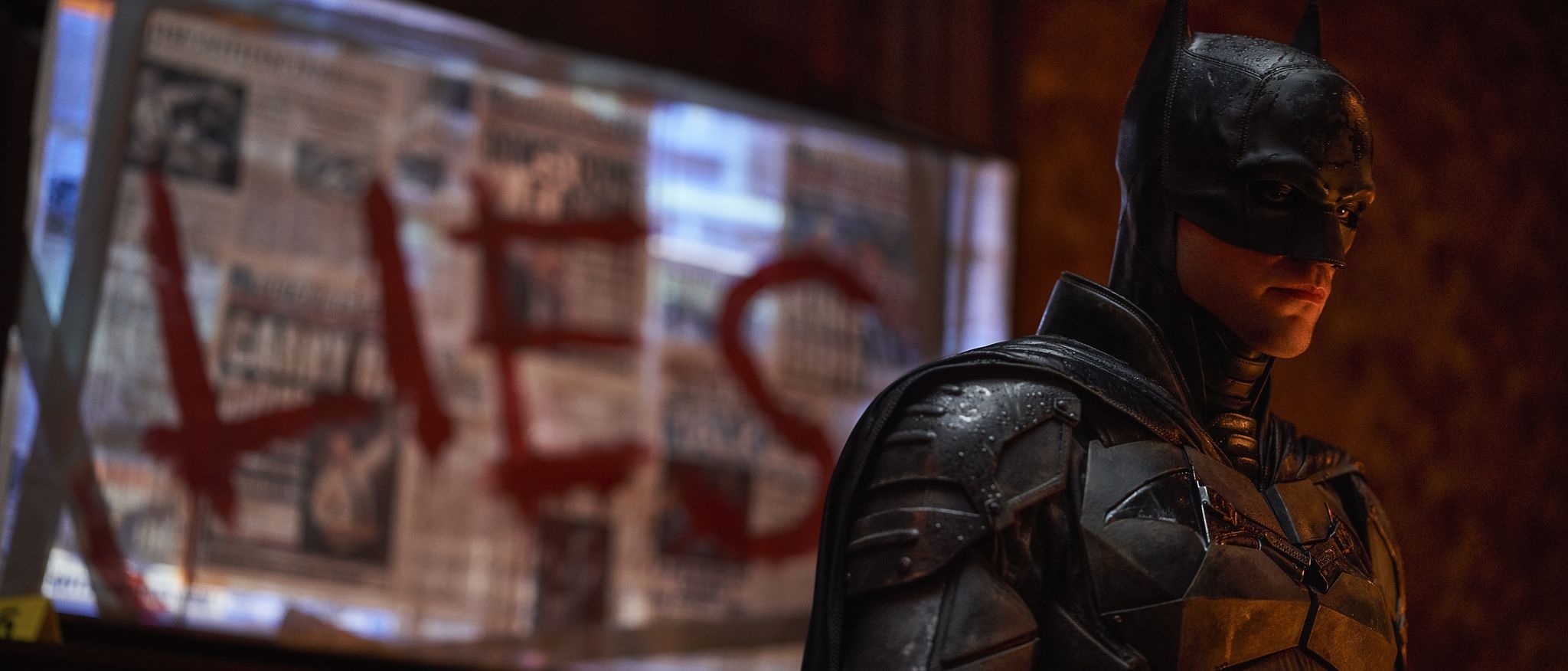
Oh, how people groaned when Warner Bros. announced they were rebooting Bruce Wayne’s adventures for the third time in two decades. “What,” they asked facetiously, “can this movie bring to the table that hasn’t already been done before?” In response came a dark and gorgeous spectacle that ranks among the best superhero blockbusters of all time.
There’s so much to admire about Matt Reeves’ picture, from an all-star cast that delivers fantastic performances across the board, to the exquisite cinematography of Greig Fraser, to the fusion of visual elements from Batman films past. And then there’s the exceptional score of Michael Giacchino, who borrows a simple four-note motif from Nirvana and utilises it to great effect. It’s not a perfect film – its screenplay lacks the narrative heft of Christopher Nolan’s Dark Knight trilogy, for instance – but in terms of thrills, The Batman can hardly be faulted.
Turning Red
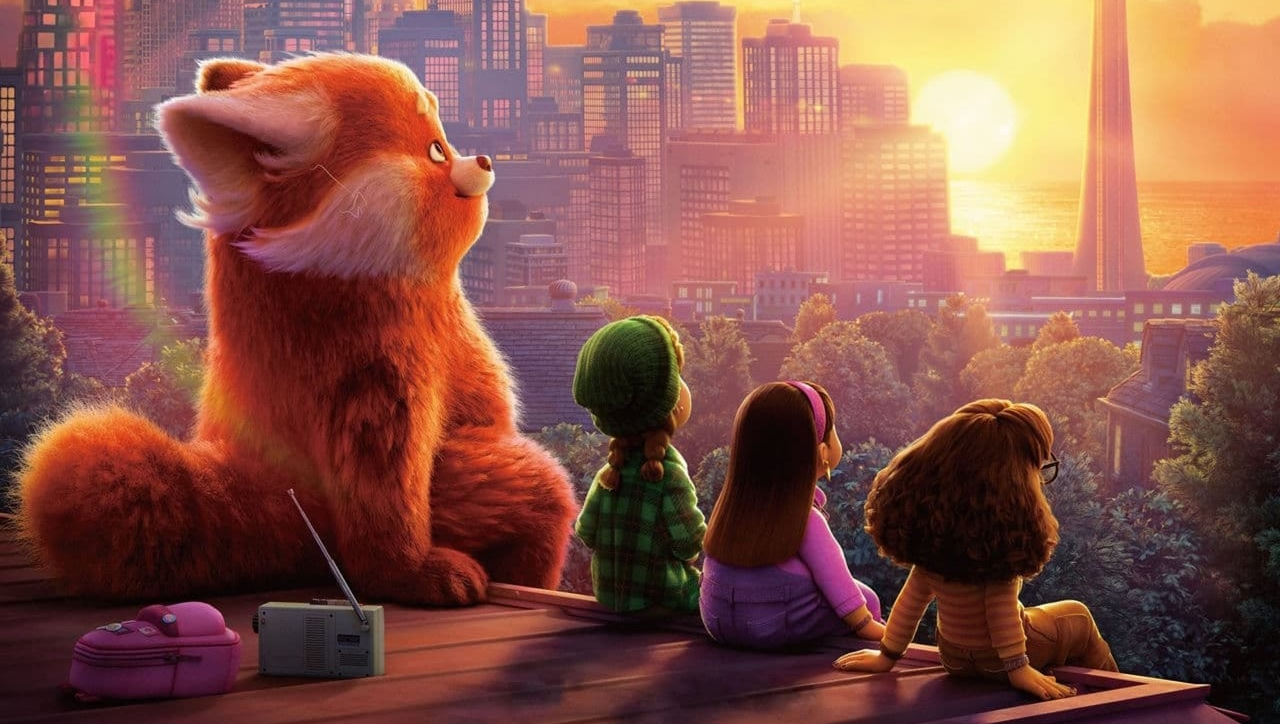
Every time Pixar appears to have lost its mojo, along comes a film that reminds everybody of their creative might. 2022’s reminder came from Domee Shi, writer-director of the critically-acclaimed short film Bao, who delivered a feature with a level of vim and originality not witnessed in the studio’s output for some years. And this is coming from a man who really, REALLY loved Soul (2020).
What particularly makes Turning Red delightful is how it forgoes Pixar’s hallmarks and tropes for a distinctive art-style, self-aware protagonist, rapid editing and energetic animation, all while delivering a resonant and timeless coming-of-age story. If anything, the picture serves as a convincing argument for Emeryville to take more risks with their material.
The Drover’s Wife: The Legend of Molly Johnson
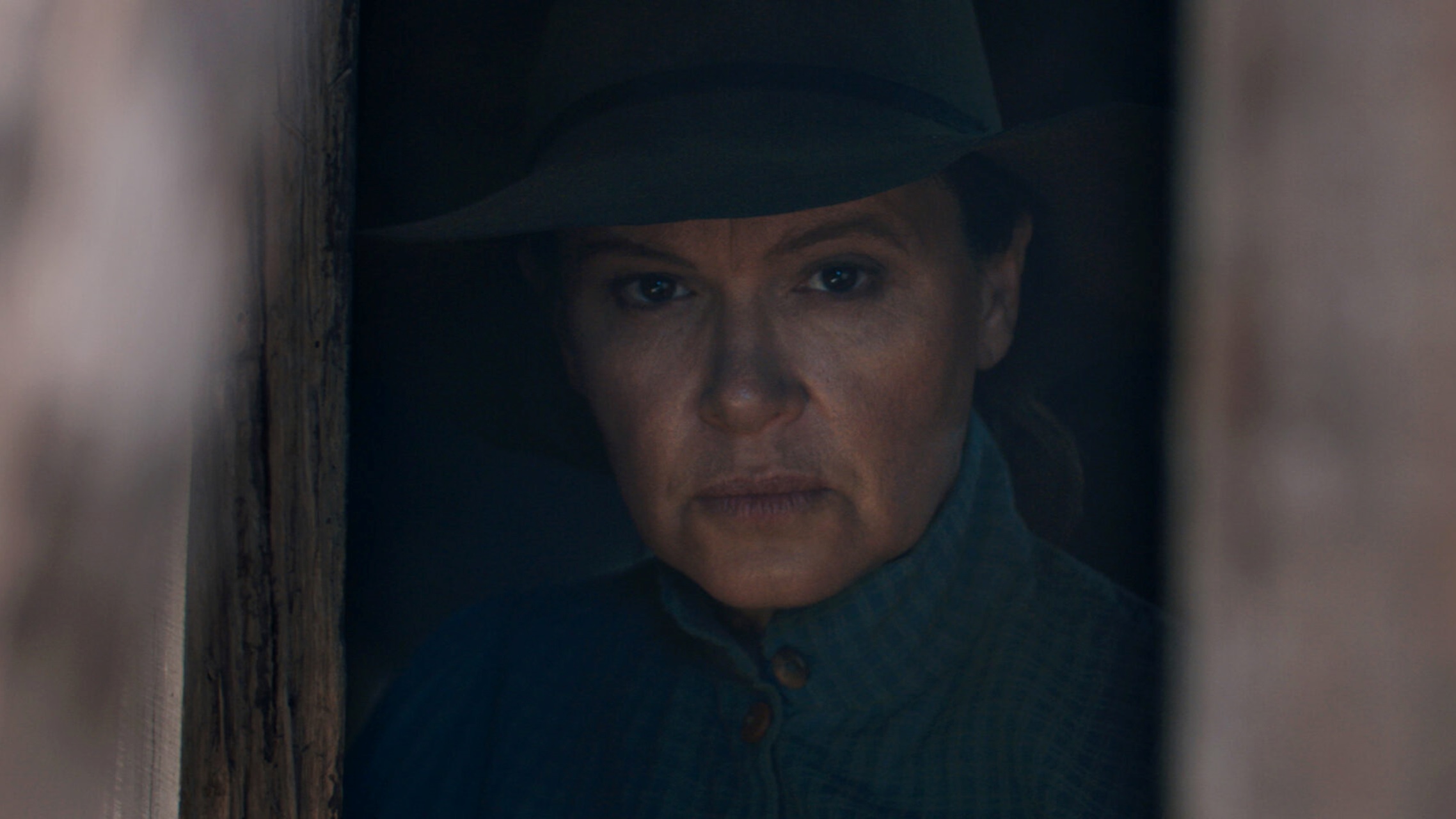
This would likely have made yours truly’s Top 10 of 2021, had it been released as scheduled – it was originally slated to premiere at the 69th Melbourne International Film Festival before a spike in Covid infections curtailed that plan, and its subsequent opening in theatres. Cinemagoers finally got a taste of what they missed in May – a Meat Pie Western that proved to be the best Australian production of the year, hands-down.
Juggling treble roles of star, writer and director, Leah Purcell (pictured) handles the grim and at times confronting material with confidence and professionalism. A stellar cast of familiar faces lend further gravitas to proceedings, while the acoustical score of Salliana Seven Campbell proves an ideal accompaniment, and Snowy Mountains a stunning backdrop. All of these elements ensure The Drover’s Wife as a fine addition to a rich, growing list of First Nations stories.
Top Gun: Maverick
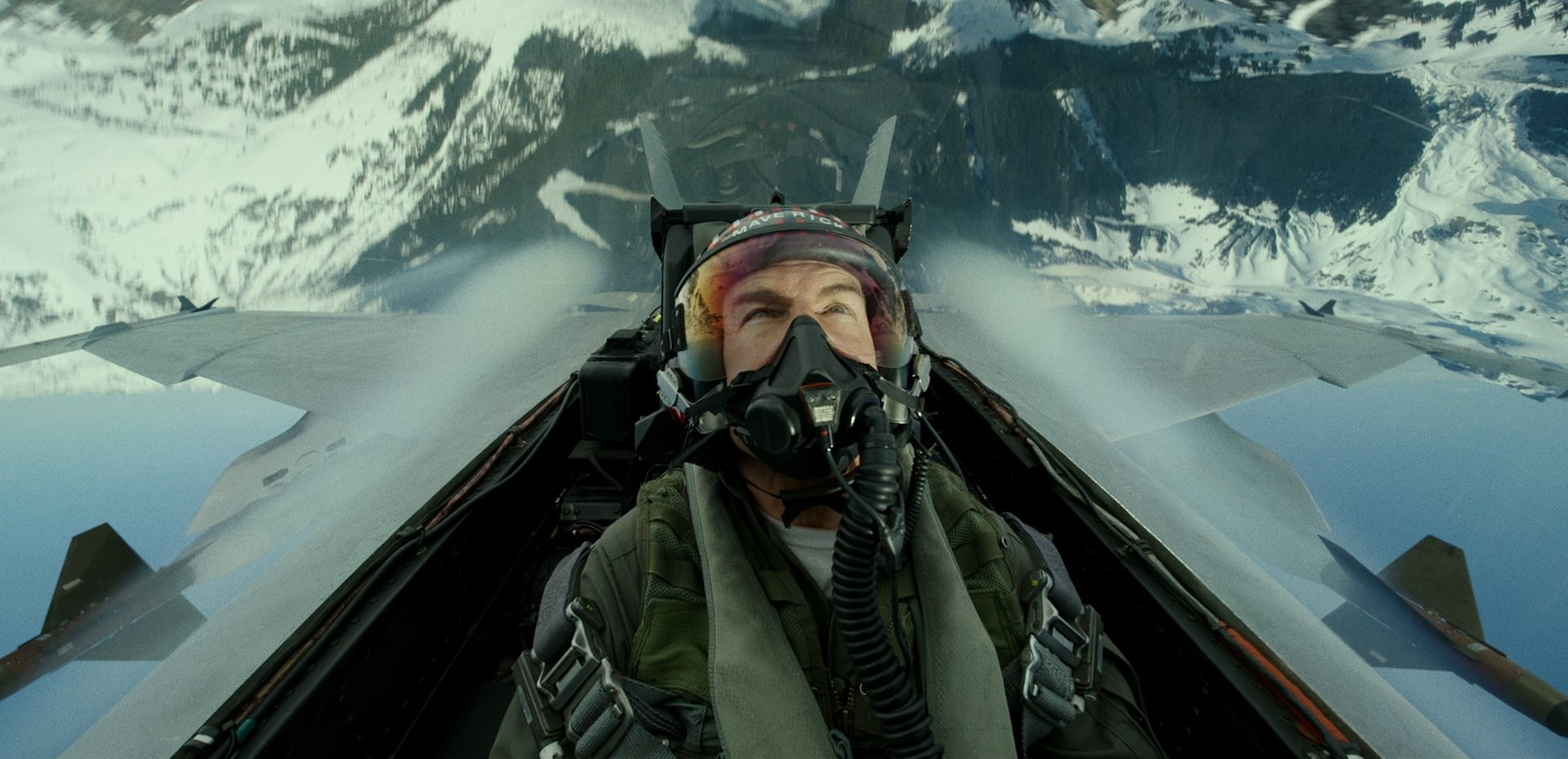
It was the sequel nobody asked for that became a must-see cinematic experience and earned praise as one of the best films of 2022 – an acclamation that’s being repeated here. After all, when a picture boasts a bevvy of practical effects, impressive stunt-work, exceptional cinematography, fantastic sound editing and a diverse cast stacked with many likeable, talented actors, it’s hard not to fall in love with it.
What makes Top Gun: Maverick even more enjoyable is how it pays tribute to the first Tony Scott-directed production, via the opening credits and a touching cameo from The Iceman himself, Val Kilmer. Had it evoked its 1986 originator even further and added just a tad more cheese, it would have likely become this writer’s favourite picture of the year.
The Bob’s Burgers Movie
What a shame this had to be released the same week as Top Gun. Had it not, a much larger audience may have paid witness to a bright, wholesome and entertaining caper that ranks as one of the best film adaptations of all time. That’s no mean feat, given its Emmy-winning source material is considered one of the best television programmes currently on-air.
Many qualities carry over from its originator, including the terrific voice-cast, quirky tone and catchy songs, while adding exceptional animation and an intriguing mystery with some great turns. While it doesn’t quite satisfy every itch that fans have ever held, it does fulfil co-director and producer Loren Bouchard’s promise of being accessible to those who don’t watch the Belcher family’s adventures on TV. For that reason alone, The Bob’s Burgers Movie is worth a watch.
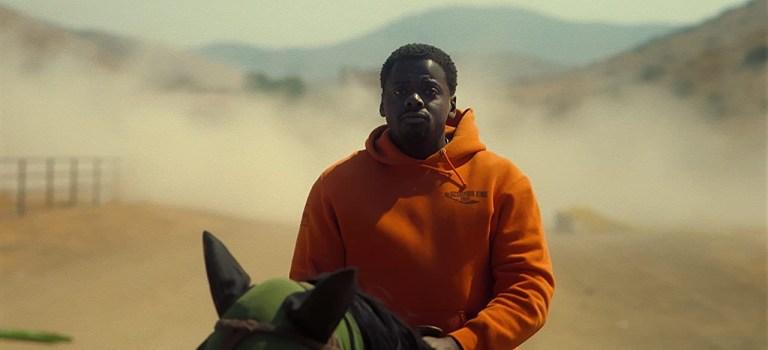
Nope
Having floored the cinematic landscape with his debut feature Get Out (2017) and delighted just as much with his follow-up effort Us (2019), anticipation was rightfully high for Jordan Peele’s third directorial effort. Not only did he deliver yet again with another smart, engrossing horror flick, he also did the impossible: made a whole generation afraid of clouds.
Among the elements that make this film a winner are the impressive photography of the surehanded Hoyte van Hoytema; the spooky, ethereal score of returning Peele collaborate Michael Abels; the great performances of the entire cast; and an ingeniously-designed UFO – sorry, UAP – that’s bound to influence every science-fiction film that follows. Also, don’t be fooled by that lowly “M” rating – despite possessing less violence and blood than its contemporaries, Nope is nothing short of a scary and most terrifying feature.
Puss in Boots: The Last Wish
As one of the strongest years for the medium of animation in recent memory, 2022 gifted no shortage of great offerings, be they stop-motion, hand-drawn or rendered with computers. DreamWorks provided the metaphorical cherry atop a most delicious cake in December’s final days with a sequel that could not be more different to its predecessor.
Contained within Puss in Boots: The Last Wish is a mature, pensive screenplay where complex, nuanced personalities grapple with conflicts that are usually reserved for adult-oriented dramas, not animated children’s films – a surprising and most-welcome move. Paired with these thoughtful musings is an art-style that, pleasingly, borrows just as many cues from oil paintings or storybooks as it does from Spider-Man: Into the Spider-Verse (2018).
One of the best films from MIFF 2022 has finally arrived in theatres, Broker (2022)is a deeply complicated but always empathetic drama from a true modern master. Hirokazu Kore-eda’s films have a certain sticky texture, maturing in your mind long after the credits roll. His films will always affect you emotionally, but their true power is the depths he is able to mine from a collection of characters.
Born out of a desire to work with legendary Korean actor Song Kang-ho, working with a large swathe of the Parasite (2019) production crew, Kore-eda has crafted another thorny but deeply humanist portrait of an unlikely family, thrown together through unusual circumstances. Broker follows a pair of church volunteers Ha Sang-hyun (Song Kang-ho) and Dong-soo (Gang Dong-won), who sell unwanted babies that are left in the church’s baby box on the adoption black market. When a young mother Moon So-young (pop star IU), returns for her baby the next day, she catches wind of their schemes and forces the brokers to take her on their journey out of town to sell her baby to the right family.
Even for one of the greatest humanist filmmakers to ever live, this is an extremely difficult story to operate as an empathy machine for an audience, making it all the more moving when it does break you open. Most of the auteur’s films start with a sweeter taste, which then patiently develops into a more acidic and complex series of emotions and flavours. In Broker, however, Koreeda begins with his darkest and most complicated place to date. The film builds and develops on top of this shaky foundation, unmasking compassion and empathy in unexpected places that will leave you in pieces.
Song Kanh-ho in Broker
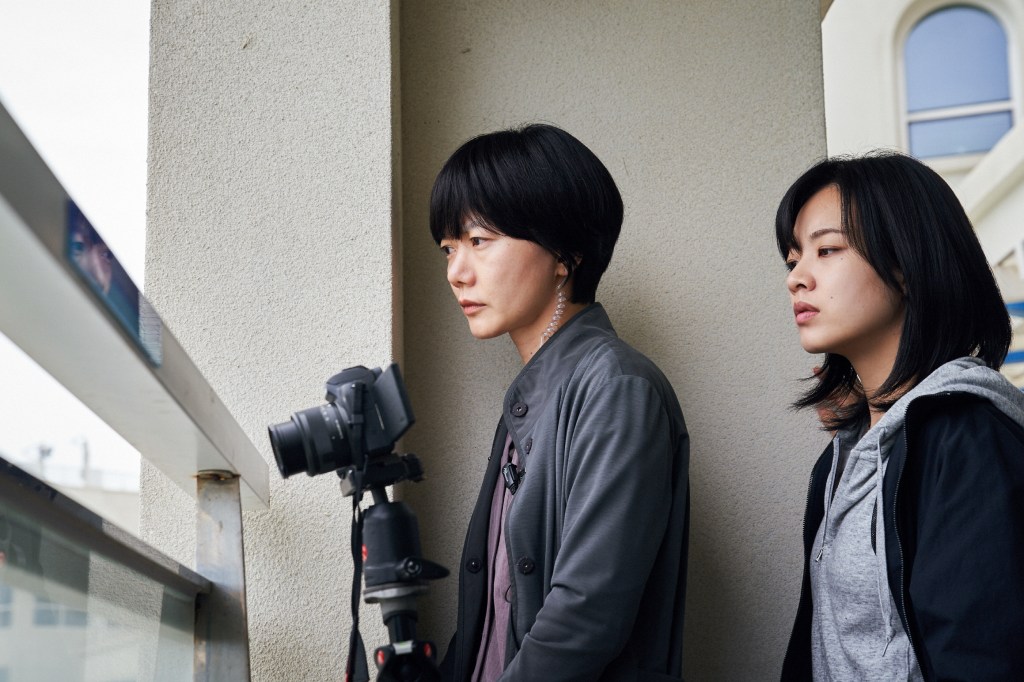
Where The Truth (2019) faltered in its execution of performance (French and Japanese styles are worlds apart), Broker is one of the best ensembles put to film in years. From Song Kang-ho’s heart of gold humanity in face of difficult circumstance to the detectives Lee (Lee Jou-young) and Su-jin (the always terrific Bae Donna) that are tasked with taking down the operation, the entire cast is pitched perfectly to Kore-eda’s empathetic underpinnings that make his work so affecting. But it is IU (real name Ji-eun Lee), who really stands out and is transcendent in the role, vaulting her immediately into the top tier of pop star performances.
Broker operates closer in style to The Truth, the filmmaker’s big swing after winning the Palme d’Or for the masterful Shoplifters (2018), which was filmed away from his home nation of Japan and in a foreign language. Both Broker and The Truth has less of the documentary style of pacing and mise en scene that made him legendary in Japanese cinema, showcasing his adaptability not just in style, but in his ability to work with a cast and crew that speak different languages.
Broker, leaning into the more Korean style of cinema, is more forceful and plot-driven in its storytelling than Kore-eda’s other films, that often stem from his documentary background. The film is quite astonishing and deeply felt, with perhaps the only false note being its loud, heavy-handed moments. These moments are further leaned on by quite an obtrusive and manipulative score by Jung Jae-il, especially by Kore-eda standards, who usually allows emotions to develop more naturally in his films.
Bae Doona (left) and Lee Joo-young (right) in Broker
In most Kore-eda films, a single location is used that is full of so much personality and attention that it feels like a whole world. In Broker, a road trip movie for the most part, that single location becomes the two central vehicles: Ha Sang-hyun’s laundry van with its broken back door but homely interior, and Su-jin and Lee’s detective sedan where they spend most of the film.
Themes of care in different forms permeate the film, with the notable motifs of rain and shirt buttons coursing through its veins. By weaving themes of care and compassion between Ha Sang-hyun and detective Su-jin through their clothing, Kore-eda complicates his seemingly straightforward detective story through his characters’ shared connections. In these small moments, Kore-eda excels and deepens his character portraits which have made him a modern master.
Perhaps the most emotionally overwhelmed you will feel in a theatre this year occurs in a hotel room with Moon So-young and the ragtag crew, with all the lights off, thanking them for being born. She is unable to say it directly to her child who she may never see again, so she says it individually to the whole group. This is a group who have felt discarded and left behind in their own lives, so to have a young mother saying this to them with the same care as she tells her own son, is profound. This is one of the most emotionally resonant scenes Kore-eda has put to film, which is saying something given his extraordinary filmography.
Fellow filmmaker Kogonada once described Kore-eda’s films as tasting similarly to the legendary director Yasujirō Ozu’s work due to its aftertaste. “When we leave his films we experience a similar aftertaste, which is to say, a deeper sense of life. And it turns out that the every day is a lot like tofu (which may explain why Ozu referred to himself as a tofu maker). It may seem bland in comparison to the spectacle of other dishes and desserts being offered, but if we happen to stumble upon a master chef capable of bringing out its subtle flavours, it will change the way we experience tofu forever.” In this case, Broker is perhaps Kore-eda’s most complex dish yet, one that will stay with you forever.
“Welcome back Mr Wick” (RIP the iconic Lance Reddick). The bravura American action franchise of the past 10 years, John Wick returns bolder, brasher, and more inventive than ever in John Wick:Chapter 4 (2023). The film, clocking in at 169 minutes with an immense 14 action set pieces, figures which on the surface would cripple most films, but in reality are remarkably well paced. Renown stuntman turned in-demand filmmaker (his IMDb page reads like a to-do list) Chad Stahelski has always focused more on individual moments than a wholly engaging narrative, which is still the case with the fourth entry in the franchise, but the attention to detail in these moments, along with an extraordinary ensemble that are all giving their best, makes the film as a whole immensely enjoyable.
The franchise has always focused on three central tenets: gloriously realistic fight choreography with one of the best to ever do it in Keanu Reeves, stunningly inventive visuals in all real locations, and minimal dialogue with an eye for larger world-building on the margins. These are all ratcheted up to extremes in Chapter 4, bringing the film closer in comparison to a David Lean film than whatever the Russo’s are producing on Netflix.
Following on from the events of Chapter 3: Parabellum (2019), John Wick (Reeves), down a finger and assumed dead by the High Table, must traverse even further reaches of the globe to take down the senior figures of the organisation. The major inclusion to the franchise here is the legendary Donnie Yen, and his presence is felt immediately as the blind retired assassin Caine, tasked with eliminating his old friend John. Caine’s story parallels John’s from the first film, a connection that is simple but effective in a film that knows when to expand the story and when to be quiet and let audiences bathe in the stylised action set pieces.
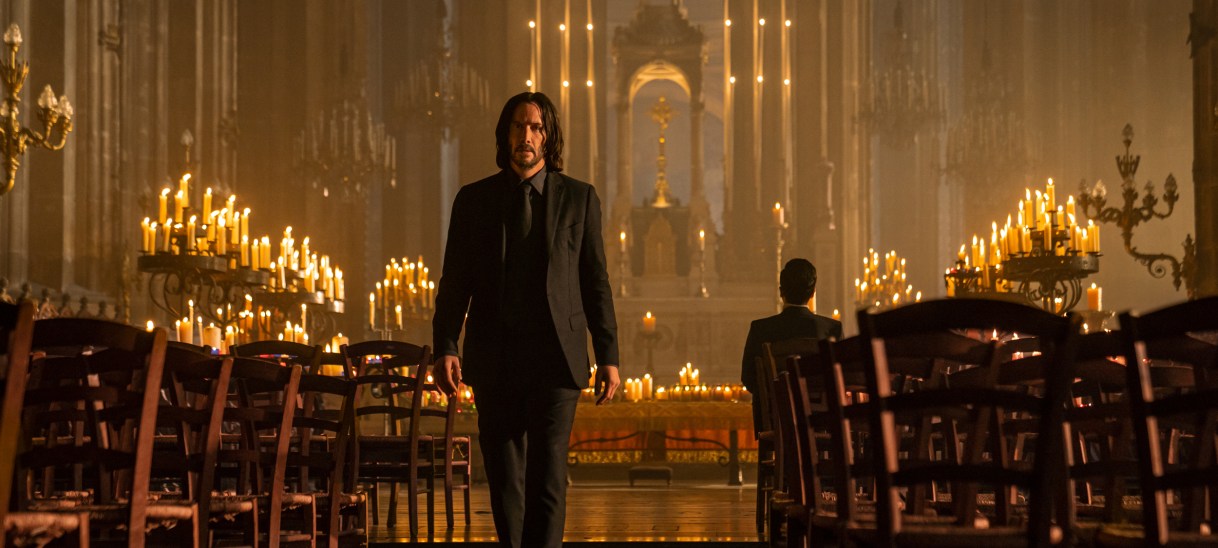
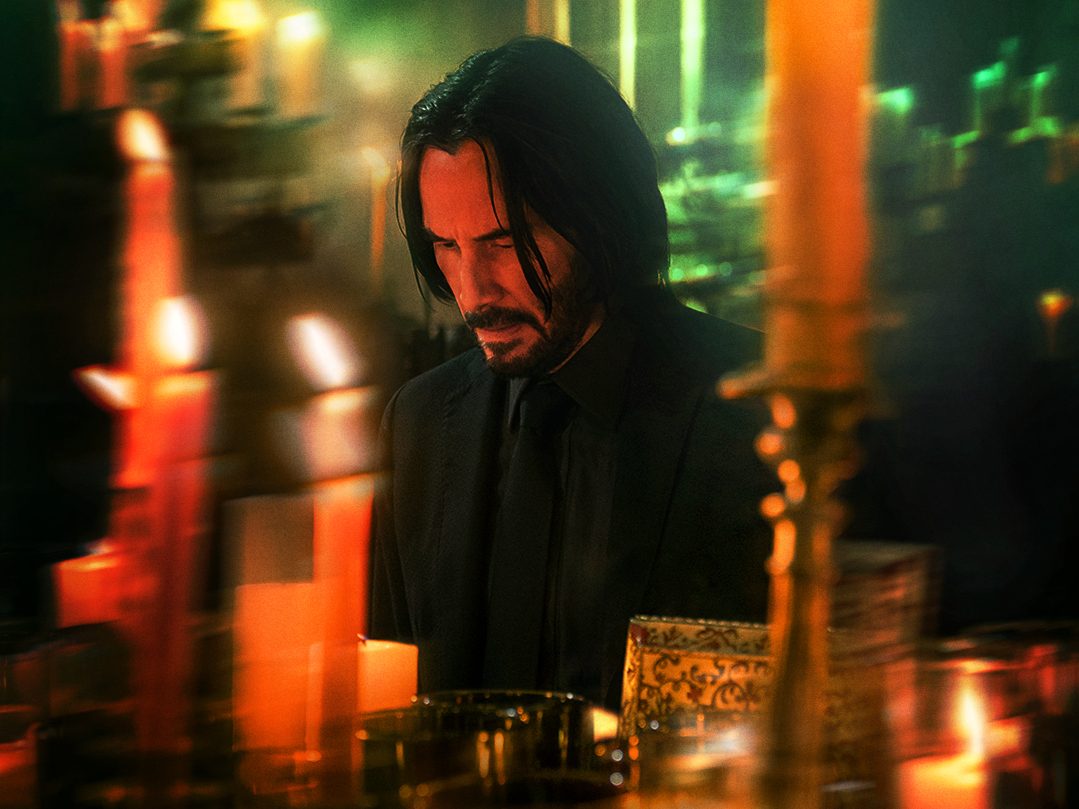
Keanu Reeves in John Wick: Chapter 4
The franchise has been able to boast an incredibly varied list of cameos from Angelica Houston to Boban Marjanović, adding a sense of scale and interest to each sequence. Added here are Yen, Bill Skarsgard, Rina Sawayama, and Hiroyuki Sanada, all improving on an already impressive ensemble that is unparalleled in an action franchise. Yen in particular is incredible, adding a coy and aloof nature to one of the best fighters in cinema history makes for a constantly compelling screen presence. To be able to add a figure like Yen to the franchise after four films shows the filmmakers are never satisfied with what was previously achieved, always seeking a greater experience for audiences, which they have accomplished in spades.
John Wick has long been a quintessential YouTube clips movie, focusing on individual moments over a cohesive narrative. Chapter 4 is easily the most ambitious entry. Whether that is in its outrageous Berlin rave sequence, incredible Donnie Yen fight sequences, or a seen-to-be-believed false roof bird’s eye oner with explosive shotgun rounds that will have audiences with their jaws on the floor and an overwhelming desire to cheer in appreciation.
The best inclusion to the franchise introduced in Chapter 3: Parabellum (besides Halle Berry and her dogs) are the locations outside of New York, something that is being further expanded here in Chapter 4. Taking place in Berlin, Paris, and Osaka, this film is able to flex its muscles visually and tonally which adds important freshness to a world that could have relied on what previously worked instead of giving audiences a three-hour endorphin rush.
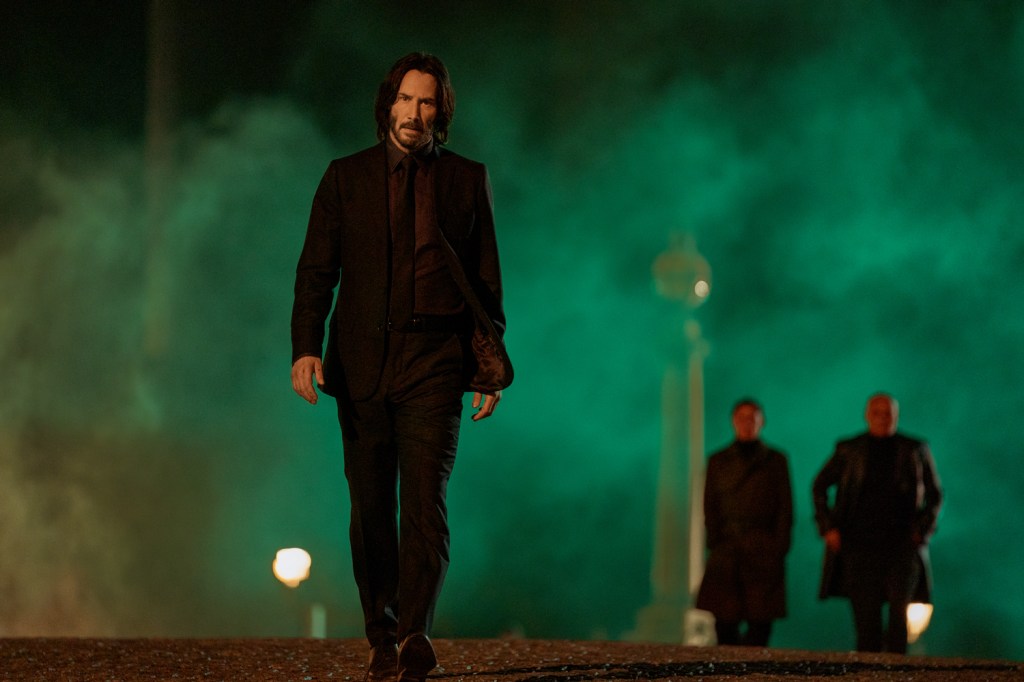
Keanu Reeves in John Wick: Chapter 4
Connection to the entire franchise can be felt throughout Chapter 4, from its extraordinary Berlin rave sequence to Mr Nobody’s attack dog. These moments never feel like a tired repetition, but an evolution of form that makes this film the quintessential John Wick film. With the additions of location jumping and more convoluted plots, the John Wick franchise has morphed into a sort of John Woo-inspired, American Wuxia James Bond or Mission Impossible, with Keanu Reeves at its centre. The only thing it’s missing is the iconic score (although the music is always top-notch).
Among the best blockbuster theatre experiences this decade, Stahelski and crew have pushed every moment to its limits to put John Wick: Chapter 4 in the pantheon of action filmmaking achievements. Comfortably the best film in the series, Chapter 4 is a perfect culmination of everything that makes the previous films great, heightened and stylised to the highest degree imaginable.
Arnie, Darcy and Tom recap the 95th Academy Awards, including everything from Ke Huy Quan’s extraordinary journey to win the Best Supporting Actor award; his fellow cast member Michelle Yeoh’s Best Actress win; the biggest winner of the night in Everything Everywhere All At Once; All Quiet on the Western Front‘s underdog wins; and Brendan Fraser’s Best Actor win to cap off his run of wins — we have it all.
It’s the most wonderful time of the year if you’re a cinephile, and it’s just around the corner.
Yes, the Academy of Motion Picture Arts and Sciences’ Night of Nights —otherwise known as “The Oscars”— will be taking place this Monday morning, March 13th (Naarm time) and the team at Rating Frames is as excited as ever.
As they did last year, our three resident critics have made their predictions as to what, or who, will be victorious in all 23 categories.
Below are the films that Arnel, Darcy and Tom are predicting will walk away with a coveted statuette at the 95th Academy Awards, and their personal vote, in each category.
“Please lord, make me the biggest star the world has ever seen”, our heroine Pearl (Mia Goth) pleads each night before bed, accompanied by a garish string accompaniment that draws immediate comparisons to the early colour cinema. A skilled director of pastiche, Ti West has crafted a Douglas Sirk-styled film within the dark and gory world he has created with muse Goth, that is sure to thrill old and new fans alike. Immediately following the release of one of 2022’s best horror films, X, it was announced West and Goth will be creating a trilogy surrounding these characters, here with the prequel Pearl (2022), and concluding with MaXXXine (2023), all following Goth’s characters.
Set in 1918 Texas during the Influenza pandemic, Pearl is the only child of a German immigrant family. Pearl’s father (Matthew Sunderland) is infirm, laying the burden of survival in a trying time with Ruth (Tandi Wright), Pearl’s domineering mother who needs to get her daughter to help out around the farm. Pearl, however, is desperate to become a silent film star and dancer, sneaking off to the picture house every opportunity she gets.
Pearl’s love of cinema and desire to be a star is established in X, something that ties her to Goth’s other character Maxine in that film, which is deepened here. Pearl is never more joyful than when she is at the picture house, watching the newest dancing features. Goth and West craft such an empathetic and archetypal image of a budding star hoping to break out, that her budding malevolence is allowed to boil under the surface.
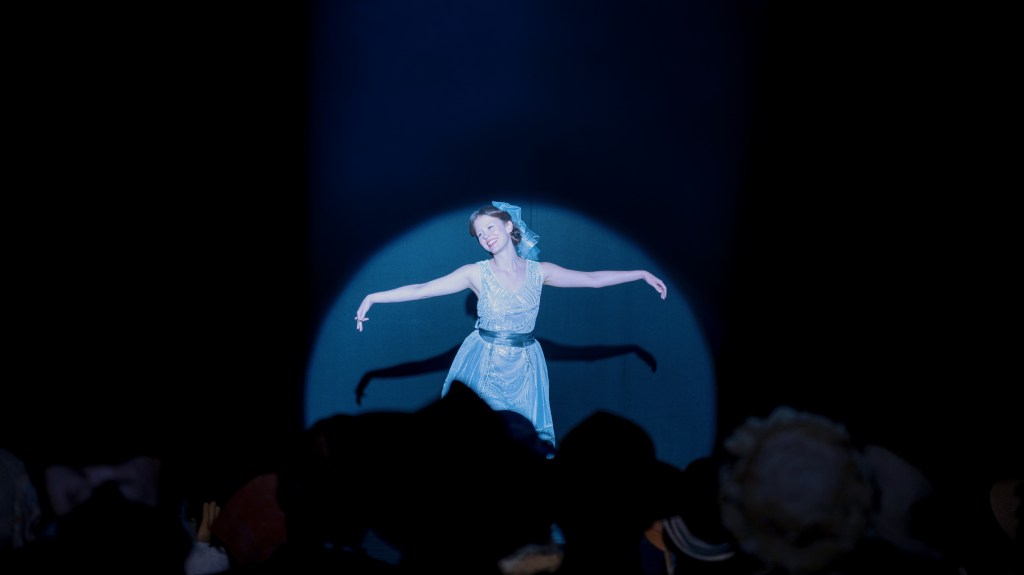
Mia Goth in Pearl
The film is aware its greatest strength is a close-up of Goth’s expressive face, a cinematic world into itself. Enough can’t be said about Goth’s commitment to the performance of this character, beginning in X but truly flowering here to create a singular horror cinema performance. You can immediately feel Goth’s co-writing credit in the character, similar to Hunter Schaeffer’s co-writing credit in the Euphoria (2019) Covid special, Fuck Anyone Who’s Not a Sea Blob (the artistic peak of the show), where a performer has a psychic connection to their role that tears through the screen.
The saturated, Wizard of Oz (1939) inspired-yet-repressed world that Pearl inhabits can grow tiring at stages, but the final act is such a showcase for Goth’s magnetism as a performer and writer, that the film leaves you satisfied. West’s films often have an issue of peaking early through his deft skill at creating tension and dread compared to his bloody finales, an issue absent in Pearl.
The film’s setting within the Influenza pandemic whilst being a Covid-produced film has a simple charm to it, with all crowds in masks and characters bemoaning the difficulties of recognising people in them. Pearl’s yearning to be out of the isolation of her farm during this pandemic is a more relatable experience than you’d expect to come out of this film.
Mia Goth in Pearl
Pearl is a unique prequel in that it has the potential to be viewed before the original film, X, due to its focused character study of Pearl, a character you leave the first film aching for more details on. West and Goth feel acutely aware of the aspects audiences were craving more from in X, namely the Pearl character and a further relishing of Goth’s unique screen presence.
Where X focuses on its wide ensemble and 70s environment, Pearl is very much a character study. Aside from a compelling performance by Tandi Wright as Ruth, Pearl’s mother, we are not given many deeply written side characters, allowing the audience to narrow their attention to our star. Wright and Goth have a similar dynamic to Spacek and Laurie in Carrie (1976), a foundational text for the film, particularly in its latter stages. While West is focusing on the juxtaposition of the Cinemascope aesthetic with the gore, the true dynamism is achieved through Goth’s varied performance that gets stymied by Wright’s hard-lined determination to survive their struggling lives. The real climax of the film is not a gory showstopper like in X, but the culmination of Pearl and Ruth’s resentments colliding at a family dinner.
The West trilogy is soon to be completed with the upcoming MaXXXine (2023), the first A24 trilogy. Following on from the events of X, this second entry in this quickly produced franchise is a unique world that has been crafted by a pair of oddball filmmakers in West and Goth that is refreshing in the world of IP drudgery we find ourselves in the never-ending middle of.
No one manages to blend crime and action on the big screen quite like Michael Mann. From the sprawling cityscapes that act as their own character, to the attention-to-detail with each and every aspect of production, Mann’s films are distinctively his own. It seems fitting then to look back on his stellar oeuvre and try and rank his titles based on my sentiment towards them at this moment in time. This is especially the case following his recent novel and sequel to the iconic Heat (1995), which he co-wrote with Meg Gardiner, and leading up to his Adam Driver-led, Enzo Ferrari biopic, Ferrari (2023).
Of course, like with any list, opinions are different and feelings towards films change as time goes by and depending on where in your life you find yourself. But for now, these are his films ranked from worst (if you can call them that) to best:
11. The Keep (1983)
The Keep
Whether it’s due to the fact that large chunks of this film were cut out, or because it’s the least Mann-esque title on the list, The Keep is what I like to call Mann’s brain fart.
His second feature following the brilliant Thief (1981) represents his first and clearest (as there are elements of this in his true crime thrillers) foray into the horror genre. It’s a film plagued by bland and uninspired performances; a nonsensical narrative involving Nazis, a devilish entity, a supernatural Scott Glenn and one of the strangest but best sex-scenes you’re likely to see in a Mann film or otherwise; an interesting production design; and a pretty neat synthy score by Tangerine Dream.
Given Mann has disowned the film because of Paramount’s treatment of it, one can only imagine what the unreleased director’s cut had in store — we can only hope it graces out screens someday.
10. Manhunter (1986)
Manhunter
Many might find my ranking of Manhunter to be completely against the grain, but this thriller revolving around capturing a psychotic serial killer just never resonated with me on a narrative level like some of the other titles on this list (and I still gave it 3.5/5).
Manhunter focuses on FBI agent Will Graham (William Peterson), a detective who’s come out of retirement to help locate an elusive serial-killer with strange motives. His past experiences hunting figures like Hannibal Lecter (a subtle performance by Brian Cox) means he’s the perfect guy for the job.
Manhunter uses Will and the serial killer he’s hunting to create an interesting parallel between the mind of a psychotic man and the man capable of catching him. Its use of home video and the focus on truly seeing almost posits that these two men aren’t so different in how they see the world, but to different ends and outcomes.
Whether or not I was expecting a more conventional voyeuristic mystery-thriller in the way that Se7en (1995) or Rear Window (1954) are —where the killer feels like they’re an arm’s length away, only for the satisfaction of catching them to be snatched from you— is difficult to say (perhaps that’s what people love about this?), but I found myself at a crossroads by the third act. I hope my opinion changes on a second viewing.
9. Ali (2001)
Ali
On the surface, a film about Muhammad Ali seems like the farthest thing from a Michael Mann joint. There’s no mesmerising cityscape, no sirens or gunfire, no real suspense in the way that his crime films create suspense, and the subject matter doesn’t exactly scream ‘Michael Mann’.
But this film about the greatest boxer of all time works because of Mann’s interest in figures that don’t play by the rules. Specifically, Ali focuses on the period of time between Ali’s (Will Smith) first major heavyweight bout, the court case filed against him for refusing conscription for the Vietnam War, and his famous win against George Foreman to reclaim the heavyweight title.
Ali’s unilateral decision to not be conscripted was momentous for the fact that he was the heavyweight champion of the world, and making such a decision could affect his ability to box in his prime (which it did). He also reinvented who he was by changing his name and living on his own terms — a staple of Mann characters, but for different reasons. Often his characters are trying to protect others from who they truly are whereas Ali was trying to break away from the branding that others (white slavers) had given him and his people centuries ago.
The opening 15 or so minutes are also arguably Mann’s most compelling in the way that he establishes character, creates purpose and builds tension. At times there’s a suddenness to proceedings where the film makes abrupt leaps in time between the court case announcement, the Joe Frazier fight, and the George Foreman fight, but overall Ali is a portrait of one man’s journey to becoming in the face of adversary.
8. The Last of the Mohicans (1992)
The Last of the Mohicans
Along with The Keep, The Last of the Mohicans represents a different sort of Mann.
Like with Peter Jackson’s first film experience with the classic King Kong (1933) and his eventual reimagining of that classic on his own terms in King Kong (2005), Mann’s first vivid film memory was of 1936’s The Last of the Mohicans.
Helmed by Daniel Day-Lewis as the adopted Mohican, Hawkeye, this period piece about everything from the damning effects of bureaucracy to the Tarzan-esque romanticism of the love affair between Hawkeye and Cora Munro (Madeleine Stowe), is the first Mann film to create a sense of scale that would have greatly shaped the way he approached his later films.
By that I mean Mann finds a balance between showcasing the wide and beautiful terrain of a primeval America against the harshness of the looming modernisation that threatens its existence. This translates onto how the characters react to each other, whether it be through Magua (a mesmerising Wes Studi) and his desire for revenge against the British (for what they took from him) as well as his forward thinking to help his tribe, or through the loud and rampant battle at Fort William Henry that threatens the peace of the land.
Guided by one of the greatest scores of any film ever by Trevor Jones and Randy Edelman which at once evokes hope and sadness, picturesque vistas, and gripping direction that never falters, this Mann-epic is Mann at his most untethered.
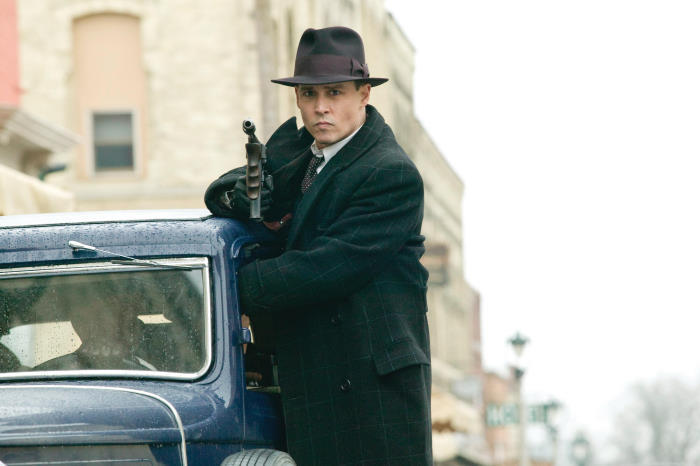
7. Public Enemies (2009)
Public Enemies
When it comes to famous outlaws, there are few that are as iconic as John Dillinger, especially given he was a man who wasn’t interested in stealing from regular people, but the state itself.
That’s partly why he’s the perfect historical figure for a Michael Mann film given his self-defined approach to life.
Public Enemies follows Dillinger (Johnny Depp) as he makes prison escape after prison escape, continuously evading capture and robbing banks before finding an added purpose in life in the form of one French-American, Billie Frechette (Marion Cotillard).
Like all of Mann’s anti-heroes, Depp’s Dillinger is charming and elusive all at once. He’s a character infused with an aura of mystique that Depp delivers with the casual suave that his own image beyond the screen has maintained.
But it’s in the reimagining of the period through a digital lens where Public Enemies really excels. The moody greys, dark passages and almost colourless world are so striking here that it creates a more profound hyper-realism — almost bringing the 1930s to life in a way that shooting on film wouldn’t.
6. The Insider (1999)
The Insider
A film about a man’s grapple with doing what’s morally right or being forced into silence by forces greater than him; The Insider, in true Mann-style, is an exercise in patience — in waiting for the right moment to make a move before it’s too late.
Unlike Mann’s other thrillers though, The Insider doesn’t have vans of heavily armed forces hiding around the corner, but it instead puts its faith in the truth overcoming the odds. That truth is in the form of former tobacco chemical scientist, Jeffrey Wigand (Russell Crowe) and the 60 Minutes producer looking to help bring his story to light, Lowell Bergman (Al Pacino). The odds are the Brown and Williamson Tobacco Company who are trying to keep Jeffrey, and this story around what really happens to tobacco, silent.
Guided by Mann’s brilliant direction, a well-crafted script by Mann and Eric Roth, and a standout performance from Al Pacino in an unfamiliar but equally familiar performance, The Insider paints a perplexing portrait of the lengths to which vindictive multi-billion dollar organisations will go to in order to supress information. It brings various parties with differing interests together, and creates a wide web of uncertainty for all involved — with no clear contingencies, but everything to lose for everyone involved.
5. Blackhat (2015)
Blackhat
Michael Mann’s most recent film feels like a sum of all of his best parts (it’s also been eight years since it was released!).
The film follows hacker Nicholas Hathaway (a career-best performance from Chris Hemsworth) who, after a series of awry events happen by an unknown source, is released from prison for the purpose of helping discover the person behind these events.
Blackhat is where ideas meet, characters converge, and where the tangible coalesces with the intangible.
In a similar way to Manhunter (but without the straining of classic thriller conventions) and Heat, this film once again depicts two sides of the same coin — Hathaway as the hacker-turned-FBI collaborator, and the unknown hacker blowing up coolant pipes and infiltrating wall-street. One is front and centre for the audience, while the other is kept faceless. While their intentions are different, they occupy a similar space like almost all of Mann’s characters do, but Blackhat is different to his past films because of how it bridges the characters worlds together and carries and communicates messages.
Mann uses modern technology to create a divide (the intangible), and forces his characters to embrace human interaction and connection (the tangible) if they are to overcome this threat.
His portrayal of the L.A. and Hong Kong maze of buildings and their bright lights speaks to the lack of personality or distinguished features in these settings, which fizzles down to the people who fade into each other like ones and zeros. It’s a wider critique on getting lost in the masses at a macro level, and getting lost in the code on a micro level.
Hathaway is the vessel Mann uses here to try and break through the code and by extension, this front that a world lacking real connections, has maintained — with Hemsworth using his size and stature to brilliant avail.
The closing sequence sees Hathaway concoct weapons and armour out of everyday tools, as though Mann is returning man to a primitive state before the world of data and technology became the guiding force. Hathaway gets the upper hand, and walks away in perhaps Mann’s most optimistic ending.
4. Thief (1981)
Thief
The OG Mann, Thief introduced audiences to this true-crime loving director who focuses on characters that take pride in the work they do, sometimes fall in love in the process, and live life on their own terms.
For expert safe-cracker and straight-talker, Frank (James Caan), he embodies the above perhaps more than any other character in Mann’s oeuvre. It might be because this is Mann’s most contained film in that it isn’t made up of major set pieces and crowded settings, but instead allows Caan to revel in the dialogue and the weight behind his words.
Thief is about a man on a mission to tick off his checklist of wants before cashing out. It’s also about a man refusing to bow down to the interests of others, instead taking it upon himself to shape his own destiny at any cost.
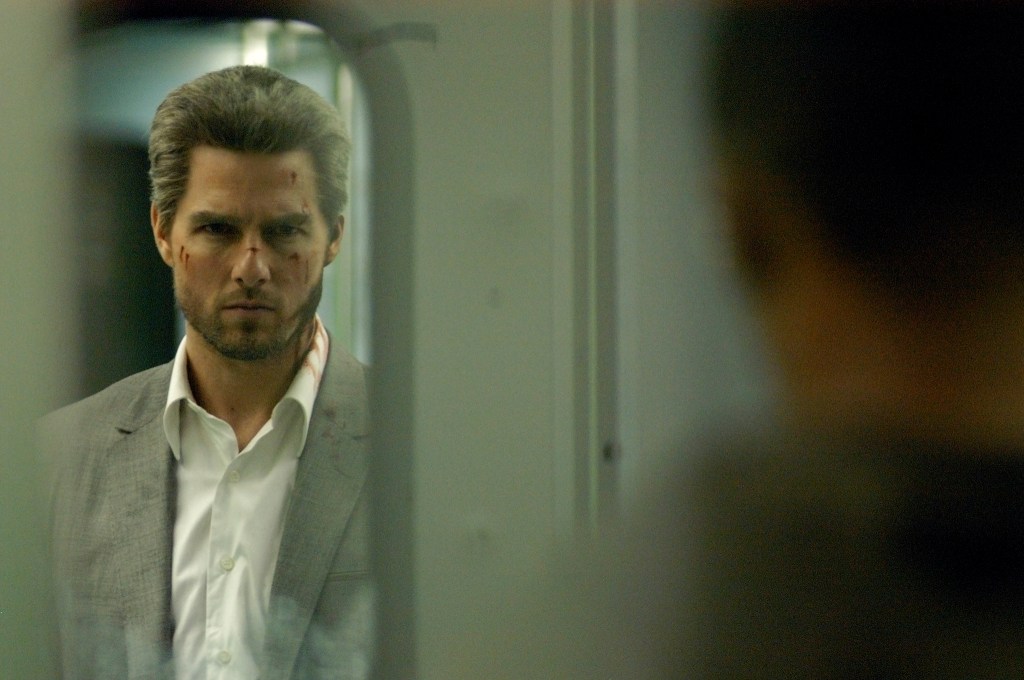
3. Collateral (2004)
Collateral
Two guys in a car, strangers to each other, both operating on a routine, a structure that they rarely break from, moving as one through the luminous L.A. night but to different ends.
Collateral is a wonderous neo-noir that pivots two men with differing moral compasses against each other: Max (Jamie Foxx), a slave to his inhibition, to his failure to act and make a difference to his life; and Vincent (Tom Cruise), a man untethered, a multi-faceted nihilistic hitman who gets in, gets out, and keeps moving forward.
Much has already been written on Collateral, from its vivid imagery to the rawness of its digitised look — at once enticing and haunting. Vincent poses a threat to Max’s idealised vision of tomorrow, but also an opportunity to start making things happen and not idle by.
2. Heat (1995)
Heat
What does one even say about what, in the eyes of many, is Mann’s magnum-opus?
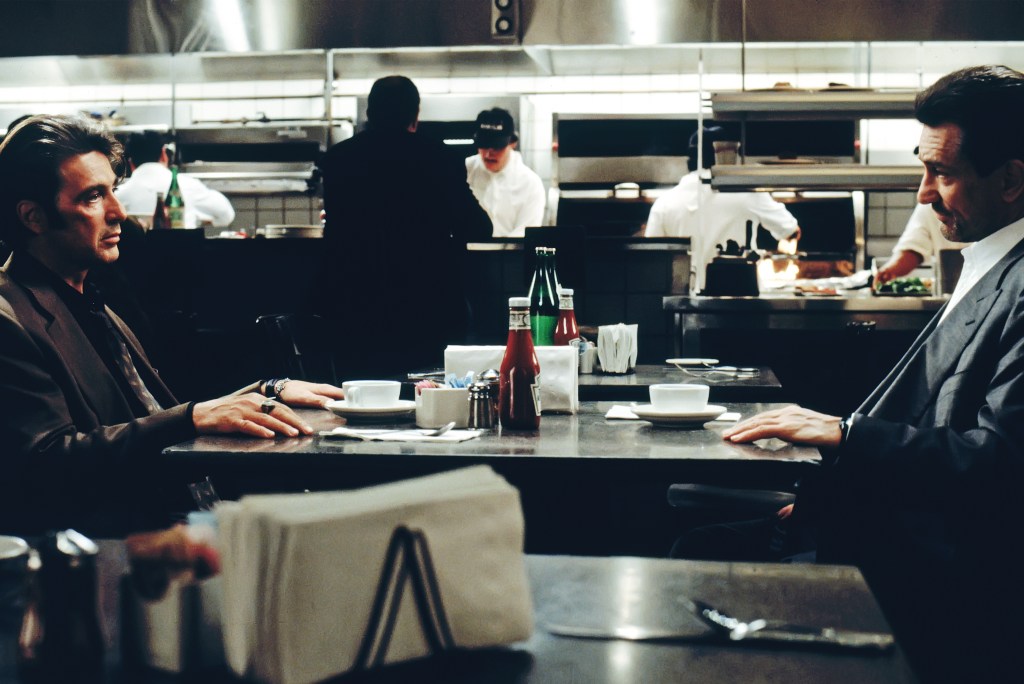
Heat is the sum of many parts, but it doesn’t work without its two key pieces: Al Pacino and Robert de Niro. The duo, reunited together on a feature for the first time (and for the first time ever in the same scene/s) since The Godfather Part II (1974), Pacino and de Niro are two sides of the same coin.
Vincent Hanna and Neil McCauley are like yin and yang — they don’t mix but they can’t function without one another. This speaks to Mann’s wider commentary on good vs evil, crime vs order which has been the focal point for 90% of his oeuvre. In Heat, Pacino and de Niro accentuate Mann’s fascination with these binary opposites to their full extent.
It’s as though these characters revel in the chase, of being the hunter and the prey, and they treat it like a drug that supersedes everything else in life. Mann brilliantly captures this through bright neon lights and the wider city which acts as its own sanctum that gives weight to the chase. Nothing is as beautiful as the city lights in a Mann film where cop cars race down the freeway in a storm of intensity.
But Heat is also made up of moments: the diner scene between Neil and Vincent is one of the greatest moments of character interaction in cinema history as these two men come face to face, pause the chase, and acknowledge each other; the downtown LA shootout where Mann shut down multiple blocks to shoot one of the most jaw-dropping scenes in any film ever; and the poignant finale where the two leads lock horns for the last time.
Without Heat, we may never have had The Dark Knight (2008), and that’s just one extra reason to watch this if you haven’t.
1. Miami Vice (2006)
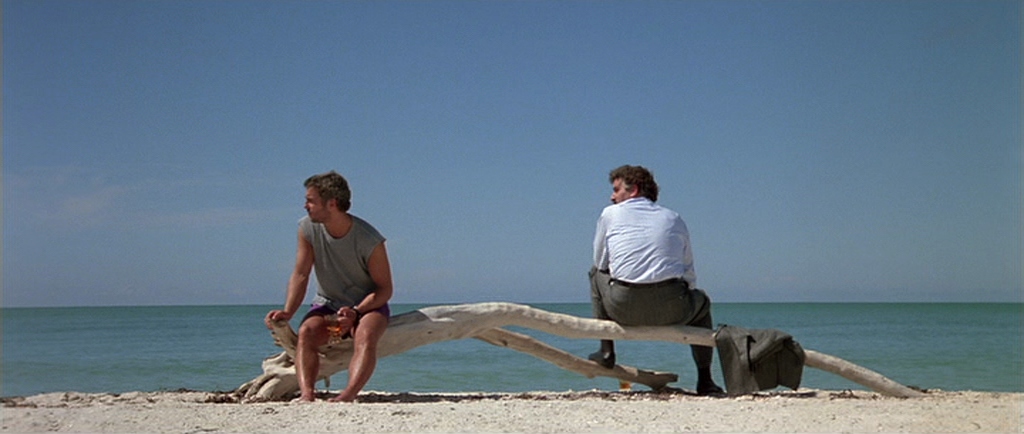
Miami Vice
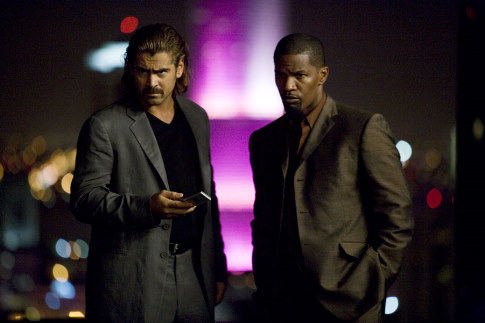
I’m sure Miami Vice is a top-three Mann on anyone’s ranking of his work, but this bustling neo-noir about two under-cover detectives goes beyond the 80s show of the same name to become a gripping tale of people accepting that they’re living on borrowed time and learning how to manage the time they have left.
On the surface, Miami Vice is a buddy-cop thriller about two detectives infiltrating an offshore drug operation where they act as the middle-man between the international supplier and the local Miami buyer. Their mission is to find out who the buyer is, but the deeper they find themselves in the operation, the more they realise they’ll never have an opportunity like this again.
Jamie Foxx and Colin Farrell are the two leads here and (while already the case with Foxx) they instantly fit the Mann-model of characters who don’t always play by the books, are good at what they do, and sometimes make rash, emotionally led decisions.
But it’s through Mann’s ability to capture the fleeting nature of life, the suddenness of a bust and the shootouts that ensue, where Miami Vice makes a case for his best film. There’s a dream-like tranquillity to the use of digital footage here that might just be the best example of creating evocative images in the digital format. From the bright hues of the nightlife and its clubs to the more intimate sensual moments, there’s a sense of liveliness and temporality mixed together in the film’s visual language.
Mann’s growing fascination with the commodification and expendability of the human body really started gaining momentum here as well. Whether it be in the film’s final shootout where bodies drop at a whim or the use of people as shields for getting what you want (drugs, cash, obedience), it’s an aspect of his films that really does speak to how precious those moments of human interaction are for his characters when they do have them.
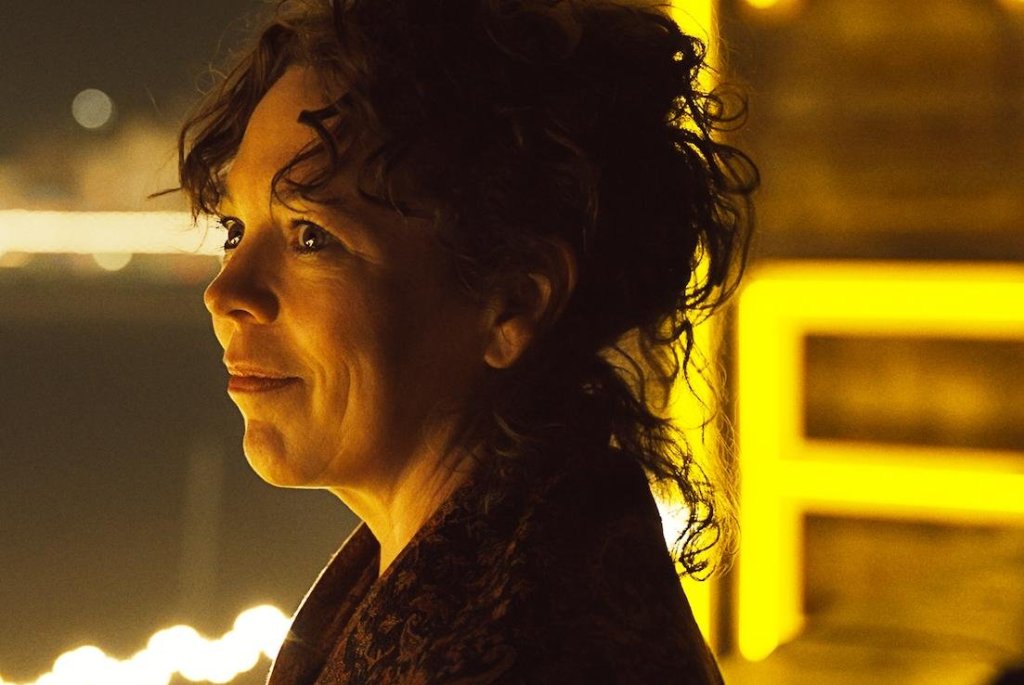
The Oscar-bait film too contrived even for awards voters, Sam Mendes’ follow-up to the acclaimed war film 1917 (2019) Empire of Light (2022) is a flat ode to the theatre made by some of the best industry professionals. Spanning the early 80s in the small British seaside town of Margate, we follow the workers of the quiet movie theatre including deputy manager Hillary (Olivia Colman), manager Donald (Colin Firth), projectionist Norman (Toby Jones), and bright-eyed new crew member Stephen (Michael Ward). We are mostly locked onto the world of Hillary, a depressive older woman burnt out and fading through life until a romance is sparked with the much younger Stephen.
Made with the best intentions with a world class crew and ensemble, Empire of Light stumbles not just in its underbaked racial and political underpinnings, but in its narrative contrivances that permeate every moment. Hillary is written into a dead end within 40 minutes, sucking the air out of the film before it even gets going. Mendes overreaches in so many narrative directions that no one moment is given the time it deserves, reducing everything to its thinnest ideas, making all the plot machinations nakedly visible.
There are many films inside this one, making it feel closer to a debut Sundance feature from an upstart filmmaker that is unsure whether they will ever make another film. Through its flat characters spouting unfelt political statements, Mendes has made a unmemorable film that takes for granted its extraordinary crew.
And enough cannot be said about the crew involved here; Trent Reznor and Atticus Ross craft an interesting piano score that unfortunately never seeps deeply into the drama; greatest living cinematographer Roger Deakins has mastered his craft to an absurd degree that we should be thankful doesn’t get relegated to a TV screen just yet; the ensemble of Colman, Firth, Jones, and the breakout of Michael Ward is punching well above the script, finding emotional depths to their characters that were clearly underdeveloped on the page.
Michael Ward and Olivia Colman in Empire of Light.
One of the best technical filmmakers working, Mendes has always been successful when working with quality screenwriters (Skyfall, Jarhead, American Beauty if that’s your thing) while still pursuing his own point of view, often surrounded by top-tier craftspeople. He has been able to create quality features without working as the screenwriter, but was clearly emboldened by his original screenplay Oscar nomination for 1917, a film that is effective more as a set piece art installation than as a work of screenwriting, to pen his follow-up feature.
Much has been made about Empire of Light being a love letter to the theatre, which is reductive at best. This film is as much a movie about the movies as Snowpiercer (2013) is a movie about trains. Cinema has enough love letters to itself, but too few ones of quality and substance that values the audience on the other end of that beam of light.
The racial politics of the film are tired and dated, with the anti-black violence made in service of a white character’s emotional development that is a disservice to both performers. The few instances of racialised violence do not even give Ward the respect of a reaction shot. There is also the issue of the depiction of Stephen’s mother Delia (Tanya Moodie) in the film, a character who does not speak to her son for almost its entirety, having more lines of dialogue with Colman than Ward. Mendes shows little maturity to handle these racial aspects of his film, souring any goodwill in its pursuits of bringing to light the racism of 1980s England.
Olivia Colman in Empire of Light.
Colman does better than any actor could with her extraordinary mix of subtle rage, but the script lends her or the other actors little assistance. Her performance in 2021’s The Lost Daughter (which she should’ve won an Oscar for last year), is a better demonstration of her quality at playing a depressive older woman.
Ward’s performance as Stephen is above the level given to him, as a purely contrived character that is more aggressively attached to the film’s writing faults and poor writing than any other character. Even with the quality of individual performance from Ward and Colman, the pair’s growing romance never garners genuine interest or stirred emotions as it is just another one of Mendes’ undercooked ideas in a film without a strong perspective.
Mendes never trusts his actors and, to a greater self-critique, his own penned characters, to develop the story and romance organically, ending up with a collection of contrivances. Empire of Light is a beautifully shot but unsubstantial feature that will quickly be forgotten, adding up to less than the sum of the parts with its top-tier cast and crew.
Marvel (by way of Star Wars and Rick and Morty), the surprising third instalment in the Ant-Man franchise, Ant-Man and the Wasp: Quantumania (2023), is one of the most enjoyable and cohesive Marvel films in years, and a great entry point into the new Phase of the universe. With a wildly inventive world that enchants and inspires awe, Quantumania manages to create something that’s been lacking from Marvel of late: pure imagination and efficient storytelling.
Quantumania kicks off with a return to the Lang family. Scott (Paul Rudd) is touring his ant-pun-filled memoir; Hope (Evangeline Lily) is running the company to improve many noble causes from affordable housing to environmental rehabilitation; Hank (Michael Douglas) and Janet (Michelle Pfieffer) are reunited and retired; and Cassie (Kathryn Newton), now 18, is getting arrested protesting the police for tearing down displacement camps. The surprising heart of the film, Cassie both sparks the plot by creating a beacon to the Quantum Realm, as well as the thematic (socialist uprising via ants combats tyranny in a blockbuster? A+) and emotional story that is never beholden to other properties. The speed in which we are thrown into the world is appreciated and economical, especially in comparison to recent superhero films that have felt bloated and undercooked.
The Rick and Morty-fication of Marvel is complete in Ant-Man and the Wasp: Quantumania, with longtime comedy writer Jeff Loveness (Jimmy Kimmel Live, Rick and Morty) given sole screenwriting credit here. Previous Rick and Morty writers landing at Marvel include Jessica Gao (She-Hulk: Attorney at Law), Michael Waldron (Loki, Doctor Strange in the Multiverse of Madness, Avengers: Secret Wars), and Loveness. This connection to the cult TV show is felt particularly through its world-building and humour, as Loveness and Reed are clearly having a blast creating these unique quantum aliens, from snail horses to amoeba buildings and freedom fighters, all with a visual and comedic flair that feels considered. The parallel is also felt in its storytelling, as Loveness is able to craft an efficient and entertaining film that works independently of its outside world, maintaining a coherent thematic pull with compelling characters that feel genuinely changed through the experience.
(From left) Paul Rudd, Kathryn Newton, and Evangeline Lily in Ant-Man and the Wasp: Quantumania
Fears were rising that, with the emergence of the multiverse and glut of recent Marvel products, regular movie fans would be left in the dust. Thankfully, Quantumania is a refreshingly standalone film and a great entry point for this new phase of Marvel. The briskness of the storytelling allows you to get swept up in the world-building and creature design, sharing the sense of wonder Scott and Cassie have for the Quantum Realm. We are shown many sides to this new realm, from its refugee camps to its high society bars inspired by the Star Wars cantina (I was shocked not to have an original tune playing when they entered the room), all fully realised. The craft and consideration here are leagues ahead of recent entry Doctor Strange in the Multiverse of Madness (2022), where the biggest leap in the boundless opportunity of multiversal storytelling was an Earth where green means stop.
Director Peyton Reed, hot off helming a couple of great episodes of The Mandalorian, returns to complete his highly improbable but all-enjoyable Ant-Man trilogy. The list of directors crafting a full trilogy is short, with Reed joining Spider-Man directors Sam Raimi and Jon Watts on the superhero trilogy front. Through a consistently robust supporting cast, the Rudd-helmed franchise has always felt light on its feet and affable, mirroring its star.
Reed’s Ant-Man films thrive more in the conversational moments, both in comedy and tension than when action is required. Early entries allowed the action set pieces to play out like big-budget Honey I Shrunk the Kids (1989)homages, but in Quantumania, the action feels taken straight from the Marvel assembly line, with its rapid cuts, poor blocking, and hand lasers. Fortunately, Reed seems aware of these shortcomings, as the film does not rely on these moments for its crescendos, opting instead for more personal battles against Kang the Conqueror.
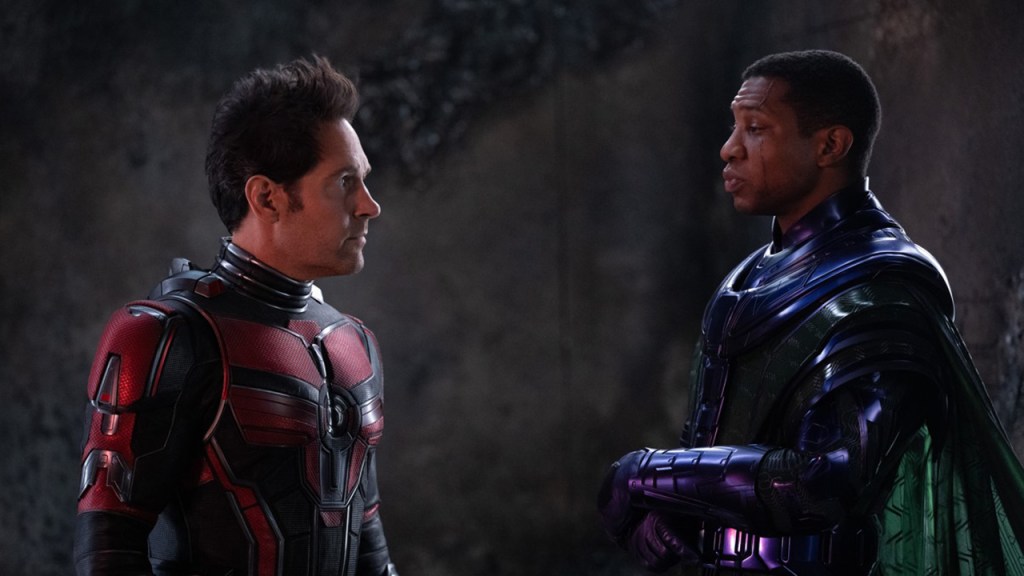
Paul Rudd and Jonathan Majors in Ant-Man and the Wasp: Quantumania
Jonathan Majors, the greatest recruit into the Marvel acting army thrives as the ominous but deeply felt villain Kang the Conqueror. Acting alongside Michelle Pfieffer for many scenes, Majors uses his physicality and always surprising depth of feeling to keep Kang more interesting and compelling to the audience, allowing him to balance out the film in ways we rarely see in Marvel villains. There is a tension and friction to his scenes that allows other actors to occupy space to play off of Majors, instead of merely dominating every moment of screen time, a rare gift to be used in a blockbuster film. The next Avengers film, Kang Dynasty (2025), is more likely to match the quality of Endgame with the emerging A-lister at its core.
No one would’ve imagined back in 2015 that Reed and Rudd would be completing a trilogy of Ant-Man films in 2023, with the third entry becoming crucial to the wider Marvel project with the emergence of Johnathan Majors’ Kang as the next Avengers villain (Loki appearance notwithstanding), let alone creating one of this quality. While still overfilled with messy CGI action set pieces, Quantumania thrives in its inventive world-building, with an economic and satisfying script by Loveness that allows its impressive ensemble to shine.
Ant-Man and the Wasp: Quantumaniais in theatres now.
Early contender for the strangest and most fun internet explosion curio in film circles of the year, Skinamarink (2022) is an atmospheric, extremely lo-fi creepypasta horror seemingly born out of a haunted VHS tape. This may be the hardest film to have a blanket recommendation for due to its upsetting atmosphere centred around young children, durational cinema tendencies, and an active refusal to follow cinematic conventions that will annoy many audiences. It may be easier to recommend Skinamarink to lovers of Apichatpong Weerasethakul or Chantal Ackerman films than horror fanatics looking for a low-budget thrill, a place I sit on both ends of.
The filmmaker, Kyle Edward Ball, has been making horror short films for years based on user-submitted stories about their nightmares on YouTube. There is a simplistic effectiveness to many of these videos, with a certain aesthetic formed that grew into Ball’s debut feature, Skinamarink.
Set one night in a family home, Skinamarink follows two young children, Kevin (Lucas Paul) and Kaylee (Dali Rose Tetreault), who have seemingly been abandoned one night as their father disappears without a sound. This childhood nightmare of abandonment is immediately heightened as the doors and windows to their home also begin to disappear, and there is a distorted voice seemingly coming from upstairs beckoning them.
The effectiveness of the film’s horror is its depiction of a universal childhood fear shown from an actual child’s perspective. Ball is tapping into primordial fears that dwell within all of us, using the constraints of his very modest budget to heighten the atmosphere of dread across its extended run time. The film is certainly too long for its narrow scope coming in at 100 minutes, but when Skinamarink is working, it is one of the most effective horror experiences in years.
Kevin (Lucas Paul) in Skinamarink. Photo Credit: Shudder
What has allowed Skinamarink to explode as a curio of indie horror cinema (including several in-demand screenings at The Astor Theatre and Palace Cinemas) is its experiential, durational cinema-styled horror that has a clear lineage in the genre, whilst feeling entirely new. Think Paranormal Activity (2007) but with actual aesthetic choices and storytelling ideas. Those films had some good scares scattered throughout the franchise, but the flat filmmaking in the name of realism makes them a chore to get through. The mixture of base human fears with an individual cinematic style that heightens digital noise and extremely low lighting, allows Skinamarink to feel familiar yet new, creating a deceptively compelling horror.
Its weaponisation of digital distortion is pretty special while still feeling familiar, turning one of indie cinema’s biggest issues (access to only cheap equipment), into its greatest strength. At its strongest moments, Skinamarink will have you questioning your own eyes, not sure if you’re seeing something that is not there or if Ball is manipulating everything on screen. Establishing an off-kilter immersion from the outset allows you to never be sure of that answer, drawing you further into each scene and the encroaching feeling of dread.
Ball gives us just enough narrative to get a sense of the family dynamic here before this fateful night. In a film centred around parental control, beginning with the four-year-old child Kevin apparently falling down the stairs (an act, like many in the film, we do not see but only hear) sets an early tone and has us questioning the children’s parents. The oldest child, six-year-old Kaylee, not wanting to speak to the mother further layers the themes of domestic issues and how they play a role in our childhood fears. In a regular horror film, a disembodied voice beckoning you to “come upstairs” would regularly have you questioning why our young protagonist would do such a thing, but here, we have an understanding about the likelihood this situation isn’t too far removed from their previous experience.
Photo Credit: Shudder
Its central set piece, which involves Kaylee going upstairs into her parent’s room, is one of the most haunting film sequences in years. After 40 minutes of atmospheric buildup, completely unsure of where we are being led, you will be wishing to return to watching cartoons downstairs and staring at Legos. The extended long take in this scene ratchets up the tension to a boiling point, with your palms a sweating mess in a sequence that seemingly goes for eternity. This is no doubt the peak of the film, with only smaller moments in the proceeding hour that match its tension and atmosphere. Structurally, Skinamarink could’ve taken some notes from its predecessors Paranormal Activity and Blair Witch Project (1999), by peaking in its final moments, but the atmosphere is definitely more of the Ball’s focus than the bigger scares the film has. Unfortunately, this makes the film drag in its second half, even for a great lover of durational cinema as I am.
A film sure to annoy and entice in equal measure, Skinamarink is a curious and mostly effective piece of atmospheric horror filmmaking from an interesting internet-focused filmmaker that is able to use his constraints to his advantage. Whilst not of the same quality as The Blair Witch Project, or the level of engagement culturally so far, Skinamarink is a more interesting and worthwhile horror experience than almost any found footage-style films in the genre.






















 Rating Frames